

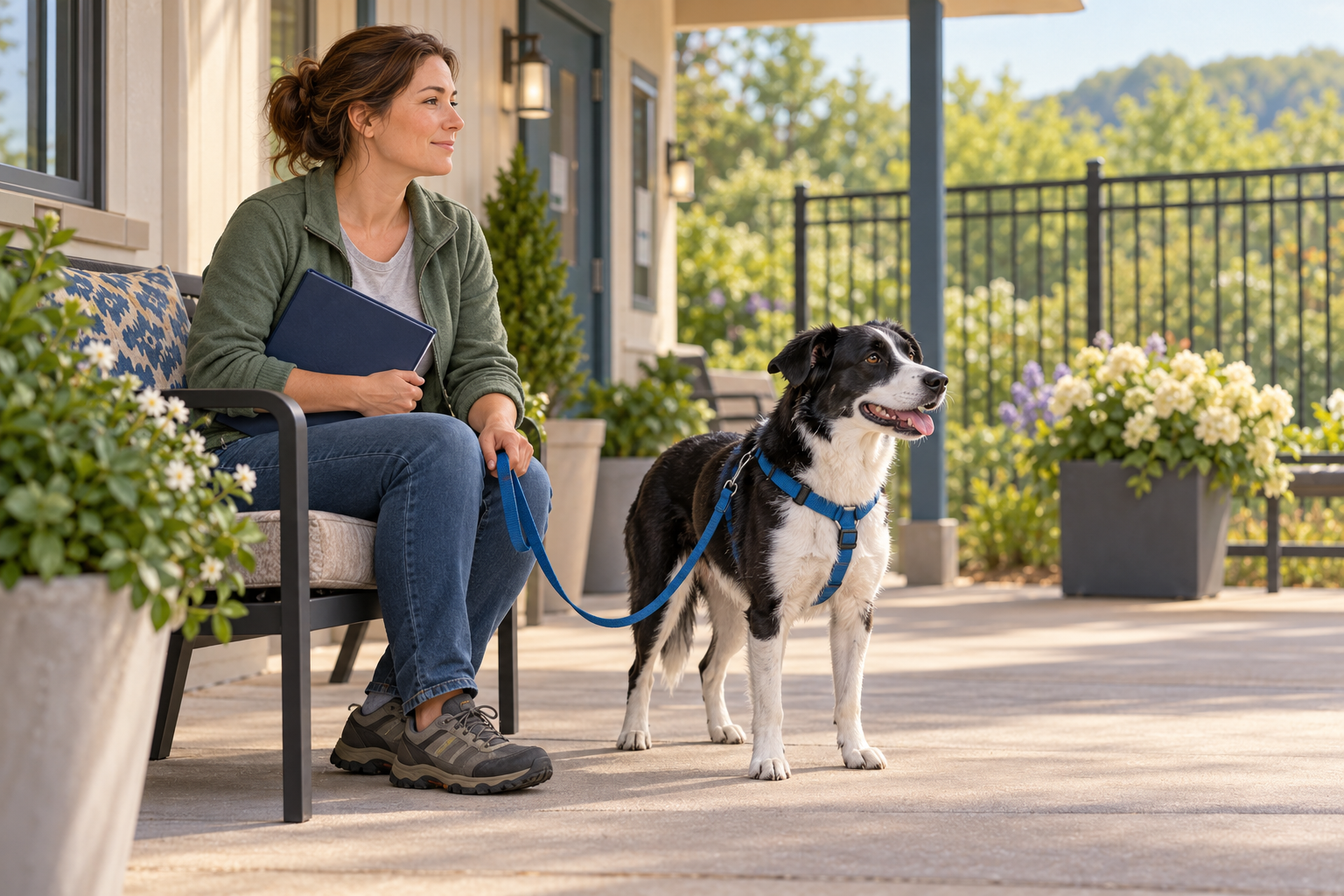
Use official reentry guidance, a property-specific hazard check, and a clear care handoff before bringing your dog home.
Short answer
Permission to return comes before the dog comes home
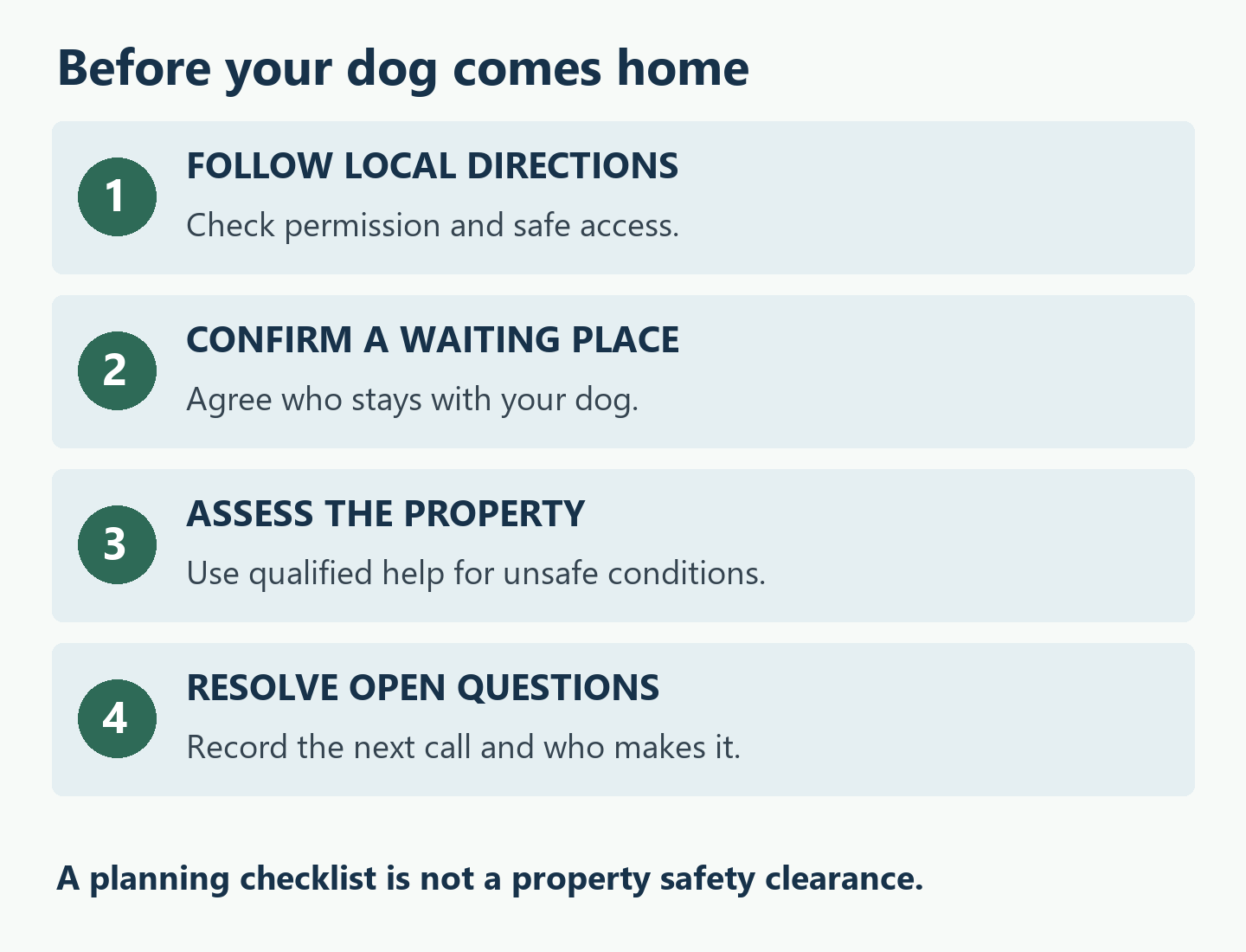
After a flood or storm, follow current local directions about returning. Keep your dog at a confirmed safe location while the property is assessed. A reopened neighborhood does not establish that your own building, yard, water supply, or fencing is safe. Keep your dog restrained outdoors, avoid floodwater, and contact your veterinarian about illness, discomfort, or a possible exposure. This checklist helps organize decisions; it does not inspect or certify a property.
Safety first
Stop when the next step needs a professional
Do not enter restricted areas or an obviously damaged structure. Leave electrical hazards, structural damage, suspected contamination, and other unsafe conditions to the appropriate authorities or qualified professionals. Do not send a dog ahead to explore. For a dog who is injured, collapsed, having trouble breathing, or otherwise seriously unwell, contact an emergency veterinarian promptly. Do not delay care to finish a checklist or improvise an exposure treatment.
Use this as a decision record, not a safety clearance
This guide is not a substitute for veterinary or qualified behavior care, local emergency instructions, or a professional building assessment. Contact your veterinarian about your dog’s health, possible exposures, or handling concerns. See our medical disclaimer. No generic room, route, or waiting place is safe for every event.
Check what has been cleared, by whom, and when
The CDC’s return-home guidance says to follow local authorities and return only when told it is safe. It also cautions against entering a visibly damaged home and recommends professional inspection. These are household reentry precautions, not veterinary findings. Keep the two decisions separate: whether people may access the area, and whether your dog’s actual living space can be used.
Write down the source of the current instruction and when you checked it. An old message saying an area was reopening may not answer a new restriction, a changed route, or a concern specific to your address. Use the current instructions from the authority responsible for the event rather than treating a neighbor’s experience as permission for your own property.
Keep unanswered questions visible. “I do not know whether this building has been inspected” is useful information; “probably fine” hides the next decision. Ask the relevant authority or professional what needs assessment and who can provide it. This guide cannot tell you to turn on equipment, repair a service, enter standing water, or test a damaged structure.
Arrange the waiting place before making the inspection trip
Work out who will stay with your dog while the property is being assessed. The waiting arrangement needs to be suitable in its own right. Do not assume that a parked vehicle, a damaged shed, or a neighbor’s yard becomes appropriate simply because you expect to return quickly. If the place you were using is no longer available, revisit the confirmed destination contacts in your household plan.
Give the temporary caregiver the information needed for the time apart: your reachable number, the veterinary contact, your dog’s current care instructions, and what you actually know about collection arrangements. Say explicitly if the return time is unknown. Avoid promising a short stay before you know what the property check will find.
Use the existing emergency records folder for that handoff. Keep current written instructions together rather than rewriting medical directions from memory. Tell the caregiver how you will share a change of plan. If an examination or other urgent care becomes necessary, that need takes priority over moving the dog back home.
Review the dog’s route through the property only when access is safe
The CDC’s pet emergency guidance identifies sharp objects, spilled chemicals, and exposed wiring as return-home hazards. It also warns that familiar scents and landmarks may change. Keep the dog out of the assessment and cleanup area. A place that looks familiar from the doorway should not be treated as a completed check.
Organize your notes around the places your dog would actually use: entry, resting space, food and water location, and outdoor access. Record a concern under the relevant location instead of keeping a vague mental list. If a room is not usable, mark it unavailable; do not give an instruction such as “be careful in there” to the next caregiver.
This is not a do-it-yourself cleanup plan. Ask the appropriate professional about structural, electrical, chemical, or other hazards. Do not invent a safe waiting interval after cleanup, a household decontamination method, or a test based on appearance or smell. When a decision has not been made, keeping that area out of use is clearer than pretending the uncertainty has disappeared.
Include the food and water arrangements in the questions you resolve before the dog returns. Ask what can be used under current local instructions and what supplies remain suitable. Keep the dog’s usual written care plan available, and contact the veterinary team about a disruption that affects prescribed care. A reentry checklist does not establish whether a medicine or food exposed to the event is usable.
Recheck containment before relying on the yard
Michigan’s April 2026 flood guidance advises leashing pets outdoors and keeping them from walking through, swimming in, or drinking floodwater. It explains that damaged fencing and changed landmarks can contribute to wandering. Those cautions apply even when a dog previously knew the yard well.
Once the relevant area is safe to assess, record which boundaries and access points have actually been checked. Separate a checked gate from a gate someone merely assumed was closed. Ask the person responsible for a repair or inspection when the affected area can be used; this article cannot determine the strength of a damaged fence or other structure.
Make the current arrangement clear to every caregiver. “Use this confirmed accessible route with the leash; the other side remains closed” describes a practical boundary. It should never be used to justify walking through a restricted or hazardous place. If no suitable outdoor arrangement is available, ask the temporary care provider and local animal services what options can be confirmed.
Keep exposure information and care observations separate from diagnosis
Tell your veterinarian about known contact with floodwater or other possible hazards and any signs of stress, discomfort, or illness. Preserve what you observed without guessing the cause. A note can state where the dog was, when contact may have happened, what changed, and what care has already been given. Mark an uncertain exposure or unknown treatment history as unknown.
For example, “A helper reported that the dog stepped into water near the entrance; I did not see it” keeps the source and uncertainty visible. It does not establish what was in the water or whether the dog needs a particular treatment. Ask the veterinary team for advice tailored to that history. Do not use a normal-looking coat, appetite, or mood as a substitute for an exposure assessment.
If distress, pain, or unsafe handling makes moving the dog difficult, contact your veterinarian for guidance and appropriate help. Do not force a homecoming to meet an arbitrary timetable. The practical question is whether the care arrangement and environment can support this dog now, with the information you actually have.
Owner tool
Keep one dated reentry decision sheet
Copy these fields into your own record. This is an organizational aid, not an official clearance form. Leave an answer marked unresolved until someone qualified to answer it has done so.
| Decision | Record | Unresolved next step |
|---|---|---|
| Access | Current official instruction and date checked | Authority or contact to ask |
| Property | Areas assessed and professional findings received | Area that remains unavailable |
| Waiting place | Confirmed caregiver and contact arrangement | Backup if the stay is extended |
| Dog’s route | Usable entry, resting space and care setup | Specific concern to resolve |
| Outdoor access | Boundary check and current handling instructions | Inspection or repair contact |
| Care | Observed changes or possible exposure timeline | Veterinary question and callback plan |
Give each open task a person responsible for the next call. Keep a dated current version so a caregiver does not mistake an earlier plan for the latest decision.
Better questions, calmer next steps
Ask about the changes that affect your dog
- Does the known exposure or separation history require an examination?
- Which changes should prompt an immediate call or emergency visit?
- What should we do if medication access or usual care has been disrupted?
- What handling or temporary-care arrangement fits this dog’s current needs?
FAQ
Does a neighborhood reopening mean my home is safe?
No. Follow the current instruction and resolve hazards specific to your property. An official reopening is not a finding that every building, utility, or dog-care space is usable.
Can my dog use a familiar yard right away?
Do not rely on familiarity alone. Follow current safety restrictions, recheck containment when it is safe to do so, and keep your dog leashed outdoors as official pet flood guidance advises.
What if my dog may have touched floodwater?
Prevent further exposure and contact your veterinarian with the circumstances and any changes you notice. This checklist does not provide a diagnosis or a home treatment protocol.
Sources and limits
Direct sources checked October 28, 2026. Human reentry guidance supports the household access decision; pet-specific guidance supports containment, floodwater avoidance, and veterinary escalation. The worksheet and examples are practical synthesis. No property safety clearance or professional medical review is claimed.
- CDC: Safety Guidelines—Returning Home After a Natural Disaster
- CDC: Be Prepared—Pet Safety in Emergencies
- Michigan MDARD: Protecting Farms, Food and Pets With Flooding and Severe Weather
Not yet medically reviewed.
Make the next unresolved decision visible before arranging the homecoming. A clear “not yet” is more useful than a guessed clearance.