

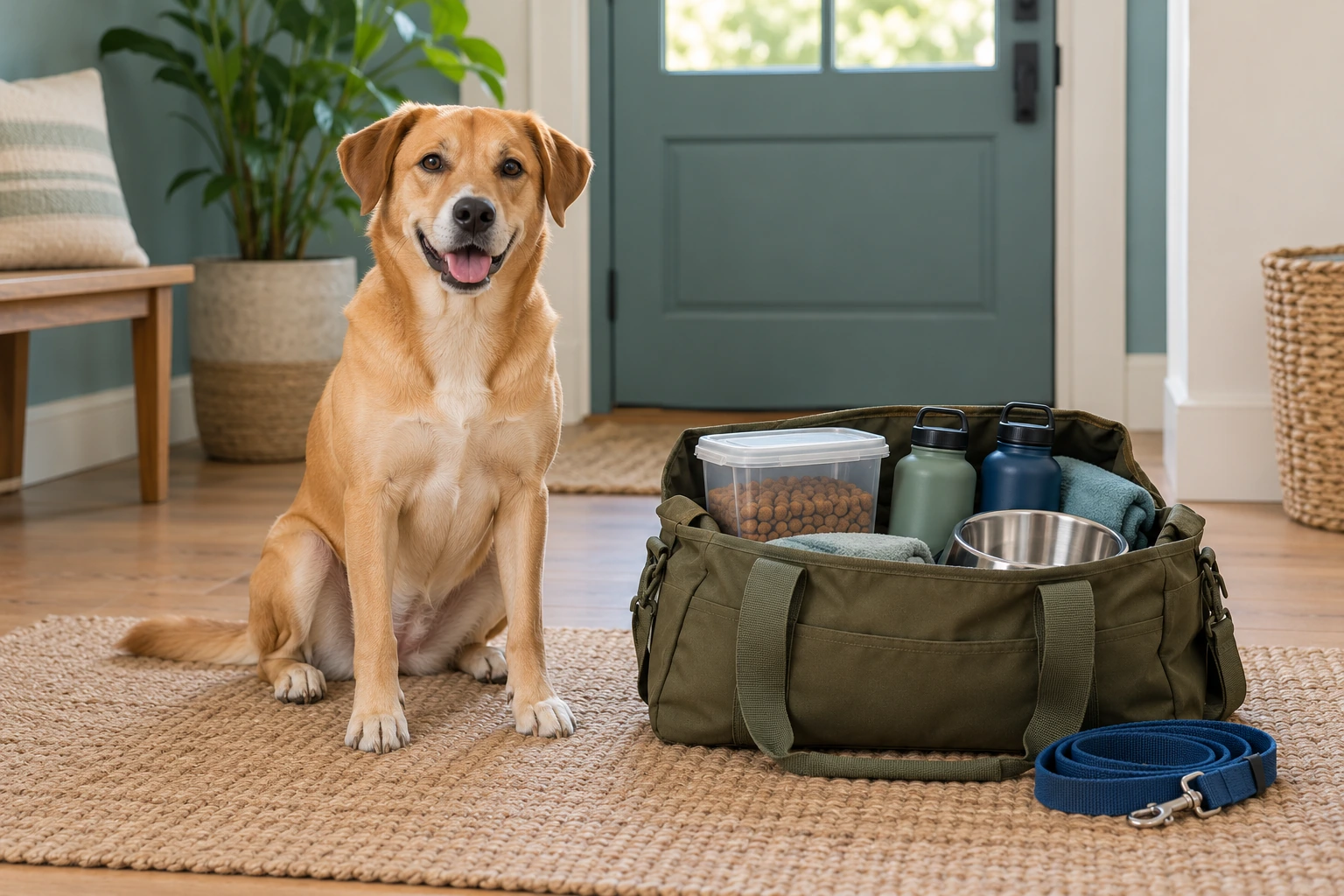
Pack the supplies your dog already needs, make last-minute items easy to find, and keep the kit usable as life changes.
Short answer
A dog evacuation go bag starts with familiar essentials
Pack your dog’s regular food, water, bowls, restraint equipment, records, contacts, sanitation supplies, and any veterinarian-directed medication arrangements. Store the kit where your caregiver can find and carry it. Put items that cannot stay packed on a short grab list attached to the bag.
- Use what fits your dog and your household’s emergency plan.
- Check quantities against local guidance and individual care needs.
- A bag supports evacuation; it does not replace a destination, transport plan, or veterinary care.
Safety first
Do not finish packing before seeking urgent veterinary care
Difficulty breathing, unresponsiveness, serious injury or bleeding, sudden extreme weakness, or a suddenly swollen abdomen warrant immediate veterinary attention. Contact an emergency veterinary service and follow its instructions; do not delay to complete this checklist. AAHA’s emergency-sign guidance explains these warning signs.
Veterinary note
This guide provides general preparation information, not diagnosis or treatment. Your veterinarian should direct medication quantities, storage, missed-dose questions, and health-related transport needs. Follow current local emergency instructions. Read our medical disclaimer.
This checklist is not a substitute for individualized veterinary or behavior advice. During routine preparation, stop practice and contact your veterinarian if your dog becomes suddenly fearful, aggressive, or withdrawn; do not force a handling exercise. See AAHA’s guidance on sudden behavior changes.
Build the bag around the dog you have
Start with your dog’s ordinary feeding, toileting, handling, and care needs. A small dog using a carrier and a large dog with mobility limits will not have identical equipment. Write a list before filling a bag, then check the items against how you would actually leave home.
The Michigan State Police kit checklist and the CDC pet disaster checklist provide useful supply categories. The packing layout and refresh worksheet below are practical organization suggestions, not a tested emergency protocol.
Keep the wider decisions in your written dog emergency plan: who gets the dog, how you travel, and where you can go. This article handles the portable supplies and their upkeep. No specific bag, brand, or purchase is required.
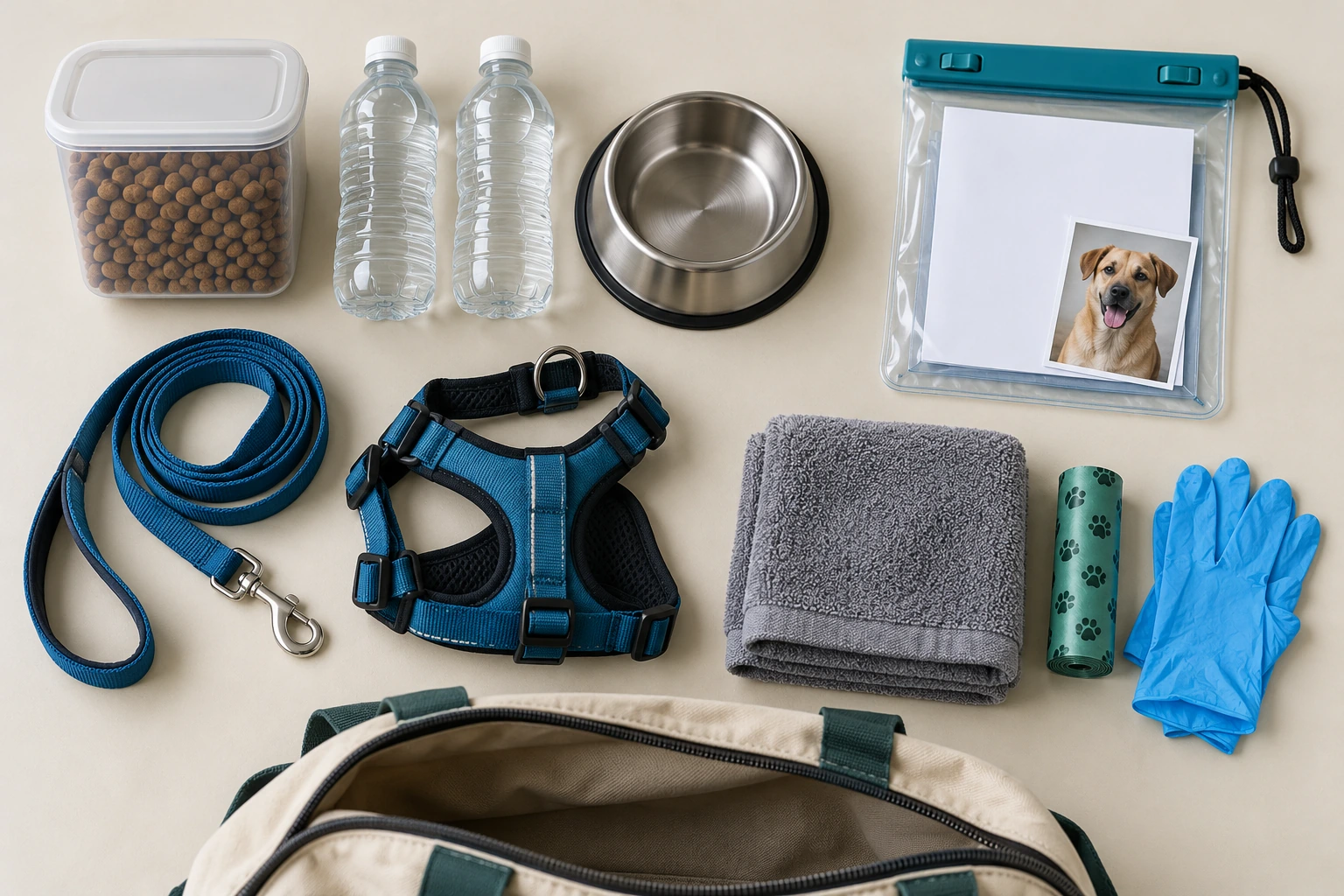
Pack six groups of essentials
1. Regular food, water, and feeding equipment
Include your dog’s usual food, water, and usable bowls. Add an opener if the food packaging requires one, and written feeding instructions for a caregiver. Protect supplies from damage and keep the food’s identifying and storage information available. A sealed container should still let you identify what is inside.
2. Restraint and transport equipment
Keep a suitable leash, collar with identification, and harness or carrier as appropriate for your dog. Check closures and fit in ordinary conditions. Label a carrier with your contact details. A large carrier or mobility aid may need to stay beside the bag; list its location instead of pretending everything fits inside.
3. Records, identification, and contacts
Pack protected copies of veterinary and vaccination records, a current dog photo, identification and microchip details, and emergency contacts. Include your regular clinic, an after-hours veterinary service, a trusted caregiver, and confirmed destination contacts. Keep sensitive originals secure and use readable printed copies for the kit.
4. Medication and care instructions
If your dog uses medication, ask your veterinary team what supply is appropriate and how to maintain access during disruption. Keep current written instructions and identifying information with it. Never create a reserve by skipping doses, sharing prescriptions, or changing the prescribed routine. A checklist cannot tell you whether medicine exposed to unsuitable temperatures remains usable.
5. Sanitation and familiar comfort items
Include waste bags and suitable cleanup materials, plus familiar bedding or a small comfort item when practical. Keep cleaning materials away from food. For multiple dogs, identify whose food and care instructions belong to whom. Familiar belongings support continuity of the routine; they are not a treatment for fear.
6. First-aid supplies and access to advice
The official lists include a pet first-aid kit. Ask your veterinarian what belongs in yours and which actions you can safely perform. Keep the emergency number easy to find. Having supplies does not make a household kit suitable for treating serious injuries or deciding which medicine a dog should receive.
Choose quantities without treating one number as universal
Official examples differ. The CDC downloadable checklist lists two weeks of food, water, and applicable medication. Michigan’s June 2026 preparedness message gives at least three days of food and water. Neither example guarantees that supplies will last through a particular emergency.
Use your local emergency guidance and expected disruption to plan household supplies. Ask the veterinary team about prescription access and any diet or medical needs. Record your dog’s usual food amount and the period you are planning for. This is inventory planning, not advice to ration food, water, or medication.
Check whether the person assigned to the dog can also carry the supplies. If you divide supplies among containers, write down the complete grab list and who takes each part. A portable bag and a larger reserve can serve different jobs; neither should be counted as present if it cannot leave with you.
Separate what stays packed from what must be added
Choose one predictable storage spot that remains accessible to your trusted caregiver. Keep related items in labeled groups so finding the records does not require emptying the food compartment. Put a dated inventory where the person opening the bag will see it.
Use two headings: “Already packed” and “Add before leaving.” The second list may include current medication stored elsewhere, refrigerated items, the everyday harness, or a carrier. For each item, write its location and the person responsible. Ask your veterinarian about any cold-storage or power-loss arrangements instead of improvising them during an alert.
For example, “medicine in kitchen” leaves too much uncertainty. A private caregiver instruction can name the exact storage location and point to the current veterinary directions. Keep access information available to the trusted person without placing private details on the outside of the bag.
Refresh the contents, not just the reminder
Choose a recurring reminder you will realistically use and recheck before your area’s higher-risk season. This is an organization habit, not a medically established interval. Check sooner after a prescription change, new diet, move, changed phone number, or change in the dog’s equipment needs.
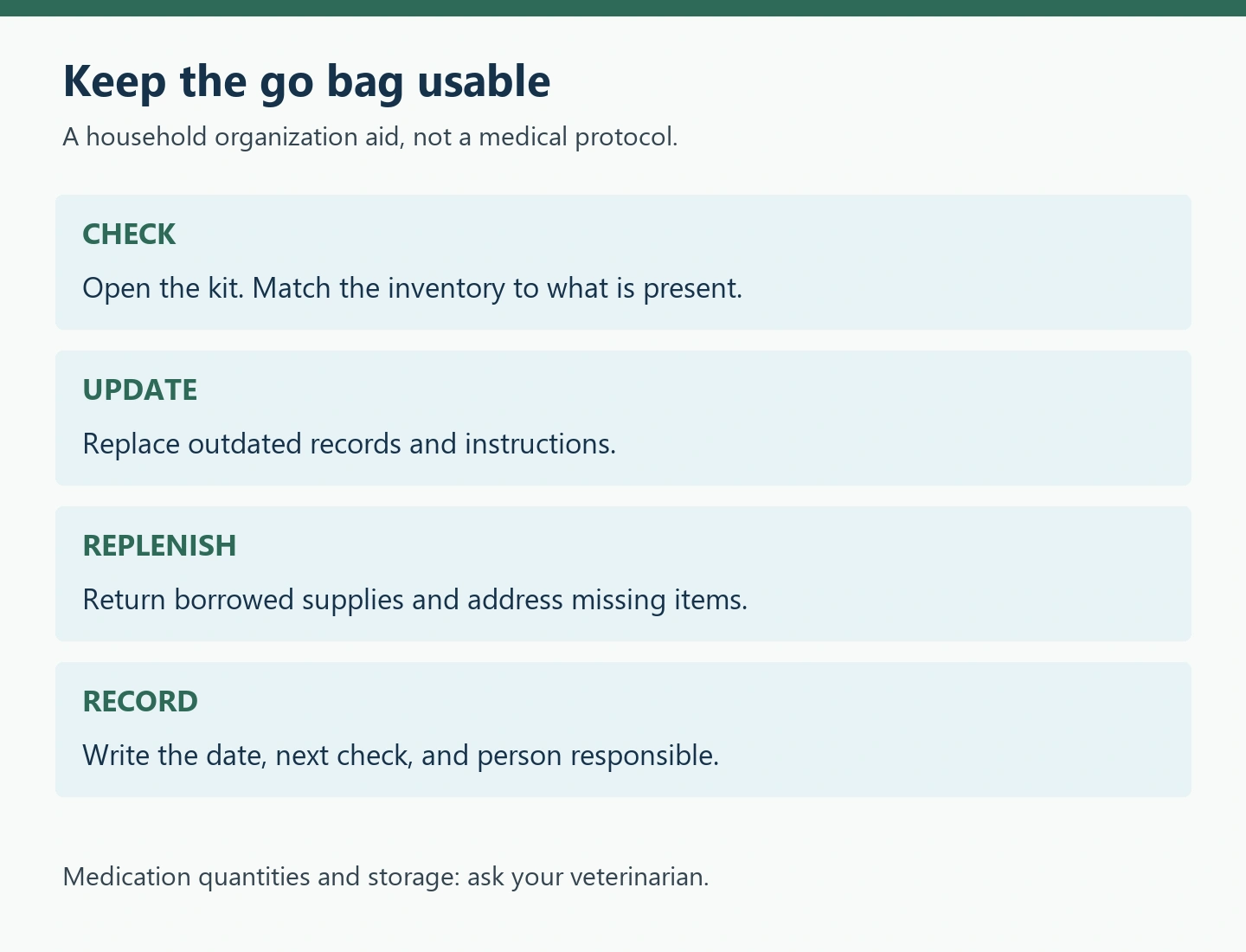
Open the kit and inspect the actual contents. Check dates, packaging condition, legibility, and whether the inventory still matches what is present. Replace unsuitable or expired items as appropriate and follow their storage instructions. Ask the veterinary team before deciding whether a medication should be retained or replaced.
Rotate usable everyday supplies into normal use before their dates when appropriate, then replenish the bag. Do not leave a checked box beside an item you borrowed and never returned. Put the next review date on the inventory and give unresolved tasks a named person.
Finish with a calm human walkthrough: can the assigned caregiver locate the bag, find the list, and account for the equipment stored separately? Do not create an emergency or force a frightened or painful dog through a test. Our senior multi-pet emergency guide adds household considerations when older dogs share the home.
Owner tool
Use a readiness worksheet with honest gaps
Copy these headings onto the kit inventory. Write what is missing as an open task; a partly filled bag is a useful start, not proof that every need is covered.
| Check | Record | Action if missing |
|---|---|---|
| Food and water | Amount, planned period, storage and dates | Resolve quantities and replenish |
| Equipment | Fit, condition, separate carrier location | Replace or arrange suitable transport |
| Documents | Current records, photos and contacts | Request updated copies |
| Medication | Veterinary instructions and grab location | Ask the clinic about continuity |
| Sanitation | Cleanup supplies and familiar bedding | Add suitable items |
| Handoff | Caregiver, last check and next review | Confirm access and ownership |
Before calling the kit ready, point to every item on the list. If a supply must come from another room, leave that task visible. The aim is a usable handoff, not a perfect-looking checklist.
Better questions, calmer next steps
Ask your veterinarian about the individual parts
- What prescription supply and storage arrangements are appropriate?
- What should we do if a refill, dose, or required storage condition is disrupted?
- What food, handling, or transport needs should a temporary caregiver know?
Bring the inventory and a current medication list. For a dog with physical limitations, use our joint and mobility emergency guide alongside individualized veterinary advice.
FAQ
Can I use a bag I already own?
Yes. Check that it holds the intended supplies, closes securely, and can be carried by the assigned person. Organizing and maintaining the contents matters more than choosing a bag marketed for emergencies.
What should I do with an old medication instruction sheet?
Obtain current directions from the veterinary team and replace the outdated caregiver copy. Keep one clearly dated current set in the kit so a helper does not have to choose between conflicting instructions.
Does completing the worksheet certify the kit?
No. It records household preparation and remaining tasks. It cannot certify safety, guarantee supplies, or confirm that a destination will accept your dog.
Sources and limits
Direct sources checked October 21, 2026. These support general preparedness categories and urgent-care limits, not certification of a particular kit or individualized treatment.
- CDC: Pet Disaster Kit. Supply categories, records, and a two-week planning example.
- Michigan State Police: Kit Checklist. Regular supplies, equipment, comfort items, and contacts.
- Michigan State Police: June 2026 preparedness message. A differing supply-duration example.
- AAHA: Help! Is This a Pet Emergency?. Signs requiring urgent veterinary attention.
Not yet medically reviewed.
Start by gathering one supply group and writing down what is missing. Then make the bag and its last-minute list easy for your trusted caregiver to find.
