

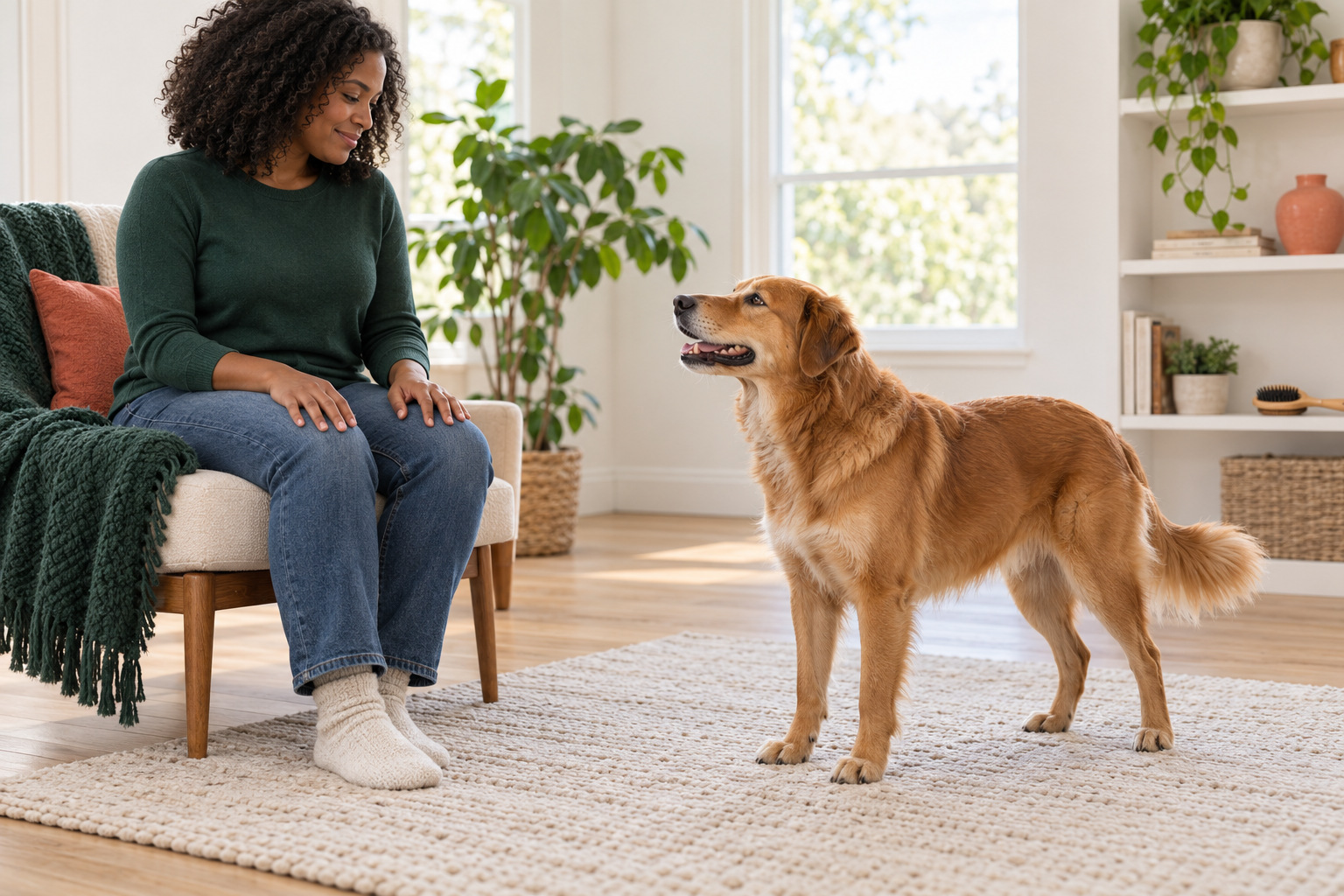
You put the brush down, your dog notices it, and the room changes. Perhaps they drift behind the sofa. Perhaps they stay beside you, but their body becomes unusually still. You wanted an ordinary bit of care, not another difficult negotiation.
Cooperative grooming offers a different question: what can your dog willingly participate in today, and what should happen when they need a pause? The aim is not to disguise a full grooming session as a game. It is to make the limits of a small practice clear enough that you can respect them.
This guide helps you separate optional learning from care that cannot safely wait. You will plan a suitable place, choose a modest interaction, and decide how to stop without turning the pause into a struggle. It is part of HPE’s Care & Safety guides, not a substitute for your veterinarian, a qualified behavior professional, or a groomer working within their skills.
You do not need to complete a full groom to make a thoughtful decision. Sometimes the useful outcome is a smaller practice. Sometimes it is recognizing that the next step belongs with a professional.
What cooperative grooming means, and what it does not
In professional cooperative-care teaching, animals learn ways to participate in handling and care rather than simply being kept still. AVSAB-hosted teaching materials describe trained participation behaviors and pauses when that participation ends. These are learned arrangements, not a special ability an owner can assume their dog already understands.
At home, keep three ideas separate: being near the equipment, accepting a particular familiar interaction, and being ready for a complete grooming task. One does not automatically establish the others. A dog standing on a rug has not agreed to everything in the grooming basket.
HPE uses the word choice in a practical, limited sense here: optional practice should have an available way to disengage, and you should not turn disengagement into an excuse for restraint. A dog cannot give human informed medical consent. Nor can this article teach every behavior needed for veterinary or complex grooming care.
Think of this as a planning framework, not a test of obedience. You are deciding what is appropriate to offer, how clearly the dog can participate, and whether you are the right person to continue.
Reward-based does not mean persuading at any cost
The American Veterinary Society of Animal Behavior recommends reward-based training and rejects aversive methods. That supports a humane approach; it does not guarantee that a particular dog will accept a brush, that a session will progress, or that an untrained owner can safely complete needed care.
For this guide, the important boundary is straightforward: do not lure your dog into a place and then block the exit to finish the job. Do not punish them for leaving. A reward should not become a reason to ignore the limits of the interaction you planned.
If an earlier grooming experience went badly, you have not missed a deadline for doing better. Begin by changing the decision you control now: whether to attempt a task, make it smaller, or ask for help.
First decide: practice, or care that needs to happen?
Before opening the grooming kit, name today’s purpose. Optional practice and necessary care are different jobs. Confusing them can leave you trying to teach a new skill while also feeling that you must finish immediately.
A practice goal might be spending time in a familiar place while the brush remains put away nearby. It might be repeating a small interaction that your dog already finds comfortable. It is not automatically a bath, a nail trim, or removing a difficult mat.
If you are concerned about pain, injury, a skin problem, or care that cannot wait, contact your veterinarian or the appropriate professional rather than treating this guide as a way around that need. Do not keep postponing necessary care while hoping training will catch up. The professional can help decide how the immediate task and later learning should fit together.

Use a practice, pause, or professional-help card
The following is an HPE editorial decision aid, not a validated behavior assessment. It is meant to keep the plan modest and make the next decision easier to explain.
- Practice: The task is optional, the setting is appropriate, and you can offer a small, familiar interaction without needing to finish a larger job.
- Pause: You are unsure about the response, the dog disengages, or the plan has become more demanding than intended. Put the task aside rather than repeating the request until the dog stays.
- Professional help: Care may be painful, is not safely manageable at home, is time-sensitive, or repeatedly creates substantial difficulty. Explain the concern and ask for an individual plan.
Write the purpose in ordinary language. “Check whether we can share the grooming area comfortably” is clearer than “fix grooming anxiety.” The first describes an optional activity. The second suggests a diagnosis and a result that this practice cannot establish.
You can also name what will not happen. For example: “The brush can be present, but I will not try to brush today.” That boundary helps everyone in the household avoid turning a short introduction into an unexpected full session.
Prepare a place that leaves room to disengage
Choose a practical location before asking your dog to join you. This is not about buying a special station. It is about whether the space suits the dog, the person, and the small activity you have chosen.
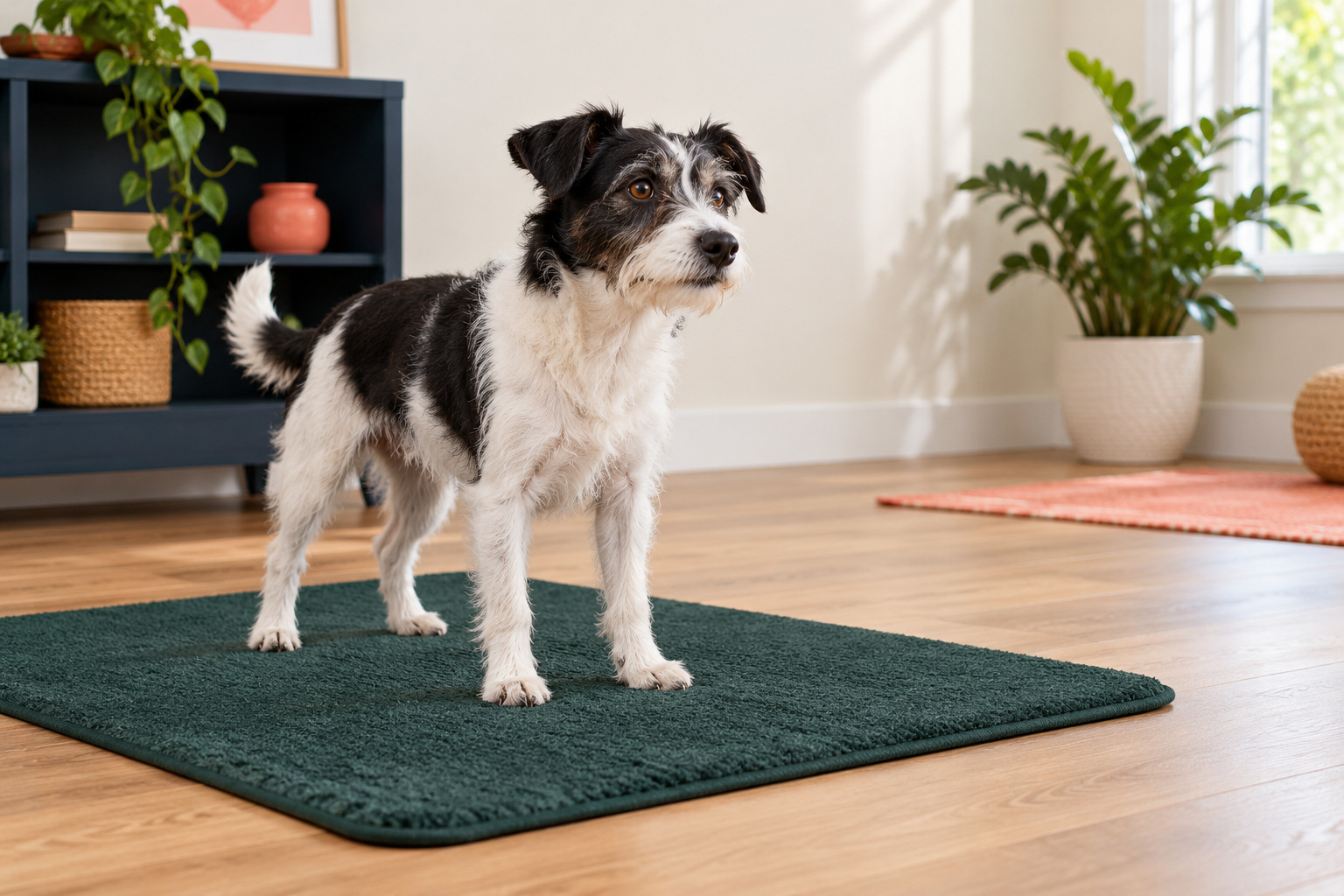
AAHA’s lower-stress clinical handling guidance includes nonslip surfaces. Applying that idea to an ordinary home setup, look for stable footing rather than a surface that shifts under the dog. A familiar floor-level area can be easier to organize than lifting a dog onto furniture. This is a home-planning application, not a clinical handling protocol.
Make sure the arrangement does not depend on cornering the dog. Notice where your own legs, a wall, an open cabinet, or another household member might unintentionally close the route away. Do not turn a designated mat into a place the dog is physically prevented from leaving.
Keep the supplies smaller than the whole grooming job
Put out only what belongs to today’s plan. If the purpose is getting comfortable with the setting, an entire collection of brushes, clippers, bottles, towels, and tools can distract you from that purpose.
For an introductory setup, your list may be as simple as a stable surface, a familiar item you actually need, and an appropriate reward plan. Keep equipment unused until you have decided whether introducing it is part of the current activity. Tool selection for a particular coat or condition belongs with appropriate grooming advice; an unfamiliar tool is not automatically a suitable next step.
Rewards need to fit the individual dog and household. AAHA specifically cautions about food allergies and situations in which food increases aggressive behavior. If dietary restrictions or food-related concerns apply, ask the veterinary or behavior team what is appropriate. Do not change a prescribed diet or experiment with rich foods to make grooming happen.
You do not need a product haul before beginning to plan. The most useful preparation may be putting an unsuitable item away and choosing a quieter moment when you are not trying to get out of the door.
Agree on the household version of the plan
If more than one person cares for the dog, share the same small purpose. One person should not be teaching that leaving ends the practice while another follows the dog with the brush to finish.
A useful handoff is brief: what is being offered, what is outside today’s scope, and what everyone will do if the dog disengages. This is not a request for everyone to interpret subtle behavior perfectly. It is a way to prevent contradictory handling choices.
Offer one interaction, not a hidden sequence
A small interaction should stay small. Do not make a familiar touch the opening move in a longer grooming sequence the dog has not learned to participate in.
For example, suppose your dog is comfortable sharing a familiar floor area while you sit nearby. You could choose to keep that as the whole activity. You do not have to add a brush simply because the first moment went smoothly.
If your dog already has a participation behavior taught with a qualified professional, use the individual plan you learned rather than replacing it with an improvised version from an article. Different tasks may need different preparation. A stationing behavior does not make every handling task interchangeable.
A brush introduction is an example, not a full brushing lesson
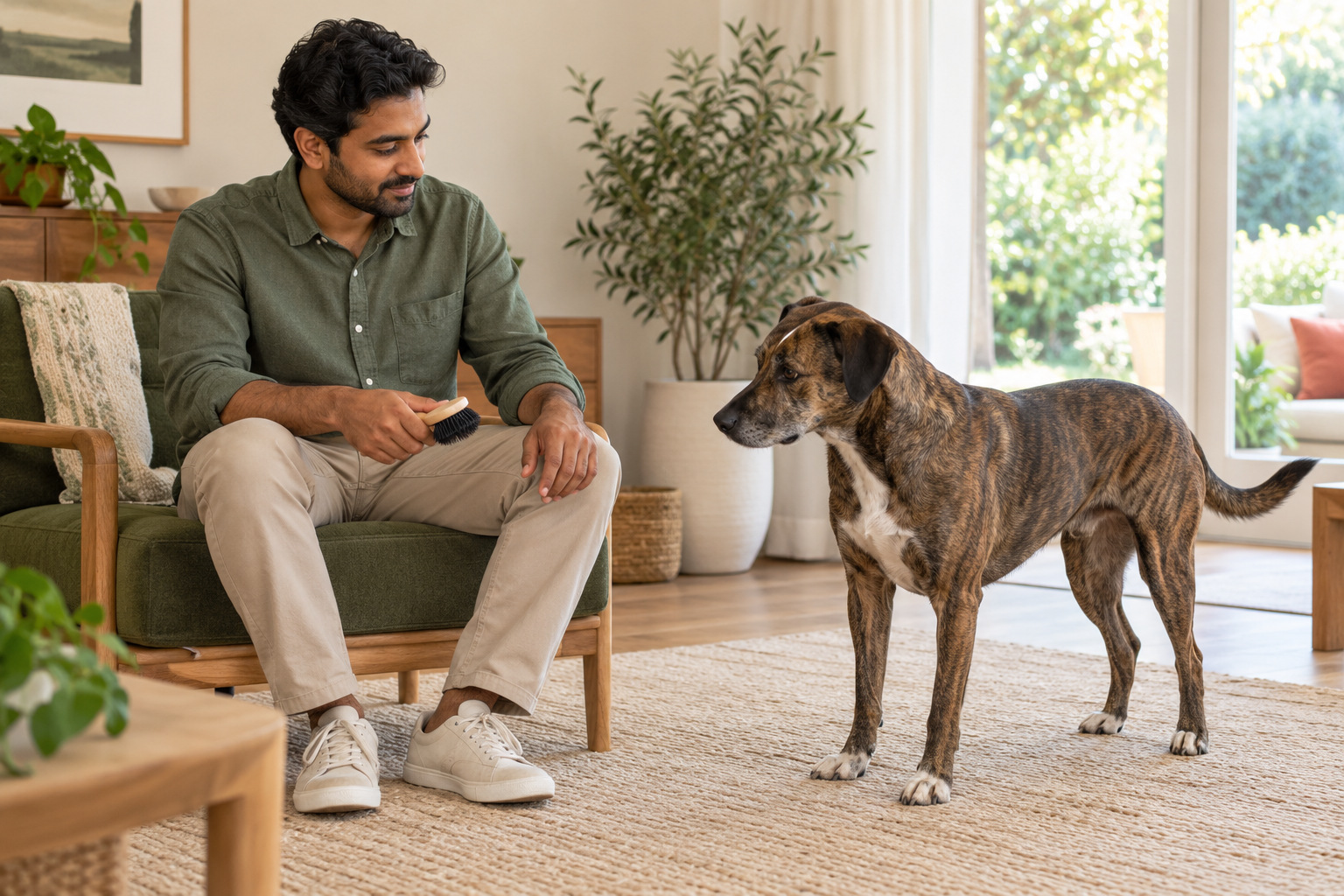
The Fear Free grooming handout hosted by the University of Illinois separates exposure to a tool from later handling steps. That distinction is useful here: seeing equipment and experiencing its contact are not the same event.
In this introductory example, the brush can remain visible and unused while you consider whether this is an appropriate setting for learning. You are not required to move on to touching the dog, brushing a body area, or completing a coat-care task. Ask a qualified professional for help if introducing equipment is already difficult.
Do not copy a nail-care method onto brushing, or transfer a brush exercise onto ears, paws, painful skin, or another sensitive task. This article does not supply cutting, grinding, restraint, or treatment instructions.
If you need the broader overview of hygiene tasks and their limits, HPE’s dog grooming and hygiene guide is a separate read. Here, the job is deciding how to offer optional participation, not completing the full checklist.
Make a pause real
A pause has to change what you do. If the dog moves away and you immediately follow, reposition them, and restart the request, you have not really paused the optional task.
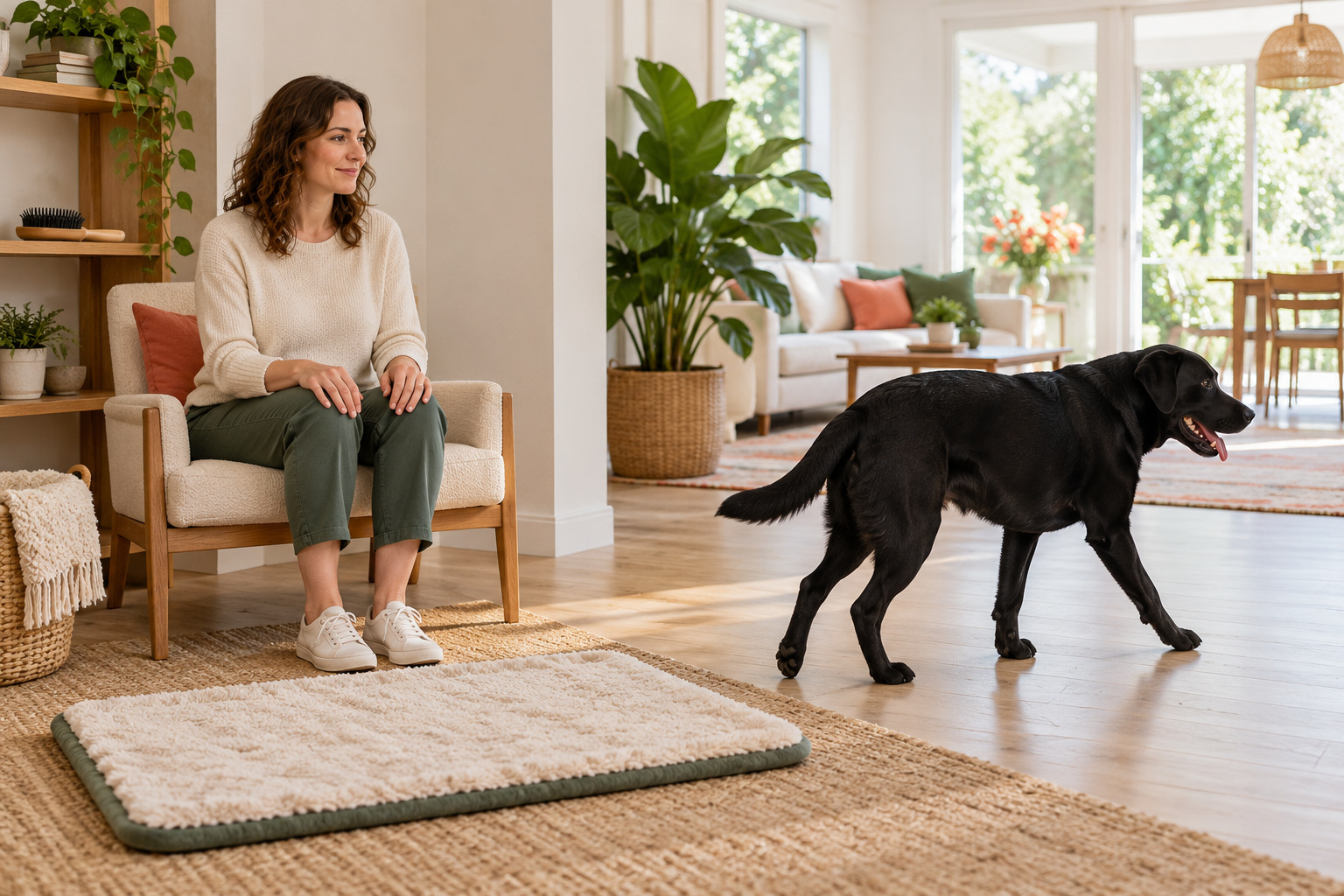
Put the equipment aside. Give the interaction room to end. You do not need to immediately test whether the dog will return, or turn one pause into repeated offers that become more insistent.
Ending the activity does not mean isolating the dog, withholding normal care, or becoming cold toward them. Keep ordinary household life ordinary. Optional grooming practice should not become a contest over who gets the last word.
Stillness is not enough information
AAHA lists freezing, avoidance, and other changes among nonspecific signs of anxiety or distress. These signs need context. A single posture cannot diagnose fear, pain, or a medical condition; equally, an absence of struggling does not prove that handling is comfortable.
When you are uncertain during an optional task, you do not need to settle that uncertainty by continuing. You can stop and describe what happened to a qualified professional. “They became very still when the brush appeared” is more useful than claiming either “they consented” or “they are being stubborn.”
Food acceptance is not a certificate that every next step is appropriate. Keep the decision tied to the whole situation and the limits of your current plan, not one convenient response.
Change the plan rather than raising the stakes
Consider what made the activity harder to organize. Were you trying to finish before an appointment? Was another person adding steps? Had the practice quietly become a complete groom?
These questions examine your setup, not your dog’s character. A smaller next plan might involve fewer supplies, a clearer purpose, or a conversation with a professional before any further practice. There is no required number of attempts to complete before you are allowed to ask for help.
Know when home practice is not the right next step
If a familiar interaction suddenly changes, or handling is associated with apparent discomfort, discuss it with your veterinarian. AAHA’s behavior-assessment guidance includes concerning reactions and changes that merit assessment. That does not mean every decision to walk away has a medical cause.
Repeated difficulty, substantial distress, or concern that someone could be hurt is a reason to seek individual help rather than escalating restraint. A veterinarian can assess health concerns and advise on the appropriate care team. A reward-based professional can help with training within their qualifications, while an experienced groomer can explain what is and is not safely manageable for the grooming task.

Ask practical questions before booking: “Can we discuss handling limits before starting?” “How do you respond if my dog cannot continue?” “When would you stop and refer us to a veterinarian?” You are looking for a clear plan, not a promise that every dog can finish every service.
If professional care is needed now, say so. Do not conceal the urgency behind a training request, and do not assume an appointment for learning can substitute for assessment. The team needs to know whether you are planning for future care or trying to meet an immediate need.
This guide does not provide emergency triage. If your dog is injured, appears seriously unwell, or you believe the situation is urgent, contact your veterinarian or an emergency veterinary service promptly.
Frequently Asked Questions
Is standing on a mat permission for every grooming task?
No. A location and a learned participation behavior are not the same thing, and a trained behavior is not blanket permission for every task. Your dog may be familiar with one interaction in one setting while needing different preparation for another. Keep the planned activity explicit, and do not add handling simply because the dog remains nearby. If you are using a method taught by a professional, follow the individual arrangement and its pause rules rather than assuming the mat itself makes the handling cooperative.
What if my dog stays still but looks uncomfortable?
Do not use stillness alone as a reason to continue optional grooming. You may be seeing something that needs more context, and an article cannot interpret the whole situation for your individual dog. Put the task aside rather than trying to prove that the response is harmless. Describe the change in ordinary words to your veterinarian or qualified behavior professional, especially if it is new or happens with particular handling. You do not need a diagnosis before deciding that an optional practice can stop.
Should I keep asking after my dog walks away?
Not as a way to complete the same optional task. A pause becomes confusing when leaving is followed by being called back repeatedly, followed with equipment, or physically repositioned. Let the activity end and keep everyday interaction normal. Later, consider whether the original purpose was too broad or whether you need help planning an appropriate starting point. This is not advice to leave necessary care undone. When care cannot safely wait, contact the relevant professional instead of trying to turn repeated requests into a solution.
Can I start before buying special equipment?
You can start by clarifying the purpose, checking the space, and deciding what should not happen. Those are planning tasks, not purchases. A special mat, branded pouch, or collection of grooming tools does not establish readiness. If equipment is needed later, choose it for the actual dog and task with suitable professional guidance. Avoid borrowing an unfamiliar tool just to begin sooner. This article deliberately includes no required shopping list: the useful first step may be removing an unnecessary item from the plan.
What if my dog has food restrictions or reacts around treats?
Keep the veterinary diet and the individual safety plan in place. Do not introduce foods that conflict with known restrictions, and do not assume that a more tempting reward will solve a difficult handling situation. Ask the veterinary or behavior team how rewards should be managed for your dog, including whether food is appropriate in that setting. If food creates tension or risk, do not rehearse that problem while trying to groom. An online example cannot choose a suitable reward or handling plan for an individual animal.
What if grooming cannot safely wait for training?
Tell the appropriate professional that there is an immediate care need as well as a handling concern. They can help determine what needs assessment, what service is appropriate, and how later training fits around it. Do not postpone care indefinitely, attempt an unfamiliar procedure, or improvise restraint because optional practice has not progressed. Cooperative-care learning can remain a future goal without becoming a condition your dog must meet before receiving help. This guide does not replace a veterinarian’s decisions about pain, medical care, or urgent problems.
What is a useful first step if a complete groom feels impossible?
Choose one decision you can make without handling the dog: whether today’s goal is optional practice or a professional-care conversation. If it is practice, write down one modest purpose and what will remain outside that purpose. Check that the setting offers stable footing and room to disengage. You can stop at that preparation stage; there is no requirement to introduce a brush immediately. If you are unsure what interaction is appropriate, ask for an individual plan before trying to build a complete sequence at home.
What to do next
Before your next grooming attempt, choose one of three directions: a modest optional practice, a genuine pause, or professional help. Write that decision down in a sentence the next caregiver can understand.
Then make the setup match it. Leave unnecessary equipment put away. Keep the route away open. Be clear about what will not be attempted. If the task needs professional care, make that call rather than adding another home experiment.
For the wider picture, return to the grooming and hygiene overview or explore HPE’s Care & Safety resources. This guide covers participation decisions, not every technique those wider tasks might require.
You do not need to prove that you are a good caregiver by finishing a full groom today. A clear limit, a smaller plan, or a timely request for help can be the thoughtful next step.
Sources and scope
- AVSAB: Position Statements and the 2025 humane-training clarification.
- Kristen Klebba, LVT, VTS (behavior): Cooperative Care: When to Touch and Poke? Professional teaching slides hosted by AVSAB, October 2024.
- AAHA: Handling anxious or reactive patients. Veterinary-setting guidance; clinical restraint methods are not adopted here.
- AAHA: Tips for reducing patient fear in the veterinary clinic.
- AAHA: Concerning Behaviors that Require Assessment.
- Fear Free Happy Homes: Nail Trims: Trimming Away the Terror. Hosted by the University of Illinois; hosting does not imply university authorship. Only the broad distinction between tool introduction and handling informs this article.
Educational information only, not veterinary diagnosis, treatment, or an individual behavior plan. The decision card and home-planning examples are HPE editorial tools, not validated assessments or a clinical protocol. Not yet medically or behavior reviewed.
