

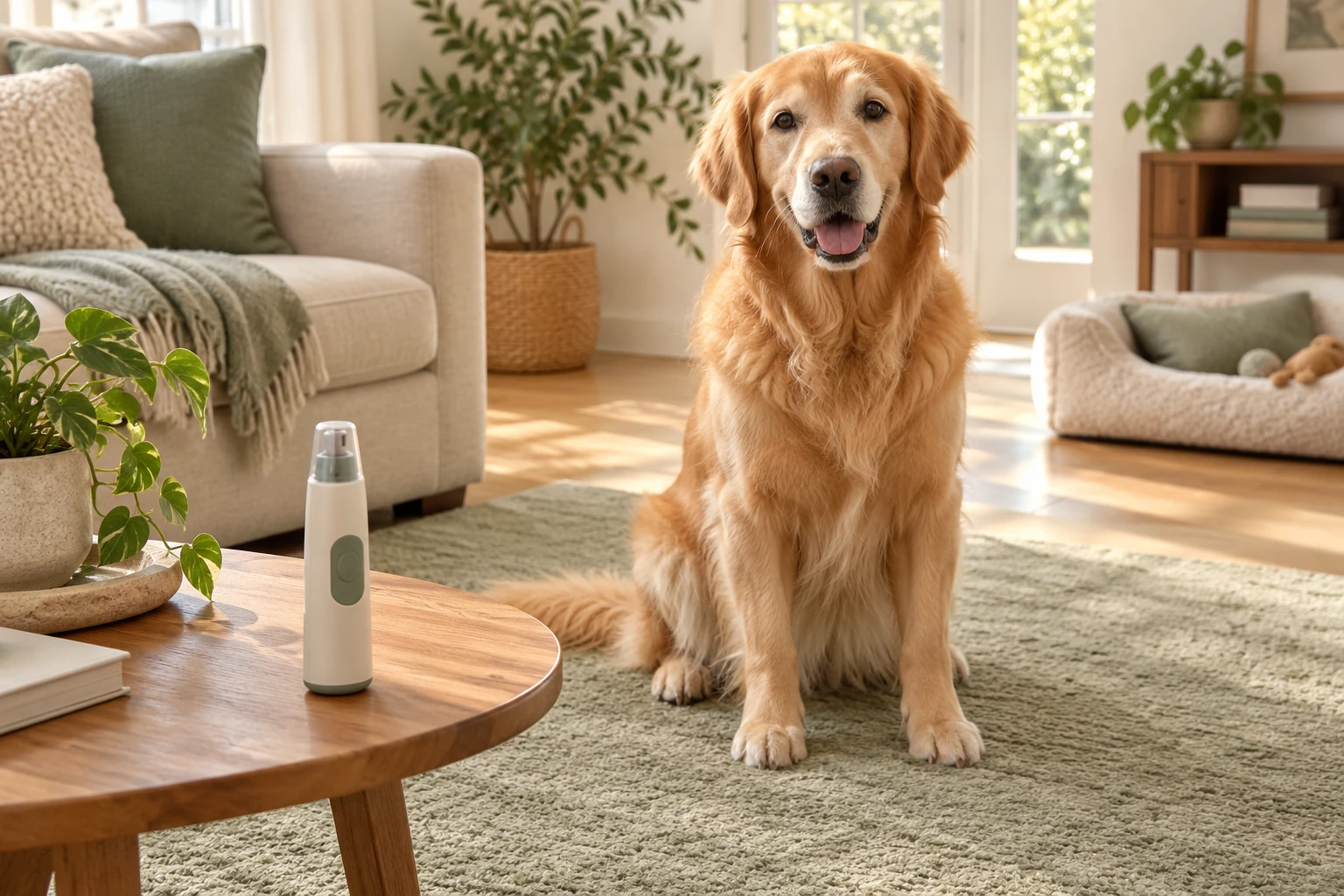
You put the new nail grinder on the counter, and your dog is already watching it. Perhaps the last nail-care attempt ended with both of you tense. Perhaps nothing difficult has happened yet, but the little motor seems like a lot to introduce alongside someone lifting a paw. You do not have to find out how your dog feels about all of that at once.
There is a useful place to begin before the grinder touches a nail: noticing the tool while it is off, then considering its sound as a separate experience. This guide is about that introduction only. It is not a grinding lesson, a trimming schedule, or a promise that a dog who tolerates the noise will be comfortable with nail care.
Our cooperative grooming guide explains the broader approach to care built around pauses and choice. Here, the smaller question is practical: how can you introduce an unfamiliar object without turning the introduction into a surprise procedure?
Review status: Not yet medically or behavior reviewed. This is general educational information, not an individual training, veterinary, or nail-care plan. If there is pain, an injured nail, a sudden behavior change, or a risk of biting, stop home practice and contact your veterinarian.
Separate the object, the sound, and the actual nail care
A switched-off grinder is an object. A running grinder adds sound. Bringing it toward a paw adds proximity and movement, and using it adds contact. It is tempting to treat those as one task called getting the dog used to grooming. Keeping them separate gives you a clearer question to answer.
For example, a dog might walk past the off tool without concern but leave when the motor starts. Another might ignore the sound from elsewhere yet move away when someone picks the tool up. Those observations describe different situations. Neither tells you that the dog is stubborn, and neither establishes that you can proceed to nail contact.
The Fear Free Happy Homes nail-care handout hosted by the University of Illinois separates seeing equipment from hearing it and from later handling. HPE uses that distinction here, not the handout’s entire procedure. In particular, this article does not provide a distance, duration, speed setting, or method for grinding nails.
Choose a smaller definition of progress
For this introduction, a useful observation could be that your dog notices the off grinder and then goes back to an ordinary activity. It could be that you discover the motor is currently too much. Both give you information without requiring a trimmed nail at the end.
A poor target would be to finish a certain number of nails because you have finally brought the equipment out. That turns preparation into a deadline. If nail care is already overdue or difficult, discuss the actual care needs with your veterinarian rather than asking a familiarization exercise to solve an urgent problem.
It can help to say the boundary out loud before you start: today, the tool will not touch a paw. That is an organizational choice for the person, not a training cue for the dog. It prevents a calm moment from becoming an invitation to add several harder steps.
Set up a place where leaving is genuinely possible
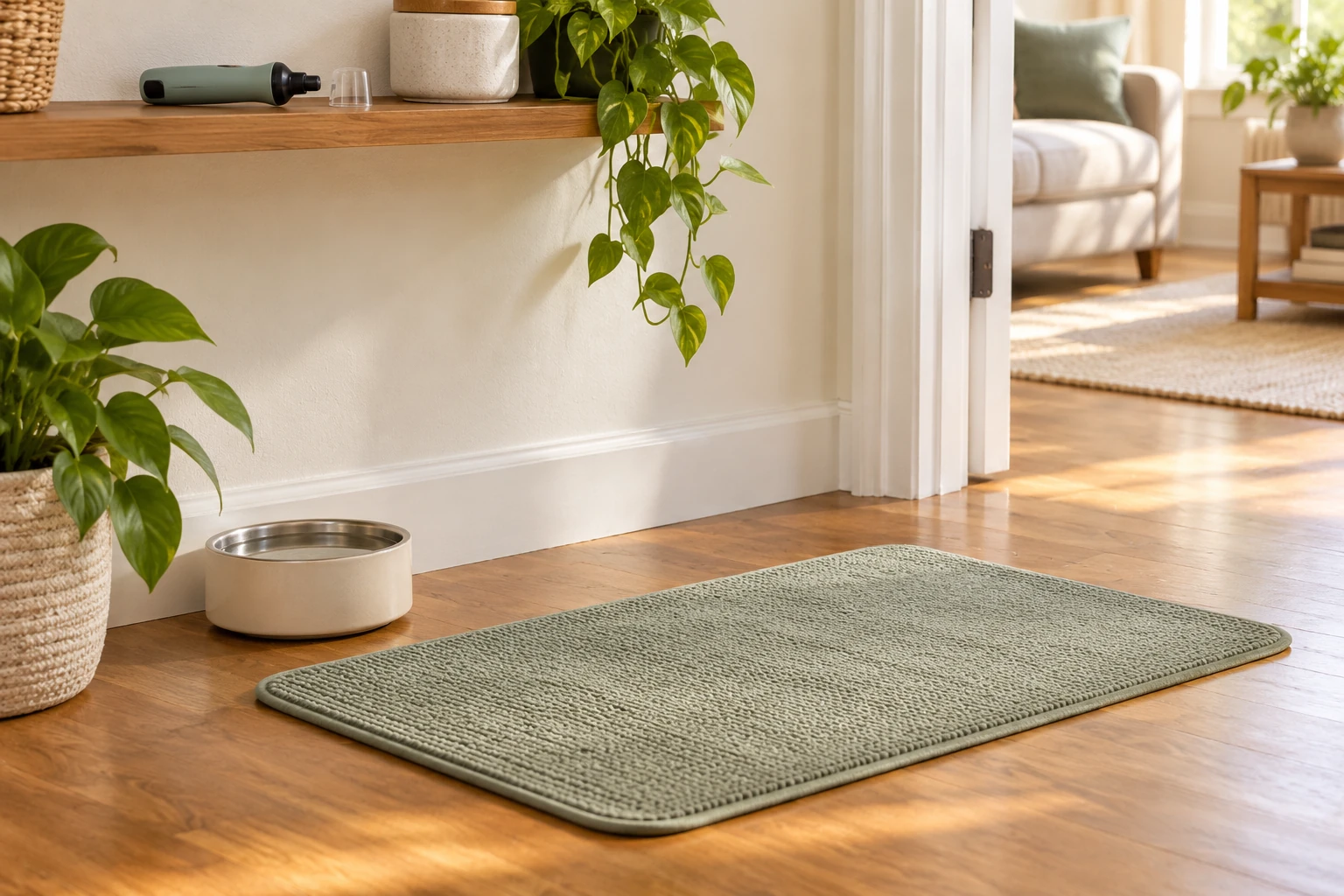
Use an ordinary, uncluttered area rather than creating a crowded grooming station. Think about the floor, the route out, where you will sit, and where the equipment will rest. If you need to shuffle furniture or search for the switch while your dog is watching, prepare those details without the dog present.
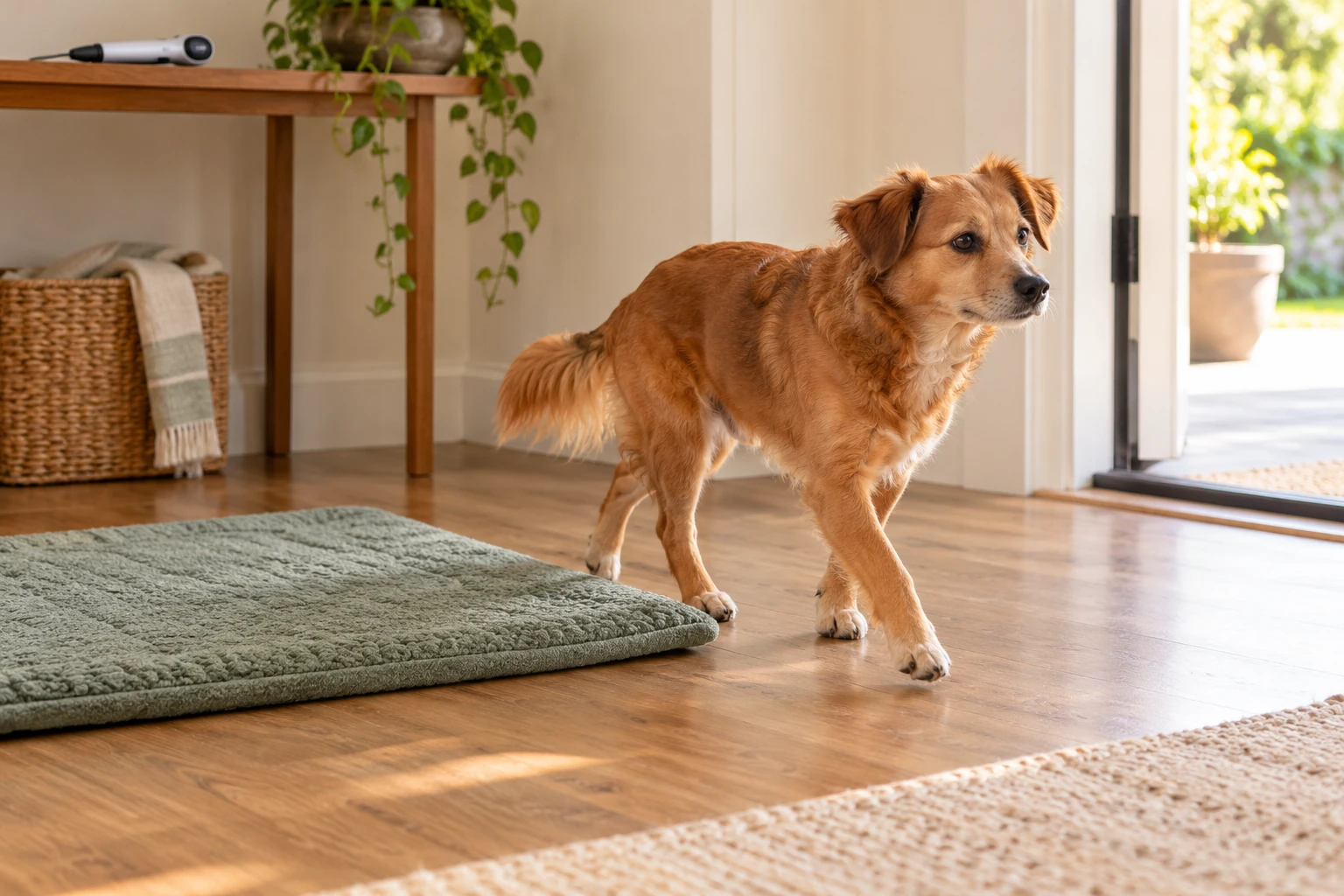
Secure footing matters. AAHA’s guidance on reducing fear in veterinary settings includes nonslip surfaces. At home, checking that a familiar mat stays flat is a sensible preparation step; the mat is not a guarantee of comfort and should not become a place the dog is forced to remain.
Leave an unobstructed route to an ordinary resting area. Do not back your dog into a corner, close a door to prevent departure, or have another person hold the dog in place for this exercise. If the room is not safe for free movement, choose another setup rather than adding restraint to make this particular activity possible.
Prepare the tool without making the dog your test subject
Read the manufacturer’s instructions yourself. Know how the device turns on and off, whether the switch can be bumped, and how its parts are stored. Inspect and operate unfamiliar equipment away from the dog first. Do not use your dog’s reaction as the way to discover an unexpected startup noise.
Keep the equipment out of reach between introductions. A grinder is not a chew toy or an object to leave loose in the dog’s bed. This article does not require your dog to sniff the grinding head, put a nose next to the motor, or approach the tool at all.
If food is part of your existing reward-based plan, use something compatible with your dog’s veterinary diet instructions and feeding needs. Food restrictions are a reason to ask your care team about suitable options, not to improvise rich treats. You can postpone this exercise while getting that advice.
Begin with the grinder switched off
Make the first question simple: what happens when the inactive tool is visible? Place it securely away from your dog’s body and chewing reach. Keep your own movements ordinary. You do not need to wave it toward the face, follow the dog with it, or tap a paw to demonstrate what will eventually happen.
Let your dog choose whether to look. Sniffing is not an assignment. If your dog notices the object and moves away, allow the departure and put the equipment away. If your dog ignores it, you can leave the observation at that. Ignoring the object is not a reason to manufacture a reaction.
The American Veterinary Society of Animal Behavior recommends reward-based training methods and rejects aversive methods. Applied to this small household task, that means there is no place for scolding, leash corrections, or forcing a closer approach because a dog has not investigated on command.
Keep rewards from becoming a way to trap the dog
Suppose your dog comes toward you because you have food. That approach does not answer whether the dog is comfortable with a grinder near a paw. Keep the introduction noncontact, even if the dog is happily accepting the usual reward. Do not use the moment to grab a leg.
An example of a modest observation note is: the grinder was off on the shelf; the dog glanced at it, remained loose, then went to the bed. That is more useful than writing that the dog passed. It records the setup and the response without assigning readiness for a different task.
If moving the off tool changes the response, treat that as a separate observation. The object resting on a shelf and an object traveling in your hand are not identical situations. There is no need to keep moving it to find the point at which your dog finally objects.
Treat the motor sound as a separate decision
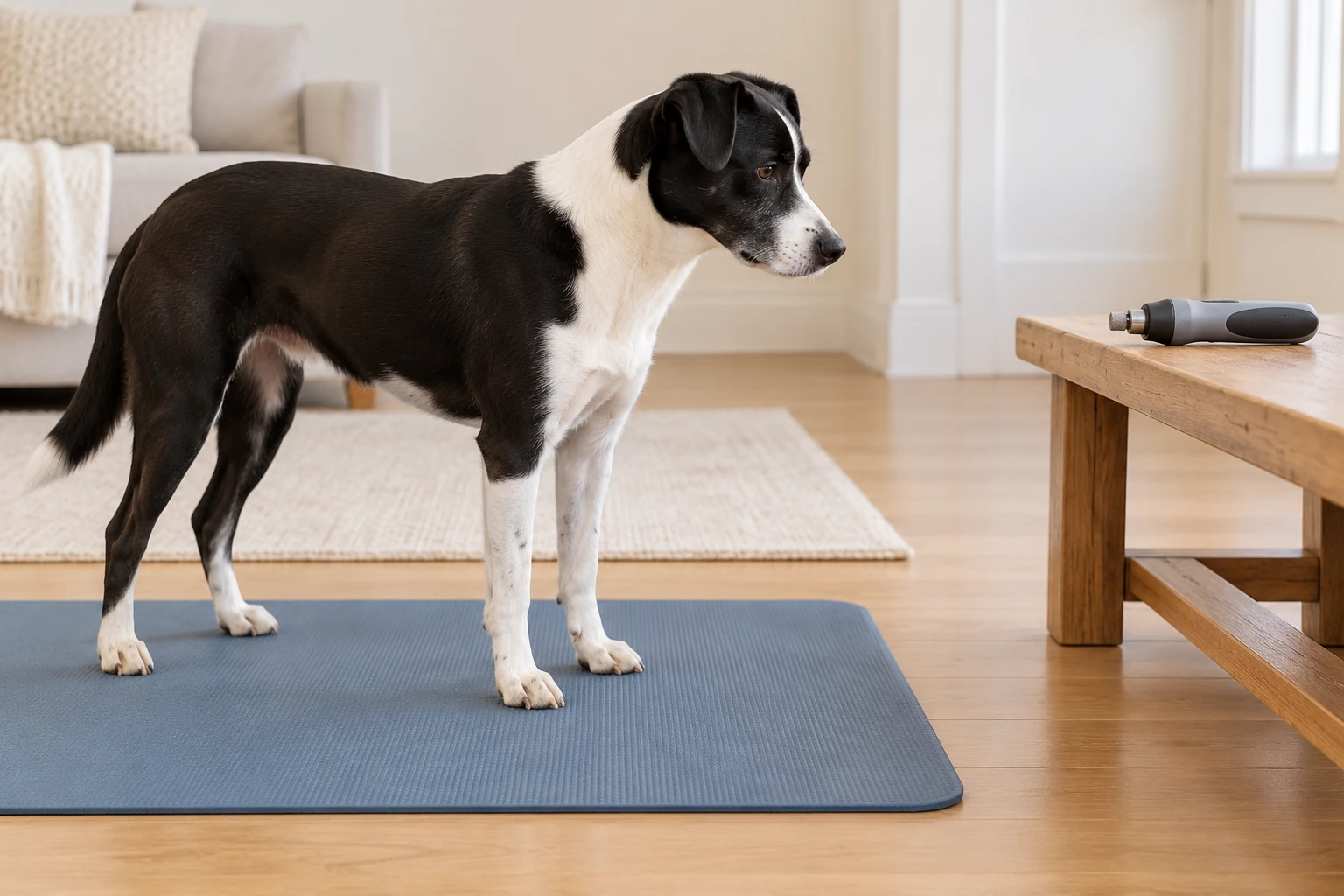
A comfortable encounter with the inactive grinder does not oblige you to turn it on. Consider the sound only when your dog is settled in the existing setup, you can stop promptly, and there is no unresolved pain or behavior concern. If you are uncertain about those conditions, get individual guidance rather than testing a bigger reaction.
Keep the device away from the body, and do not add paw handling. Choose a setup where the dog has space and you can operate the switch predictably. There is no universal number of feet or seconds that makes motor noise comfortable for every dog. The aim is not to reach a prescribed exposure length.
Notice what changes when the sound begins. Does your dog continue moving normally, or become still and watchful? Does the dog leave? A change that concerns you is a reason to switch off and stop, not a request to keep the motor running until the reaction disappears.
Do not turn a quiet response into permission for contact
A dog who remains in the room while the motor runs has experienced sound in that particular setting. That does not establish comfort with vibration, a paw being held, or a grinding head approaching a nail. Keep those later decisions outside this exercise.
Likewise, a label such as low noise, quiet, or beginner friendly cannot tell you how your individual dog will respond. This guide does not rank grinders or recommend a motor setting. Buying another device is not the automatic next step when the current introduction is difficult.
Do not use an unrelated online grinder recording as proof that the real device is familiar. A recording and the object in your room are different setups. If you discuss recordings with a qualified professional, record them as their own activity rather than treating them as a completed equipment introduction.
Know what will make you stop before you start
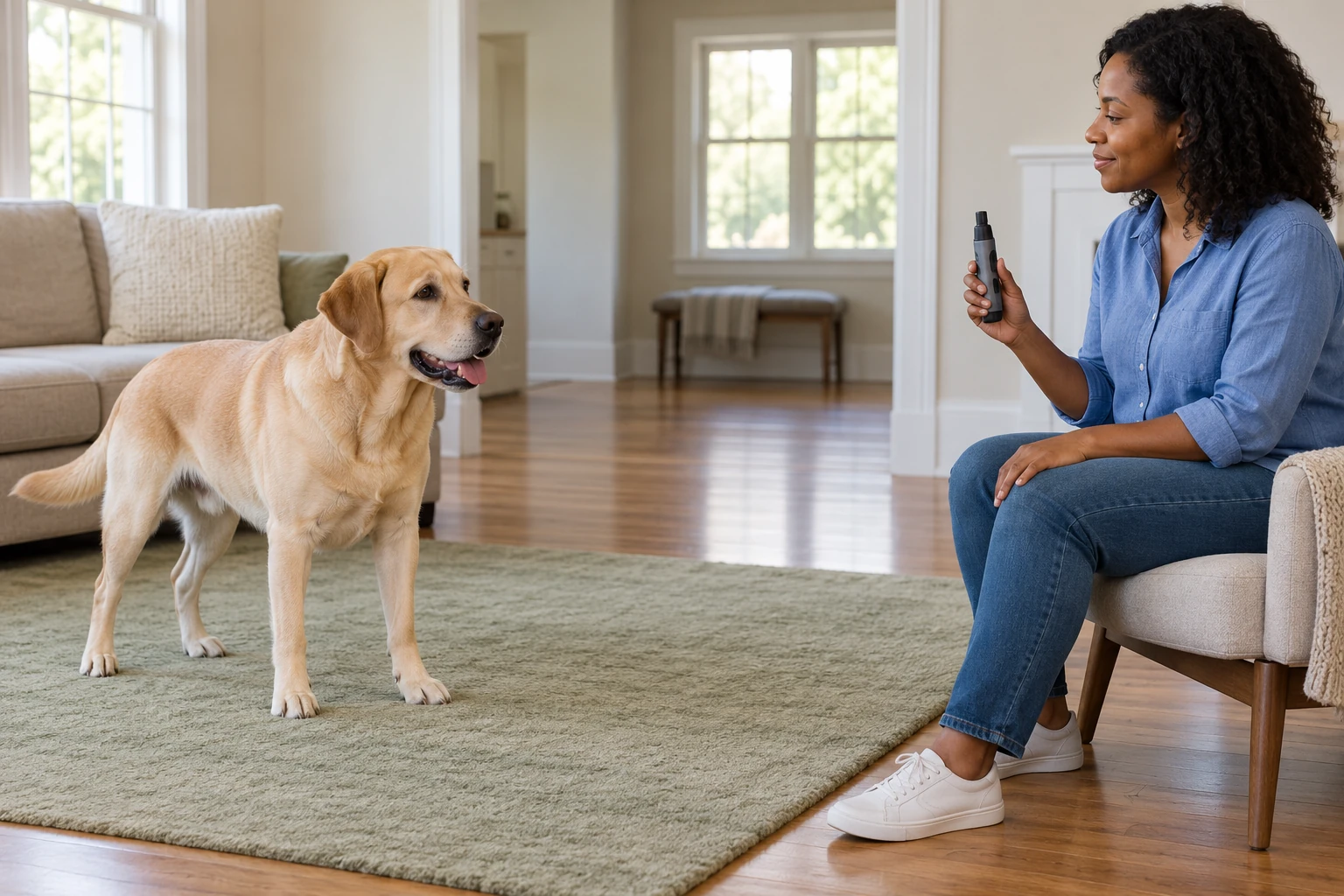
Watch the whole dog, not just whether the dog stays on the mat. AAHA’s list of nonspecific anxiety and distress signs includes freezing, turning away, trembling, attempted escape, and changes in eating. A single behavior is not a diagnosis; its context and changes from the dog’s usual behavior matter.
For this optional home introduction, you do not need a diagnosis before honoring a departure or stopping something that appears uncomfortable. Switch off, put the tool away, and give your dog space. Do not keep approaching to check whether the response will happen again.
If your dog becomes very still
Stillness is easy to misread when you are hoping the exercise is working. If the body has become rigid, the gaze fixed, or ordinary movement has stopped, do not assume cooperation merely because there is no bark. End the attempt and discuss concerning or recurring responses with your veterinarian or an appropriate reward-based professional.
If your dog leaves or declines the usual reward
Allow leaving. Do not follow with the grinder or use food to draw the dog back into the same setup. Declining food also deserves context: your dog may not be hungry, may dislike that food, or may have another reason. It is not a reliable pass-or-fail test, and increasing the value of food is not a substitute for reducing pressure.
If there is growling, snapping, pain, or a sudden change
Stop rather than punish or repeat the test. Keep people safe without reaching to seize a paw or the dog’s face. Contact your veterinary team about pain, a newly difficult response to handling, or any concern about a nail injury. A behavior plan should not be used to postpone assessment of a physical problem.
If nail care cannot wait, tell the clinic that home equipment practice is not currently comfortable. Ask how the necessary care can be arranged. You do not have to complete this exercise before asking for help, and this article cannot determine whether a particular dog needs treatment, medication, or a different handling plan.
Keep notes that make the next conversation easier
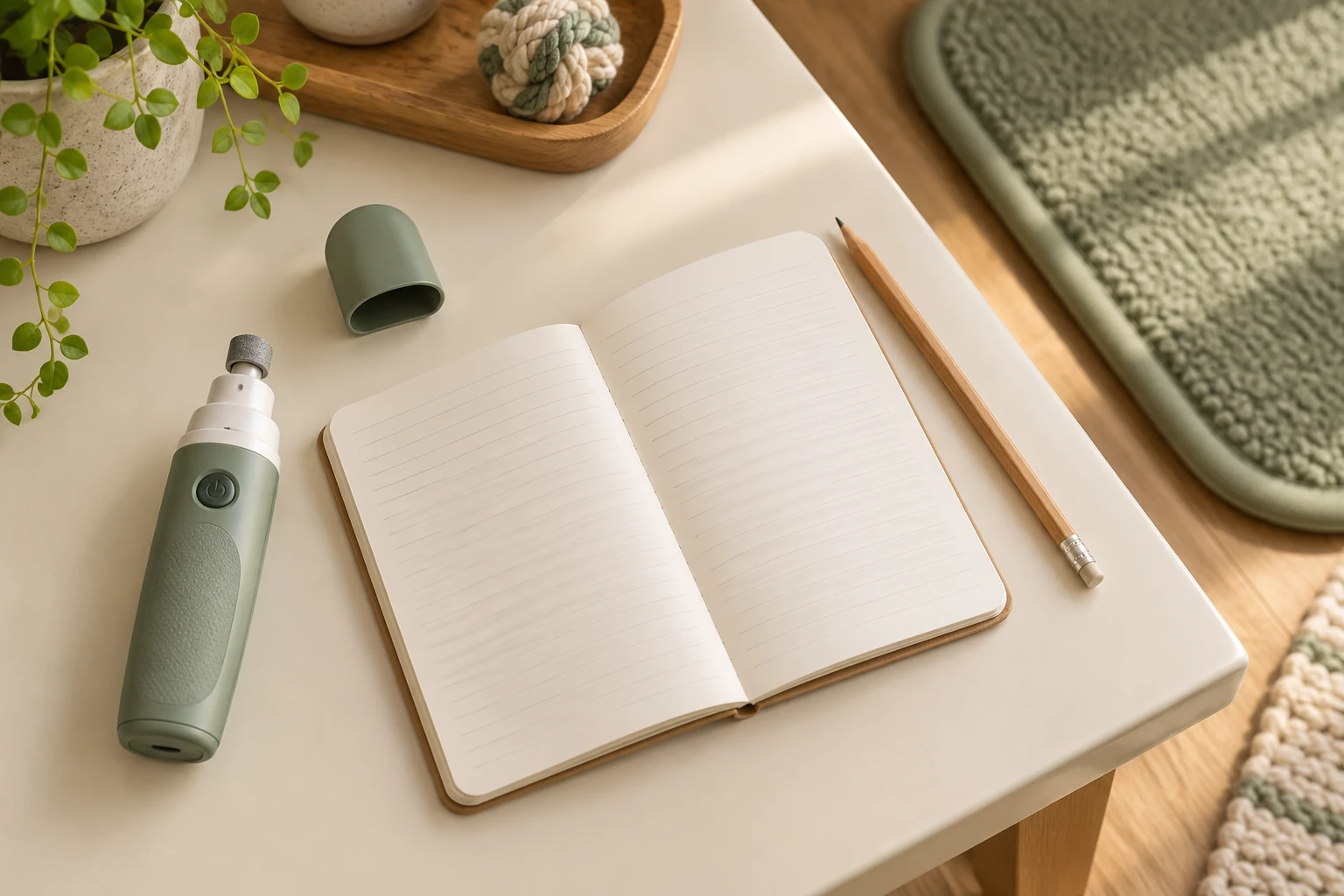
Useful notes describe an event rather than judge the dog. You are collecting information for your own decisions and, when needed, for the professionals helping you. A short factual record is enough; you do not need a complicated tracker or a video of a distressed dog.
- What was present: off grinder on a shelf, grinder picked up, or motor sound without contact.
- Where everyone was: the dog’s position, your position, the available exit, and any other pets or people nearby.
- What changed: a glance, departure, stiffness, return to an ordinary activity, or something you could not confidently interpret.
- What you did: put the tool away, ended the activity, or contacted the care team.
- What remains untested: sound, contact, paw handling, and nail care are separate entries, not automatic progressions.
For example: the dog stayed on the rug while the grinder was off; when I lifted it, the dog went to the doorway; I put it away. That note identifies the change in the setup. It does not claim that your dog will never accept a grinder, and it does not instruct you to repeat the same scene tomorrow.
A different note might say that another dog entered the room and the first dog became watchful before the motor started. That matters because the equipment was not the only thing changing. Keep uncertain observations uncertain instead of choosing the explanation that best fits your plan.
If you want to record video for a professional, ask what they need and keep safety first. Do not recreate a concerning reaction to obtain footage. Written observations can start the conversation without putting your dog through another attempt.
Frequently asked questions
1. Should my dog sniff the grinder before I switch it on?
Sniffing is not a requirement. Your dog can notice an inactive tool without touching it or coming close. Avoid directing the nose toward the grinding head, holding the object at the face, or leaving it where it can be chewed. If your dog does not investigate, do not treat that as a failed exercise. The useful question is how your dog responds to the setup, not whether a particular greeting behavior occurs. Sound remains a separate decision, not the reward for completing a sniff.
2. How many days should I spend introducing it?
This article does not set a daily schedule or a completion deadline. Your dog’s history, current care needs, and responses may make an individual plan important. A calendar cannot establish readiness for contact. If you keep encountering difficulty, or nail care is needed soon, speak to your veterinary team rather than stretching the introduction into an indefinite project. Bring your observations about the off tool and the sound separately. A professional can help decide what the next appropriate step is for your dog.
3. Is a grinder advertised as quiet automatically easier?
No label can establish your dog’s comfort. Quiet is a product description, not an assessment of your dog’s response or a guarantee of painless care. The sound, the moving object, and later physical handling remain different experiences. You do not need to purchase a new device merely to do this introduction. If equipment choice is part of an existing problem, discuss the actual device and your dog’s history with the professional helping you. Avoid treating a feature list as a behavior plan.
4. My dog takes food but looks tense. Should I continue?
No; eating is not a reason to disregard a tense body or a departure attempt. End this optional introduction and give your dog space. Food acceptance is one observation among others, not proof of comfort or consent to paw handling. Do not respond by offering richer food while moving the tool closer. Note what you saw and where the grinder was. If you are unsure what the body language means, ask for help before trying another equipment exercise.
5. Can I try a nail once the sound seems fine?
That is outside this guide. Familiarity with a sound does not establish comfort with vibration, physical contact, paw handling, or actual nail work. Keep this introduction noncontact even when it feels uneventful. Ask your veterinary team or a qualified reward-based professional about an appropriate next step, especially after a previous difficult trim. Our guide to introducing a chin rest also distinguishes a preparation behavior from permission to begin a procedure.
6. What if the tool already predicts a difficult experience?
Do not assume a new motor setting or a different color will resolve that history. If simply seeing the equipment leads to marked avoidance or distress, stop testing it and tell the professional helping you what happens. Include any previous pain, restraint, or injury that you know about without filling gaps with guesses. There may be several factors to assess. This article cannot prescribe a recovery protocol, and you do not have to prove that you tried hard enough at home before seeking help.
7. When is veterinary help more appropriate than more practice?
Contact your veterinary team for pain, an injured nail, a sudden change in handling tolerance, or any safety concern. Also ask for guidance when distress keeps returning or necessary nail care cannot wait. Tell the clinic that the current home setup is not comfortable; do not force a demonstration. Veterinary assessment and a behavior plan have different jobs, and you may need help with both. Nothing in this familiarization guide should delay appropriate assessment or required care.
What to do next
Choose one small task for yourself before involving your dog: read the device instructions, clear a comfortable space, or write down what happened during an earlier attempt. You do not need to switch the grinder on today. Preparing a predictable setup is useful work even when the dog never enters the room.
If you do introduce the inactive tool, keep the promise that it will stay away from paws. Let your dog’s response inform whether you stop, seek advice, or plan a different introduction later. A quiet moment does not need to be converted into a trimmed nail to count as worthwhile.
For the larger care routine, our low-stress grooming and hygiene guide puts equipment practice in context. The care and safety collection provides another route to related HPE guides. Neither replaces a plan tailored to a dog who is painful, frightened, or difficult to handle safely.
The point is not to persuade your dog that nothing happened when something did. It is to make your own next decision smaller and clearer: what was introduced, what you observed, and whether continuing is appropriate. Leaving the grinder put away can be the right next step.
Sources and editorial boundaries
Sources checked October 30, 2026. This educational article uses a reward-based, noncontact scope. It does not reproduce a full nail-trimming protocol or claim veterinary or behavior review of this article.
- AVSAB position statements: current reward-based training position and 2025 clarification.
- Fear Free Happy Homes, Nail Trims: Trimming Away the Terror: distinction between equipment sight, sound, and later handling; professional support when needed. Hosted by the University of Illinois; not authored by the university.
- AAHA Table 1: Common Signs of Anxiety/Distress: nonspecific signs interpreted in context.
- AAHA: Tips for reducing patient fear: secure, nonslip footing in clinical environments; the home setup here is an editorial adaptation.
