

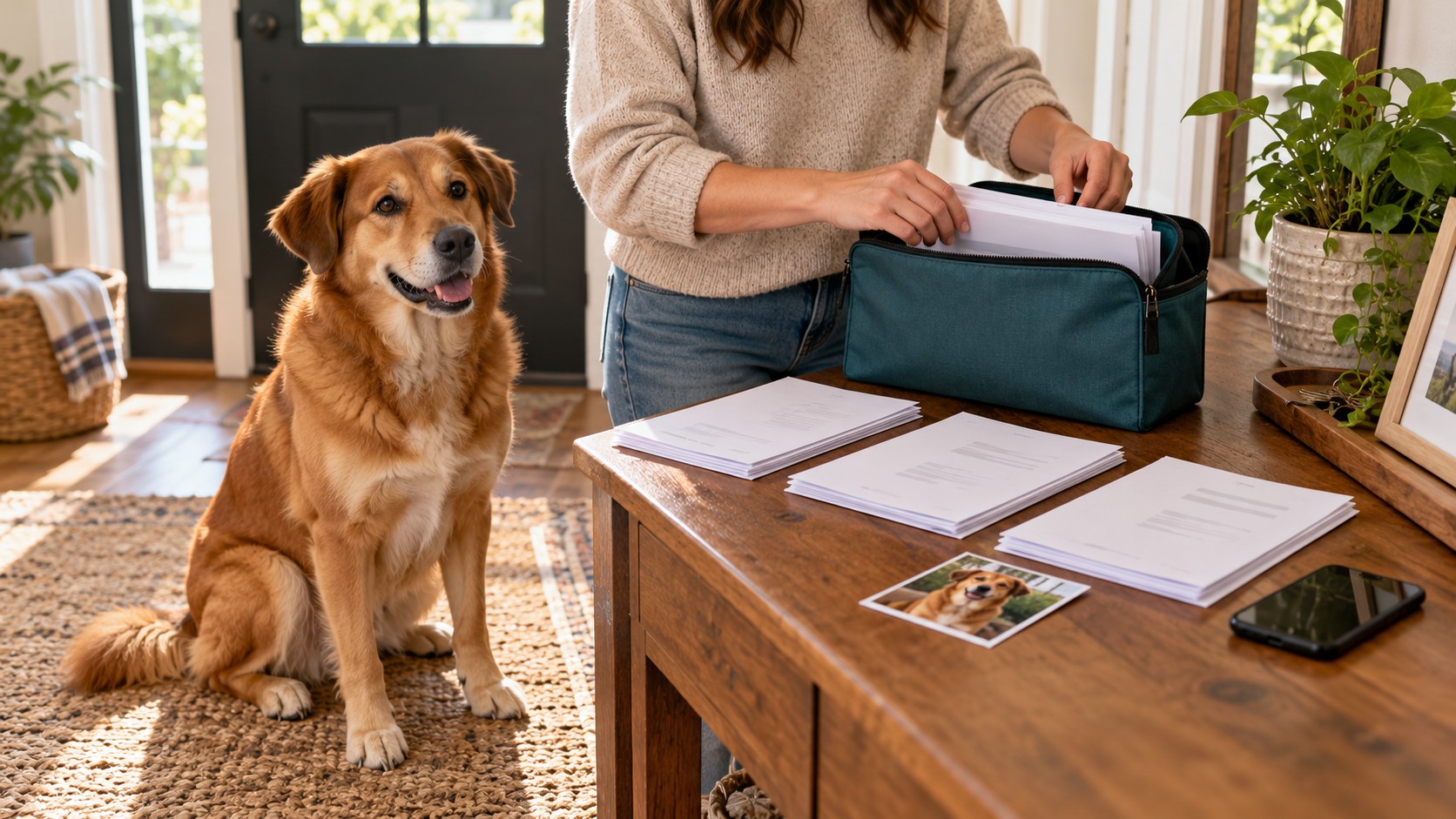
Prepare clear, current documents for your dog’s temporary caregiver or evacuation.
Short answer
Keep one current folder your backup caregiver can use
A dog emergency records folder brings your dog’s identity, veterinary documents, care instructions, and contact details into one portable place. Use readable copies, label them for the right dog, and check that a trusted caregiver can find them. Keep a protected paper set with your evacuation supplies and a digital backup you can actually open.
The goal is a clear handoff if someone else must care for your dog. A completed folder does not confirm shelter admission, authorize treatment everywhere, or replace veterinary advice.
Safety first
Urgent care comes before paperwork
Do not delay leaving an unsafe area or contacting an emergency veterinary hospital while you search for documents. Severe bleeding, suspected poisoning, or an unconscious dog who is not breathing need immediate veterinary help. Call the clinic for instructions and tell them what information is missing. The AVMA first-aid guide explains why first aid does not replace veterinary care.
If a medication instruction is unclear or contradicts another document, ask the prescribing veterinary team to resolve it. Do not guess a dose, change a schedule, or add a treatment from an old printout.
Use this as a preparation tool
This is general education about organizing records, not diagnosis, treatment, legal advice, or a veterinary authorization form. It is not a substitute for individualized veterinary or behavior care. Your veterinarian should guide medical instructions. For fear, handling concerns, or behavior changes, ask your veterinarian about appropriate care and qualified behavior support. See our medical disclaimer.
Make the first page useful to a stranger
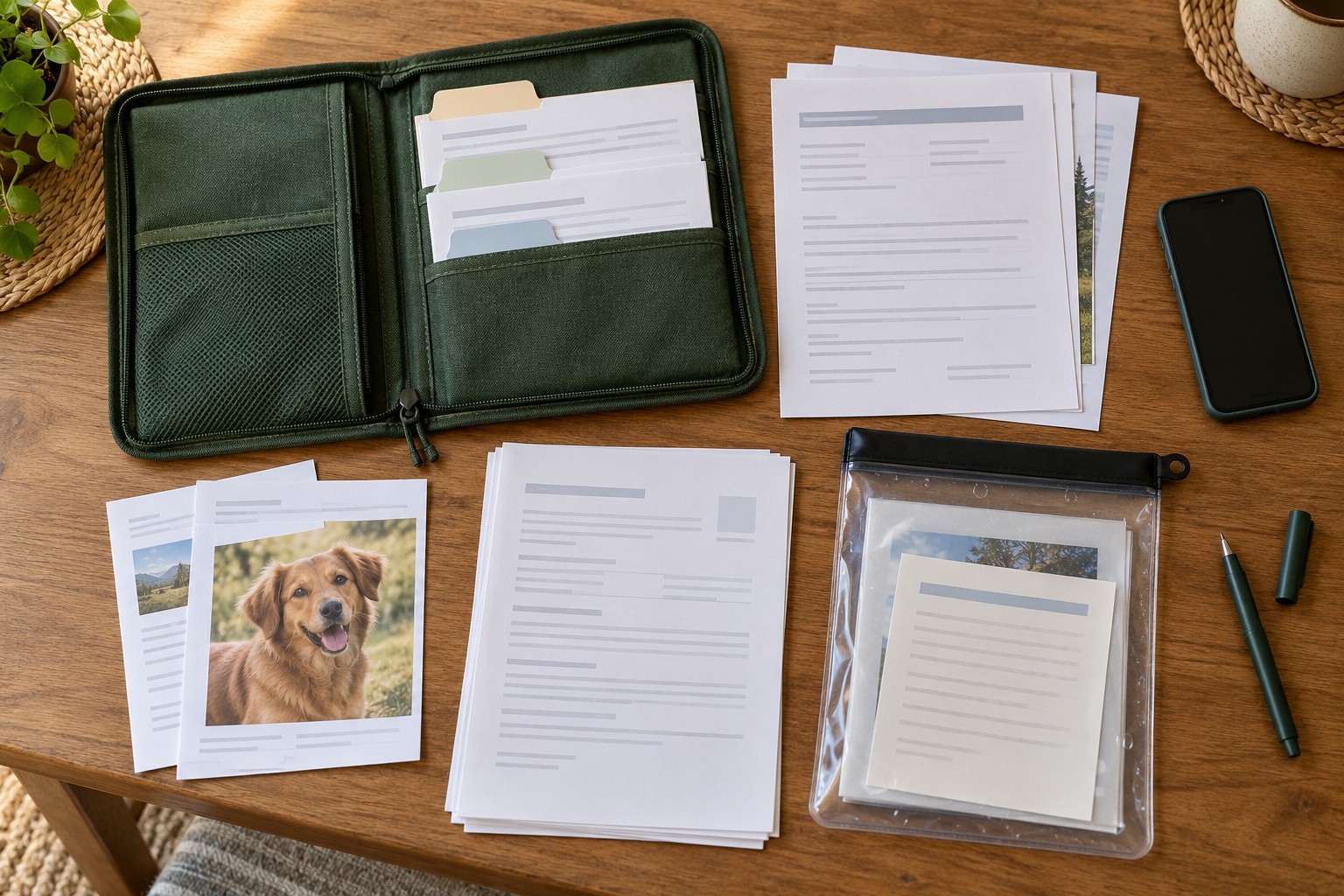
Imagine that your usual caregiver is unavailable. What would another trusted person need in the first few minutes? Start with your dog’s name, a recent photo, identifying description, your reachable phone number, and one backup contact who has agreed to help. Add your regular veterinary practice and an after-hours clinic with their addresses and phone numbers.
Keep this page brief enough to scan. Put the date checked at the top and name the person responsible for updates. With several dogs, make a separate section for each one; a shared surname or similar coat color is not enough to match medical instructions reliably.
The Michigan State Police checklist includes veterinary and immunization records, pet photographs, and contacts for veterinarians, pet-friendly hotels, and out-of-town family or friends. Use those categories as a starting point, then make the contact list specific to your household.
Gather records in four clearly labeled groups
Identity and ownership
Keep a recent photo, your dog’s identifying description, microchip number and company details, and copies of adoption or ownership records you already hold. The CDC disaster-kit checklist identifies these as useful documents. Keep originals secure unless you have a specific reason to carry them.
Copying a number into this folder does not verify the registry account. Use our dog ID tags and microchip check to work through that separate task. If details disagree, leave a clear unresolved note and contact the veterinary practice or registry rather than choosing a number by guesswork.
Veterinary information
Request current copies of vaccination records, the rabies certificate, a medical summary, and relevant prescription information. Ask the clinic which additional records matter for your dog. CDC’s checklist also includes the most recent canine heartworm test result; your veterinary team can help locate and explain the appropriate report.
Keep the clinic’s original wording and dates visible. Avoid copying a diagnosis from memory or interpreting a test result yourself. Mark a missing record as requested instead of replacing it with an estimate. The CDC pet-emergency guidance specifically recommends asking your veterinarian for help assembling these records.
Daily care and handling
Add a short household handoff page: usual food and feeding routine, familiar equipment location, toileting arrangements, and known handling limits. Distinguish everyday observations from clinician instructions. “Usually backs away from unfamiliar people” describes something a helper can notice; it does not diagnose anxiety or tell that helper how to treat it.
Destination and permissions
Keep the contacts and written requirements you have confirmed with the actual boarding facility, caregiver, hotel, or shelter. Ask what documents they need, how recent records must be, and how they handle individual care needs. Date the answers. A general checklist cannot guarantee acceptance or current space.
Make medication information unambiguous
Keep medication names and current written instructions together with the prescribing clinic’s contact details. Ask the veterinary team what the temporary caregiver should have, how to handle storage or access problems, and whom to call when the plan cannot be followed. This folder is a place to preserve professional instructions, not create new ones.
Do not leave superseded directions mixed into the active handoff pages. If you retain older paperwork for history, label and separate it so it cannot look current. When two versions conflict, note the discrepancy and contact the clinic before the next routine handoff.
A caregiver may also need to know what has actually happened that day. Use a dated handoff note for the time of the last dose or other care already given, following your veterinarian’s directions. Do not prefill future care as completed. If the last dose is unknown, write “unknown” and ask the clinic what to do.
The FDA’s disaster-preparation guidance recommends giving a temporary caretaker necessary care instructions and considering authorization for veterinary care with financial limits. Ask your own practice which form and contact arrangements it accepts. A homemade note is not a promise that another clinic will accept the same terms.
Protect the copies without making them inaccessible
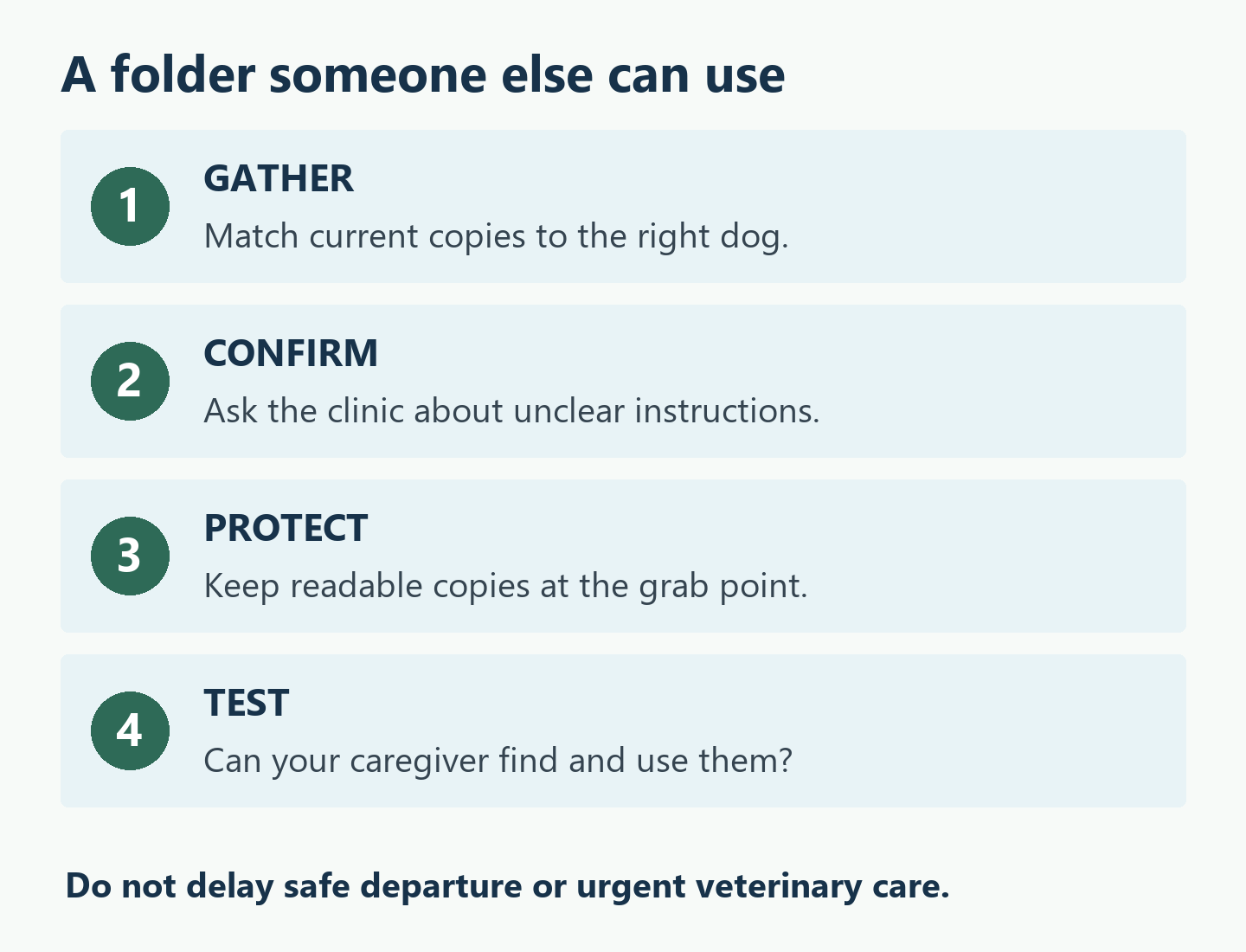
CDC’s document checklist calls for a waterproof container. Choose a practical protective pouch or container and keep it at your agreed grab point. For the rest of your supplies, use our dog evacuation go-bag checklist; this article focuses on the information inside the folder.
A digital copy is a useful household backup, but test it before relying on it. Open the files on the device you expect to carry, check that every page is readable, and try access without depending on a fresh email code or an unfamiliar account. If your backup caregiver needs access, agree on a suitable private method together.
Do not put passwords, payment-card numbers, or unrelated personal documents on a broadly shared sheet. Share the information the caregiver actually needs. Keep veterinary records and private contact details out of public social posts and publicly accessible links.
Choose a storage location the caregiver can reach without entering an unsafe building or blocking an exit. Tell them where the folder belongs and what to take if the regular container is unavailable. No storage arrangement guarantees survival of a disaster; the aim is to avoid a single obvious point of failure.
Owner tool
Run a short folder handoff check
Use this table with the actual documents open. “Requested” and “not yet confirmed” are useful answers: they show what still needs attention. This is an organization aid, not a medical assessment or readiness certificate.
| Group | Check against the real item | Record the next action |
|---|---|---|
| Identity | Correct dog, photo, ownership copy, microchip details | Missing item and person to contact |
| Veterinary records | Readable dated copies and current clinic contacts | Clinic request or clarification needed |
| Care instructions | Current directions; older versions separated | Unclear instruction to ask the clinic about |
| Destination | Actual contact, requirements, date checked | Reconfirmation still needed |
| Access | Paper grab point and digital files tested | Person responsible and completion date |
Then ask your backup caregiver to find the folder, identify the right dog, locate the emergency clinic number, and explain where the current instructions are. Let them flag anything confusing. Use a practice handoff at home; do not create a stressful evacuation exercise just to test the paperwork.
Update after a change, then test again
Review the folder after a new prescription, changed care instructions, vaccination visit, move, phone-number change, new caregiver, or destination change. Replace the affected copies, date the front page, and check that the digital version agrees. Tell the caregiver what changed instead of assuming they will notice.
Pick an additional recurring household reminder that you can maintain, especially before your local higher-risk season. That reminder is an organizational choice, not a medically proven review interval. A monthly or seasonal calendar entry cannot make an outdated prescription current.
Keep the wider decisions in your dog emergency plan: who collects the dog, where you go, and how you follow local instructions. The folder supports that plan without replacing it.
Better questions, calmer next steps
Ask your veterinary team for a usable handoff
- Which medical summary and recent reports should travel with this dog?
- Are the written medication and storage instructions clear for a temporary caregiver?
- What should a caregiver do if a dose history, instruction, or supply is uncertain?
- Which authorization form and emergency contact arrangements does your practice accept?
Bring the documents that conflict or are hard to read. A specific question is easier to resolve than an entire unsorted stack.
FAQ
What if my clinic cannot send the missing record before we leave?
Mark it missing, keep the clinic’s contact details, and tell the receiving caregiver or veterinary team. Ask how to obtain it later. Do not delay safe departure or urgent veterinary care to finish the folder.
Can I use the same folder for several dogs?
Yes, if each dog’s documents and instructions are clearly separated. A caregiver must be able to match a photo, name, and care page without guessing. Do not combine medication notes into an unlabeled household list.
Does a complete folder guarantee boarding or shelter admission?
No. Requirements, space, and care capabilities vary. Confirm with the actual destination and follow current local emergency instructions. A record checklist does not certify eligibility.
Sources and scope
Sources checked October 24, 2026. These sources support preparation categories and safety limits; the folder layout, worksheet, and update routine are practical editorial suggestions.
- CDC: Pet Disaster Kit checklist — identification, medical documents, and protected paper copies.
- Michigan State Police: pet kit checklist — contact lists, photographs, and veterinary records.
- CDC: pet safety in emergencies — veterinary record preparation and emergency planning.
- FDA: pets and disasters — temporary caretaker instructions and veterinary-care authorization planning.
- AVMA: pet first aid — urgent veterinary escalation and emergency contact information.
Not yet medically reviewed.
Start with one current clinic contact and the records you already have. Write down the missing items, request them, and make the next handoff easier to understand.
