A gentle, evidence-aware guide to watching an older dog's mouth, eating comfort, and daily behavior while keeping dental diagnosis and treatment professional.
Short answer
Oral comfort is part of whole-dog wellness
Dental disease can affect comfort, eating, grooming, sleep, and daily behavior in senior dogs. Routine home observation and veterinary dental checkups can identify concerns, but looking at the mouth cannot rule out disease below the gumline or replace a professional examination.
- Notice changes in breath, chewing, drooling, gums, teeth, and food preference.
- Use only home-care methods your dog can tolerate safely.
- Do not scrape tartar, pull teeth, or use human dental products.
- Seek prompt care for facial swelling, severe bleeding, inability to eat, or marked distress.
Safety first
Painful oral signs need veterinary attention
Contact a veterinarian for persistent bad breath, drooling, bleeding gums, broken or loose teeth, trouble chewing, pawing at the mouth, or reduced appetite linked to discomfort. Seek prompt care if your dog cannot eat, develops facial swelling, has severe mouth bleeding, or appears very distressed.
Veterinary note
Educational information only; contact a veterinarian for diagnosis, treatment, or urgent concerns. This guide supports observation and preparation; it does not diagnose a condition or replace an individualized care plan.
What is reasonably supported
Use repeated observations to improve the veterinary conversation
Veterinary guidance supports routine home oral care when tolerated and regular professional dental assessment as parts of preventive health. Oral changes can affect comfort and daily function, making them relevant to broader senior wellness monitoring.
What remains uncertain
Home observations cannot establish the cause
Visible teeth show only part of the mouth. Owners cannot determine periodontal depth, tooth-root disease, the need for extraction, anesthesia risk, or whether another illness is contributing to appetite or behavior changes without veterinary assessment.
Why the mouth belongs in a senior wellness check
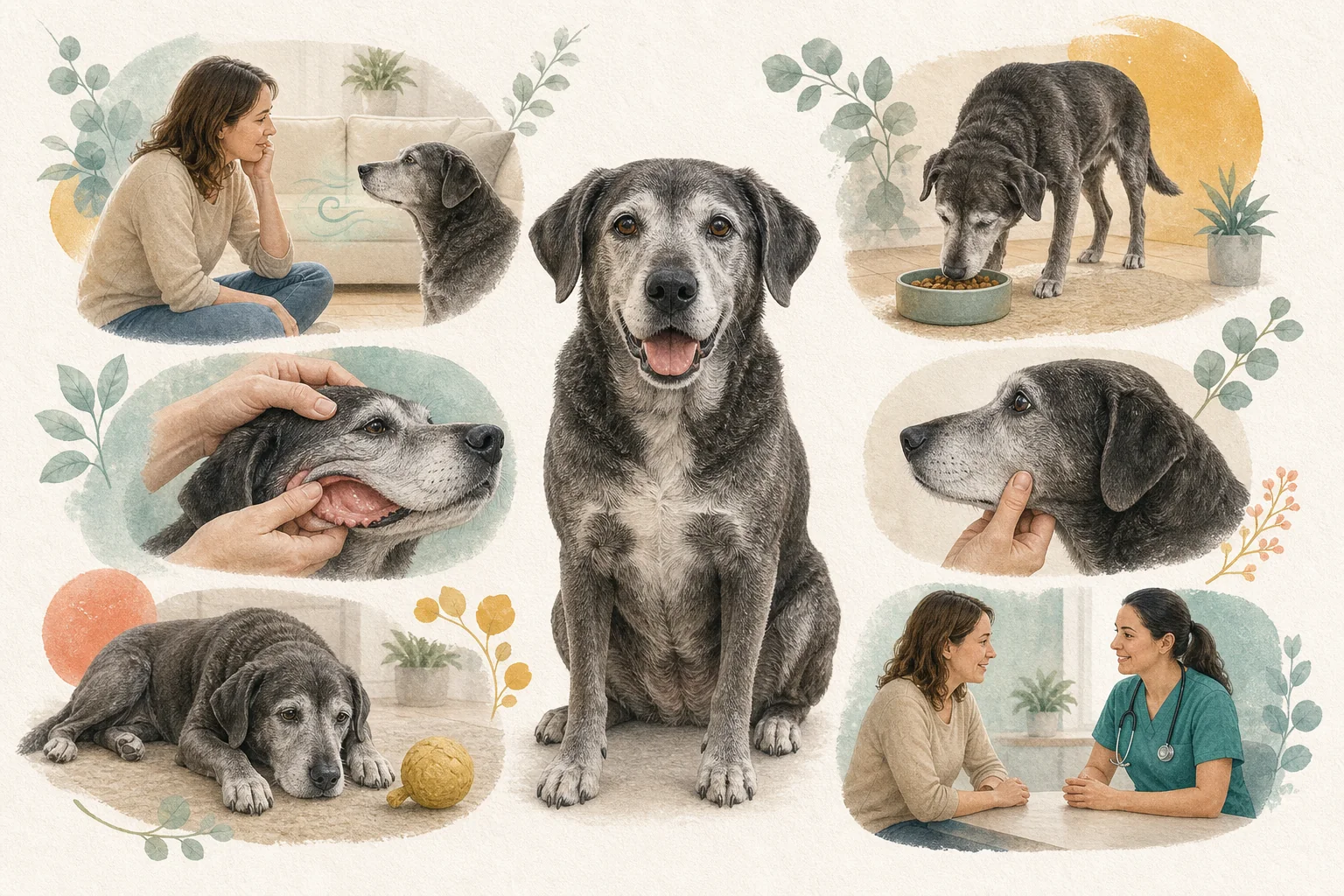
Senior dogs may compensate for oral discomfort by chewing on one side, swallowing food quickly, dropping kibble, preferring softer food, or becoming less interested in toys. These changes can be gradual and may be mistaken for pickiness or normal aging.
Oral health also intersects with weight, hydration, grooming, medication administration, and quality of life. That does not mean every appetite or behavior change begins in the mouth. It means the mouth should be included in a whole-dog evaluation rather than treated as a separate cosmetic concern.
Observe without forcing the mouth open
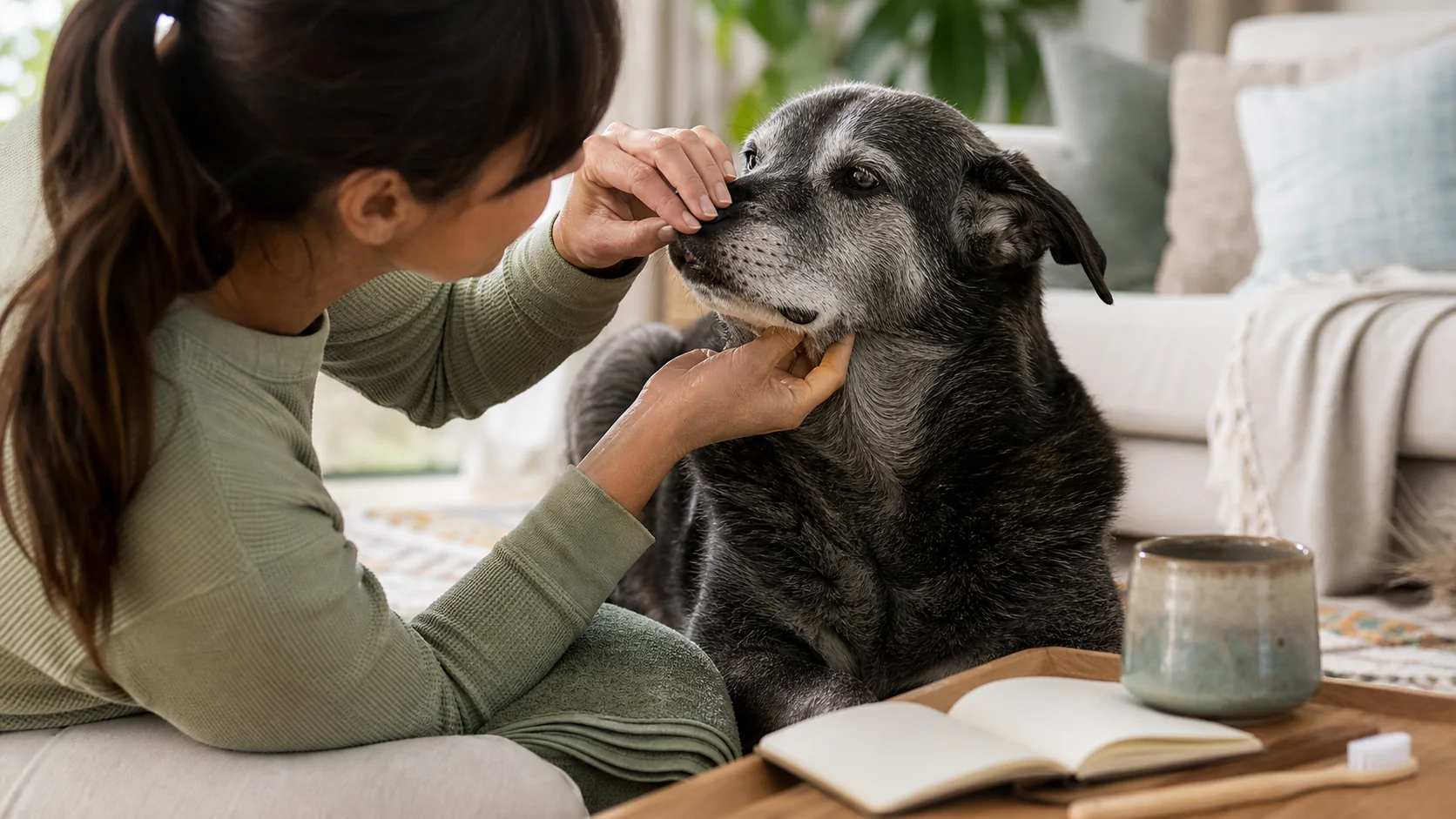
Watch your dog eat and drink, yawn, carry toys, and accept gentle face handling. If the dog is comfortable, lift the lip briefly to look for obvious redness, swelling, bleeding, heavy buildup, or a damaged tooth. Stop if the dog pulls away, freezes, growls, or shows pain.
Do not put fingers deep into the mouth, pry the jaws apart, or test a loose tooth. Pain can make even a gentle dog react defensively. A clear photo of what you can see safely and a short video of eating may be more useful than a stressful home examination.
Separate breath changes from a diagnosis
Persistent unpleasant breath can accompany dental disease, but odor alone cannot identify the cause or severity. Food, oral debris, damaged teeth, inflammation, and health conditions can all affect breath. Masking odor does not address pain or disease.
Record when the change started and whether it occurs with drooling, chewing changes, weight loss, vomiting, increased thirst, or other signs. That broader context helps the veterinary team decide how urgently the dog should be seen and whether the evaluation should extend beyond the mouth.
Use home care as prevention support
Veterinary-approved toothbrushing is commonly used for home plaque control when a dog accepts it. Introduce handling gradually, use products made for dogs, and prioritize comfort. Human toothpaste and improvised sharp tools are not appropriate.
Chews, diets, wipes, rinses, and other products vary in purpose and suitability. Ask the veterinary team what fits the dog's dental condition, chewing style, calorie needs, medications, and risk of swallowing pieces. A product does not replace an examination or professional cleaning when those are needed.
Understand the role of a professional dental evaluation
A veterinary examination can assess the visible mouth and the dog's overall health, then determine whether a more complete dental procedure is appropriate. Disease can exist below the gumline even when the visible crown looks acceptable.
For a senior dog, planning may include discussion of health history, current medications, laboratory testing, anesthesia, monitoring, pain control, and recovery. Age alone does not answer those questions. Individual health status and the likely benefit of treating painful disease matter.
Connect dental care with the rest of the care plan
Bring oral changes into routine senior visits instead of waiting for a crisis. Update the clinic about food preference, weight, water intake, medication difficulty, sleep, and behavior because these can influence both urgency and planning.
After treatment or a home-care change, follow the veterinary instructions and watch for eating difficulty, swelling, bleeding, vomiting, unusual sleepiness, or pain. Do not restart hard chews or brushing until the clinic says it is appropriate.
Keep a dated record of professional dental care and the home routine the clinic recommends. Note when a method becomes harder for the dog to tolerate. A change in cooperation can reflect discomfort, fear, sensory change, or handling difficulty and should lead to a gentler plan, not stronger restraint.
Owner tool
Senior oral-wellness observation chart
Use this once a month and whenever eating or behavior changes. Stop any observation that causes distress or discomfort immediately.
| Area | Observe safely | Discuss with the veterinarian |
|---|---|---|
| Breath | Persistent change from usual | Duration and related signs |
| Eating | Dropping food, one-sided chewing, slower meals | Pain, refusal, weight change |
| Gums | Visible redness, swelling, bleeding | Any persistent abnormality |
| Teeth | Visible damage or heavy buildup | Broken, loose, or discolored tooth |
| Behavior | Face sensitivity, pawing, less play | New defensiveness or withdrawal |
| Face | Symmetry and swelling | Any swelling or severe tenderness promptly |
A three-step next action
Watch a normal meal
Record chewing, food dropping, pace, and comfort without interfering.
Check only what is comfortable
Briefly view the lips and visible teeth; never force the mouth.
Arrange appropriate care
Share the pattern, photos, health history, and medication list with the veterinary team.
Prepare for the visit
Questions to take to your veterinarian
- Could these eating or behavior changes be related to oral pain?
- What home-care method is safe for this dog?
- Does the mouth need a professional dental evaluation?
- How will senior health conditions affect planning and monitoring?
- What recovery signs should prompt a call?
Bring the dated observation log, relevant photos or short videos, and a complete list of foods, treats, medications, and supplements. Do not change the routine solely to produce evidence for the visit.
Frequently asked questions
Is bad breath normal in a senior dog?
Persistent bad breath should be discussed with a veterinarian rather than dismissed as aging.
Can I remove tartar at home?
Do not scrape teeth with sharp tools. Ask the veterinary team about safe home care and professional assessment.
What if my dog will not allow brushing?
Do not force it. Ask about gradual conditioning and other appropriate options.
Can a dog eat normally and still have dental disease?
Yes. Dogs may continue eating despite discomfort, and disease may be hidden below the gumline.
Sources
- Pet Dental Care, American Veterinary Medical Association. AVMA dental-care guidance supports routine home oral care and veterinary dental checkups as part of overall pet health.
- Dental Disease in Dogs and Cats, UC Davis School of Veterinary Medicine. UC Davis dental-disease guidance explains that dental disease can affect comfort and general health, making oral changes relevant to broader wellness monitoring.
- Dog Dental Care, UC Davis School of Veterinary Medicine. UC Davis dog-dental-care guidance supports regular preventive oral care as part of routine dog health management.
- Caring for Older Dogs – Senior Dog Care, RSPCA. Senior-dog care guidance reinforces that health changes in older dogs should be observed across multiple body systems, including the mouth.
Medical disclaimer
Educational information only; contact a veterinarian for diagnosis, treatment, or urgent concerns. If your dog is showing severe, sudden, or rapidly worsening signs, seek urgent veterinary care.
