

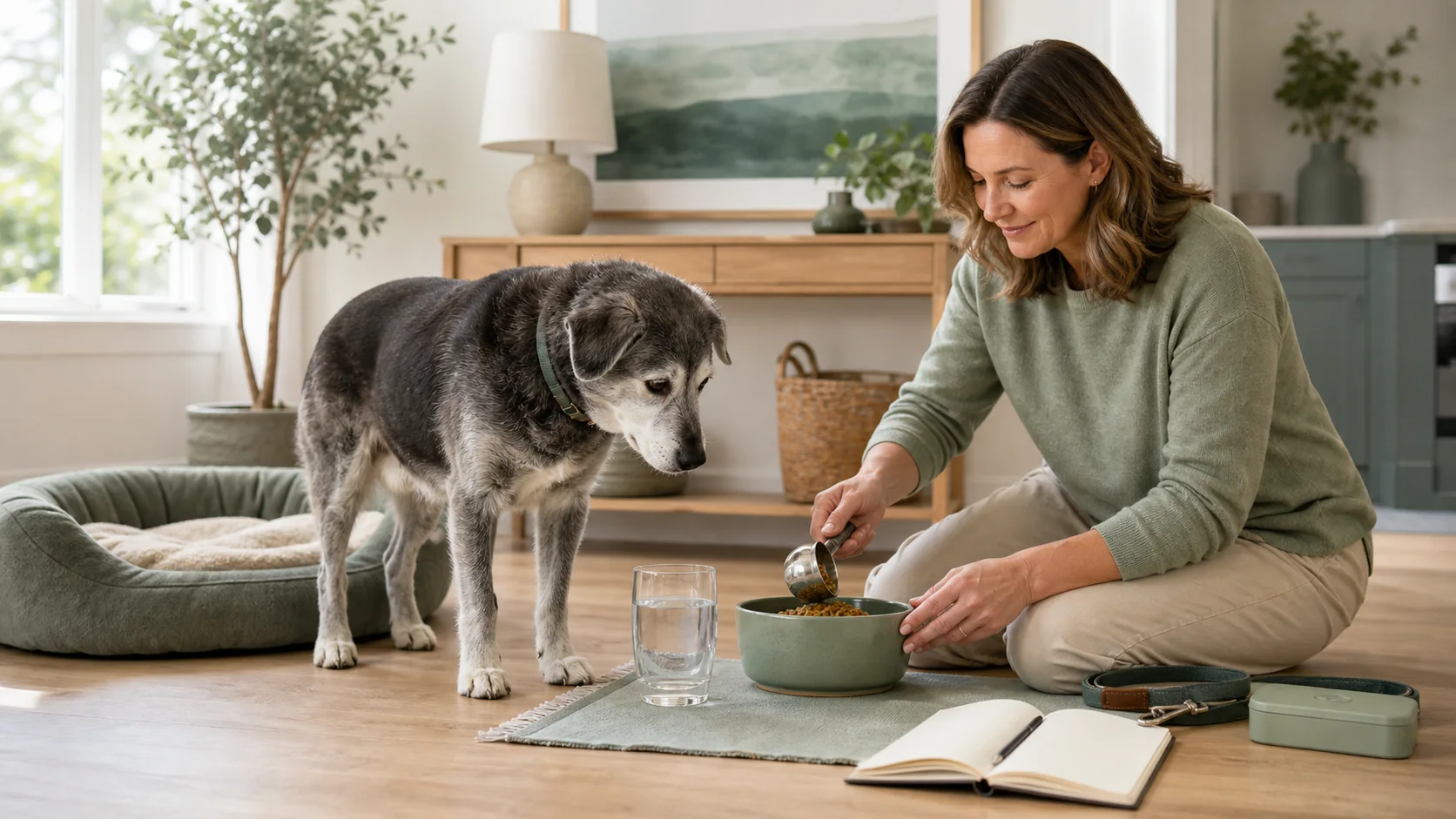
A practical lifestyle framework for supporting an older dog while keeping testing, treatment, and medical decisions with the veterinary team.
Short answer
Consistency makes change easier to see and care easier to follow
A predictable routine for meals, water, bathroom access, activity, rest, medication, and observation can support comfort and help owners notice change. It complements veterinary care but does not treat a metabolic condition or replace testing, prescriptions, or individualized nutrition advice.
- Keep food, medication, and observation timing consistent with the veterinary plan.
- Maintain free access to fresh water unless the veterinary team says otherwise.
- Adapt activity to comfort, stamina, weather, and diagnosed conditions.
- Report sustained appetite, thirst, urination, weight, or energy changes promptly.
Safety first
Routine support is not a reason to delay reassessment
Contact a veterinarian for sustained appetite change, marked thirst or urination changes, unexplained weight loss or gain, reduced stamina, repeated vomiting, or new weakness. Seek urgent care for collapse, inability to rise, severe weakness, breathing trouble, seizures, or repeated vomiting with rapid decline.
Veterinary note
Educational information only; contact a veterinarian for diagnosis, treatment, or urgent concerns. This guide supports observation and preparation; it does not diagnose a condition or replace an individualized care plan.
What is reasonably supported
Use repeated observations to improve the veterinary conversation
Senior-care and life-stage guidance supports regular veterinary reassessment, age-appropriate monitoring, comfort-focused environmental adjustments, and practical routine changes for aging dogs. A stable routine also helps owners describe departures from normal more clearly.
What remains uncertain
Home observations cannot establish the cause
No single schedule, diet, exercise plan, or supplement routine is appropriate for every older dog. Metabolic concerns may involve different organs and treatments, and needs can change after laboratory results, medication adjustments, or new symptoms.
Start with the veterinary care plan
Write down the confirmed diagnosis if one exists, current goals, medications, feeding instructions, monitoring schedule, and the clinic's urgent-contact guidance. If the concern is still being investigated, distinguish confirmed facts from possibilities so household members do not treat a suspicion as a diagnosis.
Ask which parts of the day should stay especially consistent. Some medications or feeding plans have timing requirements, while others allow flexibility. Use the veterinary instructions as the controlling plan and keep a current copy where every caregiver can find it.
Create a steady meal and water routine
Measure food with the method recommended by the veterinary team and record meaningful leftovers. Avoid frequent unplanned treats or table food that make intake difficult to assess. If appetite is poor, contact the clinic rather than repeatedly changing foods and obscuring the pattern.
Keep fresh water easy to reach and use stable bowls on non-slip flooring. Never restrict water to control accidents or test thirst unless a veterinarian specifically directs it. Add bathroom opportunities when drinking or mobility patterns change, and protect the dog's dignity when accidents occur.
Match activity to the dog in front of you
Use familiar, low-pressure activity as a daily check of comfort and stamina. A shorter walk, several brief outings, sniffing time, or gentle indoor movement may be more manageable than one long session. Stop before exhaustion and account for heat, cold, slippery surfaces, and recovery time.
Reduced activity can reflect pain, weakness, cardiovascular limits, neurologic change, or simple fatigue, so do not force exercise to meet a generic target. Record what the dog could comfortably do and how long recovery took, then share any meaningful decline with the veterinary team.
Make rest and access easier
Place supportive resting areas near family activity and in a quiet location, with a clear non-slip route to water and the exit. Reduce unnecessary stairs and prevent jumping when mobility is limited. Keep nighttime lighting gentle but adequate for dogs with vision or cognitive changes.
Comfort adjustments should reduce effort without isolating the dog. Bring bowls, bedding, and bathroom access closer when needed, but preserve choices and normal social contact. Reassess the setup after falls, new weakness, medication changes, or altered sleep.
Organize medications and supplements safely
Maintain one complete list with product name, amount, timing, reason, and prescribing clinician. Store products securely and give them to one dog at a time. Do not add a supplement because it appears natural or senior-specific; interactions, duplication, calories, and inactive ingredients still matter.
Use reminders or a caregiver log to prevent missed or double doses. If vomiting, refusal, or a schedule disruption affects a dose, call the veterinary team or pharmacy for instructions instead of guessing. Never alter a prescription schedule based on an online article.
Use a weekly review to catch drift
Once a week, look across appetite, water, elimination, weight, stamina, sleep, comfort, and behavior. The goal is not a score; it is to notice direction. A small shift in several areas can be more important than one isolated entry.
Send concise updates at the interval the clinic recommends and call sooner for red flags or progressive change. Bring the log to appointments with photos or videos, current food information, and every medication and supplement container or clear label photograph.
Include caregiver changes in the review. A different person may estimate portions, notice bathroom behavior, or interpret energy differently. Agree on simple terms such as finished, partly eaten, refused, comfortable, hesitant, and stopped early. Shared definitions make the record more useful and reduce accidental changes to the plan.
Owner tool
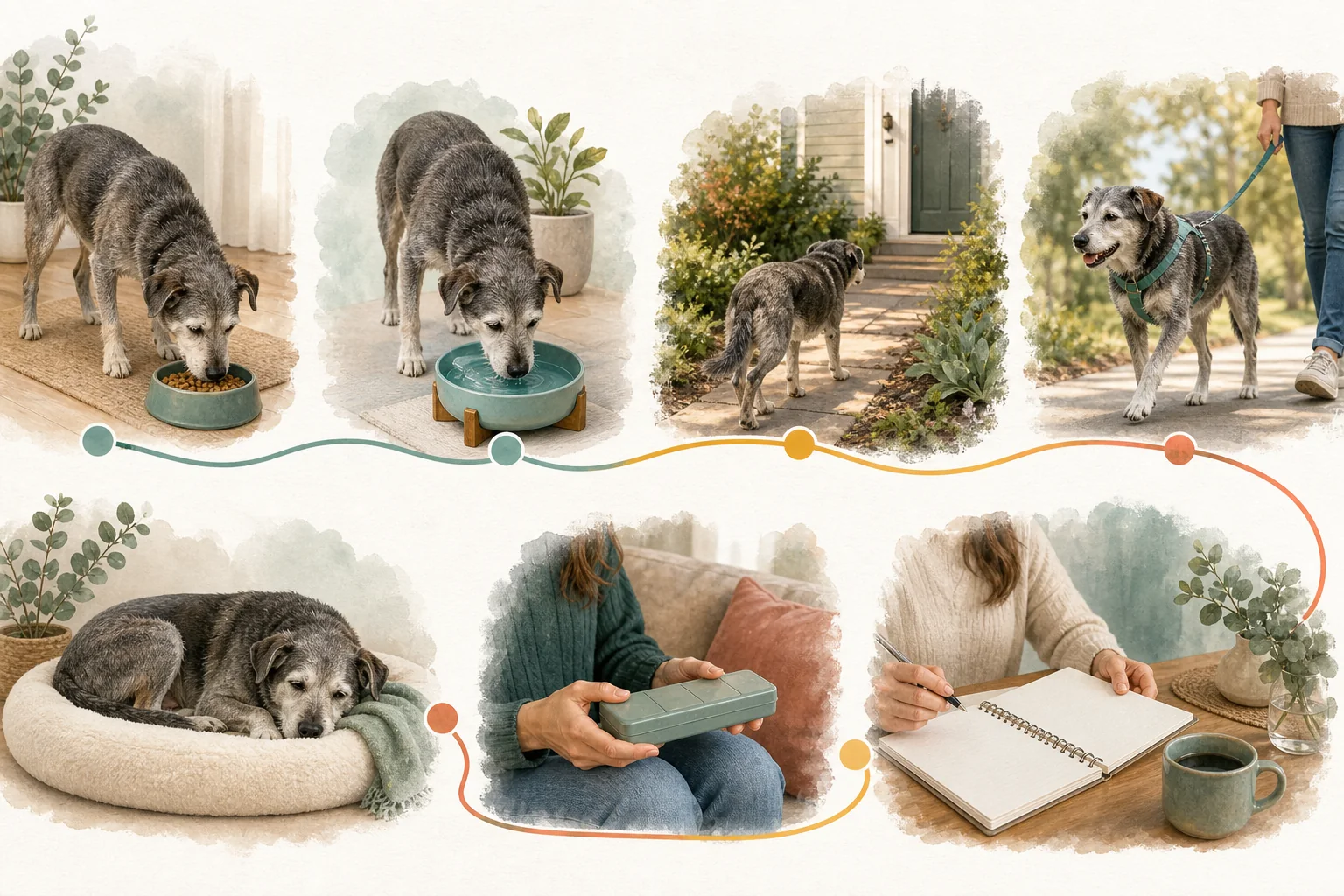
Daily routine and handoff chart
Use this chart to keep multiple caregivers aligned. Replace general timing with the exact instructions from your veterinary team.
| Routine | Keep consistent | Record |
|---|---|---|
| Meals | Measured portion and approved foods | Amount eaten and unusual behavior |
| Water | Fresh, accessible supply | Meaningful change in refills or seeking |
| Bathroom | Frequent safe access | Frequency, accidents, stool, straining |
| Activity | Comfortable familiar movement | Duration, tolerance, recovery |
| Medication | Exact veterinary instructions | Given, missed, vomited, or uncertain |
| Rest | Accessible quiet bedding | Sleep disruption, panting, difficulty settling |
A three-step next action
Write the care plan
Consolidate veterinary instructions, contacts, food, medications, and monitoring in one place.
Run the routine for one week
Record exceptions without changing several variables at once.
Review with the clinic
Share trends and ask what should remain, change, or trigger earlier reassessment.
Prepare for the visit
Questions to take to your veterinarian
- Which routine elements need exact timing?
- What activity level is appropriate right now?
- Should weight or water intake be measured at home?
- How should I handle a missed or vomited medication dose?
- Which changes should prompt same-day or emergency care?
Bring the dated observation log, relevant photos or short videos, and a complete list of foods, treats, medications, and supplements. Do not change the routine solely to produce evidence for the visit.
Frequently asked questions
Should a senior dog with metabolic concerns follow a special diet?
Only use an individualized diet plan recommended by the veterinary team. The right approach depends on diagnosis, test results, other conditions, and current intake.
Is more rest always better?
Rest matters, but excessive inactivity can have tradeoffs. Ask the veterinarian what comfortable activity is appropriate.
Can supplements replace medication?
No. Supplements should not replace prescribed treatment, testing, or follow-up.
What if several people care for the dog?
Use one shared log and one current instruction list to reduce missed or duplicate care.
Sources
- 2023 AAHA Senior Care Guidelines for Dogs and Cats, American Animal Hospital Association. AAHA senior-care guidance supports age-appropriate monitoring, preventive care, and routine reassessment for older dogs.
- How Often Should My Dog Go to the Vet? A Dog Life Stage Guide, American Animal Hospital Association. AAHA life-stage guidance supports regular veterinary visits, which is important when a senior dog has ongoing metabolic concerns.
- Senior Dog Care, VCA Animal Hospitals. VCA senior-dog guidance emphasizes practical routine adjustments that can help owners support aging dogs at home.
- Caring for Older Dogs – Senior Dog Care, RSPCA. RSPCA senior-dog guidance supports maintaining comfort, observing change, and adapting daily care as dogs age.
Medical disclaimer
Educational information only; contact a veterinarian for diagnosis, treatment, or urgent concerns. If your dog is showing severe, sudden, or rapidly worsening signs, seek urgent veterinary care.
