


A calm, vet-first system for noticing meaningful changes in an older dog's daily patterns without trying to diagnose the cause at home.
Short answer
Track the pattern, not a single unusual day
Senior dogs can develop gradual changes in drinking, urination, appetite, weight, energy, sleep, and behavior. A dated home log can help your veterinarian understand when a change began and how it is progressing, but it cannot identify endocrine, kidney, liver, or other disease on its own.
- Measure or describe changes consistently instead of relying on memory.
- Compare your dog with their own usual pattern, not another senior dog.
- Report persistent, progressive, or combined changes to the veterinary team.
- Seek urgent care for collapse, breathing difficulty, confusion, inability to stand, or sudden severe illness.
Safety first
Do not wait for several signs when one change is severe
Contact a veterinarian promptly for marked thirst or urination changes, unexplained weight change, appetite loss, repeated vomiting, weakness, or a clear decline in energy. Seek urgent care for collapse, breathing difficulty, confusion, inability to stand, seizures, or sudden severe illness.
Veterinary note
Educational information only; contact a veterinarian for diagnosis, treatment, or urgent concerns. This guide supports observation and preparation; it does not diagnose a condition or replace an individualized care plan.
What is reasonably supported
Use repeated observations to improve the veterinary conversation
Senior-care guidance supports routine owner observation of eating, drinking, elimination, weight, function, and behavior. Those observations can give a veterinarian useful timing and trend information when paired with an examination and appropriate testing.
What remains uncertain
Home observations cannot establish the cause
Similar home signs can arise from many different conditions, medication effects, pain, environmental changes, or ordinary short-term variation. No home checklist can determine the cause, rule out disease, or establish that a change is simply aging.
Why metabolic changes can be easy to miss
Older dogs often live by familiar routines, so gradual change can blend into the background. A water bowl emptied a little faster, an extra overnight bathroom trip, or a slower finish at breakfast may not seem important alone. The signal becomes clearer when the same change repeats, grows, or appears alongside weight, energy, or behavior changes.
Healthy aging is not the same as the absence of disease. Age can affect stamina, sleep, mobility, and recovery, while medical conditions can produce some of the same outward signs. The useful owner role is to notice and document change early, then let the veterinary team interpret it in context.
Build a reliable baseline first
Write down what a typical week looks like before you are worried. Note meal timing, usual appetite, water-bowl routine, bathroom schedule, preferred activities, sleep pattern, and how easily your dog rises and settles. Record current weight from the clinic or a reliable home scale if weighing can be done safely.
A baseline should be practical enough to repeat. Choose the same measuring cup for water, the same scale when possible, and the same short description for appetite and energy. Consistency matters more than elaborate scoring because it makes change easier to compare over time.
Observe thirst and urination together
A warm day, added exercise, diet change, or spilled bowl can alter apparent water use. Look at the broader pattern: how often the bowl is refilled, whether your dog seeks new water sources, whether overnight drinking increases, and whether bathroom frequency or urine volume appears different.
Do not restrict water to test whether thirst is real. Note the dates and circumstances, then contact the veterinarian if the increase is sustained or paired with accidents, weakness, vomiting, appetite change, or weight loss. The clinic may ask for measured intake, but follow its instructions rather than improvising a test.
Track appetite, weight, and body condition
Record whether meals are finished, delayed, refused, or approached eagerly. Also note scavenging, new food-seeking behavior, chewing difficulty, nausea-like behavior, or a preference for softer food. Appetite can change before weight does, and a normal appetite does not rule out illness.
Check weight at a useful interval recommended by your veterinarian and observe body shape and muscle over the back, hips, and thighs. Sudden change deserves prompt attention. Gradual loss or gain also matters, especially when food portions have not changed or when muscle seems to decrease despite stable scale weight.
Include energy, sleep, and behavior
Energy is more informative when tied to a familiar task. Note whether your dog completes the usual walk, climbs the same step, greets family, or settles after activity as expected. Separate reduced interest from physical difficulty when you can, but do not assume you know which is responsible.
New nighttime restlessness, confusion, irritability, withdrawal, panting, or house-soiling can reflect discomfort, sensory change, cognitive change, medical illness, or several factors together. Video can help the veterinary team see movement or behavior that does not occur during the appointment.
Turn observations into a useful veterinary update
Summarize the start date, frequency, direction of change, and any connected signs. Bring a complete list of food, treats, medications, and supplements, including recent additions or dose changes. Mention travel, household disruption, heat exposure, and changes in activity because context can affect interpretation.
Avoid changing several parts of the routine before the visit unless the veterinary team directs it. Multiple changes can blur the pattern and may create new risks. Continue prescribed care as directed and ask before changing medication, diet, supplements, water access, or exercise.
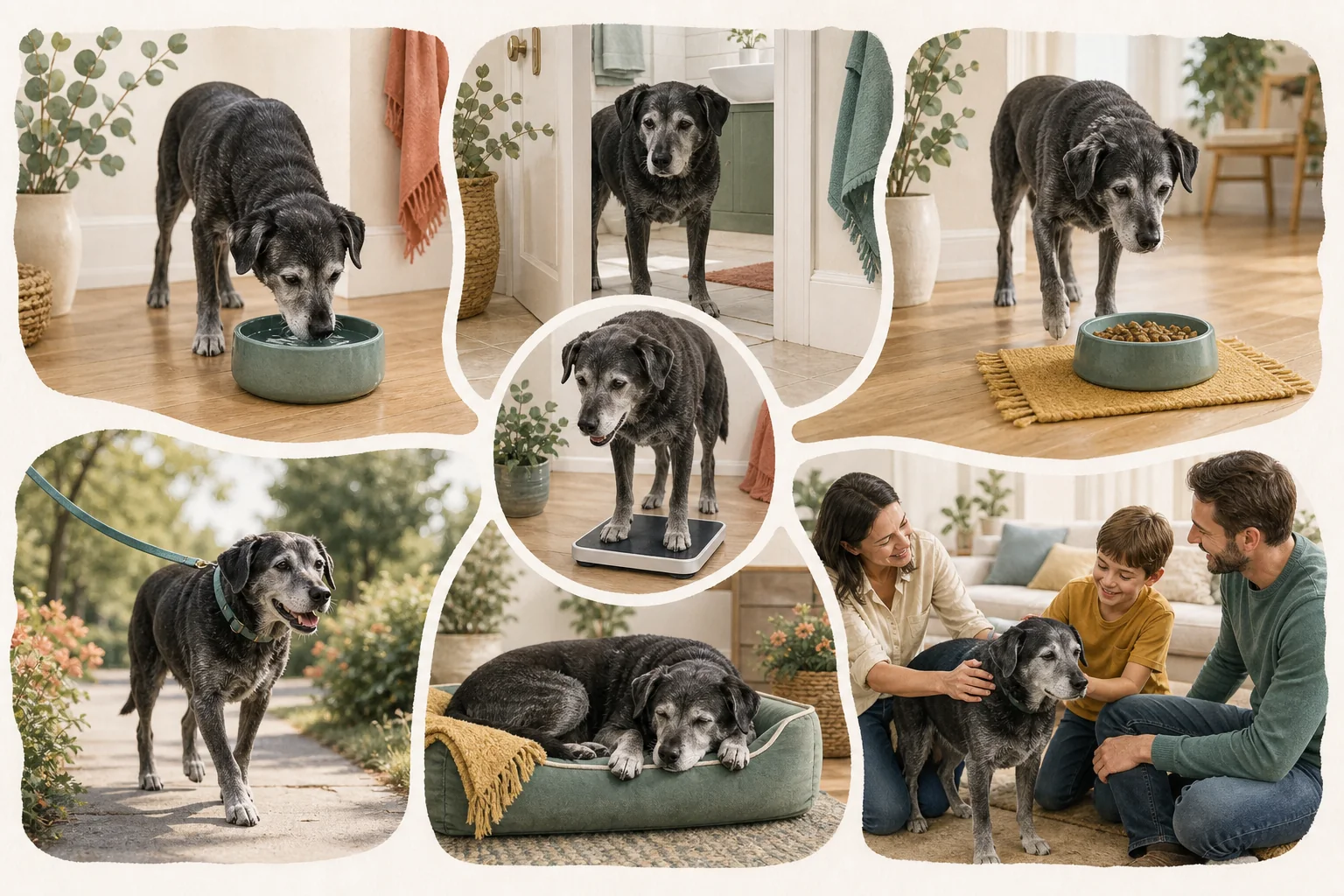
Owner tool
Seven-day senior change log
Use one short entry at the same time each day. Record only what you can observe reliably and add a note when the routine was unusual.
| Area | What to record | Call sooner when |
|---|---|---|
| Water | Refills, unusual seeking, overnight drinking | Increase persists or accompanies weakness or vomiting |
| Urination | Frequency, accidents, apparent volume | Marked change, straining, blood, or inability to urinate |
| Food | Amount eaten and eating behavior | Repeated refusal, vomiting, or chewing difficulty |
| Weight | Same-scale trend and body shape | Unexplained or rapid loss or gain |
| Energy | Response to one familiar activity | Clear decline, collapse, or inability to stand |
| Behavior | Sleep, interaction, orientation | Confusion, distress, or sudden major change |
A three-step next action
Start with today
Record the current routine and the first date you noticed a difference.
Look for direction
Note whether the sign is stable, improving, worsening, or joining other changes.
Share the concise pattern
Contact the veterinary team with dates, measurements, videos, and the full medication and supplement list.
Prepare for the visit
Questions to take to your veterinarian
- Which observations should I measure at home, and how often?
- How quickly should this combination of signs be evaluated?
- Could current medications, supplements, diet, pain, or mobility affect the pattern?
- What changes would make this urgent?
- Should I bring a urine or stool sample, and how should it be collected?
Bring the dated observation log, relevant photos or short videos, and a complete list of foods, treats, medications, and supplements. Do not change the routine solely to produce evidence for the visit.
Frequently asked questions
Are increased thirst and urination normal in an older dog?
They should not be dismissed as normal aging. Record the change and contact your veterinarian, especially if it persists or occurs with other signs.
How often should I weigh my senior dog?
Ask your veterinarian for an interval suited to your dog's health and mobility. Use the same safe method when possible.
Should I restrict water before a veterinary visit?
No, unless your veterinarian gives specific instructions. Restricting water can be dangerous.
Can a home log diagnose a metabolic disease?
No. It helps describe timing and trends; diagnosis requires veterinary assessment and appropriate testing.
Sources
- AAHA Senior Care Guidelines – Your Senior Pet (Owner Handout), American Animal Hospital Association. AAHA senior-care owner guidance supports routine monitoring of eating, drinking, elimination, weight, and behavior in older dogs.
- Defining healthy aging in older dogs and differentiating age-related changes from disease, Journal of the American Veterinary Medical Association (JAVMA). JAVMA guidance on healthy aging highlights the need to distinguish normal age-related changes from disease in older dogs.
- Senior Dog Care – Special Considerations, VCA Animal Hospitals. VCA senior-dog guidance supports owner awareness of subtle physical and functional shifts that can occur with aging.
Medical disclaimer
Educational information only; contact a veterinarian for diagnosis, treatment, or urgent concerns. If your dog is showing severe, sudden, or rapidly worsening signs, seek urgent veterinary care.
