

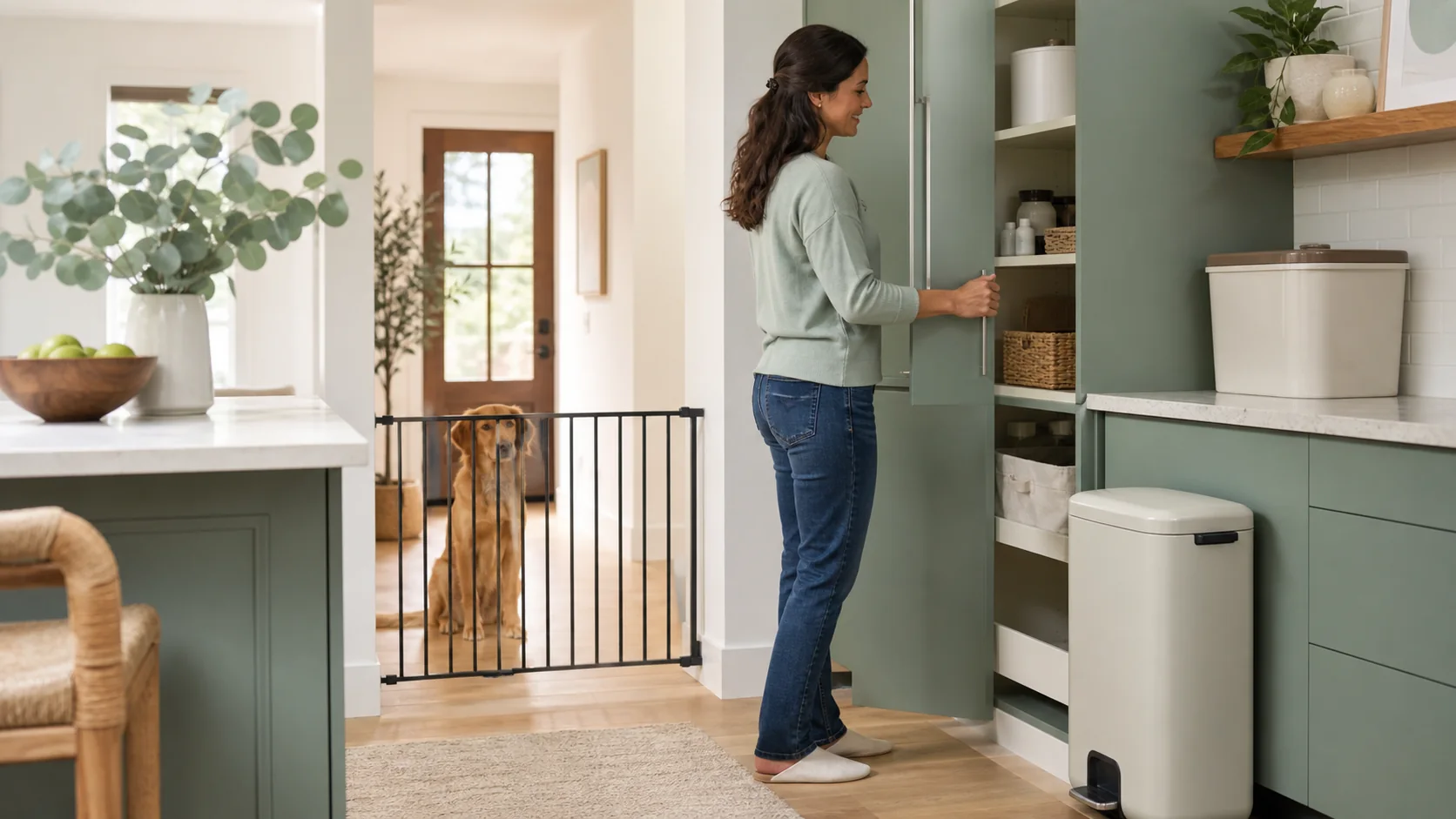
A room-by-room prevention checklist for food, medication, plant, chemical, and storage risks, plus a clear response plan for possible exposure.
Short answer
Prevent access first and keep emergency contacts ready
Dogs can encounter unsafe foods, medicines, plants, chemicals, trash, and contaminated pet food in ordinary homes. Store hazards out of reach behind secure barriers, keep labels and lot information, and contact a veterinarian or animal poison-control service immediately after a suspected exposure instead of waiting for symptoms.
- Treat counters, bags, purses, trash, and guest belongings as possible access points.
- Verify plants and food ingredients rather than relying on natural or pet-friendly claims.
- Preserve packaging and estimate the amount and time of exposure when safe to do so.
- Never induce vomiting or give a home antidote unless a veterinary professional directs it.
Safety first
A suspected exposure can be urgent before signs appear
Call a veterinarian or animal poison-control service immediately after suspected ingestion of medication, rodenticide, chocolate, grapes or raisins, xylitol products, household chemicals, or an unknown substance. Emergency signs include vomiting, diarrhea, tremors, seizures, breathing difficulty, collapse, abnormal bleeding, or sudden behavior change.
Veterinary note
Educational information only; contact a veterinarian for diagnosis, treatment, or urgent concerns. This guide supports observation and preparation; it does not diagnose a condition or replace an individualized care plan.
What is reasonably supported
Use repeated observations to improve the veterinary conversation
Veterinary, poison-control, and government guidance supports preventing access to hazardous foods, plants, medicines, and household substances; storing pet food safely; preserving exposure details; and seeking professional advice promptly when poisoning is possible.
What remains uncertain
Home observations cannot establish the cause
No checklist can include every hazardous substance, plant, dose, or household circumstance. Toxicity depends on the exact material, amount, timing, dog, and health status, so owners should not infer a safe dose or use symptom absence as reassurance.
Secure the kitchen and dining areas
Move chocolate, grapes and raisins, onions and garlic, xylitol-containing products, alcohol, caffeine, dough, high-fat scraps, and unknown leftovers out of reach. Remember that groceries, backpacks, lunch boxes, and cooling racks can become temporary access points.
Use lidded trash and compost containers and clean spills promptly. During parties or deliveries, place the dog in a safe area before food is unpacked or cleared. Ask guests not to feed the dog and provide one approved treat option when appropriate.
Store pet food and treats safely
Keep food in clean, dry storage and retain the original bag or label with the lot code and date information. Follow storage instructions, inspect packaging for damage, and stop using food that has unusual odor, moisture, insects, or mold.
Wash bowls and utensils regularly and separate raw pet food from human food-preparation areas. If a product is recalled or seems contaminated, preserve the packaging and contact the manufacturer, veterinary team, or relevant authority rather than feeding a test portion.
Lock medicines and supplements away
Human and veterinary medicines, weekly organizers, flavored prescriptions, topical products, vitamins, and supplements should be inside secure closed storage. Purses, bedside tables, counters, and shipping boxes are not reliable storage around a determined dog.
Give products to one animal at a time and close the container immediately. Pick up dropped pills before the dog enters the area. If a dose is missing or another pet may have accessed it, call for professional guidance rather than waiting for signs.
Audit bathrooms, laundry, and cleaning areas
Secure cleaners, detergents, disinfectants, cosmetics, essential oils, batteries, nicotine products, and personal-care items. Keep the dog away while products are used and until surfaces are dry or the area is ventilated according to label instructions.
Do not mix chemicals or transfer them into food containers. Keep original labels intact. A closed cabinet with a reliable latch is safer than a high open shelf, especially in homes with climbing pets, children, guests, or cognitive changes.
Identify plant, garage, and yard risks
Verify indoor and outdoor plants by exact identity and manage access to unknown species. Secure fertilizers, pesticides, rodenticides, automotive fluids, fuels, paint, and garden products in locked storage, and check the yard after contractors or storms.
Regional wildlife, mushrooms, standing water, mulch, and discarded food can add risks that national lists do not capture. Supervise outdoor time when conditions change and ask local veterinary or extension resources about region-specific hazards.
Respond to a possible exposure
Move the dog away without putting yourself at risk. Gather the container or a photograph, estimate what may be missing, note the time, and record the dog's weight and current signs if known. Call the veterinarian, emergency clinic, or animal poison-control service immediately.
Do not induce vomiting, give milk, oil, salt, charcoal, food, or human medicine unless a professional specifically directs it for that exposure. Follow transport instructions and bring packaging when safe. Rapid, accurate information is more useful than an improvised remedy.
Owner tool
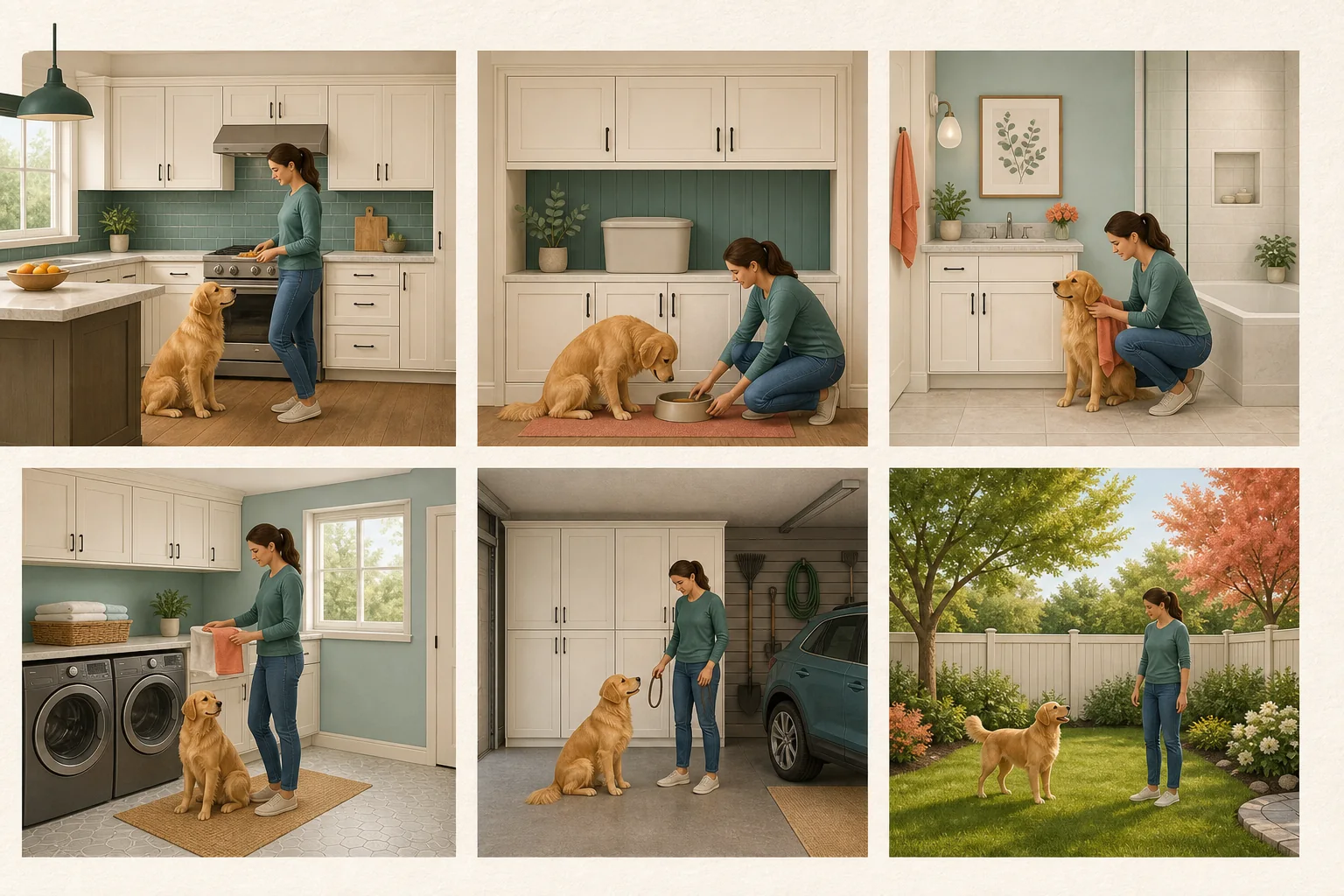
Room-by-room toxin prevention audit
Repeat this audit after moving, hosting guests, starting medication, changing products, gardening, or adding a new pet.
| Zone | Secure | Verify |
|---|---|---|
| Kitchen | Food, trash, bags, compost | Ingredients and guest routines |
| Pet feeding | Food bin, treats, supplements | Storage, lot code, spoilage |
| Bathroom | Medicines, cosmetics, cleaners | Closed latched storage |
| Laundry | Detergent and stain products | Dog excluded during use |
| Garage | Fluids, rodenticide, tools | Locked storage and spill cleanup |
| Yard | Plants, mushrooms, chemicals | Exact identity and local hazards |
A three-step next action
Prevent access
Close and latch storage, use barriers, and remove temporary hazards from counters and bags.
Prepare contacts
Save the regular clinic, emergency clinic, and poison-control information where every caregiver can find it.
Respond without guessing
Preserve details, call immediately, and follow professional instructions.
Prepare for the visit
Questions to take to your veterinarian
- Which household hazards are especially important for this dog's health conditions?
- What information should I collect after a possible exposure?
- Which emergency clinic and poison-control service should I use?
- How should pet food and medications be stored?
- Are any current supplements duplicated or risky if accidentally accessed?
Bring the dated observation log, relevant photos or short videos, and a complete list of foods, treats, medications, and supplements. Do not change the routine solely to produce evidence for the visit.
Frequently asked questions
Should I wait for symptoms after a suspected toxin exposure?
No. Contact a veterinarian or animal poison-control service immediately because guidance may be time-sensitive.
Should I make my dog vomit?
Not unless a veterinarian or poison-control professional specifically directs it.
Is this toxin list complete?
No. Many foods, plants, medicines, and local hazards are not listed here.
Why keep the original pet-food packaging?
It provides product, lot, and date details that may help with recalls or suspected contamination.
Sources
- Animal Poison Control, American Veterinary Medical Association. The AVMA advises that owners keep **potentially toxic household items, human foods, plants, and medications out of pets’ reach**, and contact a veterinarian or **animal poison control center immediately** if exposure is suspected.
- Animal Poison Control, ASPCA Animal Poison Control Center. ASPCA Animal Poison Control notes that **rapid veterinary assessment** is critical in suspected toxin exposure, and owners should not attempt home remedies before consulting professionals.
- People Foods to Avoid Feeding Your Pets, ASPCA Animal Poison Control Center. ASPCA Animal Poison Control lists **many plants and human foods** that are toxic to dogs, including grapes/raisins, onions, garlic, chocolate, xylitol‑containing products, and certain ornamental plants, highlighting the need for **meal and home-planning checklists**.
- Toxic and Non-Toxic Plants, ASPCA Animal Poison Control Center. ASPCA Animal Poison Control lists **many plants and human foods** that are toxic to dogs, including grapes/raisins, onions, garlic, chocolate, xylitol‑containing products, and certain ornamental plants, highlighting the need for **meal and home-planning checklists**.
- Toxic and Non-Toxic Plants – Dogs, ASPCA Animal Poison Control Center. ASPCA Animal Poison Control lists **many plants and human foods** that are toxic to dogs, including grapes/raisins, onions, garlic, chocolate, xylitol‑containing products, and certain ornamental plants, highlighting the need for **meal and home-planning checklists**.
- Safe Feeding Tips for Your Dog, U.S. Food and Drug Administration. The U.S. FDA recommends feeding dogs a **commercially balanced diet or a vet‑supervised home-prepared diet**, avoiding unsafe human foods and ensuring that pet food, treats, and supplements are stored properly and **kept away from household chemicals**.
Medical disclaimer
Educational information only; contact a veterinarian for diagnosis, treatment, or urgent concerns. If your dog is showing severe, sudden, or rapidly worsening signs, seek urgent veterinary care.
