

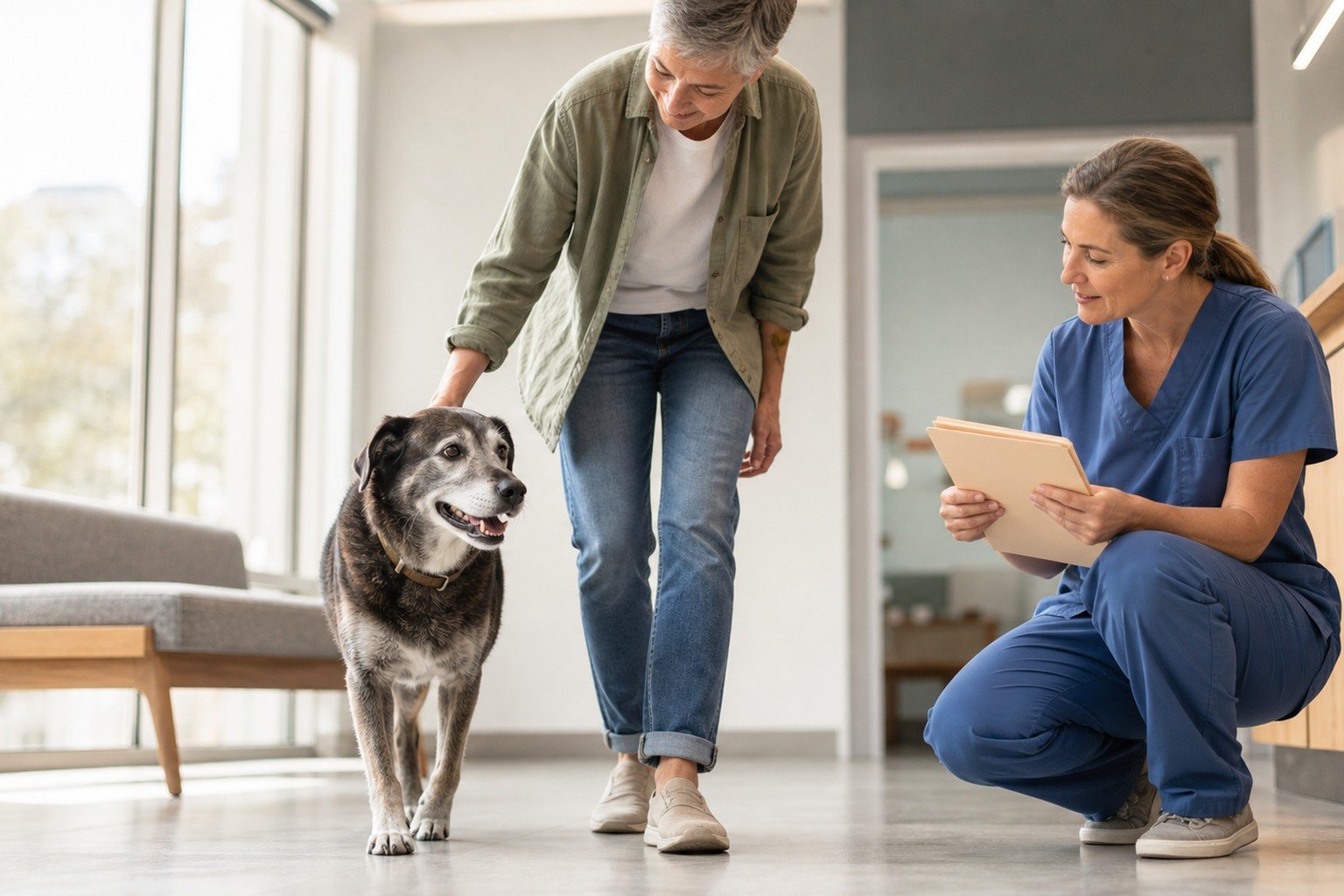
Senior status is a life-stage context, not a diagnosis or a single birthday. Dogs age at different rates, and several conditions may coexist. Record the dog's ordinary function across movement, appetite, water, elimination, sleep, behavior, senses, grooming, social interaction, and recovery. Use routine visits to establish trends and patient-specific screening rather than waiting for dramatic decline. Keep dates, sources, and the dog's affected daily function attached to every observation so later changes can be compared accurately without turning a trend into a home diagnosis.
Short answer
Healthy aging still requires an individual baseline and repeated assessment
AAHA senior guidelines emphasize individual variation, multimorbidity, history, examination, diagnostic planning, and follow-up. Quality-of-life research supports multidimensional owner observations while preserving measurement limits. [1] [2] [3] [4]
- Compare the dog with an individual whole-dog baseline.
- Observe ordinary function without provoking pain, fear, fatigue, or a stronger example.
- Treat age, terms, checklists, and population evidence as context rather than diagnosis.
- Escalate sudden, severe, progressive, dangerous, or function-limiting changes promptly.
Safety first
Do not dismiss urgent change as normal aging
Seek urgent care for collapse, breathing difficulty, seizure, severe pain, major trauma, inability to stand, sudden loss of coordination, repeated unproductive retching, a painful distended abdomen, major bleeding, suspected toxin exposure, or new inability to urinate. Contact the veterinarian promptly for rapid or progressive change.
- Do not delay urgent care while completing a log, FAQ, glossary, or routine appointment plan.
- Do not force activity, handling, food, water, or a home test to confirm a concern.
- Do not start, stop, combine, divide, or calculate medication or supplements from this article.
Veterinary note
This article is educational and does not diagnose, treat, prescribe, or replace care from a licensed veterinarian. Your dog’s history, examination, diet, medications, and current signs determine what is appropriate.
Understand senior status without stereotyping decline
Age, size, breed, genetics, prior disease, body and muscle condition, activity, environment, and access to care influence aging. A population pattern does not predict one dog's exact trajectory.
Slower movement, sleep change, sensory change, appetite change, accidents, confusion, or social change should not be labeled normal without context. Pain, organ disease, endocrine change, neurologic disease, dental disease, medication, and environment may contribute.
A senior dog can remain engaged and comfortable while still needing closer monitoring. Wellness care and illness evaluation can occur together.
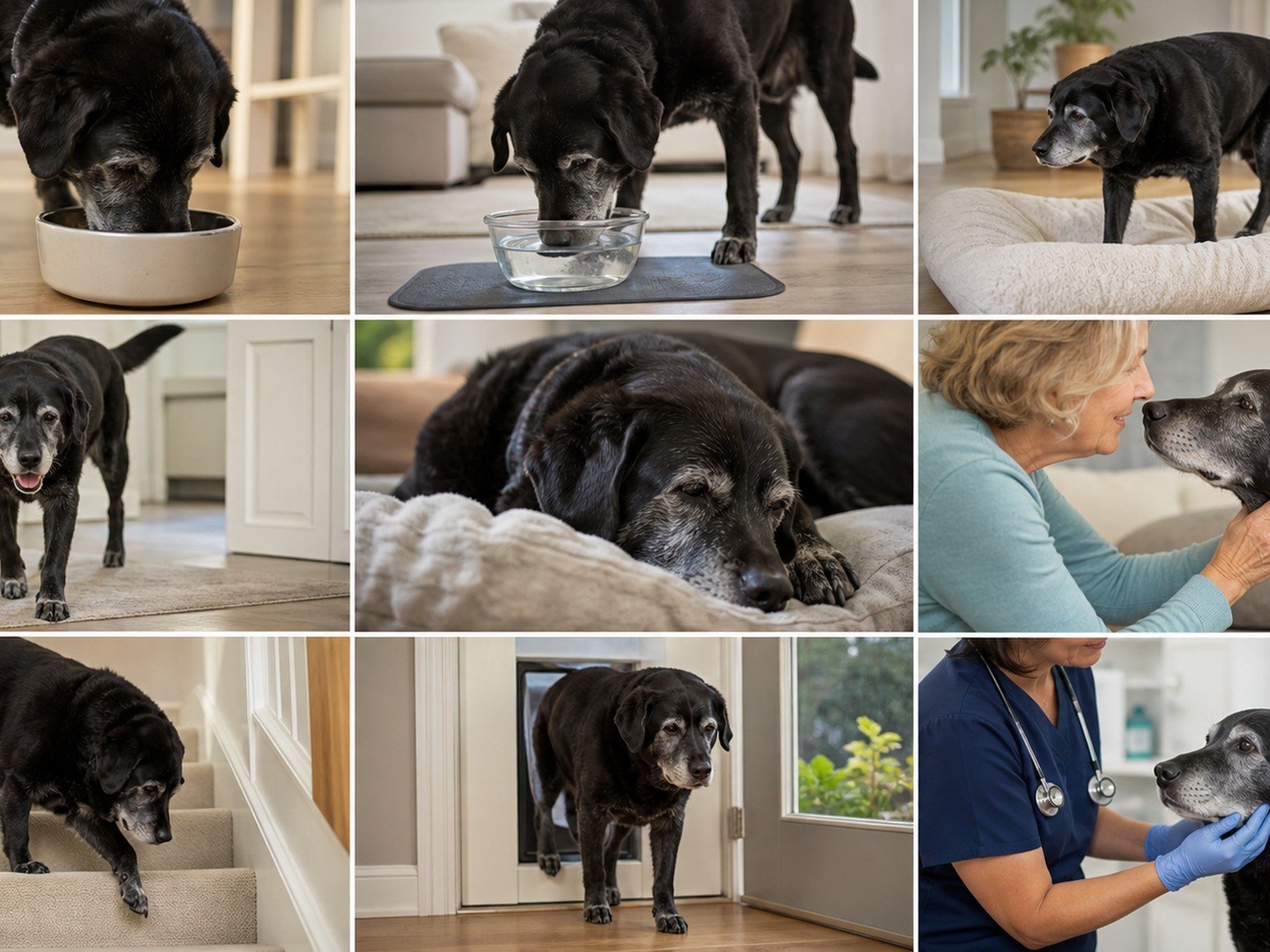
Build a whole-dog baseline
Track weight trend, body and muscle condition, appetite, water, urination, stool, vomiting, mobility, rising, stairs, play, sleep, breathing, cough, grooming, skin, mouth, senses, behavior, and medication tolerance.
Record change from the dog's own ordinary pattern, onset, frequency, progression, context, recovery, and affected daily task. Stable scale weight can coexist with muscle loss or another meaningful change.
Use short natural video for gait or behavior only when safe. Do not repeat stairs, extend exercise, withhold food or water, or provoke confusion for documentation.
Prepare patient-specific screening
Screening is intended to identify risk or early change in an apparently stable patient; diagnosis evaluates a specific concern. Examination and history guide which tests are useful and how often they are repeated. [3]
A CBC, chemistry profile, urinalysis, blood pressure, imaging, endocrine testing, or other assessment answers a different question. No panel proves that every system is normal.
Ask what each proposed test is intended to detect, how results would change the plan, what limitations apply, and when a baseline should be repeated.
Support function without self-prescribing
Home traction, access, lighting, temperature, resting areas, feeding setup, and routine can affect comfort and safety, but no aid prevents every fall or treats disease.
Activity, rehabilitation, nutrition, weight goals, medication, supplements, and assistive devices require patient-specific fit. Do not assume every senior needs less activity or a supplement stack.
Preserve current veterinary instructions and report barriers. A plan that the dog or caregiver cannot perform safely needs revision, not silent improvisation.
Create a sustainable follow-up rhythm
Keep one current medication, supplement, diet, diagnosis, allergy, and emergency-contact list. Record who gave each instruction and the date.
Choose a few meaningful functional outcomes and contact triggers. Quality-of-life tools may organize observations but do not create universal thresholds or replace examination. [4]
At each recheck, compare the baseline, new findings, treatment response, adverse effects, caregiver capacity, and priorities. Aging care is iterative rather than a one-time senior checklist.
Coordinate daily caregivers
Share concise instructions with family, walkers, sitters, groomers, boarding staff, and anyone helping with medication or mobility. Include what is normal, what must not be changed, and who to contact.
Use consistent names and units for foods, medication, supplements, water observations, and elimination notes. Duplicate or contradictory records can hide trends.
Report missed doses, appetite changes, falls, confusion, or inability to follow the plan honestly. Caregiver observations are evidence for reassessment, not a test of devotion.
Plan for transitions without assuming decline
A move, new caregiver, schedule change, loss of a companion, travel, boarding, or home renovation can affect sleep, elimination, appetite, mobility, and behavior. Record the transition alongside health observations instead of attributing every change to age.
Prepare identification, current records, medication instructions, familiar routines, safe transport, and clinic contact details before a predictable transition. Do not introduce several new aids or products at once.
Afterward, compare recovery with baseline and report persistent or progressive change. Environmental context may contribute without ruling out pain, illness, sensory change, or another medical cause.
Prepare for a focused veterinary conversation
Bring a concise timeline, short natural-movement or symptom videos when safe, the exact names and photographs of every food, treat, medication, and supplement label, and notes about appetite, water intake, stool, sleep, activity, comfort, and behavior. Include recent injuries, travel, boarding, diet changes, missed medication, and previous test results. A complete record helps the veterinary team separate a repeatable pattern from a single impression.
Decide in advance what you need from the visit: an urgency decision, a diagnosis plan, a nutrition review, a pain or mobility assessment, or a monitored trial. Ask what result would change the plan and what finding would rule an option out. This keeps research and product information in the right role. Evidence can shape questions and expectations, but it cannot determine what is safe for an individual dog without the history and examination.
Owner tool
Build a first senior baseline
On a phone, swipe across the table to see every column.
| Checkpoint | What to record | Why it helps |
|---|---|---|
| Whole dog | Function, intake, elimination, senses | Finds trends |
| Context | Onset, routine, health, products | Widens causes |
| Assessment | History, exam, selected tests | Clarifies plan |
| Follow-up | Outcome, triggers, recheck | Closes loop |
Better questions, calmer next steps
Questions to ask your veterinarian
- What is this dog's senior baseline?
- Which changes should prompt earlier contact?
- What is each screening test intended to clarify?
- Which home and activity instructions apply?
- What outcome and recheck should we record?
FAQ
Is slowing always normal aging?
No.
Does every senior need the same tests?
No.
Should every senior take supplements?
No.
Can a quality-of-life score diagnose disease?
No.
Is weight alone enough?
No; muscle and function matter too.
Sources
- American Animal Hospital Association: 2023 Senior Care Guidelines. Whole-patient senior assessment and multimorbidity.
- American Animal Hospital Association: Evaluating the Healthy Senior Pet. History, examination, baseline, and monitoring.
- American Animal Hospital Association: Diagnostic Tests and Recommended Frequencies. Patient-specific diagnostics and monitoring.
- Frontiers in Veterinary Science: Health-Related Quality of Life in Senior Dogs. Multidimensional owner reporting and measurement limits.
