

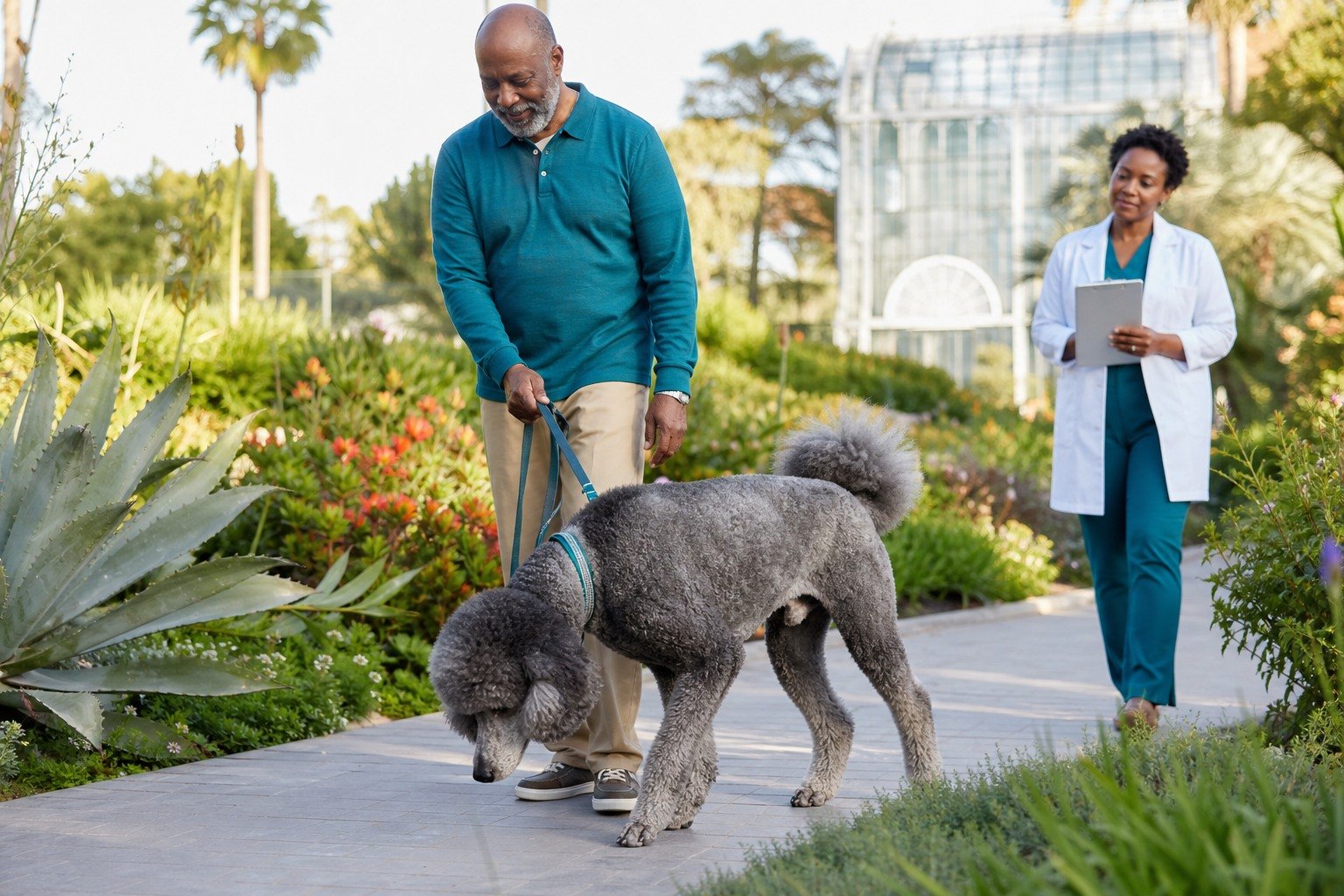
Aging affects immune regulation, but immune support is not a single product category or a promise to boost defenses. Research in dogs and cats describes immunosenescence, meaning age-related changes in immune response, alongside inflammaging, a pattern of chronic low-grade inflammation. These concepts are scientifically useful but cannot diagnose an individual dog or justify an immune-boosting supplement. A practical senior plan protects overall health through regular veterinary assessment, individualized vaccination and parasite prevention, complete and balanced nutrition, dental and skin care, appropriate movement, rest, weight and muscle monitoring, chronic-disease management, and prompt evaluation of infection or unexplained decline. This guide separates research concepts from owner actions and keeps treatment decisions with the veterinary team.
Short answer
Support the whole senior dog, not an undefined immune score
Immune aging involves complex changes rather than a simple decline that owners can measure at home. Reviews describe altered innate and adaptive responses and chronic inflammation, while senior-care guidelines emphasize preventive care, nutrition, dental health, function, and individualized medical plans. No consumer product can be assumed to reverse immune aging. [1] [2]
- Record the exact question, baseline, product or exposure, timing, and whole-dog context.
- Use the record to support veterinary assessment, not to diagnose or create a regimen at home.
- Bring the complete diet, labels, medications, supplements, health history, and observed changes.
- Agree on measurable goals, a review point, and clear instructions for urgent changes.
Safety first
Fever, breathing trouble, collapse, severe weakness, or rapid decline needs prompt care
Contact a veterinarian promptly for new lethargy, reduced appetite, persistent cough, skin or ear infection, vomiting or diarrhea, painful urination, unexplained weight loss, a changing wound, or recurrent illness. Seek urgent care for breathing difficulty, collapse, seizures, severe weakness, uncontrolled bleeding, suspected poisoning, or rapid deterioration. Do not wait for a supplement to work.
- Do not delay care for sudden, severe, escalating, or function-limiting signs.
- Do not start, stop, combine, divide, or calculate treatment from this article.
- Preserve exact packages, lot information, exposure details, and a concise timeline.
Veterinary note
This article is educational and does not diagnose, treat, prescribe, or replace care from a licensed veterinarian. Your dog’s history, examination, diet, medications, and current signs determine what is appropriate.
Understand what immune aging does and does not mean
Immunosenescence describes age-associated changes across immune cells, signaling, antibody response, barriers, and recovery. Inflammaging describes persistent low-grade inflammatory signaling. Neither term means that every older dog is immunodeficient, chronically infected, or helped by the same intervention. [1]
Dogs age at different rates according to size, breed, genetics, environment, prior disease, nutrition, and individual physiology. Research findings from populations or laboratory measures cannot be converted into a home immune score, a universal senior age, or a list of symptoms that identifies immune dysfunction.
Signs such as fatigue, poor appetite, weight change, skin problems, coughing, digestive upset, or slower recovery are nonspecific. They can reflect infection, pain, dental disease, cancer, endocrine illness, kidney or heart disease, medication effects, or other problems that require veterinary assessment.
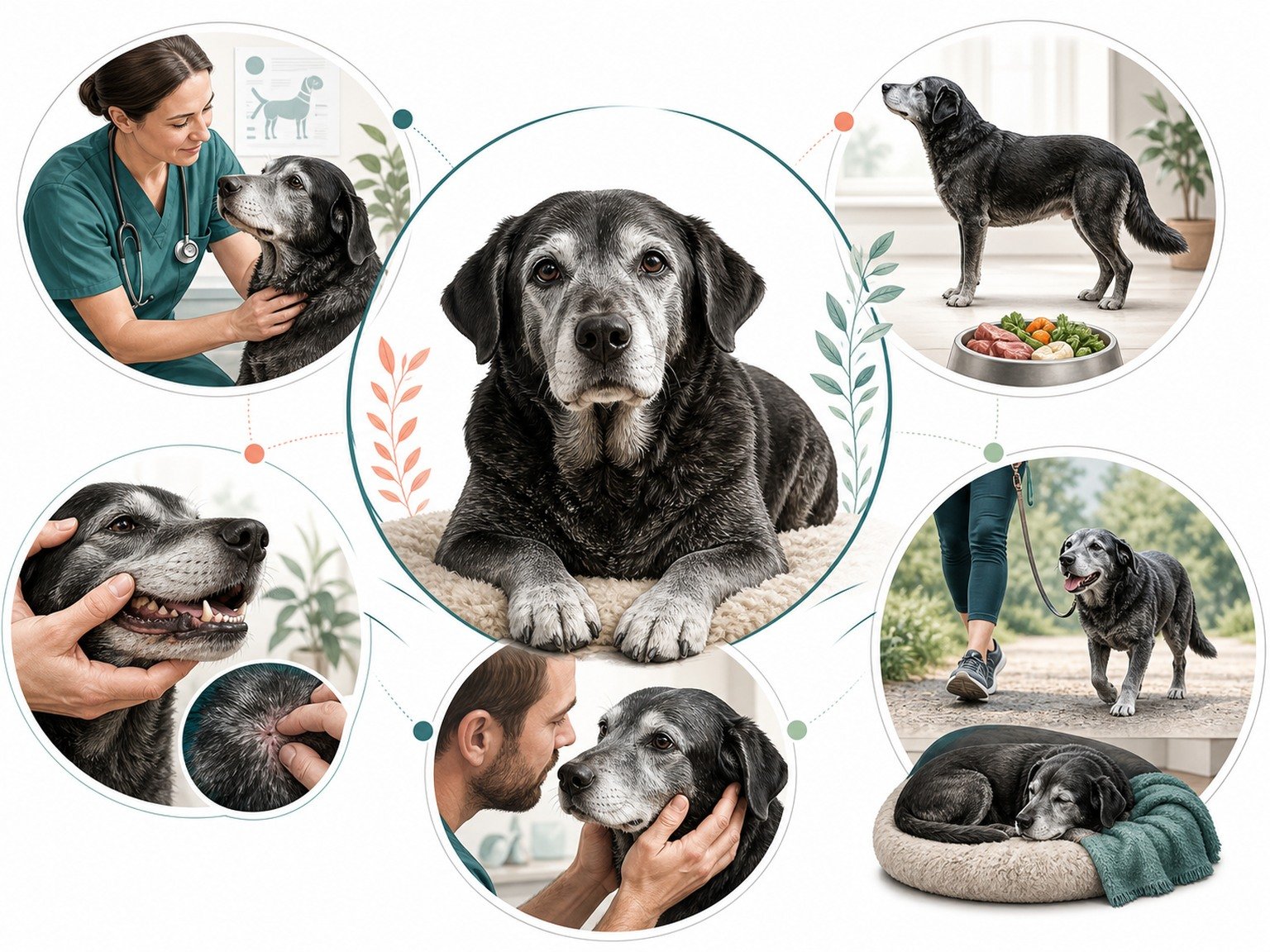
Build prevention around individual risk
Senior wellness care should review exposure, travel, lifestyle, prior vaccine response, concurrent disease, medications, and regional risks. Vaccination and parasite prevention are individualized; age alone is not a reason to stop or automatically intensify them. AAHA recommends a tailored preventive plan. [2]
Oral disease, damaged skin, chronic ear disease, urinary problems, and untreated wounds can create ongoing inflammation or infection risk. Regular examinations and timely treatment protect barriers and comfort more directly than an unverified immune claim on a package.
Bring a record of illnesses, healing time, antimicrobial use, vaccination history, travel, boarding, wildlife or tick exposure, and household changes. Trends help the veterinarian decide whether testing, prevention changes, or referral is appropriate.
Use nutrition, movement, and rest without overpromising
A complete and balanced diet supplies required nutrients, but more is not automatically better. Senior dogs may have obesity, muscle loss, dental limitations, kidney disease, gastrointestinal disease, or other needs that change food decisions. Nutrition should be matched to the individual. [3]
Regular tolerable movement can support muscle, mobility, sleep, enrichment, and weight management. It should be adjusted for pain, heart or respiratory disease, neurologic change, weather, and recovery. Exercise is not an immune treatment, and exhaustion is not evidence of a stronger response.
Sleep and predictable routines support wellbeing, yet a sudden sleep change may signal pain, cognitive change, elimination needs, or illness. Track rest alongside appetite, thirst, stool, urination, mobility, interaction, and medication timing rather than treating sleep alone.
Evaluate immune-support products with a clinical question
Terms such as immune support, antioxidant defense, natural protection, or healthy inflammation do not establish a clinically meaningful outcome. Ask what exact ingredient and formulation were studied in dogs, for which population, at what outcome, and with what limitations. [4]
Review the full product against the complete diet, medications, other supplements, diseases, allergies, and laboratory findings. Duplication, contamination, formulation variability, interactions, and inappropriate amounts can matter, especially in a senior dog with reduced physiologic reserve.
If a veterinarian approves a trial, define the purpose, baseline, target observation, administration plan, adverse signs, and review date. Do not use a supplement to delay investigation of recurrent infection, weight loss, a mass, fever, pain, or declining function.
Prepare for a focused veterinary conversation
Bring a concise timeline, short natural-movement or symptom videos when safe, the exact names and photographs of every food, treat, medication, and supplement label, and notes about appetite, water intake, stool, sleep, activity, comfort, and behavior. Include recent injuries, travel, boarding, diet changes, missed medication, and previous test results. A complete record helps the veterinary team separate a repeatable pattern from a single impression.
Decide in advance what you need from the visit: an urgency decision, a diagnosis plan, a nutrition review, a pain or mobility assessment, or a monitored trial. Ask what result would change the plan and what finding would rule an option out. This keeps research and product information in the right role. Evidence can shape questions and expectations, but it cannot determine what is safe for an individual dog without the history and examination.
Owner tool
Build a senior immune-health record
On a phone, swipe across the table to see every column.
| Checkpoint | Record | Why it helps |
|---|---|---|
| Baseline | Weight, muscle, appetite, activity | Shows whole-dog trend |
| Prevention | Vaccines, parasites, exposure, travel | Individualizes risk |
| Barriers | Mouth, skin, ears, wounds, urine | Finds treatable concerns |
| Change | Timing, severity, recovery, recurrence | Guides evaluation |
Better questions, calmer next steps
Questions to ask your veterinarian
- Which age-related changes matter for this dog?
- Is preventive care matched to current exposure and disease?
- Could dental, skin, urinary, or chronic disease be contributing?
- Is the diet complete and appropriate for current health?
- What change requires prompt reassessment?
FAQ
Can I boost my senior dog's immune system?
No product or routine can promise a general immune boost.
Do senior dogs stop needing vaccines?
Not automatically; vaccination is individualized.
Is inflammation always harmful?
No. Context, cause, duration, and degree matter.
Should I add antioxidants?
Not without reviewing the diet, evidence, and patient.
Do recurrent infections mean normal aging?
No. They warrant veterinary evaluation.
Sources
- Frontiers in Veterinary Science: Immunosenescence and Inflammaging in Dogs and Cats. Age-related immune and inflammatory changes.
- American Animal Hospital Association: Senior Care Guidelines for Dogs and Cats. Individualized preventive and senior care.
- American Animal Hospital Association: Senior Pet Nutrition. Nutrition, body condition, and muscle assessment.
- Nutrition Today: Veterinary Pet Supplements and Nutraceuticals. Evidence, quality, and formulation limits.
- Animals: Aging in Dogs: A Review. Biology and variability of canine aging.
