

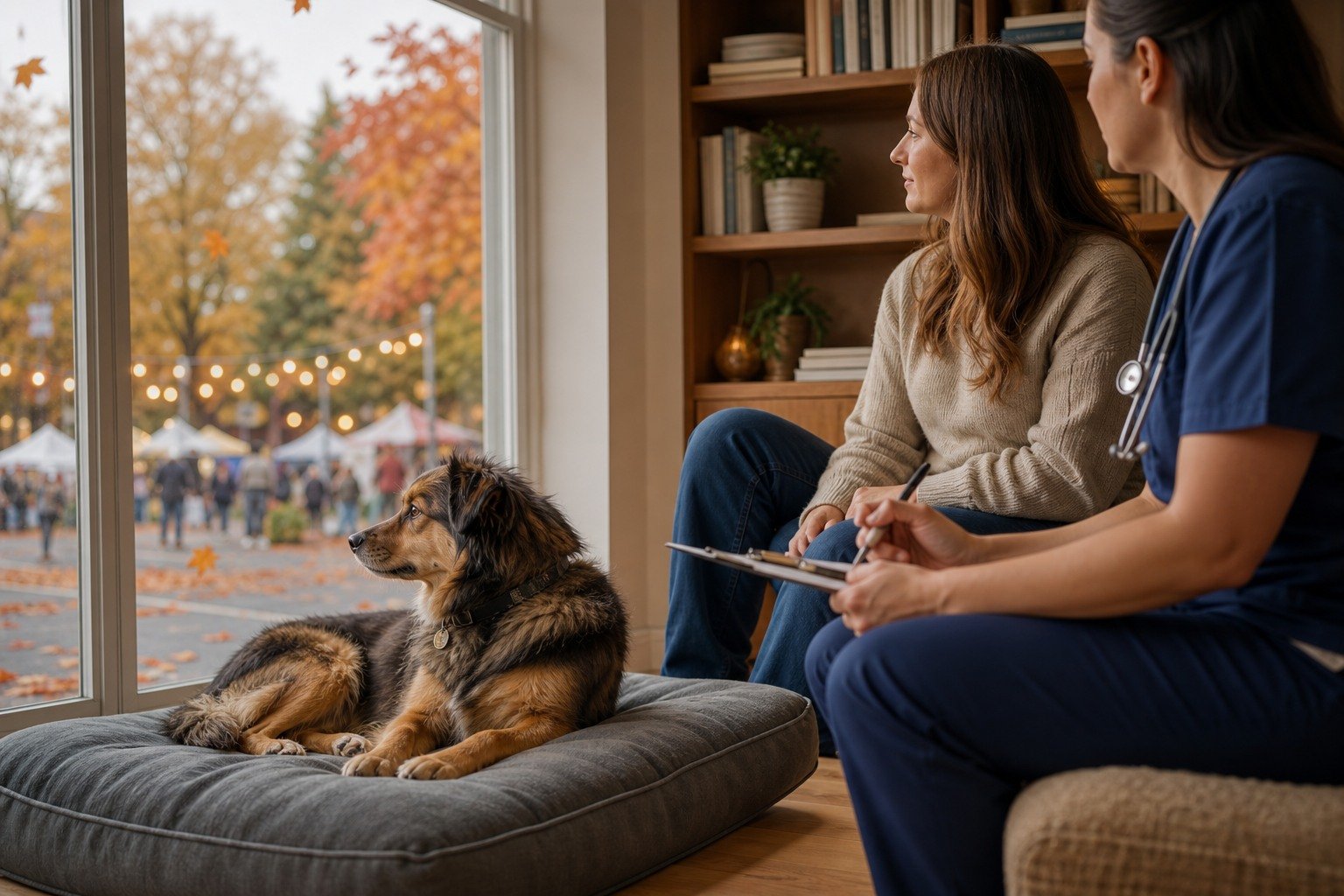
Seasonal events can cluster noise, visitors, travel, schedule changes, decorations, neighborhood activity, and unfamiliar handling. Some dogs show subtle avoidance; others may attempt escape or become unable to settle. Timing helps owners anticipate context, but it does not diagnose anxiety, identify the cause, or determine severity. This guide complements storm and fireworks resources by using a full-year calendar. Record each event, the dog's baseline, prior observable response, safety issues, recovery, and concurrent health or routine changes. Review predictable concerns early with the veterinarian and, when appropriate, a qualified behavior professional. Never force exposure to prove readiness.
Short answer
Plan from the dog's history, not the holiday name
Noise-fear evidence and Cornell guidance support advance planning, familiar retreat options, identification, avoidance of punishment, and veterinary consultation for significant fear. Population surveys show broad patterns and comorbidity, but no calendar date diagnoses one dog. Humane planning remains individualized and should avoid aversive methods and flooding. [1] [2] [3] [4]
- Start with the individual dog's baseline, complete history, and current veterinary plan.
- Use repeated observations to improve a veterinary discussion, not to diagnose or treat at home.
- Keep associations, population findings, and research endpoints within their actual limits.
- Escalate sudden, severe, persistent, progressive, dangerous, or function-limiting changes promptly.
Safety first
Escape risk, severe distress, or sudden change needs professional help
Contact the veterinary team promptly for panic, repeated escape attempts, self-injury, inability to eat or rest, aggression, prolonged failure to recover, or sudden behavior change. Seek urgent help when the dog or another person is in immediate danger. Do not punish, flood, corner, or deliberately recreate the event.
- Do not delay urgent care while completing a log, testing a setup, or seeking a lower-cost option.
- Do not provoke, corner, restrain, punish, flood, or force exposure to test a behavior or capture a video.
- Do not start, stop, combine, divide, or calculate medication or supplements from this article.
Veterinary note
This article is educational and does not diagnose, treat, prescribe, or replace care from a licensed veterinarian. Your dog’s history, examination, diet, medications, and current signs determine what is appropriate.
Build a full-calendar event map
List predictable noise, visitors, travel, boarding, schedule disruption, neighborhood gatherings, school breaks, construction, ceremonies, and household traditions. Add approximate dates, duration, location, people and animals involved, and whether several events cluster together.
Beside each event, record the dog's ordinary baseline and prior observable behavior: orientation, startle, retreat, panting, pacing, vocalizing, elimination, food interest, sleep, escape attempts, aggression, and recovery. These signs have multiple explanations and should not be converted into a diagnosis.
Large owner-survey research describes population-level noise sensitivity and comorbidity patterns. [3] It cannot determine cause, prognosis, or treatment for an individual dog. Use it to recognize that concerns deserve attention, not to assign a label from timing.
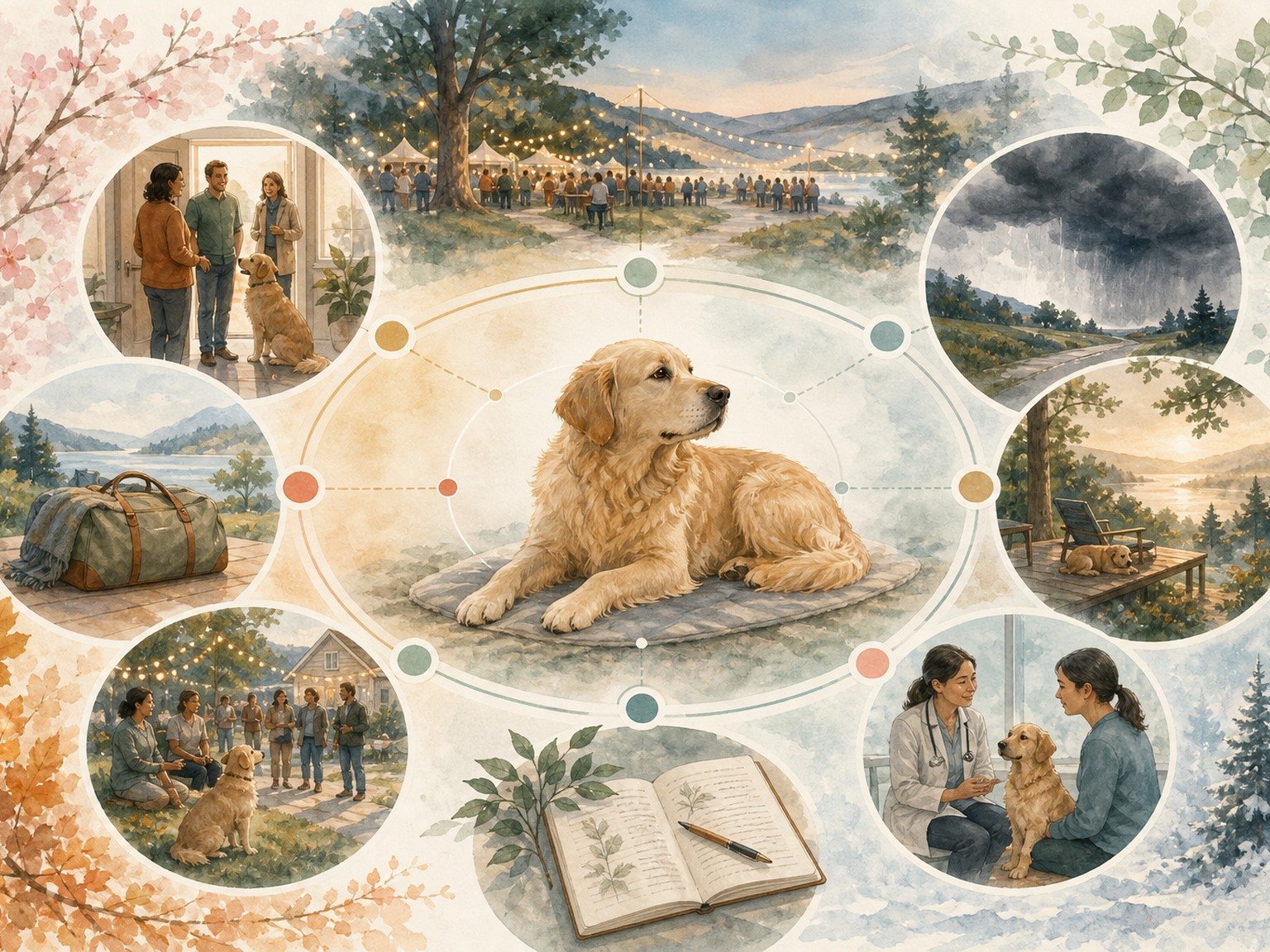
Plan distance, choice, and household safety
Cornell recommends advance preparation, current identification, avoidance of punishment, and veterinary consultation for significant fireworks or storm fear. [2] A familiar retreat may help some dogs, but no room design, sound level, crate, or event routine is universally safe.
Decide who controls doors, gates, visitors, walks, and transport. Tell guests not to approach or coax the dog. Preserve access to water and ordinary elimination opportunities when safe. Check that identification and contact details are current before the event.
AVSAB supports reward-based methods, environmental management, medical assessment, and qualified referral rather than aversive techniques or flooding. [4] Do not hold a dog near noise, lure it closer than it chooses, or punish avoidance, vocalizing, or attempts to leave.
Discuss known events early with the professional team
Noise-fear reviews describe individualized, multimodal management and variable evidence. [1] Bring the calendar, prior response, recovery time, medical history, medication and supplement list, and practical constraints well before a predictable event.
Ask what medical contributors should be considered and whether a veterinary behavior referral is appropriate. Medication, supplements, behavior modification, and emergency planning are patient-specific decisions. A generic holiday checklist cannot select or dose them.
Clarify what can be practiced safely before the event and what should not be attempted. Any behavior plan should preserve choice, avoid provoking distress, and include criteria for stopping and contacting the professional team.
Review the event after it passes
Record what actually occurred: intensity and duration of the event, distance, household setup, observed behavior, food and water, sleep, elimination, safety incidents, interventions used, and time to recover. Note whether the event differed from expectations.
Do not judge success only by silence. A dog may freeze, withdraw, or remain vigilant without vocalizing. Compare the whole pattern with baseline and prior events, and report adverse effects or worsening promptly.
Use the review to update future questions. Include the next known event and any household change that could alter the plan. The aim is not to expose the dog until it gets used to events; it is to improve safety, welfare, professional decision-making, and realistic preparation across the year.
Prepare for a focused veterinary conversation
Bring a concise timeline, short natural-movement or symptom videos when safe, the exact names and photographs of every food, treat, medication, and supplement label, and notes about appetite, water intake, stool, sleep, activity, comfort, and behavior. Include recent injuries, travel, boarding, diet changes, missed medication, and previous test results. A complete record helps the veterinary team separate a repeatable pattern from a single impression.
Decide in advance what you need from the visit: an urgency decision, a diagnosis plan, a nutrition review, a pain or mobility assessment, or a monitored trial. Ask what result would change the plan and what finding would rule an option out. This keeps research and product information in the right role. Evidence can shape questions and expectations, but it cannot determine what is safe for an individual dog without the history and examination.
Owner tool
Create a seasonal event plan
On a phone, swipe across the table to see every column.
| Checkpoint | What to record | Why it helps |
|---|---|---|
| Event | Date, noise, visitors, travel, duration | Maps context |
| Dog | Baseline, behavior, safety, recovery | Shows pattern |
| Plan | Distance, retreat, doors, identification | Reduces risk |
| Review | What happened, response, adverse effects | Improves follow-up |
Better questions, calmer next steps
Questions to ask your veterinarian
- How early should we discuss this event?
- Could pain or illness contribute to the change?
- What safety plan fits this dog's history?
- Is qualified behavior referral appropriate?
- Which response requires urgent or earlier contact?
FAQ
Does seasonal timing diagnose anxiety?
No.
Is this only about fireworks?
No; it covers full-calendar disruption.
Should I expose my dog in advance?
Never force or flood exposure.
Does a safe room work for every dog?
No.
Can I choose medication from a checklist?
No.
Sources
- Animals: Therapy and Prevention of Noise Fears in Dogs. Individualized multimodal care and evidence limits.
- Cornell University College of Veterinary Medicine: Fear of Fireworks and Thunderstorms. Advance planning, retreat, identification, and consultation.
- Scientific Reports: Prevalence and Comorbidity in Canine Anxiety. Population patterns and observational limits.
- American Veterinary Society of Animal Behavior: Humane Dog Training Position Statement. Reward-based methods and opposition to aversives and flooding.
