


A calm, evidence-aware owner framework for life-stage wellness plan, with clear professional-care boundaries and practical observations to bring to the veterinary team.
Short answer
Use a repeatable plan and keep veterinary care in the lead
Match preventive care, nutrition review, behavior support, movement, dental care, and screening conversations to the dog's current life stage and individual risk.
- Consider age, size, breed pattern, development, health history, and function.
- Ask how often examinations and screening should occur.
- Measure intake and track body and muscle condition.
- Choose age-appropriate learning, rest, social contact, and mental activity.
Safety first
Stop the checklist when the dog needs professional care
At any life stage, owners should seek immediate veterinary or emergency care if a dog has difficulty breathing, collapses, experiences seizures, or suffers major trauma such as being hit by a car. Prompt veterinary evaluation is advised if owners notice rapid or unexplained weight loss, persistent vomiting or diarrhea, marked changes in thirst or urination, or a sudden decline in energy or behavior, as these can signal serious illness. Senior dogs or those with known chronic disease that suddenly become disoriented, unable to rise, or incontinent in ways that affect their welfare should be assessed quickly to address pain, neurologic problems, or other urgent conditions. During end-of-life planning, owners are encouraged to contact their veterinarian for urgent guidance if pain appears uncontrolled despite current medications, the dog cannot eat or drink adequately, or breathing seems labored or uncomfortable.
Veterinary note
Educational information only; contact a veterinarian for diagnosis, treatment, or urgent concerns. This guide supports observation and preparation; it does not diagnose a condition or replace an individualized care plan.
What is reasonably supported
Use repeated observations to improve the veterinary conversation
Life-stage guidelines group dogs into stages such as puppy, young adult, mature adult, senior, and end-of-life, with wellness care tailored to each stage, including physical exams, client education, and risk-based… Exact age cutoffs and recommended services may vary by guideline and individual dog; veterinarians adjust… Healthy adult dogs are generally recommended to have at least annual wellness examinations, while many senior dogs benefit from visits about every six months to help detect age-related problems earlier. Dogs with chronic illnesses, high-risk lifestyles, or concerning home observations may need more frequent visits… Preventive care across all life stages typically includes a thorough physical examination, vaccination based on core and risk-based needs, parasite control, nutritional assessment, behavior evaluation, and discussion of environmental and… Specific vaccine schedules, parasite products, and diagnostic tests should follow current regional guidelines and the… Baseline and periodic laboratory screening, such as complete blood counts, serum biochemistry profiles, urinalysis, and in some cases thyroid testing, are recommended more consistently as dogs reach middle age and… The timing and frequency of screening tests should be guided by the veterinarian, taking into… End-of-life or palliative-care planning for dogs focuses on frequent quality-of-life assessments, pain management, mobility support, caregiver support, and discussion of hospice and euthanasia options when appropriate. End-of-life decisions are individualized and based on the dog’s comfort, prognosis, and family values; structured…
What remains uncertain
Home observations cannot establish the cause
Offers a broad planning framework for life-stage wellness in dogs and does not replace individualized veterinary recommendations based on breed, medical history, and local disease risks. Does not specify vaccine products, exact deworming or screening intervals, or medication dosing; these must follow current veterinary guidelines and the dog’s risk profile. Uses general age ranges (puppy, adult, senior, end-of-life) that may shift depending on breed size and expected lifespan. Does not guarantee disease prevention; wellness planning aims to reduce risk and detect problems earlier, not to eliminate illness entirely.
Define the current life stage
A useful review begins with the dog's own normal pattern, because comparison with a generic ideal can hide meaningful individual change. Research selected for this guide supports a bounded point: Life-stage guidelines group dogs into stages such as puppy, young adult, mature adult, senior, and end-of-life, with wellness care tailored to each stage, including physical exams, client education, and risk-based preventive care. Exact age cutoffs and recommended services may vary by guideline and individual dog; veterinarians adjust plans based on breed, size,… This informs careful observation and veterinary discussion, not diagnosis or a guaranteed result.
In practice, consider age, size, breed pattern, development, health history, and function. Record the date, frequency, context, and related changes that matter to this task. Calendar age alone does not determine an individual plan. Contact the veterinary team when the pattern is persistent, progressive, painful, or joined by the red-flag signs above.
Plan veterinary visits
The safest approach separates observation from interpretation: owners document what happened, while the veterinary team evaluates possible causes. Research selected for this guide supports a bounded point: Healthy adult dogs are generally recommended to have at least annual wellness examinations, while many senior dogs benefit from visits about every six months to help detect age-related problems earlier. Dogs with chronic illnesses, high-risk lifestyles, or concerning home observations may need more frequent visits as determined by their veterinarian. This informs careful observation and veterinary discussion, not diagnosis or a guaranteed result.
In practice, ask how often examinations and screening should occur. Record the date, frequency, context, and related changes that matter to this task. Visit frequency changes with health status and new signs. Contact the veterinary team when the pattern is persistent, progressive, painful, or joined by the red-flag signs above.
Review nutrition and growth
Consistency makes the record more useful. Use the same route, measure, timing, or description when practical and note unusual circumstances. Research selected for this guide supports a bounded point: Preventive care across all life stages typically includes a thorough physical examination, vaccination based on core and risk-based needs, parasite control, nutritional assessment, behavior evaluation, and discussion of environmental and lifestyle factors. Specific vaccine schedules, parasite products, and diagnostic tests should follow current regional guidelines and the dog’s individual risk profile rather… This informs careful observation and veterinary discussion, not diagnosis or a guaranteed result.
In practice, measure intake and track body and muscle condition. Record the date, frequency, context, and related changes that matter to this task. Puppies, adults, and seniors have different nutritional questions. Contact the veterinary team when the pattern is persistent, progressive, painful, or joined by the red-flag signs above.
Support behavior and enrichment
Small environmental details can change what the owner sees, so include weather, visitors, travel, food changes, medication timing, and household disruption. Research selected for this guide supports a bounded point: Baseline and periodic laboratory screening, such as complete blood counts, serum biochemistry profiles, urinalysis, and in some cases thyroid testing, are recommended more consistently as dogs reach middle age and become seniors, to identify subclinical… The timing and frequency of screening tests should be guided by the veterinarian, taking into account prior results, breed-related risks,… This informs careful observation and veterinary discussion, not diagnosis or a guaranteed result.
In practice, choose age-appropriate learning, rest, social contact, and mental activity. Record the date, frequency, context, and related changes that matter to this task. Behavior change can also signal pain or illness. Contact the veterinary team when the pattern is persistent, progressive, painful, or joined by the red-flag signs above.
Protect mobility and fitness
A checklist is a prompt for attention, not proof that risk has been removed or that a medical concern has been explained. Research selected for this guide supports a bounded point: End-of-life or palliative-care planning for dogs focuses on frequent quality-of-life assessments, pain management, mobility support, caregiver support, and discussion of hospice and euthanasia options when appropriate. End-of-life decisions are individualized and based on the dog’s comfort, prognosis, and family values; structured checklists are tools to support,… This informs careful observation and veterinary discussion, not diagnosis or a guaranteed result.
In practice, match movement to development, conditioning, comfort, and weather. Record the date, frequency, context, and related changes that matter to this task. More exercise is not automatically safer. Contact the veterinary team when the pattern is persistent, progressive, painful, or joined by the red-flag signs above.
Include oral and parasite care
When several caregivers are involved, shared terms and one current record reduce missed steps, duplicate care, and conflicting impressions. Research selected for this guide supports a bounded point: Life-stage guidelines group dogs into stages such as puppy, young adult, mature adult, senior, and end-of-life, with wellness care tailored to each stage, including physical exams, client education, and risk-based preventive care. Exact age cutoffs and recommended services may vary by guideline and individual dog; veterinarians adjust plans based on breed, size,… This informs careful observation and veterinary discussion, not diagnosis or a guaranteed result.
In practice, use veterinary guidance for dental prevention and regional parasite risk. Record the date, frequency, context, and related changes that matter to this task. One generic schedule cannot fit every location or dog. Contact the veterinary team when the pattern is persistent, progressive, painful, or joined by the red-flag signs above.
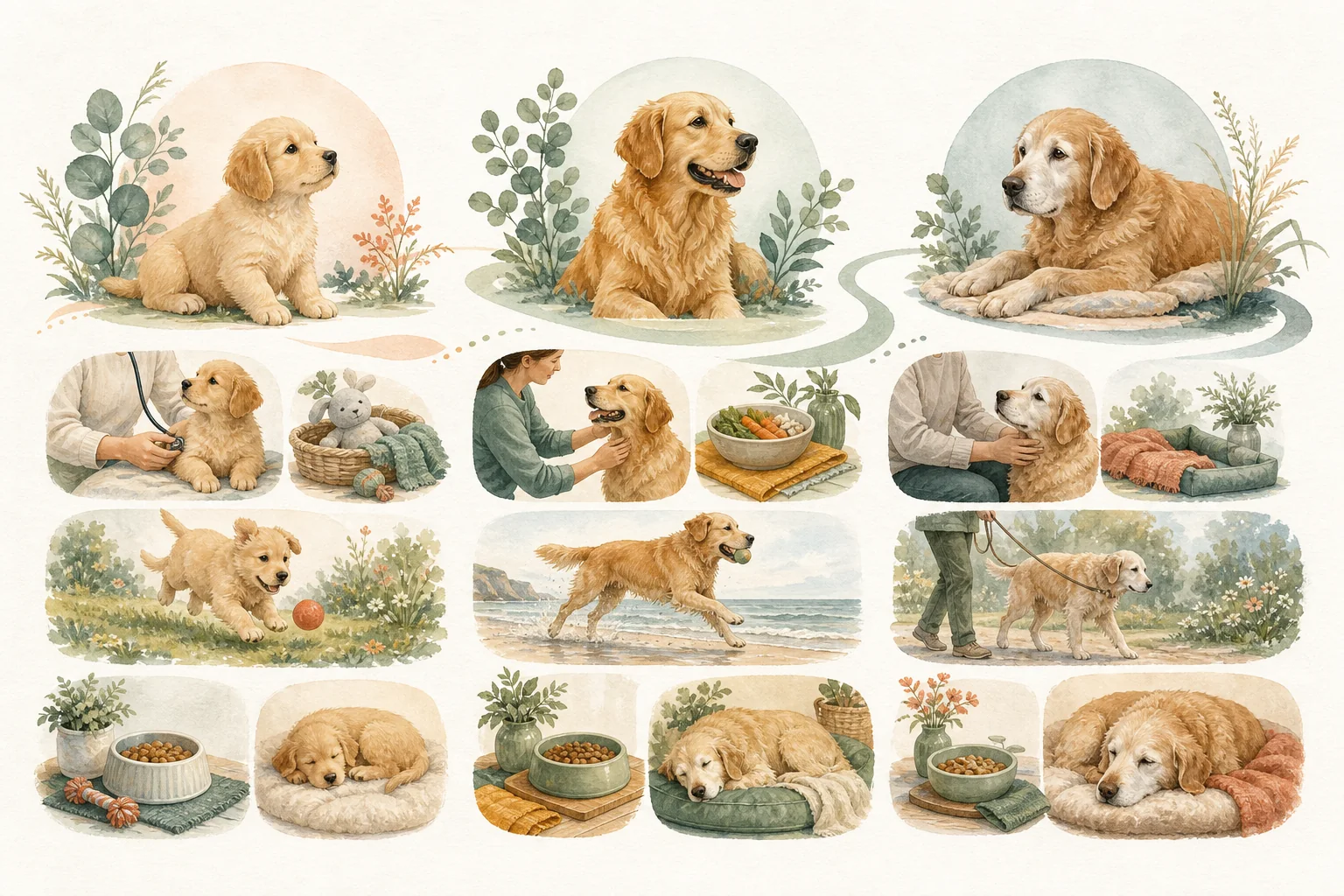
Owner tool
Life-Stage Wellness Planning for Dogs
Use this life-stage wellness plan as a repeatable owner record. Mark what is normal, what changed, and what needs veterinary guidance.
| Checkpoint | Owner action | Boundary |
|---|---|---|
| Define the current life stage | consider age, size, breed pattern, development, health history, and function | Calendar age alone does not determine an individual plan |
| Plan veterinary visits | ask how often examinations and screening should occur | Visit frequency changes with health status and new signs |
| Review nutrition and growth | measure intake and track body and muscle condition | Puppies, adults, and seniors have different nutritional questions |
| Support behavior and enrichment | choose age-appropriate learning, rest, social contact, and mental activity | Behavior change can also signal pain or illness |
| Protect mobility and fitness | match movement to development, conditioning, comfort, and weather | More exercise is not automatically safer |
| Include oral and parasite care | use veterinary guidance for dental prevention and regional parasite risk | One generic schedule cannot fit every location or dog |
| Reassess at transitions | update the plan after maturity, reproductive changes, diagnosis, injury, or aging | Do not wait for a birthday when function has changed |
A three-step next action
Observe
Complete the life-stage wellness plan without provoking a symptom or forcing the dog through difficulty.
Record
Keep dates, measurements, photographs, short natural-behavior videos, product labels, and caregiver notes together.
Escalate
Share the concise pattern with the veterinary team and seek urgent care for severe or rapidly worsening signs.
Prepare for the visit
Questions to take to your veterinarian
- Which parts of this life-stage wellness plan are most important for this dog?
- What findings need a routine appointment, a same-day call, or emergency care?
- Could current diagnoses, medications, diet, supplements, pain, vision, hearing, or mobility change the plan?
- What should I measure at home, and how often should I reassess it?
- Which change should make me stop the routine and contact you sooner?
Bring the dated observation log, relevant photos or short videos, and a complete list of foods, treats, medications, and supplements. Do not change the routine solely to produce evidence for the visit.
Frequently asked questions
Can this checklist diagnose a health problem?
No. It organizes observations and questions; diagnosis requires veterinary assessment.
How often should I repeat it?
Use the interval recommended by the veterinary team and repeat sooner after a meaningful change.
Should I change several things at once?
Usually not unless the veterinary team directs it. Multiple changes make response and risk harder to interpret.
What should I bring to the appointment?
Bring the dated log, relevant photos or videos, and complete food, medication, supplement, and product information.
Sources
- Canine Life Stage Health Checklist, American Animal Hospital Association. Life‑stage guidelines group dogs into stages such as puppy, young adult, mature adult, senior, and end‑of‑life, with wellness care tailored to each stage, including physical exams, client education, and risk‑based…
- AAHA‑AVMA Canine Preventive Healthcare Guidelines, American Veterinary Medical Association. Healthy adult dogs are generally recommended to have at least annual wellness examinations, while many senior dogs benefit from visits about every six months to help detect age‑related problems earlier.;…
- How Often Should My Dog Go to the Vet? A Dog Life Stage Guide, American Animal Hospital Association. Life‑stage guidelines group dogs into stages such as puppy, young adult, mature adult, senior, and end‑of‑life, with wellness care tailored to each stage, including physical exams, client education, and risk‑based…
- Wellness Examination in Dogs, VCA Animal Hospitals. Healthy adult dogs are generally recommended to have at least annual wellness examinations, while many senior dogs benefit from visits about every six months to help detect age‑related problems earlier.;…
Medical disclaimer
Educational information only; contact a veterinarian for diagnosis, treatment, or urgent concerns. If your dog is showing severe, sudden, or rapidly worsening signs, seek urgent veterinary care.
