A calm, evidence-aware owner framework for dog food storage plan, with clear professional-care boundaries and practical observations to bring to the veterinary team.
Short answer
Use a repeatable plan and keep veterinary care in the lead
Protect food quality and household safety through clean storage, original lot information, measured handling, bowl hygiene, and recall readiness.
- Retain the bag or label with product, lot, and date details.
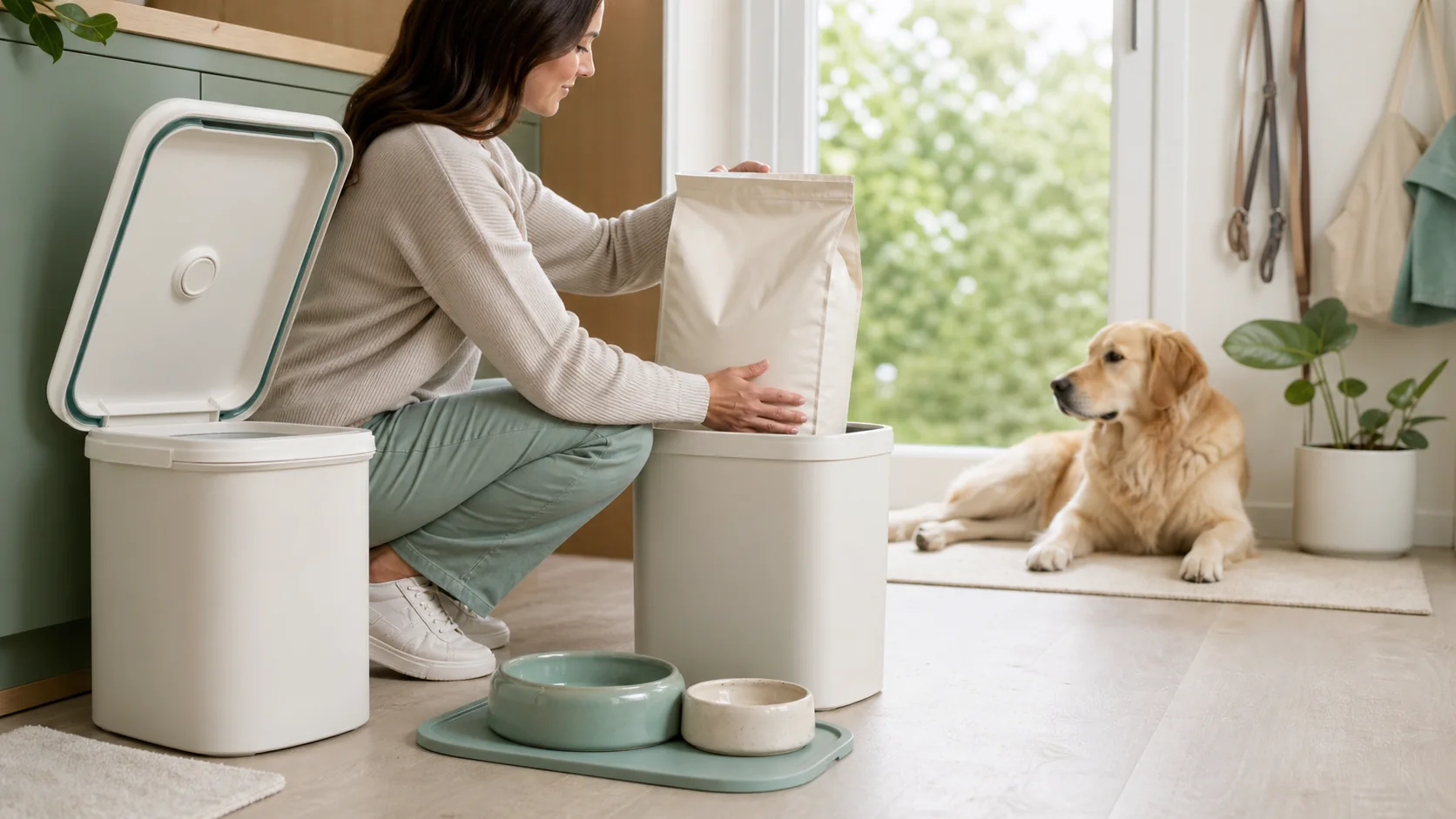
- Place the closed original bag in a clean fitted container when practical.
- Store away from heat, humidity, chemicals, and wildlife.
- Wash hands and use dedicated clean utensils.
Safety first
Stop the checklist when the dog needs professional care
Owners should seek urgent veterinary care if a dog develops sudden, severe, or bloody vomiting or diarrhea, marked abdominal pain, or collapse after eating, as these can indicate serious gastrointestinal disease or foodborne illness. Veterinary assessment is recommended the same day if a dog shows repeated vomiting, persistent diarrhea, refusal to eat for more than one meal, or signs of dehydration such as dry gums or reduced energy following a diet change or suspect food exposure. If a household member, especially a child, older adult, pregnant person, or immunocompromised person, develops gastrointestinal illness after contact with pet food, treats, or a pet on a raw diet, medical care should be sought and the healthcare provider informed about the animal and diet exposure. Any pet food or treat associated with a recall or contamination warning should be discontinued immediately, and owners should contact their veterinarian if their dog has eaten the product and displays any signs of illness.
Veterinary note
Educational information only; contact a veterinarian for diagnosis, treatment, or urgent concerns. This guide supports observation and preparation; it does not diagnose a condition or replace an individualized care plan.
What is reasonably supported
Use repeated observations to improve the veterinary conversation
Food-safety agencies advise washing hands thoroughly after handling pet food or treats, using dedicated scoops and clean bowls, and storing pet food according to label directions to reduce the risk… These steps lower bacterial exposure but do not eliminate all risk, particularly with raw or… Dry pet food and treats should be stored in their original bags or containers, kept sealed, and placed in a cool, dry location off the floor, and owners are advised… These recommendations aim to balance practicality with safety; exact shelf life can vary by product,… Raw pet foods and raw animal-product treats carry increased risk of pathogenic bacteria such as Salmonella and Listeria, and public-health agencies recommend extra precautions when handling these products, including avoiding… Some pets may tolerate raw diets without obvious illness, but they can still shed pathogens… Owners are advised to monitor their dogs for signs of possible food-related illness, such as vomiting, diarrhea, decreased appetite, or lethargy, and to contact a veterinarian if such signs are… These clinical signs are non-specific and may stem from many causes; veterinary examination is needed… Public-health and regulatory agencies stress that young children, older adults, pregnant people, and those with weakened immune systems should avoid direct contact with raw pet foods and treats and wash… This is a precautionary population-level recommendation; actual risk to any given person depends on many…
What remains uncertain
Home observations cannot establish the cause
Provides general home-storage and handling principles for commercial, raw, and home-prepared dog foods; it is not a substitute for food-safety regulations, veterinary nutrition consults, or manufacturer instructions. Does not give specific feeding amounts, recipes, or nutritional adequacy assurances for any diet type, including raw or home-cooked diets. Cannot guarantee prevention of foodborne illness, spoilage, or gastrointestinal upset; it focuses on risk reduction through safe practices. Does not resolve ongoing digestive problems; recurrent vomiting, diarrhea, or weight loss require veterinary evaluation rather than repeated diet changes at home.
Keep original product information
A useful review begins with the dog's own normal pattern, because comparison with a generic ideal can hide meaningful individual change. Research selected for this guide supports a bounded point: Food-safety agencies advise washing hands thoroughly after handling pet food or treats, using dedicated scoops and clean bowls, and storing pet food according to label directions to reduce the risk of contamination for both pets… These steps lower bacterial exposure but do not eliminate all risk, particularly with raw or home-prepared diets that may carry… This informs careful observation and veterinary discussion, not diagnosis or a guaranteed result.
In practice, retain the bag or label with product, lot, and date details. Record the date, frequency, context, and related changes that matter to this task. Do not discard traceability information after transferring food. Contact the veterinary team when the pattern is persistent, progressive, painful, or joined by the red-flag signs above.
Use clean dry storage
The safest approach separates observation from interpretation: owners document what happened, while the veterinary team evaluates possible causes. Research selected for this guide supports a bounded point: Dry pet food and treats should be stored in their original bags or containers, kept sealed, and placed in a cool, dry location off the floor, and owners are advised to follow best-by dates and… These recommendations aim to balance practicality with safety; exact shelf life can vary by product, packaging, and environmental conditions, so… This informs careful observation and veterinary discussion, not diagnosis or a guaranteed result.
In practice, place the closed original bag in a clean fitted container when practical. Record the date, frequency, context, and related changes that matter to this task. A container does not correct spoiled or damaged food. Contact the veterinary team when the pattern is persistent, progressive, painful, or joined by the red-flag signs above.
Control moisture and pests
Consistency makes the record more useful. Use the same route, measure, timing, or description when practical and note unusual circumstances. Research selected for this guide supports a bounded point: Raw pet foods and raw animal-product treats carry increased risk of pathogenic bacteria such as Salmonella and Listeria, and public-health agencies recommend extra precautions when handling these products, including avoiding cross-contamination with human foods and… Some pets may tolerate raw diets without obvious illness, but they can still shed pathogens and pose a risk to… This informs careful observation and veterinary discussion, not diagnosis or a guaranteed result.
In practice, store away from heat, humidity, chemicals, and wildlife. Record the date, frequency, context, and related changes that matter to this task. Do not feed food with mold, unusual odor, insects, or water damage. Contact the veterinary team when the pattern is persistent, progressive, painful, or joined by the red-flag signs above.
Handle meals cleanly
Small environmental details can change what the owner sees, so include weather, visitors, travel, food changes, medication timing, and household disruption. Research selected for this guide supports a bounded point: Owners are advised to monitor their dogs for signs of possible food-related illness, such as vomiting, diarrhea, decreased appetite, or lethargy, and to contact a veterinarian if such signs are severe, persistent, or occur soon… These clinical signs are non-specific and may stem from many causes; veterinary examination is needed to determine whether food handling… This informs careful observation and veterinary discussion, not diagnosis or a guaranteed result.
In practice, wash hands and use dedicated clean utensils. Record the date, frequency, context, and related changes that matter to this task. Avoid cross-contamination with raw products and human food areas. Contact the veterinary team when the pattern is persistent, progressive, painful, or joined by the red-flag signs above.
Clean bowls and feeding areas
A checklist is a prompt for attention, not proof that risk has been removed or that a medical concern has been explained. Research selected for this guide supports a bounded point: Public-health and regulatory agencies stress that young children, older adults, pregnant people, and those with weakened immune systems should avoid direct contact with raw pet foods and treats and wash hands after interacting with pets… This is a precautionary population-level recommendation; actual risk to any given person depends on many factors including hygiene, specific pathogens… This informs careful observation and veterinary discussion, not diagnosis or a guaranteed result.
In practice, wash bowls on a regular schedule and clean spills promptly. Record the date, frequency, context, and related changes that matter to this task. Biofilm and residue can persist in apparently empty bowls. Contact the veterinary team when the pattern is persistent, progressive, painful, or joined by the red-flag signs above.
Store treats and supplements separately
When several caregivers are involved, shared terms and one current record reduce missed steps, duplicate care, and conflicting impressions. Research selected for this guide supports a bounded point: Food-safety agencies advise washing hands thoroughly after handling pet food or treats, using dedicated scoops and clean bowls, and storing pet food according to label directions to reduce the risk of contamination for both pets… These steps lower bacterial exposure but do not eliminate all risk, particularly with raw or home-prepared diets that may carry… This informs careful observation and veterinary discussion, not diagnosis or a guaranteed result.
In practice, close packages and prevent multi-pet access. Record the date, frequency, context, and related changes that matter to this task. Flavored products can be attractive in unsafe amounts. Contact the veterinary team when the pattern is persistent, progressive, painful, or joined by the red-flag signs above.
Owner tool
Safe Dog Food Storage and Handling
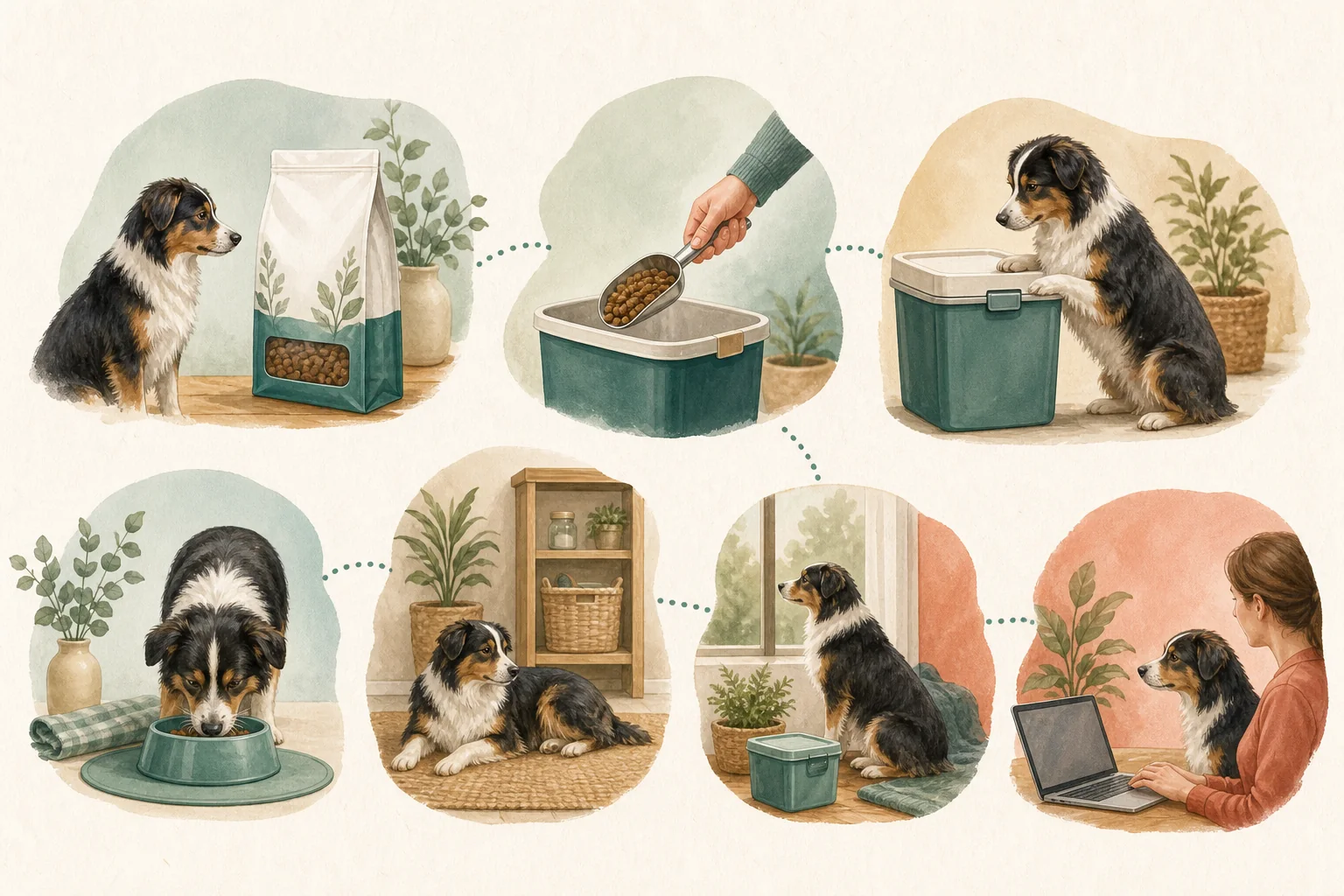
Use this dog food storage plan as a repeatable owner record. Mark what is normal, what changed, and what needs veterinary guidance.
| Checkpoint | Owner action | Boundary |
|---|---|---|
| Keep original product information | retain the bag or label with product, lot, and date details | Do not discard traceability information after transferring food |
| Use clean dry storage | place the closed original bag in a clean fitted container when practical | A container does not correct spoiled or damaged food |
| Control moisture and pests | store away from heat, humidity, chemicals, and wildlife | Do not feed food with mold, unusual odor, insects, or water damage |
| Handle meals cleanly | wash hands and use dedicated clean utensils | Avoid cross-contamination with raw products and human food areas |
| Clean bowls and feeding areas | wash bowls on a regular schedule and clean spills promptly | Biofilm and residue can persist in apparently empty bowls |
| Store treats and supplements separately | close packages and prevent multi-pet access | Flavored products can be attractive in unsafe amounts |
| Prepare for a recall | stop use, preserve packaging, and follow veterinary or regulatory guidance | Do not feed a test serving when contamination is suspected |
A three-step next action
Observe
Complete the dog food storage plan without provoking a symptom or forcing the dog through difficulty.
Record
Keep dates, measurements, photographs, short natural-behavior videos, product labels, and caregiver notes together.
Escalate
Share the concise pattern with the veterinary team and seek urgent care for severe or rapidly worsening signs.
Prepare for the visit
Questions to take to your veterinarian
- Which parts of this dog food storage plan are most important for this dog?
- What findings need a routine appointment, a same-day call, or emergency care?
- Could current diagnoses, medications, diet, supplements, pain, vision, hearing, or mobility change the plan?
- What should I measure at home, and how often should I reassess it?
- Which change should make me stop the routine and contact you sooner?
Bring the dated observation log, relevant photos or short videos, and a complete list of foods, treats, medications, and supplements. Do not change the routine solely to produce evidence for the visit.
Frequently asked questions
Can this checklist diagnose a health problem?
No. It organizes observations and questions; diagnosis requires veterinary assessment.
How often should I repeat it?
Use the interval recommended by the veterinary team and repeat sooner after a meaningful change.
Should I change several things at once?
Usually not unless the veterinary team directs it. Multiple changes make response and risk harder to interpret.
What should I bring to the appointment?
Bring the dated log, relevant photos or videos, and complete food, medication, supplement, and product information.
Sources
- Tips for Safe Handling of Pet Food and Treats for Your Family and Pet, U.S. Food and Drug Administration. Food‑safety agencies advise washing hands thoroughly after handling pet food or treats, using dedicated scoops and clean bowls, and storing pet food according to label directions to reduce the risk…
- What You Should Know About Your Pet’s Food and Treats, U.S. Food and Drug Administration. Food‑safety agencies advise washing hands thoroughly after handling pet food or treats, using dedicated scoops and clean bowls, and storing pet food according to label directions to reduce the risk…
- Pet Food Safety, Centers for Disease Control and Prevention. Dry pet food and treats should be stored in their original bags or containers, kept sealed, and placed in a cool, dry location off the floor, and owners are advised…
Medical disclaimer
Educational information only; contact a veterinarian for diagnosis, treatment, or urgent concerns. If your dog is showing severe, sudden, or rapidly worsening signs, seek urgent veterinary care.
