


A calm, evidence-aware framework for 90-day wellness and preventive care review framework for dogs at home, with practical owner observations and clear professional-care boundaries.
Short answer
Use a repeatable plan and keep veterinary care in the lead
Provide a structured, non-diagnostic method for owners to review and refine their wellness plan (including supplements, lifestyle, and home safety) every 90 days, without overmedicalizing normal variation. The practical goal is simple: learns how to schedule a 90-day check-in on weight, supplements, activity, environment, and safety, updates the plan with vet input, and avoids unnecessary changes based on short-term fluctuations. Keep veterinary care in the lead, record patterns rather than isolated moments, and stop the routine when pain, distress, or urgent signs appear.
- Record the dog's ordinary routine, body condition, movement, appetite, sleep, and behavior.
- Keep timing, angle, equipment, and description consistent.
- Note weather, activity, food, travel, grooming, medication, and household change.
- Observe natural behavior and make only veterinary-aligned changes.
Safety first
Stop the routine when the dog needs professional care
If a 90-day home wellness review identifies signs such as persistent vomiting or diarrhea, marked lethargy, difficulty breathing, collapse, or signs of significant pain, owners should seek urgent veterinary care rather than deferring to the next planned review Suspected toxin exposure to plants, household chemicals, human drugs, or rodenticides should trigger immediate contact with a veterinarian or emergency poison service, not just documentation in the home checklist. Noticeable, unexplained weight loss or gain, reduced appetite, or changes in drinking over a few days should be discussed with a veterinarian promptly, as these can indicate underlying disease rather than normal variation.
Veterinary note
Educational information only; contact a veterinarian for diagnosis, treatment, or urgent concerns. This guide supports observation and preparation; it does not diagnose a condition or replace an individualized care plan.
What is reasonably supported
Use repeated observations to improve the veterinary conversation
VCA preventive-care and wellness-examination guidance describe routine veterinary visits, physical exams, laboratory screening, and parasite control as recurring… Owners should align any home review schedule,… AVMA pet health checkup guidance and MSD preventative-care content encourage regular assessment of body condition, lifestyle risks, vaccination… Checklists and home reviews should remain non-diagnostic;… AVMA guidance on supplements and nutraceuticals for pets and AAHA nutrition and weight-management guidelines emphasize that dietary supplements,… Owners should avoid adding, stopping, or changing… WSAVA Principles of Wellness and AVMA obesity resources highlight the importance of ongoing monitoring of body weight, body… Attempts to induce weight loss or major…
What remains uncertain
Home observations cannot establish the cause
The framework supports structured owner reflection on wellness but is not a substitute for professional examinations, diagnostics, or individualized treatment planning. Suggested 90-day check-ins are a behavioral and planning aid for owners, not a formal clinical schedule; actual visit intervals and tests should follow veterinary advice. Discussion of supplements, nutraceuticals, and lifestyle changes is limited to general considerations and cannot determine safety or effectiveness for individual dogs. No source explicitly endorses a 90-day interval for home wellness reviews; this cadence is a practical interpretation of general preventive-care and monitoring recommendations. Home review of supplements and nutraceuticals is supported conceptually, but detailed criteria for benefit/risk assessment and product selection are not provided in the cited consumer guidance.
Choose a repeatable baseline
Begin with the dog's own normal pattern so a meaningful change is easier to recognize. For 90-day wellness and preventive care review framework for dogs at home, the accepted research supports a bounded point: VCA preventive-care and wellness-examination guidance describe routine veterinary visits, physical exams, laboratory screening, and parasite control as recurring processes, which owners can complement with periodic at-home… Owners should align any home review schedule, including a 90-day cadence, with their… This evidence guides observation and a veterinary conversation; it does not establish a diagnosis, treatment response, or guaranteed result.
In practice, record the dog's ordinary routine, body condition, movement, appetite, sleep, and behavior. Record the date, frequency, context, and related changes. A home check cannot replace a physical examination. Compare the dog with their own baseline and contact the veterinary team when the pattern is persistent, progressive, painful, or joined by the red-flag signs above.
Use the same observation method
Separate observation from interpretation: describe what happened before deciding what it might mean. For 90-day wellness and preventive care review framework for dogs at home, the accepted research supports a bounded point: AVMA pet health checkup guidance and MSD preventative-care content encourage regular assessment of body condition, lifestyle risks, vaccination status, and parasite prevention, supporting use of a… Checklists and home reviews should remain non-diagnostic; any perceived illness, pain, or significant… This evidence guides observation and a veterinary conversation; it does not establish a diagnosis, treatment response, or guaranteed result.
In practice, keep timing, angle, equipment, and description consistent. Record the date, frequency, context, and related changes. Precision is less useful than a reliable trend. Compare the dog with their own baseline and contact the veterinary team when the pattern is persistent, progressive, painful, or joined by the red-flag signs above.
Connect the finding with context
Consistency improves the value of a home record, even when the measurement is simple. For 90-day wellness and preventive care review framework for dogs at home, the accepted research supports a bounded point: AVMA guidance on supplements and nutraceuticals for pets and AAHA nutrition and weight-management guidelines emphasize that dietary supplements, treats, and feeding practices should be evaluated within… Owners should avoid adding, stopping, or changing supplements without veterinary input, particularly for… This evidence guides observation and a veterinary conversation; it does not establish a diagnosis, treatment response, or guaranteed result.
In practice, note weather, activity, food, travel, grooming, medication, and household change. Record the date, frequency, context, and related changes. Context does not prove cause. Compare the dog with their own baseline and contact the veterinary team when the pattern is persistent, progressive, painful, or joined by the red-flag signs above.
Avoid provoking or overcorrecting
The setting around a sign can matter as much as the sign itself. For 90-day wellness and preventive care review framework for dogs at home, the accepted research supports a bounded point: WSAVA Principles of Wellness and AVMA obesity resources highlight the importance of ongoing monitoring of body weight, body condition, and activity, reinforcing the value of regular… Attempts to induce weight loss or major activity changes based solely on home… This evidence guides observation and a veterinary conversation; it does not establish a diagnosis, treatment response, or guaranteed result.
In practice, observe natural behavior and make only veterinary-aligned changes. Record the date, frequency, context, and related changes. Testing a concern can worsen pain, fear, or injury. Compare the dog with their own baseline and contact the veterinary team when the pattern is persistent, progressive, painful, or joined by the red-flag signs above.
Record direction over time
A checklist supports attention; it does not prove that a risk is gone or explain a medical concern. For 90-day wellness and preventive care review framework for dogs at home, the accepted research supports a bounded point: VCA preventive-care and wellness-examination guidance describe routine veterinary visits, physical exams, laboratory screening, and parasite control as recurring processes, which owners can complement with periodic at-home… Owners should align any home review schedule, including a 90-day cadence, with their… This evidence guides observation and a veterinary conversation; it does not establish a diagnosis, treatment response, or guaranteed result.
In practice, compare stable days, changed days, recovery, and combined signs. Record the date, frequency, context, and related changes. A fluctuating pattern can still be clinically important. Compare the dog with their own baseline and contact the veterinary team when the pattern is persistent, progressive, painful, or joined by the red-flag signs above.
Know the stop points
Shared language and one current record help multiple caregivers act consistently. For 90-day wellness and preventive care review framework for dogs at home, the accepted research supports a bounded point: AVMA pet health checkup guidance and MSD preventative-care content encourage regular assessment of body condition, lifestyle risks, vaccination status, and parasite prevention, supporting use of a… Checklists and home reviews should remain non-diagnostic; any perceived illness, pain, or significant… This evidence guides observation and a veterinary conversation; it does not establish a diagnosis, treatment response, or guaranteed result.
In practice, pause the routine when pain, fear, weakness, breathing difficulty, or rapid decline appears. Record the date, frequency, context, and related changes. Urgent signs take priority over completing the checklist. Compare the dog with their own baseline and contact the veterinary team when the pattern is persistent, progressive, painful, or joined by the red-flag signs above.
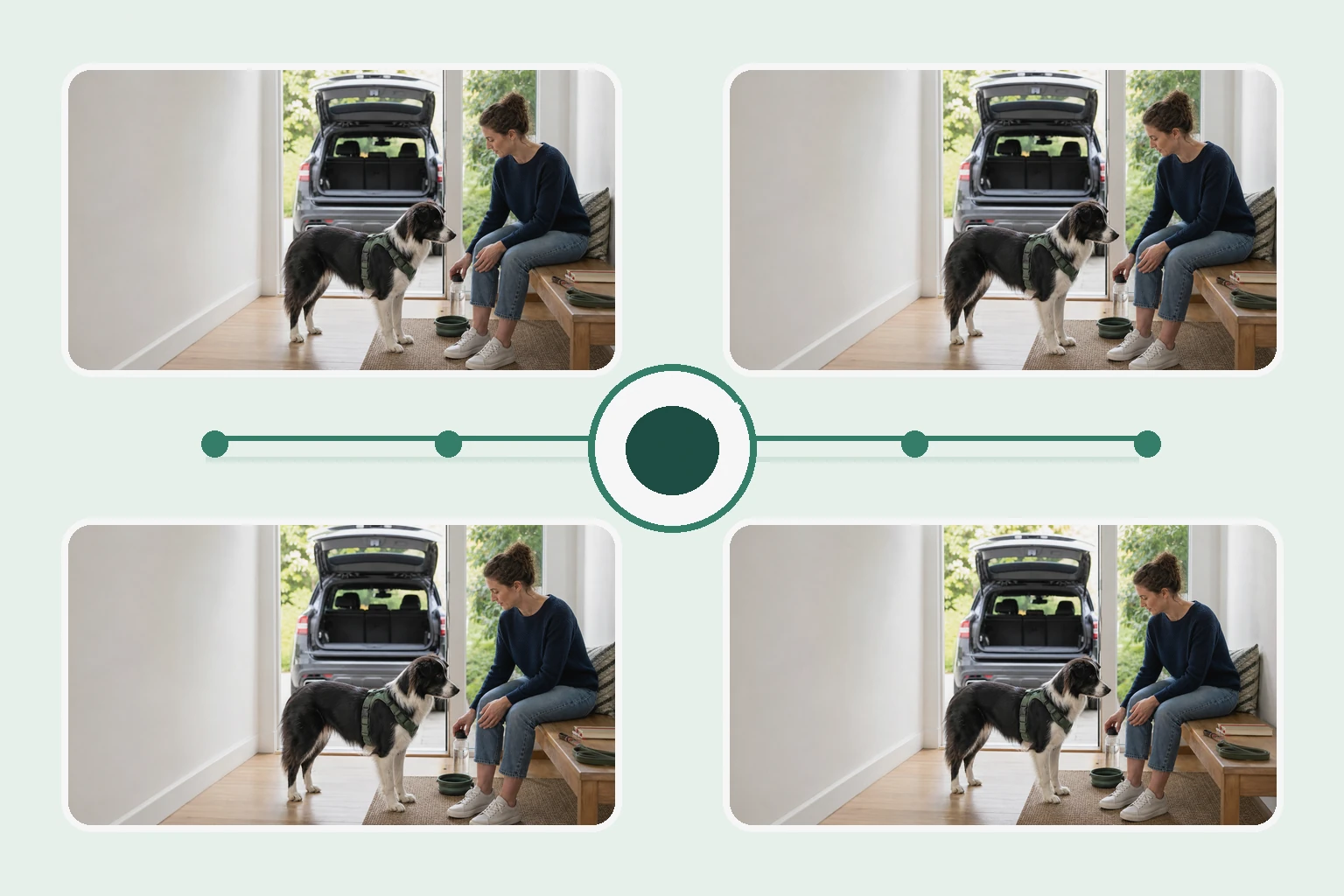
Owner tool
90-Day Wellness and Preventive Care Review Framework for Dogs at Home
Use this framework as a repeatable record for 90-day wellness and preventive care review framework for dogs at home. Mark what is normal, what changed, and what needs veterinary guidance.
| Checkpoint | Owner action | Safety boundary |
|---|---|---|
| Choose a repeatable baseline | record the dog's ordinary routine, body condition, movement, appetite, sleep, and behavior | A home check cannot replace a physical examination |
| Use the same observation method | keep timing, angle, equipment, and description consistent | Precision is less useful than a reliable trend |
| Connect the finding with context | note weather, activity, food, travel, grooming, medication, and household change | Context does not prove cause |
| Avoid provoking or overcorrecting | observe natural behavior and make only veterinary-aligned changes | Testing a concern can worsen pain, fear, or injury |
| Record direction over time | compare stable days, changed days, recovery, and combined signs | A fluctuating pattern can still be clinically important |
| Know the stop points | pause the routine when pain, fear, weakness, breathing difficulty, or rapid decline appears | Urgent signs take priority over completing the checklist |
| Share a concise handoff | bring dated notes, useful images, current products, and focused questions | The veterinary team determines diagnosis and next steps |
A three-step next action
Observe
Complete the 90-day wellness and preventive care review framework for dogs at home review without provoking a symptom or forcing the dog through difficulty.
Record
Keep dates, measurements, photographs, short natural-behavior videos, product labels, and caregiver notes together.
Escalate
Share the concise pattern with the veterinary team and seek urgent care for severe or rapidly worsening signs.
Prepare for the visit
Questions to take to your veterinarian
- Which parts of this 90-day wellness and preventive care review framework for dogs at home plan matter most for this dog?
- What findings need a routine appointment, a same-day call, or emergency care?
- Could current diagnoses, medications, diet, supplements, pain, vision, hearing, or mobility change the plan?
- What should I measure at home, and how often should I reassess it?
- Which change should make me stop the routine and contact you sooner?
Bring the dated observation log, relevant photos or short videos, and a complete list of foods, treats, medications, and supplements. Do not change the routine solely to produce evidence for the visit.
Frequently asked questions
Can this guide diagnose a health or behavior problem?
No. It organizes observations and questions; diagnosis requires veterinary assessment.
How often should I repeat the routine?
Use the interval recommended by the veterinary team and repeat sooner after a meaningful change.
Should I change several things at once?
Usually not unless the veterinary team directs it. Multiple changes make response and risk harder to interpret.
What should I bring to the appointment?
Bring the dated log, relevant photos or videos, and complete food, medication, supplement, and product information.
Sources
- Pet Health Checkup, American Veterinary Medical Association. AVMA pet health checkup guidance and MSD preventative‑care content encourage regular assessment of body condition, lifestyle risks, vaccination status, and parasite prevention, supporting use of a structured checklist for owners…
- Wellness Examination in Dogs, VCA Animal Hospitals. VCA preventive‑care and wellness‑examination guidance describe routine veterinary visits, physical exams, laboratory screening, and parasite control as recurring processes, which owners can complement with periodic at‑home reviews of diet, activity,…
- WSAVA Principles of Wellness, World Small Animal Veterinary Association (WSAVA). WSAVA Principles of Wellness and AVMA obesity resources highlight the importance of ongoing monitoring of body weight, body condition, and activity, reinforcing the value of regular home check‑ins to track…
- Supplements and nutraceuticals for pets, American Veterinary Medical Association. AVMA guidance on supplements and nutraceuticals for pets and AAHA nutrition and weight‑management guidelines emphasize that dietary supplements, treats, and feeding practices should be evaluated within an overall nutrition plan,…
Medical disclaimer
Educational information only; contact a veterinarian for diagnosis, treatment, or urgent concerns. If your dog is showing severe, sudden, or rapidly worsening signs, seek urgent veterinary care.
