

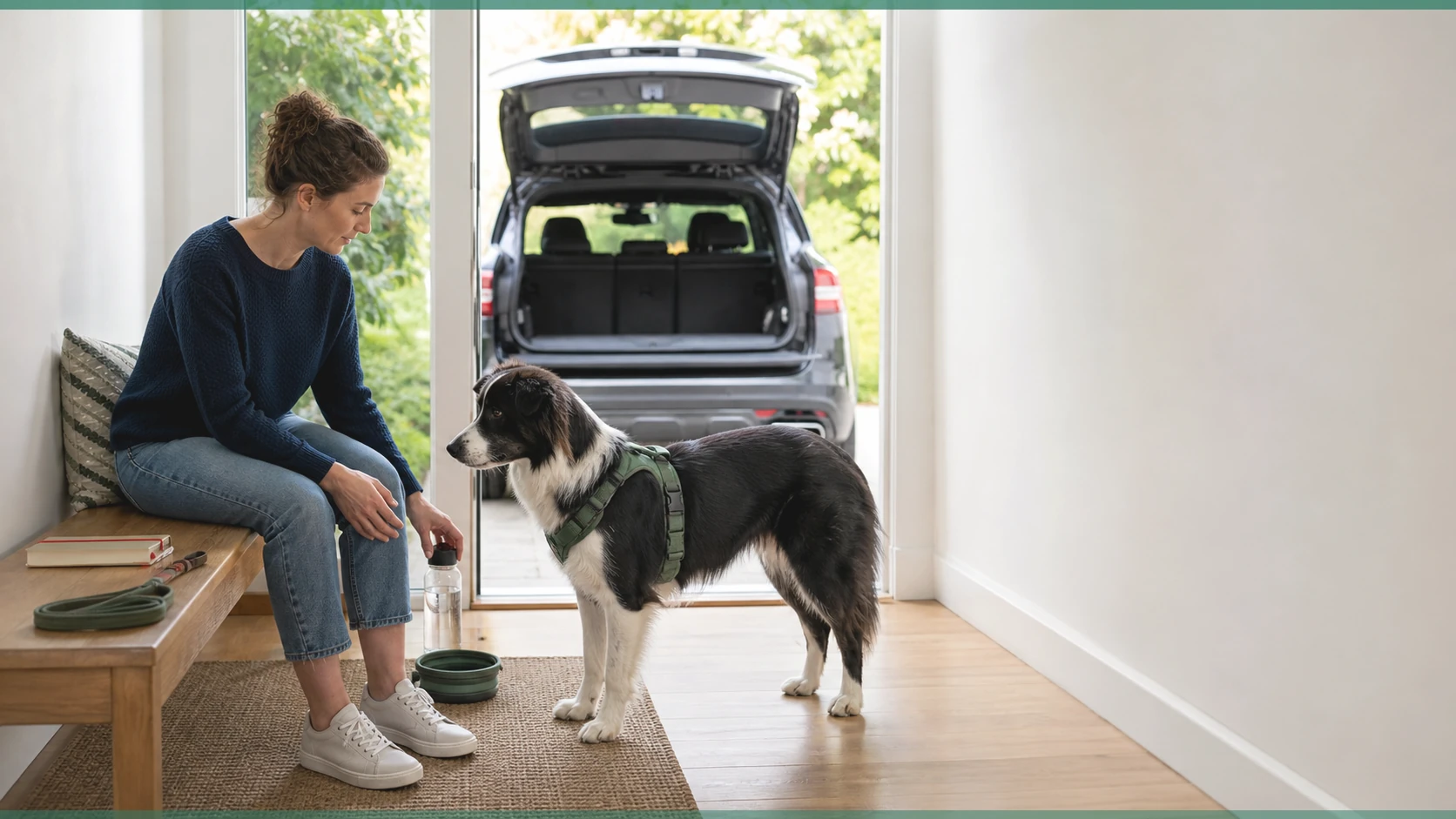
A calm, evidence-aware framework for life-stage primed home tracking framework for dog wellness and preventive care, with practical owner observations and clear professional-care boundaries.
Short answer
Use a repeatable plan and keep veterinary care in the lead
Integrate basic at-home tracking (hydration, urine, thirst, stool, weight, energy, breathing, activity) into a life-stage primed framework that owners can tailor to gut, joint, calming, and senior pillars without presuming a diagnosis. The practical goal is simple: use a simple, modular structure to track what matters most to their dog (gut, joint, calming, senior, metabolic) while keeping the language non-diagnostic and oriented toward preventive conversations with the vet. Keep veterinary care in the lead, record patterns rather than isolated moments, and stop the routine when pain, distress, or urgent signs appear.
- Record the dog's ordinary routine, body condition, movement, appetite, sleep, and behavior.
- Keep timing, angle, equipment, and description consistent.
- Note weather, activity, food, travel, grooming, medication, and household change.
- Observe natural behavior and make only veterinary-aligned changes.
Safety first
Stop the routine when the dog needs professional care
Owners should contact their veterinarian promptly if home tracking reveals sustained changes-over several days-in appetite, thirst, urination, stool quality, weight, or energy, even if each change seems mild in isolation. Urgent veterinary care is indicated if logs capture acute events such as repeated vomiting, bloody stool or urine, collapse, severe breathing difficulty, or sudden inability to stand or walk. If tracking shows progressive trends like increasing resting respiratory rate, rising thirst and urination, or declining mobility over weeks, owners should schedule a veterinary evaluation rather than continuing to adjust routines on their own.
Veterinary note
Educational information only; contact a veterinarian for diagnosis, treatment, or urgent concerns. This guide supports observation and preparation; it does not diagnose a condition or replace an individualized care plan.
What is reasonably supported
Use repeated observations to improve the veterinary conversation
AAHA canine life-stage health checklists and visit-frequency guidance outline age-specific recommendations for exams, screening, and history-taking, which owners… Guideline-based; supports a life-stage-primed approach to at-home… WSAVA Principles of Wellness stress life-stage-appropriate preventive care, documenting diet, environment, and clinical findings, suggesting that owner tracking… Global guideline context; reinforces integrating home logs… The VCA resting respiratory rate diary provides a concrete example of how owners can record numerical data and… Template-style example; useful for building multi-indicator tracking… VCA preventive-care guidelines and the MSD Veterinary Manual’s preventive-care chapter highlight the importance of regular monitoring of weight,… General preventive-care guidance; supports broad, non-diagnostic home…
What remains uncertain
Home observations cannot establish the cause
Offers a non-diagnostic framework for home tracking across multiple wellness indicators; it does not prescribe specific medical tests or interpret patterns as particular diseases. Does not replace individualized veterinary advice on life-stage care, parasite control, or nutrition. Encourages tailoring tracking intensity to the dog’s age and health status in consultation with a veterinarian. Professional life-stage guidelines recommend what veterinarians should monitor but give limited detail on owner-driven tracking tools that span hydration, stool, weight, and behavior in a unified format. There is little research on optimal tracking frequency or thresholds for non-diagnostic home logs in healthy dogs across all life stages.
Choose a repeatable baseline
Begin with the dog's own normal pattern so a meaningful change is easier to recognize. For life-stage-primed home tracking framework for dog wellness and preventive care, the accepted research supports a bounded point: AAHA canine life-stage health checklists and visit-frequency guidance outline age-specific recommendations for exams, screening, and history-taking, which owners can mirror at home by adjusting the depth… Guideline-based; supports a life-stage-primed approach to at-home observation without assigning diagnostic meaning. This evidence guides observation and a veterinary conversation; it does not establish a diagnosis, treatment response, or guaranteed result.
In practice, record the dog's ordinary routine, body condition, movement, appetite, sleep, and behavior. Record the date, frequency, context, and related changes. A home check cannot replace a physical examination. Compare the dog with their own baseline and contact the veterinary team when the pattern is persistent, progressive, painful, or joined by the red-flag signs above.
Use the same observation method
Separate observation from interpretation: describe what happened before deciding what it might mean. For life-stage-primed home tracking framework for dog wellness and preventive care, the accepted research supports a bounded point: WSAVA Principles of Wellness stress life-stage-appropriate preventive care, documenting diet, environment, and clinical findings, suggesting that owner tracking of hydration, elimination, and behavior can be most… Global guideline context; reinforces integrating home logs into veterinary-led wellness frameworks. This evidence guides observation and a veterinary conversation; it does not establish a diagnosis, treatment response, or guaranteed result.
In practice, keep timing, angle, equipment, and description consistent. Record the date, frequency, context, and related changes. Precision is less useful than a reliable trend. Compare the dog with their own baseline and contact the veterinary team when the pattern is persistent, progressive, painful, or joined by the red-flag signs above.
Connect the finding with context
Consistency improves the value of a home record, even when the measurement is simple. For life-stage-primed home tracking framework for dog wellness and preventive care, the accepted research supports a bounded point: The VCA resting respiratory rate diary provides a concrete example of how owners can record numerical data and notes over time, a structure that can be… Template-style example; useful for building multi-indicator tracking tools while keeping entries descriptive and… This evidence guides observation and a veterinary conversation; it does not establish a diagnosis, treatment response, or guaranteed result.
In practice, note weather, activity, food, travel, grooming, medication, and household change. Record the date, frequency, context, and related changes. Context does not prove cause. Compare the dog with their own baseline and contact the veterinary team when the pattern is persistent, progressive, painful, or joined by the red-flag signs above.
Avoid provoking or overcorrecting
The setting around a sign can matter as much as the sign itself. For life-stage-primed home tracking framework for dog wellness and preventive care, the accepted research supports a bounded point: VCA preventive-care guidelines and the MSD Veterinary Manual’s preventive-care chapter highlight the importance of regular monitoring of weight, appetite, stool, urination, and behavior at home to… General preventive-care guidance; supports broad, non-diagnostic home tracking across gut, joint, behavior, and… This evidence guides observation and a veterinary conversation; it does not establish a diagnosis, treatment response, or guaranteed result.
In practice, observe natural behavior and make only veterinary-aligned changes. Record the date, frequency, context, and related changes. Testing a concern can worsen pain, fear, or injury. Compare the dog with their own baseline and contact the veterinary team when the pattern is persistent, progressive, painful, or joined by the red-flag signs above.
Record direction over time
A checklist supports attention; it does not prove that a risk is gone or explain a medical concern. For life-stage-primed home tracking framework for dog wellness and preventive care, the accepted research supports a bounded point: AAHA canine life-stage health checklists and visit-frequency guidance outline age-specific recommendations for exams, screening, and history-taking, which owners can mirror at home by adjusting the depth… Guideline-based; supports a life-stage-primed approach to at-home observation without assigning diagnostic meaning. This evidence guides observation and a veterinary conversation; it does not establish a diagnosis, treatment response, or guaranteed result.
In practice, compare stable days, changed days, recovery, and combined signs. Record the date, frequency, context, and related changes. A fluctuating pattern can still be clinically important. Compare the dog with their own baseline and contact the veterinary team when the pattern is persistent, progressive, painful, or joined by the red-flag signs above.
Know the stop points
Shared language and one current record help multiple caregivers act consistently. For life-stage-primed home tracking framework for dog wellness and preventive care, the accepted research supports a bounded point: WSAVA Principles of Wellness stress life-stage-appropriate preventive care, documenting diet, environment, and clinical findings, suggesting that owner tracking of hydration, elimination, and behavior can be most… Global guideline context; reinforces integrating home logs into veterinary-led wellness frameworks. This evidence guides observation and a veterinary conversation; it does not establish a diagnosis, treatment response, or guaranteed result.
In practice, pause the routine when pain, fear, weakness, breathing difficulty, or rapid decline appears. Record the date, frequency, context, and related changes. Urgent signs take priority over completing the checklist. Compare the dog with their own baseline and contact the veterinary team when the pattern is persistent, progressive, painful, or joined by the red-flag signs above.
Owner tool
Life-Stage-Primed Home Tracking Framework for Dog Wellness and Preventive Care
Use this informational as a repeatable record for life-stage primed home tracking framework for dog wellness and preventive care. Mark what is normal, what changed, and what needs veterinary guidance.
| Checkpoint | Owner action | Safety boundary |
|---|---|---|
| Choose a repeatable baseline | record the dog's ordinary routine, body condition, movement, appetite, sleep, and behavior | A home check cannot replace a physical examination |
| Use the same observation method | keep timing, angle, equipment, and description consistent | Precision is less useful than a reliable trend |
| Connect the finding with context | note weather, activity, food, travel, grooming, medication, and household change | Context does not prove cause |
| Avoid provoking or overcorrecting | observe natural behavior and make only veterinary-aligned changes | Testing a concern can worsen pain, fear, or injury |
| Record direction over time | compare stable days, changed days, recovery, and combined signs | A fluctuating pattern can still be clinically important |
| Know the stop points | pause the routine when pain, fear, weakness, breathing difficulty, or rapid decline appears | Urgent signs take priority over completing the checklist |
| Share a concise handoff | bring dated notes, useful images, current products, and focused questions | The veterinary team determines diagnosis and next steps |
A three-step next action
Observe
Complete the life-stage-primed home tracking framework for dog wellness and preventive care review without provoking a symptom or forcing the dog through difficulty.
Record
Keep dates, measurements, photographs, short natural-behavior videos, product labels, and caregiver notes together.
Escalate
Share the concise pattern with the veterinary team and seek urgent care for severe or rapidly worsening signs.
Prepare for the visit
Questions to take to your veterinarian
- Which parts of this life-stage-primed home tracking framework for dog wellness and preventive care plan matter most for this dog?
- What findings need a routine appointment, a same-day call, or emergency care?
- Could current diagnoses, medications, diet, supplements, pain, vision, hearing, or mobility change the plan?
- What should I measure at home, and how often should I reassess it?
- Which change should make me stop the routine and contact you sooner?
Bring the dated observation log, relevant photos or short videos, and a complete list of foods, treats, medications, and supplements. Do not change the routine solely to produce evidence for the visit.
Frequently asked questions
Can this guide diagnose a health or behavior problem?
No. It organizes observations and questions; diagnosis requires veterinary assessment.
How often should I repeat the routine?
Use the interval recommended by the veterinary team and repeat sooner after a meaningful change.
Should I change several things at once?
Usually not unless the veterinary team directs it. Multiple changes make response and risk harder to interpret.
What should I bring to the appointment?
Bring the dated log, relevant photos or videos, and complete food, medication, supplement, and product information.
Sources
- Preventative Health Care for Small Animals, MSD Veterinary Manual. VCA preventive‑care guidelines and the MSD Veterinary Manual’s preventive‑care chapter highlight the importance of regular monitoring of weight, appetite, stool, urination, and behavior at home to support veterinary detection of…
- How Often Should My Dog Go to the Vet? A Dog Life Stage Guide, American Animal Hospital Association. AAHA canine life‑stage health checklists and visit‑frequency guidance outline age‑specific recommendations for exams, screening, and history‑taking, which owners can mirror at home by adjusting the depth of tracking for factors…
- WSAVA Principles of Wellness, World Small Animal Veterinary Association (WSAVA). WSAVA Principles of Wellness stress life‑stage‑appropriate preventive care, documenting diet, environment, and clinical findings, suggesting that owner tracking of hydration, elimination, and behavior can be most useful when aligned with…
- Record Your Dog's Resting Respiratory Rate Diary, VCA Animal Hospitals – Sonoma County. The VCA resting respiratory rate diary provides a concrete example of how owners can record numerical data and notes over time, a structure that can be extended to other metrics…
Medical disclaimer
Educational information only; contact a veterinarian for diagnosis, treatment, or urgent concerns. If your dog is showing severe, sudden, or rapidly worsening signs, seek urgent veterinary care.
