

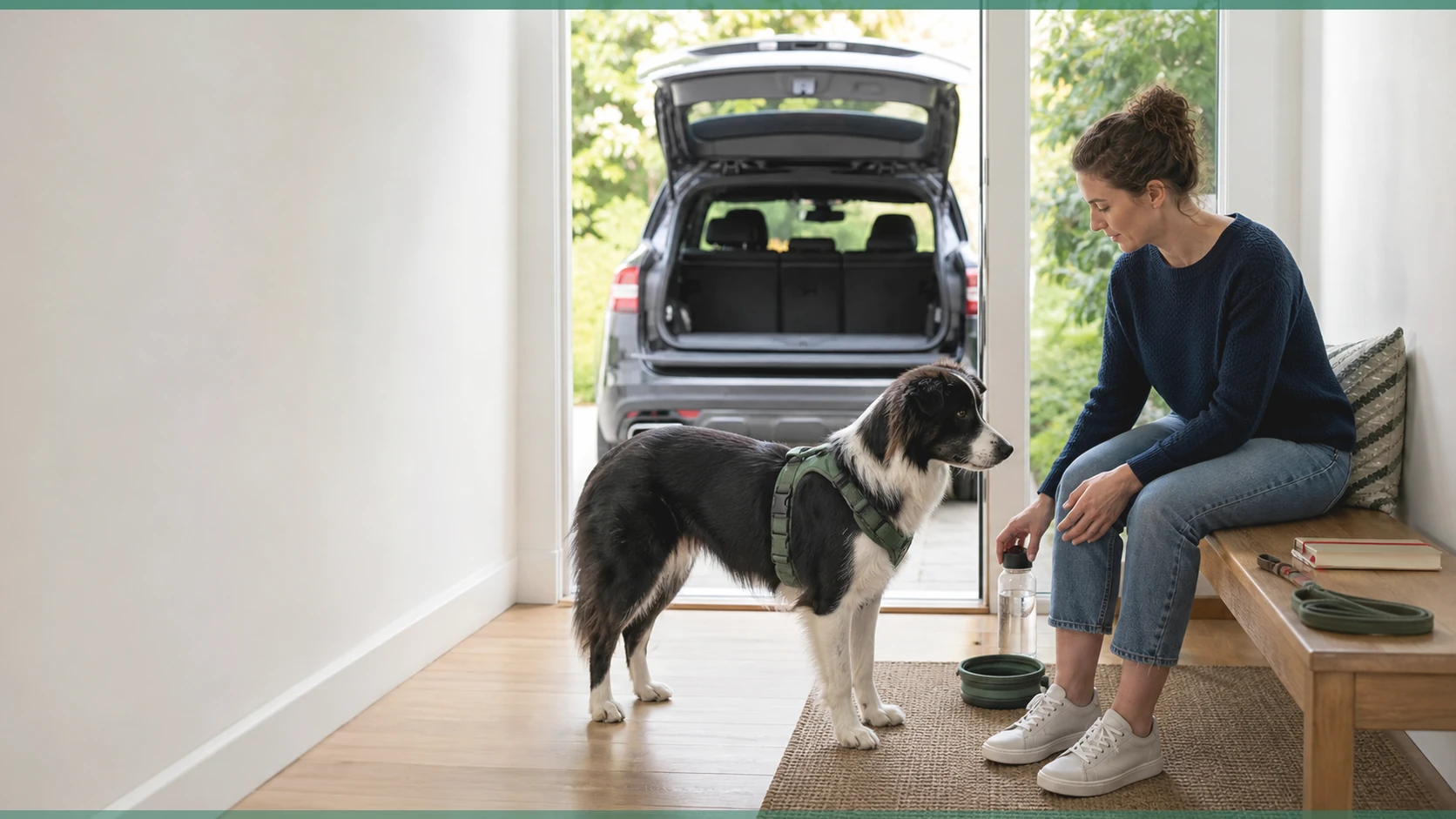
A calm, evidence-aware framework for how to tell genuine dog wellness changes from normal day-to-day variability at home, with practical owner observations and clear professional-care boundaries.
Short answer
Use a repeatable plan and keep veterinary care in the lead
Teach owners how to distinguish day-to-day ‘off-days’ and normal variability from emerging patterns that should trigger a conversation with the vet, using recognizable, non-diagnostic language across gut, joint, behavior, and senior themes. The practical goal is simple: feel more confident deciding when a change is a one-off vs. part of a pattern worth sharing with the vet, without over-interpreting or under-reporting subtle shifts. Keep veterinary care in the lead, record patterns rather than isolated moments, and stop the routine when pain, distress, or urgent signs appear.
- Follow the dog through sleeping, feeding, toileting, play, travel, and family spaces.
- Secure gaps, chemicals, foods, cords, elevation, unstable objects, and escape points.
- Check traction, thresholds, stairs, ramps, doors, and turning space.
- Review heat, cold, airflow, surface temperature, weather, wildlife, and household products.
Safety first
Stop the routine when the dog needs professional care
Owners should seek veterinary care if logs or observations reveal repeated off-days-such as reduced appetite, diarrhea, stiffness, or lowered activity-persisting for more than a few days or increasing in severity. Emergency or urgent care is indicated if a dog develops acute signs such as severe breathing difficulty, collapse, repeated vomiting, bloody stool, or sudden marked behavioral changes suggesting distress or neurologic compromise. If a dog shows sustained changes in social interaction, anxiety, or aggression that pose safety concerns for people or other animals, owners should promptly consult a veterinarian or behavior professional rather than waiting for the pattern to resolve on its
Veterinary note
Educational information only; contact a veterinarian for diagnosis, treatment, or urgent concerns. This guide supports observation and preparation; it does not diagnose a condition or replace an individualized care plan.
What is reasonably supported
Use repeated observations to improve the veterinary conversation
The VCA resting respiratory rate diary underscores the value of tracking measurements over time to distinguish one-off variations… Template-style; supports pattern recognition while avoiding diagnostic… JAVMA reviews on healthy aging and the aging phenotype in dogs explain that some physical and behavioral changes… Professional context; helps frame the difference between… VCA senior-dog care guidance notes that older dogs may experience fluctuating energy, mobility, and outdoor tolerances, advising owners… Owner-facing; supports using patterns and impact on… Cornell’s guidance on anxious behavior emphasizes that changes in engagement, coping, and reactions to unsettling situations can reflect… Behavioral perspective; supports recognizing genuine changes in…
What remains uncertain
Home observations cannot establish the cause
Helps owners distinguish routine variability from emerging patterns; it does not set diagnostic thresholds or replace veterinary judgment about illness. Does not give specific criteria for starting, stopping, or changing medications or supplements based on home observations. Focuses on awareness of trends across multiple wellness domains rather than ruling in or out particular conditions. Clinical and owner-facing resources describe signs of disease and healthy aging but offer limited explicit guidance on what constitutes normal day-to-day variability in otherwise stable dogs. Research on aging and anxiety highlights complex, overlapping causes of subtle changes, leaving uncertainty about how owners should interpret mild, short-lived deviations at home.
Map the real daily route
Begin with the dog's own normal pattern so a meaningful change is easier to recognize. For how to tell genuine dog wellness changes from normal day-to-day variability at home, the accepted research supports a bounded point: The VCA resting respiratory rate diary underscores the value of tracking measurements over time to distinguish one-off variations from sustained changes, a principle that can be… Template-style; supports pattern recognition while avoiding diagnostic conclusions by owners. This evidence guides observation and a veterinary conversation; it does not establish a diagnosis, treatment response, or guaranteed result.
In practice, follow the dog through sleeping, feeding, toileting, play, travel, and family spaces. Record the date, frequency, context, and related changes. A room that looks safe from adult height may not be safe for the dog. Compare the dog with their own baseline and contact the veterinary team when the pattern is persistent, progressive, painful, or joined by the red-flag signs above.
Remove preventable access
Separate observation from interpretation: describe what happened before deciding what it might mean. For how to tell genuine dog wellness changes from normal day-to-day variability at home, the accepted research supports a bounded point: JAVMA reviews on healthy aging and the aging phenotype in dogs explain that some physical and behavioral changes are expected with age, whereas others-especially rapid or… Professional context; helps frame the difference between gradual, age-related variability and potentially genuine… This evidence guides observation and a veterinary conversation; it does not establish a diagnosis, treatment response, or guaranteed result.
In practice, secure gaps, chemicals, foods, cords, elevation, unstable objects, and escape points. Record the date, frequency, context, and related changes. Supervision alone cannot correct every physical hazard. Compare the dog with their own baseline and contact the veterinary team when the pattern is persistent, progressive, painful, or joined by the red-flag signs above.
Improve footing and transitions
Consistency improves the value of a home record, even when the measurement is simple. For how to tell genuine dog wellness changes from normal day-to-day variability at home, the accepted research supports a bounded point: VCA senior-dog care guidance notes that older dogs may experience fluctuating energy, mobility, and outdoor tolerances, advising owners to watch for consistent declines, pain signs, or… Owner-facing; supports using patterns and impact on daily life to distinguish normal off-days… This evidence guides observation and a veterinary conversation; it does not establish a diagnosis, treatment response, or guaranteed result.
In practice, check traction, thresholds, stairs, ramps, doors, and turning space. Record the date, frequency, context, and related changes. An aid must fit the dog and be introduced safely. Compare the dog with their own baseline and contact the veterinary team when the pattern is persistent, progressive, painful, or joined by the red-flag signs above.
Control climate and exposure
The setting around a sign can matter as much as the sign itself. For how to tell genuine dog wellness changes from normal day-to-day variability at home, the accepted research supports a bounded point: Cornell’s guidance on anxious behavior emphasizes that changes in engagement, coping, and reactions to unsettling situations can reflect stress or anxiety, and that persistent or escalating… Behavioral perspective; supports recognizing genuine changes in emotional wellness beyond day-to-day fluctuations. This evidence guides observation and a veterinary conversation; it does not establish a diagnosis, treatment response, or guaranteed result.
In practice, review heat, cold, airflow, surface temperature, weather, wildlife, and household products. Record the date, frequency, context, and related changes. Risk changes with season, location, health, and mobility. Compare the dog with their own baseline and contact the veterinary team when the pattern is persistent, progressive, painful, or joined by the red-flag signs above.
Coordinate every caregiver
A checklist supports attention; it does not prove that a risk is gone or explain a medical concern. For how to tell genuine dog wellness changes from normal day-to-day variability at home, the accepted research supports a bounded point: The VCA resting respiratory rate diary underscores the value of tracking measurements over time to distinguish one-off variations from sustained changes, a principle that can be… Template-style; supports pattern recognition while avoiding diagnostic conclusions by owners. This evidence guides observation and a veterinary conversation; it does not establish a diagnosis, treatment response, or guaranteed result.
In practice, use one current plan for access, handling, feeding, products, and emergency contacts. Record the date, frequency, context, and related changes. Conflicting routines increase missed steps and duplicate care. Compare the dog with their own baseline and contact the veterinary team when the pattern is persistent, progressive, painful, or joined by the red-flag signs above.
Test the plan without stressing the dog
Shared language and one current record help multiple caregivers act consistently. For how to tell genuine dog wellness changes from normal day-to-day variability at home, the accepted research supports a bounded point: JAVMA reviews on healthy aging and the aging phenotype in dogs explain that some physical and behavioral changes are expected with age, whereas others-especially rapid or… Professional context; helps frame the difference between gradual, age-related variability and potentially genuine… This evidence guides observation and a veterinary conversation; it does not establish a diagnosis, treatment response, or guaranteed result.
In practice, walk through barriers, transport, exits, and backup arrangements calmly. Record the date, frequency, context, and related changes. Never create an exposure or emergency as a test. Compare the dog with their own baseline and contact the veterinary team when the pattern is persistent, progressive, painful, or joined by the red-flag signs above.
Owner tool
How to Tell Genuine Dog Wellness Changes From Normal Day-To-Day Variability at Home
Use this informational as a repeatable record for how to tell genuine dog wellness changes from normal day-to-day variability at home. Mark what is normal, what changed, and what needs veterinary guidance.
| Checkpoint | Owner action | Safety boundary |
|---|---|---|
| Map the real daily route | follow the dog through sleeping, feeding, toileting, play, travel, and family spaces | A room that looks safe from adult height may not be safe for the dog |
| Remove preventable access | secure gaps, chemicals, foods, cords, elevation, unstable objects, and escape points | Supervision alone cannot correct every physical hazard |
| Improve footing and transitions | check traction, thresholds, stairs, ramps, doors, and turning space | An aid must fit the dog and be introduced safely |
| Control climate and exposure | review heat, cold, airflow, surface temperature, weather, wildlife, and household products | Risk changes with season, location, health, and mobility |
| Coordinate every caregiver | use one current plan for access, handling, feeding, products, and emergency contacts | Conflicting routines increase missed steps and duplicate care |
| Test the plan without stressing the dog | walk through barriers, transport, exits, and backup arrangements calmly | Never create an exposure or emergency as a test |
| Prepare for failure and escalation | keep labels, identification, records, contacts, and a safe transport method ready | Suspected poisoning, heat illness, trauma, or collapse requires prompt care |
A three-step next action
Observe
Complete the how to tell genuine dog wellness changes from normal day-to-day variability at home review without provoking a symptom or forcing the dog through difficulty.
Record
Keep dates, measurements, photographs, short natural-behavior videos, product labels, and caregiver notes together.
Escalate
Share the concise pattern with the veterinary team and seek urgent care for severe or rapidly worsening signs.
Prepare for the visit
Questions to take to your veterinarian
- Which parts of this how to tell genuine dog wellness changes from normal day-to-day variability at home plan matter most for this dog?
- What findings need a routine appointment, a same-day call, or emergency care?
- Could current diagnoses, medications, diet, supplements, pain, vision, hearing, or mobility change the plan?
- What should I measure at home, and how often should I reassess it?
- Which change should make me stop the routine and contact you sooner?
Bring the dated observation log, relevant photos or short videos, and a complete list of foods, treats, medications, and supplements. Do not change the routine solely to produce evidence for the visit.
Frequently asked questions
Can this guide diagnose a health or behavior problem?
No. It organizes observations and questions; diagnosis requires veterinary assessment.
How often should I repeat the routine?
Use the interval recommended by the veterinary team and repeat sooner after a meaningful change.
Should I change several things at once?
Usually not unless the veterinary team directs it. Multiple changes make response and risk harder to interpret.
What should I bring to the appointment?
Bring the dated log, relevant photos or videos, and complete food, medication, supplement, and product information.
Sources
- Defining healthy aging in older dogs and differentiating age-related changes from disease, Journal of the American Veterinary Medical Association (JAVMA). JAVMA reviews on healthy aging and the aging phenotype in dogs explain that some physical and behavioral changes are expected with age, whereas others—especially rapid or progressive shifts—may signal underlying…
- Anxious behavior: How to help your dog cope with unsettling situations, Cornell University College of Veterinary Medicine. Cornell’s guidance on anxious behavior emphasizes that changes in engagement, coping, and reactions to unsettling situations can reflect stress or anxiety, and that persistent or escalating patterns should be discussed…
- Senior Dog Care – Special Considerations, VCA Animal Hospitals. VCA senior‑dog care guidance notes that older dogs may experience fluctuating energy, mobility, and outdoor tolerances, advising owners to watch for consistent declines, pain signs, or intolerance of previous activities…
- Record Your Dog's Resting Respiratory Rate Diary, VCA Animal Hospitals – Sonoma County. The VCA resting respiratory rate diary underscores the value of tracking measurements over time to distinguish one‑off variations from sustained changes, a principle that can be applied to other wellness…
Medical disclaimer
Educational information only; contact a veterinarian for diagnosis, treatment, or urgent concerns. If your dog is showing severe, sudden, or rapidly worsening signs, seek urgent veterinary care.
