

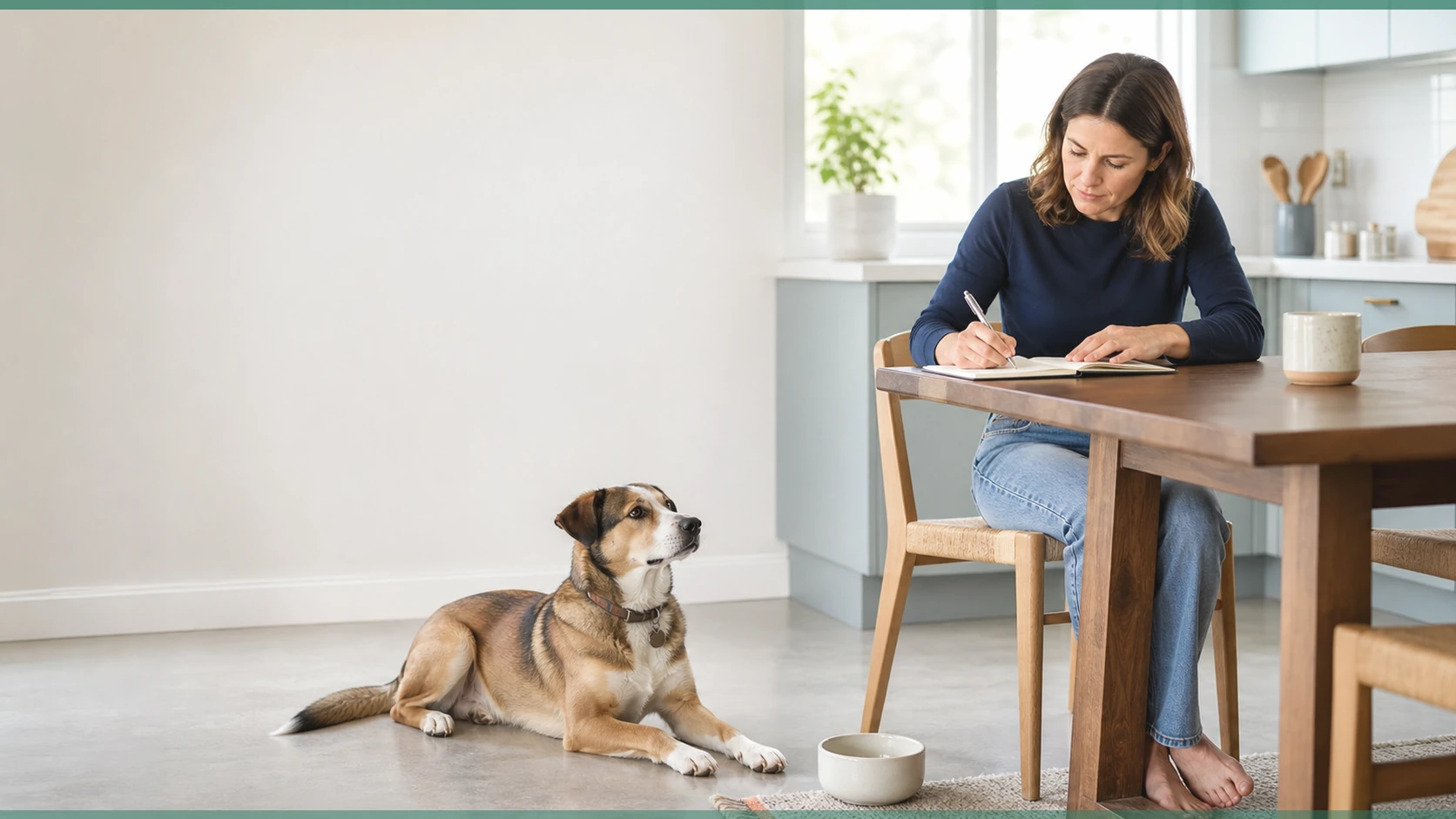
A calm, evidence-aware framework for how long can a dog be left alone welfare and health considerations, with practical owner observations and clear professional-care boundaries.
Short answer
Use a repeatable plan and keep veterinary care in the lead
Help owners think through practical, welfare-focused decisions about leaving dogs home alone (duration, environment setup, monitoring options) across different ages and health profiles, grounded in behavioral and welfare research rather than generic time limits. The practical goal is simple: owner can make more nuanced, welfare-oriented decisions about how long their particular dog can be left alone and what support (breaks, enrichment, monitoring) is advisable. Keep veterinary care in the lead, record patterns rather than isolated moments, and stop the routine when pain, distress, or urgent signs appear.
- Record the dog's ordinary routine, body condition, movement, appetite, sleep, and behavior.
- Keep timing, angle, equipment, and description consistent.
- Note weather, activity, food, travel, grooming, medication, and household change.
- Observe natural behavior and make only veterinary-aligned changes.
Safety first
Stop the routine when the dog needs professional care
Advise owners to seek veterinary care urgently if a dog left alone shows signs such as self-injury, persistent vocalization, escape attempts, severe destruction, or loss of housetraining, as these may indicate separation anxiety or other significant welfare or behavior problems.[2][4] Recommend immediate veterinary attention if a dog returns from being alone with vomiting, diarrhea, difficulty walking, collapse, or signs of heat stress (excessive panting, drooling, weakness), as these can represent medical emergencies.[3][4]
Veterinary note
Educational information only; contact a veterinarian for diagnosis, treatment, or urgent concerns. This guide supports observation and preparation; it does not diagnose a condition or replace an individualized care plan.
What is reasonably supported
Use repeated observations to improve the veterinary conversation
RSPCA guidance on teaching dogs to stay home alone emphasizes gradually building independence, monitoring for signs of distress,… These training steps support welfare-friendly alone time… ASPCA information on separation anxiety explains that some dogs develop significant panic and destructive behaviors when left alone,… Dogs with suspected separation anxiety should be… Dog welfare and housing guidance from UFAW stresses the importance of appropriate space, bedding, temperature, and opportunities for… Housing recommendations are general and may need… Recent work on the phenotype of aging in dogs notes that older dogs can experience declines in mobility,… Any sudden change in an older dog’s…
What remains uncertain
Home observations cannot establish the cause
The content provides a decision framework for home-alone duration and environment but cannot assign a fixed "safe" number of hours for every dog, as welfare needs vary by age, health, and behavior.[1][2] Observation tips and welfare considerations do not replace a veterinary or behaviorist assessment for dogs showing distress, health changes, or separation anxiety.[1][2][3] Selected sources do not specify universal maximum alone-times; recommendations must be individualized from welfare and behavior principles.[1][2] Evidence on monitoring technologies and owner schedules is limited in these sources, so guidance on cameras or remote check-ins remains pragmatic rather than research-based.
Choose a repeatable baseline
Begin with the dog's own normal pattern so a meaningful change is easier to recognize. For how long can a dog be left alone? welfare and health considerations for modern owners, the accepted research supports a bounded point: RSPCA guidance on teaching dogs to stay home alone emphasizes gradually building independence, monitoring for signs of distress, and ensuring access to water, a comfortable resting… These training steps support welfare-friendly alone time but do not guarantee that every… This evidence guides observation and a veterinary conversation; it does not establish a diagnosis, treatment response, or guaranteed result.
In practice, record the dog's ordinary routine, body condition, movement, appetite, sleep, and behavior. Record the date, frequency, context, and related changes. A home check cannot replace a physical examination. Compare the dog with their own baseline and contact the veterinary team when the pattern is persistent, progressive, painful, or joined by the red-flag signs above.
Use the same observation method
Separate observation from interpretation: describe what happened before deciding what it might mean. For how long can a dog be left alone? welfare and health considerations for modern owners, the accepted research supports a bounded point: ASPCA information on separation anxiety explains that some dogs develop significant panic and destructive behaviors when left alone, indicating that behavioral health must be considered alongside… Dogs with suspected separation anxiety should be evaluated by a veterinarian or qualified… This evidence guides observation and a veterinary conversation; it does not establish a diagnosis, treatment response, or guaranteed result.
In practice, keep timing, angle, equipment, and description consistent. Record the date, frequency, context, and related changes. Precision is less useful than a reliable trend. Compare the dog with their own baseline and contact the veterinary team when the pattern is persistent, progressive, painful, or joined by the red-flag signs above.
Connect the finding with context
Consistency improves the value of a home record, even when the measurement is simple. For how long can a dog be left alone? welfare and health considerations for modern owners, the accepted research supports a bounded point: Dog welfare and housing guidance from UFAW stresses the importance of appropriate space, bedding, temperature, and opportunities for social contact and mental stimulation, supporting owners in… Housing recommendations are general and may need adaptation for specific medical or mobility… This evidence guides observation and a veterinary conversation; it does not establish a diagnosis, treatment response, or guaranteed result.
In practice, note weather, activity, food, travel, grooming, medication, and household change. Record the date, frequency, context, and related changes. Context does not prove cause. Compare the dog with their own baseline and contact the veterinary team when the pattern is persistent, progressive, painful, or joined by the red-flag signs above.
Avoid provoking or overcorrecting
The setting around a sign can matter as much as the sign itself. For how long can a dog be left alone? welfare and health considerations for modern owners, the accepted research supports a bounded point: Recent work on the phenotype of aging in dogs notes that older dogs can experience declines in mobility, cognition, and sensory function, meaning that alone-time decisions… Any sudden change in an older dog’s ability to cope alone could signal… This evidence guides observation and a veterinary conversation; it does not establish a diagnosis, treatment response, or guaranteed result.
In practice, observe natural behavior and make only veterinary-aligned changes. Record the date, frequency, context, and related changes. Testing a concern can worsen pain, fear, or injury. Compare the dog with their own baseline and contact the veterinary team when the pattern is persistent, progressive, painful, or joined by the red-flag signs above.
Record direction over time
A checklist supports attention; it does not prove that a risk is gone or explain a medical concern. For how long can a dog be left alone? welfare and health considerations for modern owners, the accepted research supports a bounded point: RSPCA guidance on teaching dogs to stay home alone emphasizes gradually building independence, monitoring for signs of distress, and ensuring access to water, a comfortable resting… These training steps support welfare-friendly alone time but do not guarantee that every… This evidence guides observation and a veterinary conversation; it does not establish a diagnosis, treatment response, or guaranteed result.
In practice, compare stable days, changed days, recovery, and combined signs. Record the date, frequency, context, and related changes. A fluctuating pattern can still be clinically important. Compare the dog with their own baseline and contact the veterinary team when the pattern is persistent, progressive, painful, or joined by the red-flag signs above.
Know the stop points
Shared language and one current record help multiple caregivers act consistently. For how long can a dog be left alone? welfare and health considerations for modern owners, the accepted research supports a bounded point: ASPCA information on separation anxiety explains that some dogs develop significant panic and destructive behaviors when left alone, indicating that behavioral health must be considered alongside… Dogs with suspected separation anxiety should be evaluated by a veterinarian or qualified… This evidence guides observation and a veterinary conversation; it does not establish a diagnosis, treatment response, or guaranteed result.
In practice, pause the routine when pain, fear, weakness, breathing difficulty, or rapid decline appears. Record the date, frequency, context, and related changes. Urgent signs take priority over completing the checklist. Compare the dog with their own baseline and contact the veterinary team when the pattern is persistent, progressive, painful, or joined by the red-flag signs above.
Owner tool
How Long Can a Dog Be Left Alone? Welfare and Health Considerations for Modern Owners
Use this article as a repeatable record for how long can a dog be left alone welfare and health considerations. Mark what is normal, what changed, and what needs veterinary guidance.
| Checkpoint | Owner action | Safety boundary |
|---|---|---|
| Choose a repeatable baseline | record the dog's ordinary routine, body condition, movement, appetite, sleep, and behavior | A home check cannot replace a physical examination |
| Use the same observation method | keep timing, angle, equipment, and description consistent | Precision is less useful than a reliable trend |
| Connect the finding with context | note weather, activity, food, travel, grooming, medication, and household change | Context does not prove cause |
| Avoid provoking or overcorrecting | observe natural behavior and make only veterinary-aligned changes | Testing a concern can worsen pain, fear, or injury |
| Record direction over time | compare stable days, changed days, recovery, and combined signs | A fluctuating pattern can still be clinically important |
| Know the stop points | pause the routine when pain, fear, weakness, breathing difficulty, or rapid decline appears | Urgent signs take priority over completing the checklist |
| Share a concise handoff | bring dated notes, useful images, current products, and focused questions | The veterinary team determines diagnosis and next steps |
A three-step next action
Observe
Complete the how long can a dog be left alone? welfare and health considerations for modern owners review without provoking a symptom or forcing the dog through difficulty.
Record
Keep dates, measurements, photographs, short natural-behavior videos, product labels, and caregiver notes together.
Escalate
Share the concise pattern with the veterinary team and seek urgent care for severe or rapidly worsening signs.
Prepare for the visit
Questions to take to your veterinarian
- Which parts of this how long can a dog be left alone? welfare and health considerations for modern owners plan matter most for this dog?
- What findings need a routine appointment, a same-day call, or emergency care?
- Could current diagnoses, medications, diet, supplements, pain, vision, hearing, or mobility change the plan?
- What should I measure at home, and how often should I reassess it?
- Which change should make me stop the routine and contact you sooner?
Bring the dated observation log, relevant photos or short videos, and a complete list of foods, treats, medications, and supplements. Do not change the routine solely to produce evidence for the visit.
Frequently asked questions
Can this guide diagnose a health or behavior problem?
No. It organizes observations and questions; diagnosis requires veterinary assessment.
How often should I repeat the routine?
Use the interval recommended by the veterinary team and repeat sooner after a meaningful change.
Should I change several things at once?
Usually not unless the veterinary team directs it. Multiple changes make response and risk harder to interpret.
What should I bring to the appointment?
Bring the dated log, relevant photos or videos, and complete food, medication, supplement, and product information.
Sources
- Dog Welfare and Housing, Universities Federation for Animal Welfare (UFAW). Dog welfare and housing guidance from UFAW stresses the importance of appropriate space, bedding, temperature, and opportunities for social contact and mental stimulation, supporting owners in designing home-alone environments that…
- Separation Anxiety, ASPCA. ASPCA information on separation anxiety explains that some dogs develop significant panic and destructive behaviors when left alone, indicating that behavioral health must be considered alongside time and environment when…
- How to Train Your Dog to Stay Home Alone, RSPCA. RSPCA guidance on teaching dogs to stay home alone emphasizes gradually building independence, monitoring for signs of distress, and ensuring access to water, a comfortable resting area, and appropriate enrichment…
- The phenotype of aging in the dog: how aging impacts the health and well-being of dogs and their caregivers, Journal of the American Veterinary Medical Association (JAVMA). Recent work on the phenotype of aging in dogs notes that older dogs can experience declines in mobility, cognition, and sensory function, meaning that alone-time decisions for seniors must factor…
Medical disclaimer
Educational information only; contact a veterinarian for diagnosis, treatment, or urgent concerns. If your dog is showing severe, sudden, or rapidly worsening signs, seek urgent veterinary care.
