
A practical way to decide whether a new treat or chew fits your dog, plan one change, and recognize when the right next step is to stop.
A new packet can look like a simple pleasure: a different reward for walks, something to occupy your dog while you sit together, or a gift from a friend. The decision gets less simple when your dog has a sensitive stomach, tends to swallow things quickly, or already follows a particular feeding plan.
You do not have to choose between trying everything and feeling afraid of every treat. Start by asking what the item is for and whether it suits this dog. A bite-sized reward and an extended chew need different decisions. This guide separates those decisions, then helps you organize a first introduction without turning it into a home medical experiment.
Short answer
Check the dog, check the item, then plan one change
Before offering something new, consider your dog’s current health, feeding instructions, and chewing habits. Read the actual product label and decide how the item would fit. Keep the first introduction simple enough to observe, and stop rather than trying to push through a concern.
- Dietary suitability and physical chewing suitability are separate checks.
- A new optional item does not need a place in your dog’s routine just because you bought it.
- This is an owner-planning sequence, not an allergy test or a guaranteed safe schedule.
Safety first
Do not wait out a possible chewing emergency
Choking, breathing difficulty, or obvious distress after eating or chewing needs immediate veterinary attention. If your dog swallows a chunk of chew material, contact a veterinarian immediately for advice, even if the dog initially seems comfortable. FDA notes that signs of a blockage may appear later, not necessarily during the chewing session.
Stop the new item and contact your veterinary team for concerning digestive changes, particularly loss of appetite, lethargy, vomiting with diarrhea, or black, tarry, or bloody stool. Visible tooth damage or avoiding foods that require biting also warrants a veterinary assessment. Do not give another serving to see whether the problem happens again.
Keep medical decisions with your veterinary team
This educational plan helps organize an optional food or chew decision. It does not diagnose food allergy, intolerance, dental disease, or obstruction, and it does not prescribe treatment. Follow your dog’s individual care instructions. Read HPE’s medical disclaimer.
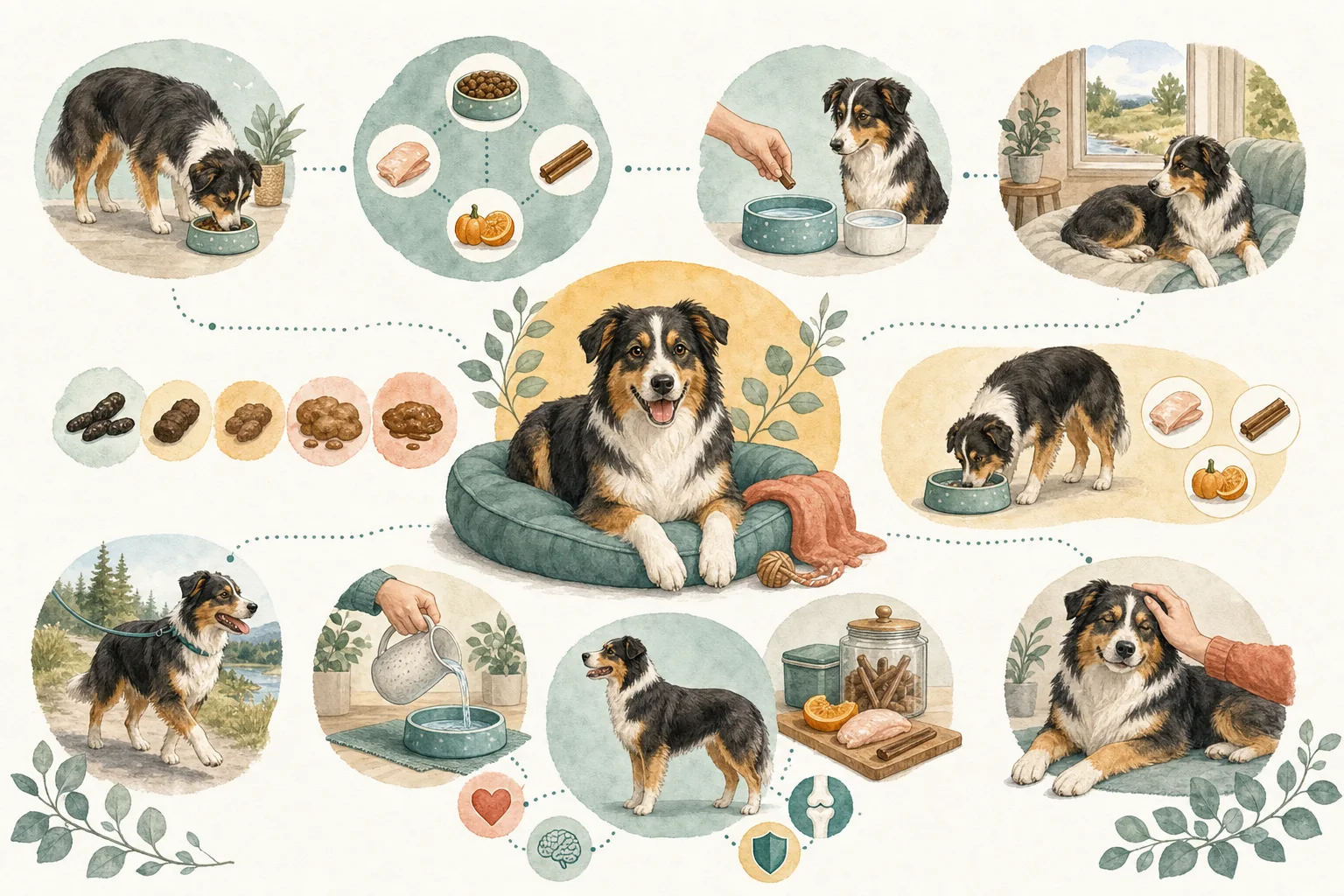
The illustration is not a recommended ingredient list, a stool-scoring chart, or an instruction to feed the foods and chew shapes pictured. Use the individual checks below for the actual item you are considering.
First decide whether this is a good time to introduce anything
If your dog is already unwell, a new treat is not the next troubleshooting step. Speak with your veterinary team about the change you are seeing. For broader symptom context, HPE’s guide to digestive issues and when to call a veterinarian is the better starting point.
WSAVA advises checking with the veterinary team when a dog has a medical condition, dietary sensitivities, or a prescribed diet. Ask about the exact item, not just whether treats are generally allowed. Do not work around a clinical feeding plan with a supposedly harmless extra.
Even for a dog without a known restriction, choose a moment when you can pay attention. A travel day, a crowded gathering, or the arrival of several gift packets can make it harder to account for what was offered. Waiting for a quieter occasion is a practical choice, not a missed opportunity.
Read the item in two ways: food fit and physical fit
For food fit, look past the front of the packet
Read the ingredient list, calorie information, intended use, and feeding directions. Photograph the label if you need to ask your veterinarian about it. A flavor name or a reassuring phrase on the front is not enough information to answer your dog’s individual question.
WSAVA gives a general guideline that treats should provide less than 10% of daily calories, without replacing complete, balanced meals. That means the whole day’s extras, not a fresh allowance for each packet or caregiver. Ask the veterinary team about your dog’s allowance; if calories are missing, ask the manufacturer rather than estimating from the item’s size.
For physical fit, consider how your dog actually chews
An ingredient your dog can eat does not make every shape or texture appropriate. ASPCA advises matching chews to the dog’s size and chewing habits and following label directions. Think about whether your dog works slowly, breaks off chunks, or tries to gulp the item.
Very hard items can fracture teeth. Cornell advises avoiding antlers, hooves, and bones. Do not treat a home hardness check as a safety certificate. If you cannot judge the proposed chew’s suitability, show it to the veterinary team before offering it.
For an ordinary edible reward, keep the first offer easy to account for
Once you have checked suitability, choose one new product rather than opening several. Keep the familiar feeding plan in place unless your veterinarian directs otherwise. The purpose is to make your record understandable, not to prove that a particular ingredient does or does not cause a problem.
For a bite-sized edible treat, use an appropriately small offer that fits the label and your dog’s agreed feeding plan. This guide cannot supply a universal number of pieces or grams. Write down the product, approximate time, and what was offered before the packet gets put away.
Tell other caregivers which item is new. Ask them not to add an unrecorded extra during the introduction. If the label is unclear about whether an item can be divided, check with the manufacturer or veterinarian instead of improvising.
Afterward, record anything you genuinely notice. An uneventful first offer is one observation, not proof of permanent tolerance. Equally, a change that happens afterward is something to report, not enough by itself to diagnose an allergy.
For an extended chew, plan the session separately
A chew is not simply a treat that takes longer. Consider its size, texture, condition, and how it changes while your dog uses it. ASPCA recommends active observation and discarding chews before worn sections can break off and be swallowed.
Choose a setting where you can watch rather than leaving the item with your dog while you leave the room or become occupied elsewhere. Follow the product’s directions and any veterinary instructions. There is no fixed session length in this guide: a timer cannot make an unsuitable item appropriate.
Do not cut down an extended chew merely to create a smaller trial serving. A smaller piece may introduce a different swallowing hazard. If the original item does not fit the dog’s chewing behavior or dietary allowance, choose another approach with professional guidance.
Plan how to end the session safely. If your dog guards items or you cannot retrieve one without confrontation, ask your veterinary team for help planning an appropriate alternative. Supervision is useful, but it does not guarantee that swallowing or injury cannot happen.
Owner tool
Make a one-item decision card before opening the packet
Use this short record for the proposed product. It is a planning aid, not a clinical test. An unanswered question is a reason to clarify the plan, not a blank to fill with a reassuring guess.
| Decision | Record or confirm | If unresolved |
|---|---|---|
| Reason for the item | Training reward, supervised chewing, or another specific purpose. | Keeping a familiar option is acceptable. |
| Dietary fit | Product label, calories, ingredients, and existing veterinary restrictions. | Ask about this exact item before offering it. |
| Physical fit | Label guidance, intended size, and your dog’s chewing behavior. | Do not assume an edible item is mechanically suitable. |
| First offer | Who will supervise, what will be offered, and what other extras are planned. | Wait until the arrangement is clear. |
| Outcome and next decision | What actually happened, any concern, and any advice received. | Stop the optional item and seek guidance when needed. |
For example, a caregiver might write: “New packet unopened. Label photographed. Need to ask whether this chew fits the current feeding instructions.” That is a completed decision for today. The record does not need to end with a successful first serving.
Keep the packaging and the handling plan
FDA recommends buying intact packaging, washing hands before and after handling pet food and treats, cleaning utensils, and keeping supplies securely stored. Follow storage directions for the particular item. Do not leave the whole supply accessible to your dog.
Keep the identifying packet rather than relying on a name remembered from an online order. A clear label photograph and the original package can help you describe the exact item if you need to contact the manufacturer or your veterinary team. Clean handling reduces risk; it is not a promise that a product cannot cause a problem.
Better questions, calmer next steps
Ask about the choice, not just the brand
Bring the label and describe what you want the item to do. Useful questions include: “Does this fit the current diet?” “Is this texture appropriate for these teeth and chewing habits?” and “What should make us stop?”
If something concerning already happened, start with that event and your dog’s current condition. Do not bury it beneath a long account of why you bought the product.
FAQ
Should I follow a seven-day treat-introduction schedule?
This guide does not prescribe one. Label directions, the type of item, and your dog’s individual instructions matter more than completing a calendar. Ask the veterinary team about timing when needed. Never keep offering an item through concerning signs simply to finish an introduction period.
Does “single ingredient” mean a chew is suitable?
No single label phrase answers every suitability question. You still need to consider the diet, the item’s physical properties, and the way your dog handles it. Check the actual package rather than assuming that a short ingredient list settles the decision.
Can I try the same item again after digestive upset?
Do not arrange a home re-challenge to test your theory. Stop the optional item and ask your veterinarian what to do next, describing the timing and signs. Returning to the packet without advice is not a reliable way to diagnose what happened.
What if my dog likes it but it does not fit the plan?
You can decide not to continue. Liking an item does not settle its suitability. Ask about another reward or activity that fits your dog’s care plan. You do not owe a packet a second chance because it was a gift, cost money, or received enthusiastic reviews.
Your next step: decide before opening the packet
Choose one item, read its directions, and identify the question you still need answered. The best result may be a thoughtful first offer, a conversation with your veterinary team, or a decision to keep the familiar routine.
Your job is not to make every new product work. It is to make a clear, informed choice for the dog in front of you.
Sources
The decision card and sequence are HPE organizational tools, not a validated introduction protocol. These direct sources support the dietary, mechanical, handling, and professional-care boundaries.
- WSAVA: Feeding treats to your dog. Dietary context and individual suitability.
- ASPCA: Position Statement on Dog Chews/Treats. Chewing behavior, supervision, and swallowed pieces.
- Cornell: Risks from a fractured tooth. Hard-item hazards and dental concerns.
- FDA: Tips for Safe Handling of Pet Food and Treats. Packaging, hygiene, and storage.
- FDA: Keep Your Dogs and Cats Safe From Holiday Hazards. Swallowing hazards and potentially delayed signs.
- Cornell: Diarrhea. Signs that need veterinary attention; home-treatment instructions are not adopted here.
