

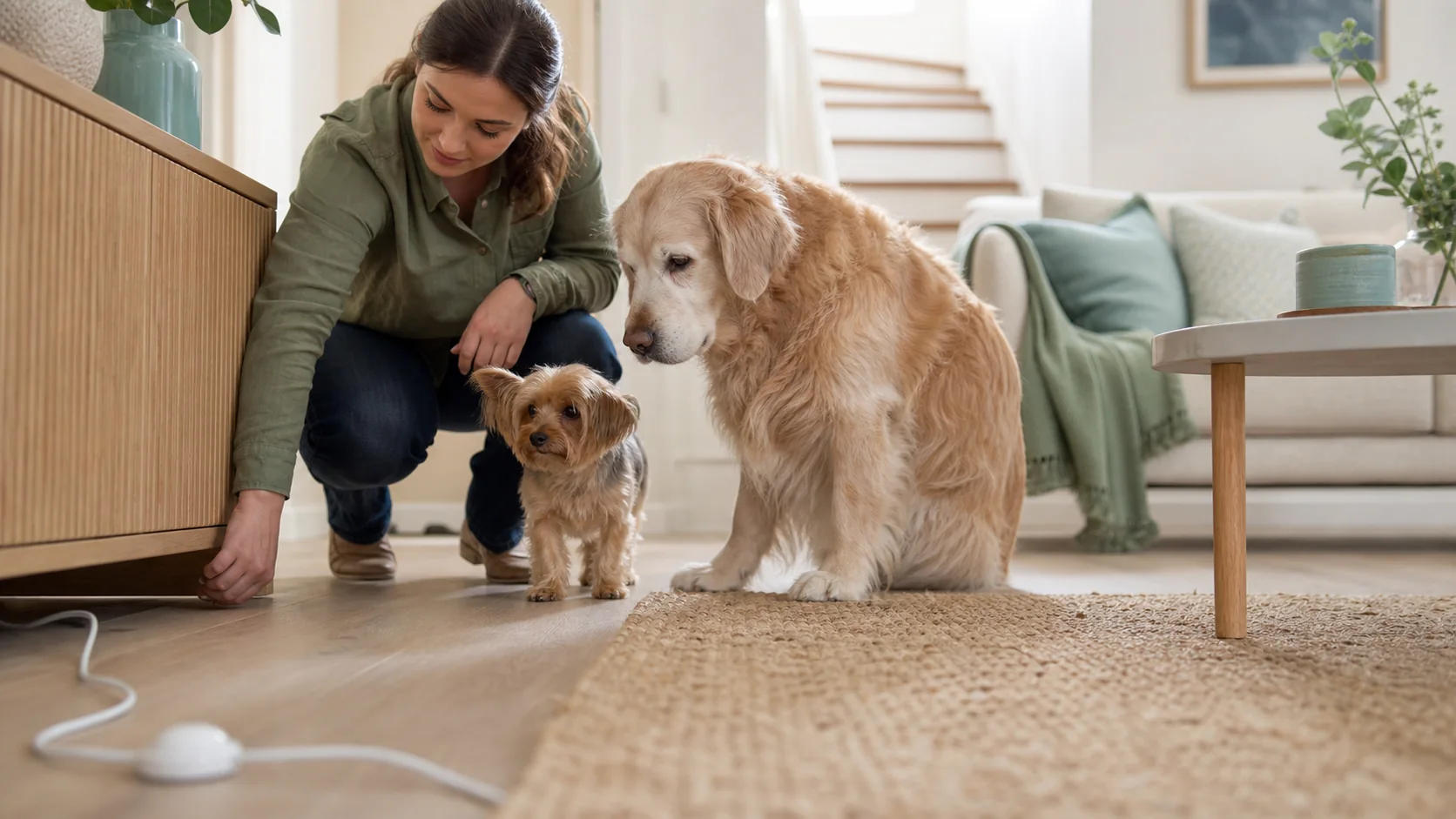
A calm, evidence-aware owner framework for small and senior dog home hazard check, with clear professional-care boundaries and practical observations to bring to the veterinary team.
Short answer
Use a repeatable plan and keep veterinary care in the lead
Audit low-level access, gaps, stairs, furniture, cords, doors, and household traffic through the perspective of dogs with smaller bodies, reduced vision, or slower reactions.
- Look for reachable objects, gaps, sharp edges, and unstable items.
- Manage escape points, recliners, balconies, and spaces behind furniture.
- Gate unsafe elevation and prevent risky jumping.
- Remove batteries, toys, food wrappers, and choking hazards.
Safety first
Stop the checklist when the dog needs professional care
Owners should consult a veterinarian if a small or senior dog shows frequent stumbling, misjudging distances, or bumping into furniture, as these may reflect vision loss, neurologic disease, or significant mobility problems. Urgent veterinary care is needed if a dog falls down stairs or from furniture and then shows difficulty standing, obvious limb deformity, crying in pain, or changes in consciousness, because serious injury is possible.
Veterinary note
Educational information only; contact a veterinarian for diagnosis, treatment, or urgent concerns. This guide supports observation and preparation; it does not diagnose a condition or replace an individualized care plan.
What is reasonably supported
Use repeated observations to improve the veterinary conversation
Household-hazard guidance lists stairs, slippery floors, unsecured cords, and small objects as common risks for dogs and cats, recommending that owners minimize access or secure these areas to prevent falls… AVMA provides general examples; individual homes may have unique hazards that still require owner judgment… Veterinary hospital advice suggests using non-slip rugs, ramps for furniture or elevated surfaces, and clear, obstacle-free pathways to help mobility-compromised dogs move safely between rooms. Recommendations are practical but not exhaustive; some dogs may need more specialized equipment or rehabilitation… Canine arthritis resources highlight that dogs with osteoarthritis may struggle with stairs and slick floors, and encourage owners to block off steep staircases, add traction, and ensure comfortable resting spots… Guidance is based on experience with arthritic dogs and does not replace veterinary assessment for… Animal welfare guidance for senior dogs emphasizes creating a safe, easily navigable home environment, including avoiding sudden layout changes and ensuring essentials like beds, water, and toileting areas are easy… RSPCA notes that senior dogs may also have medical and behavioral needs; environmental changes are…
What remains uncertain
Home observations cannot establish the cause
Guidance focuses on identifying and reducing physical home hazards for small or senior dogs; it does not cover all toxic exposures or complex behavioral risks. Owners should not assume that completing a home hazard check removes the need for supervision or regular veterinary assessments. This packet does not provide engineering or structural safety specifications for stairs, railings, or flooring.
View the home at dog height
A useful review begins with the dog's own normal pattern, because comparison with a generic ideal can hide meaningful individual change. Research selected for this guide supports a bounded point: Household-hazard guidance lists stairs, slippery floors, unsecured cords, and small objects as common risks for dogs and cats, recommending that owners minimize access or secure these areas to prevent falls and injuries. AVMA provides general examples; individual homes may have unique hazards that still require owner judgment and veterinary input. This informs careful observation and veterinary discussion, not diagnosis or a guaranteed result.
In practice, look for reachable objects, gaps, sharp edges, and unstable items. Record the date, frequency, context, and related changes that matter to this task. Adult eye level misses many hazards. Contact the veterinary team when the pattern is persistent, progressive, painful, or joined by the red-flag signs above.
Secure doors and narrow gaps
The safest approach separates observation from interpretation: owners document what happened, while the veterinary team evaluates possible causes. Research selected for this guide supports a bounded point: Veterinary hospital advice suggests using non-slip rugs, ramps for furniture or elevated surfaces, and clear, obstacle-free pathways to help mobility-compromised dogs move safely between rooms. Recommendations are practical but not exhaustive; some dogs may need more specialized equipment or rehabilitation planning. This informs careful observation and veterinary discussion, not diagnosis or a guaranteed result.
In practice, manage escape points, recliners, balconies, and spaces behind furniture. Record the date, frequency, context, and related changes that matter to this task. Small dogs can enter spaces that appear closed. Contact the veterinary team when the pattern is persistent, progressive, painful, or joined by the red-flag signs above.
Protect stairs and furniture
Consistency makes the record more useful. Use the same route, measure, timing, or description when practical and note unusual circumstances. Research selected for this guide supports a bounded point: Canine arthritis resources highlight that dogs with osteoarthritis may struggle with stairs and slick floors, and encourage owners to block off steep staircases, add traction, and ensure comfortable resting spots on each level. Guidance is based on experience with arthritic dogs and does not replace veterinary assessment for pain management or mobility training. This informs careful observation and veterinary discussion, not diagnosis or a guaranteed result.
In practice, gate unsafe elevation and prevent risky jumping. Record the date, frequency, context, and related changes that matter to this task. Carrying is not automatically safe for every dog or caregiver. Contact the veterinary team when the pattern is persistent, progressive, painful, or joined by the red-flag signs above.
Control cords and small objects
Small environmental details can change what the owner sees, so include weather, visitors, travel, food changes, medication timing, and household disruption. Research selected for this guide supports a bounded point: Animal welfare guidance for senior dogs emphasizes creating a safe, easily navigable home environment, including avoiding sudden layout changes and ensuring essentials like beds, water, and toileting areas are easy to reach. RSPCA notes that senior dogs may also have medical and behavioral needs; environmental changes are one part of broader care. This informs careful observation and veterinary discussion, not diagnosis or a guaranteed result.
In practice, remove batteries, toys, food wrappers, and choking hazards. Record the date, frequency, context, and related changes that matter to this task. Household traffic can reintroduce items daily. Contact the veterinary team when the pattern is persistent, progressive, painful, or joined by the red-flag signs above.
Improve traction and lighting
A checklist is a prompt for attention, not proof that risk has been removed or that a medical concern has been explained. Research selected for this guide supports a bounded point: Household-hazard guidance lists stairs, slippery floors, unsecured cords, and small objects as common risks for dogs and cats, recommending that owners minimize access or secure these areas to prevent falls and injuries. AVMA provides general examples; individual homes may have unique hazards that still require owner judgment and veterinary input. This informs careful observation and veterinary discussion, not diagnosis or a guaranteed result.
In practice, connect key routes and illuminate transitions. Record the date, frequency, context, and related changes that matter to this task. Senior sensory change can alter navigation. Contact the veterinary team when the pattern is persistent, progressive, painful, or joined by the red-flag signs above.
Manage children and visitors
When several caregivers are involved, shared terms and one current record reduce missed steps, duplicate care, and conflicting impressions. Research selected for this guide supports a bounded point: Veterinary hospital advice suggests using non-slip rugs, ramps for furniture or elevated surfaces, and clear, obstacle-free pathways to help mobility-compromised dogs move safely between rooms. Recommendations are practical but not exhaustive; some dogs may need more specialized equipment or rehabilitation planning. This informs careful observation and veterinary discussion, not diagnosis or a guaranteed result.
In practice, create a protected rest area and clear handling rules. Record the date, frequency, context, and related changes that matter to this task. Small or older dogs need choice and escape from crowding. Contact the veterinary team when the pattern is persistent, progressive, painful, or joined by the red-flag signs above.
Owner tool
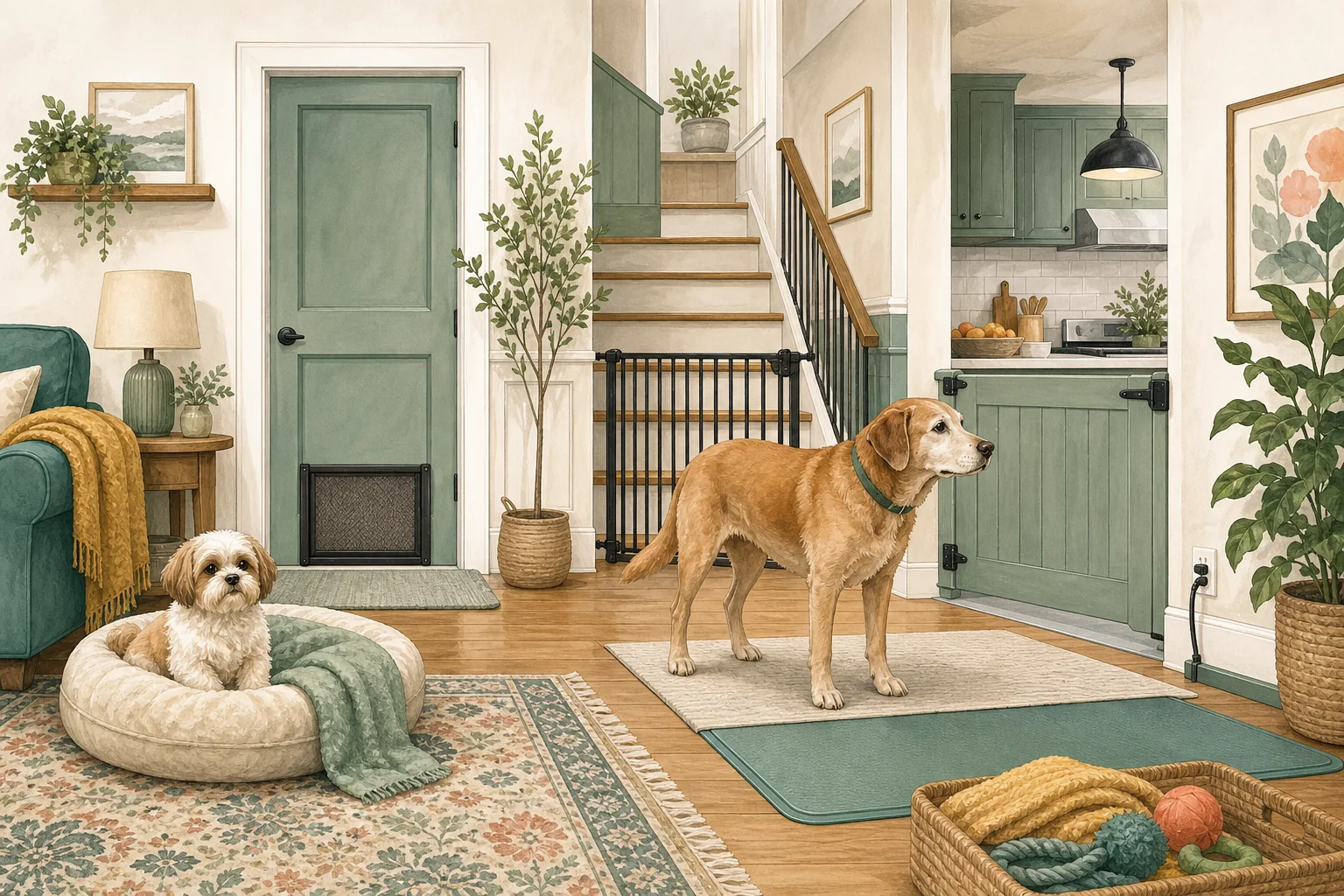
Room-by-Room Hazard Check for Small or Senior Dogs
Use this small and senior dog home hazard check as a repeatable owner record. Mark what is normal, what changed, and what needs veterinary guidance.
| Checkpoint | Owner action | Boundary |
|---|---|---|
| View the home at dog height | look for reachable objects, gaps, sharp edges, and unstable items | Adult eye level misses many hazards |
| Secure doors and narrow gaps | manage escape points, recliners, balconies, and spaces behind furniture | Small dogs can enter spaces that appear closed |
| Protect stairs and furniture | gate unsafe elevation and prevent risky jumping | Carrying is not automatically safe for every dog or caregiver |
| Control cords and small objects | remove batteries, toys, food wrappers, and choking hazards | Household traffic can reintroduce items daily |
| Improve traction and lighting | connect key routes and illuminate transitions | Senior sensory change can alter navigation |
| Manage children and visitors | create a protected rest area and clear handling rules | Small or older dogs need choice and escape from crowding |
| Recheck after change | audit after moving furniture, deliveries, guests, or mobility decline | A previously safe room can become unfamiliar |
A three-step next action
Observe
Complete the small and senior dog home hazard check without provoking a symptom or forcing the dog through difficulty.
Record
Keep dates, measurements, photographs, short natural-behavior videos, product labels, and caregiver notes together.
Escalate
Share the concise pattern with the veterinary team and seek urgent care for severe or rapidly worsening signs.
Prepare for the visit
Questions to take to your veterinarian
- Which parts of this small and senior dog home hazard check are most important for this dog?
- What findings need a routine appointment, a same-day call, or emergency care?
- Could current diagnoses, medications, diet, supplements, pain, vision, hearing, or mobility change the plan?
- What should I measure at home, and how often should I reassess it?
- Which change should make me stop the routine and contact you sooner?
Bring the dated observation log, relevant photos or short videos, and a complete list of foods, treats, medications, and supplements. Do not change the routine solely to produce evidence for the visit.
Frequently asked questions
Can this checklist diagnose a health problem?
No. It organizes observations and questions; diagnosis requires veterinary assessment.
How often should I repeat it?
Use the interval recommended by the veterinary team and repeat sooner after a meaningful change.
Should I change several things at once?
Usually not unless the veterinary team directs it. Multiple changes make response and risk harder to interpret.
What should I bring to the appointment?
Bring the dated log, relevant photos or videos, and complete food, medication, supplement, and product information.
Sources
- Household hazards for dogs and cats, American Veterinary Medical Association. Household-hazard guidance lists **stairs, slippery floors, unsecured cords, and small objects** as common risks for dogs and cats, recommending that owners minimize access or secure these areas to prevent falls…
- Creating a Comfortable Home for Your Mobility Compromised Dog, VCA Animal Hospitals. Veterinary hospital advice suggests using **non-slip rugs, ramps for furniture or elevated surfaces, and clear, obstacle-free pathways** to help mobility-compromised dogs move safely between rooms.
- Home Environment Modifications for Dogs with OA, Canine Arthritis Management. Canine arthritis resources highlight that dogs with osteoarthritis may struggle with **stairs and slick floors**, and encourage owners to **block off steep staircases, add traction, and ensure comfortable resting spots…
- Caring for Older Dogs – Senior Dog Care, RSPCA. Animal welfare guidance for senior dogs emphasizes creating a **safe, easily navigable home environment**, including avoiding sudden layout changes and ensuring essentials like beds, water, and toileting areas are easy…
Medical disclaimer
Educational information only; contact a veterinarian for diagnosis, treatment, or urgent concerns. If your dog is showing severe, sudden, or rapidly worsening signs, seek urgent veterinary care.
