

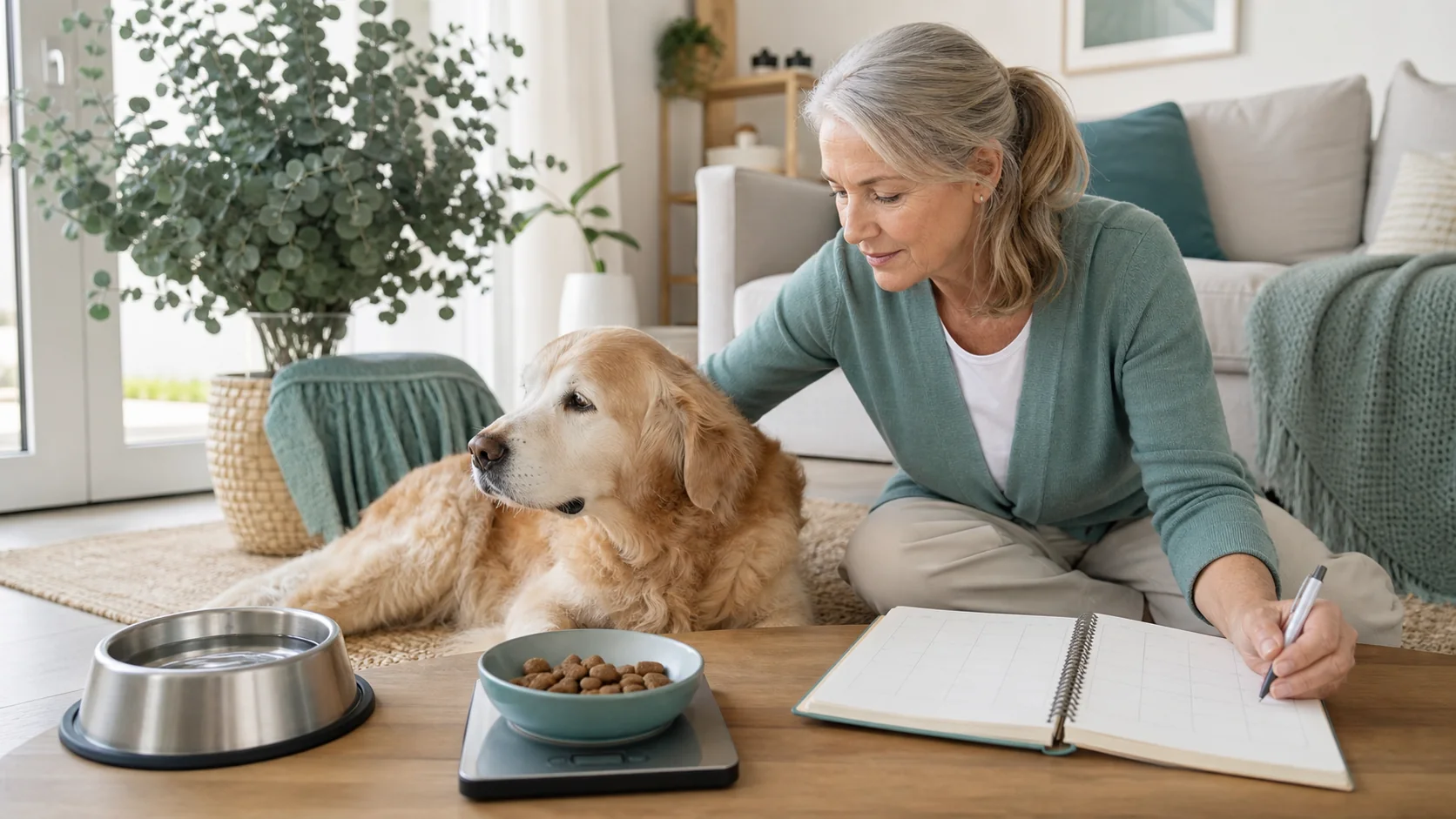
A calm, evidence-aware owner framework for monthly wellness review, with clear professional-care boundaries and practical observations to bring to the veterinary team.
Short answer
Use a repeatable plan and keep veterinary care in the lead
Track one month of appetite, water, elimination, weight, energy, comfort, and treatment adherence so the veterinary team can see direction without treating a home log as diagnosis.
- Record the current veterinary plan, usual routine, and recent test dates.
- Measure planned portions and record leftovers, food seeking, nausea-like behavior, or chewing difficulty.
- Note bowl refills, overnight drinking, urination, stool, accidents, and straining.
- Use the same safe scale method and observe body and muscle trend.
Safety first
Stop the checklist when the dog needs professional care
Contact a veterinarian promptly if a dog has marked thirst or urination, unexplained weight loss, appetite decline, lethargy, vomiting, or a sudden drop in activity. Seek urgent care for collapse, breathing trouble, severe weakness, or any rapidly worsening illness.
Veterinary note
Educational information only; contact a veterinarian for diagnosis, treatment, or urgent concerns. This guide supports observation and preparation; it does not diagnose a condition or replace an individualized care plan.
What is reasonably supported
Use repeated observations to improve the veterinary conversation
VCA diabetes guidance identifies symptoms and monitoring points that owners can watch for at home, such as thirst, urination, appetite, and weight changes. These signs should prompt veterinary evaluation rather than self-diagnosis. VCA hypothyroidism guidance supports watching for patterns in energy, weight, coat, and behavior that may suggest a change in health status. The pattern is nonspecific and requires veterinary confirmation. AAHA-AVMA preventive-care guidance supports regular wellness monitoring and veterinary partnership across a dog's life. Preventive care does not replace diagnostic testing when disease is suspected. MSD Veterinary Manual guidance supports routine preventive care and earlier follow-up when changes are noticed at home. Home logs are most useful when reviewed with a veterinarian.
What remains uncertain
Home observations cannot establish the cause
This packet is for routine tracking, not diagnosis or treatment of diabetes, hypothyroidism, or kidney disease. Monthly checks are best used to identify trends and decide when to contact the veterinarian.
Set the month's baseline
A useful review begins with the dog's own normal pattern, because comparison with a generic ideal can hide meaningful individual change. Research selected for this guide supports a bounded point: VCA diabetes guidance identifies symptoms and monitoring points that owners can watch for at home, such as thirst, urination, appetite, and weight changes. These signs should prompt veterinary evaluation rather than self-diagnosis. This informs careful observation and veterinary discussion, not diagnosis or a guaranteed result.
In practice, record the current veterinary plan, usual routine, and recent test dates. Record the date, frequency, context, and related changes that matter to this task. Do not reinterpret a diagnosis or laboratory result. Contact the veterinary team when the pattern is persistent, progressive, painful, or joined by the red-flag signs above.
Review meals and appetite
The safest approach separates observation from interpretation: owners document what happened, while the veterinary team evaluates possible causes. Research selected for this guide supports a bounded point: VCA hypothyroidism guidance supports watching for patterns in energy, weight, coat, and behavior that may suggest a change in health status. The pattern is nonspecific and requires veterinary confirmation. This informs careful observation and veterinary discussion, not diagnosis or a guaranteed result.
In practice, measure planned portions and record leftovers, food seeking, nausea-like behavior, or chewing difficulty. Record the date, frequency, context, and related changes that matter to this task. Do not make several diet changes before asking the clinic. Contact the veterinary team when the pattern is persistent, progressive, painful, or joined by the red-flag signs above.
Review water and elimination
Consistency makes the record more useful. Use the same route, measure, timing, or description when practical and note unusual circumstances. Research selected for this guide supports a bounded point: AAHA-AVMA preventive-care guidance supports regular wellness monitoring and veterinary partnership across a dog's life. Preventive care does not replace diagnostic testing when disease is suspected. This informs careful observation and veterinary discussion, not diagnosis or a guaranteed result.
In practice, note bowl refills, overnight drinking, urination, stool, accidents, and straining. Record the date, frequency, context, and related changes that matter to this task. Never restrict water to test thirst or control accidents. Contact the veterinary team when the pattern is persistent, progressive, painful, or joined by the red-flag signs above.
Check weight and body condition
Small environmental details can change what the owner sees, so include weather, visitors, travel, food changes, medication timing, and household disruption. Research selected for this guide supports a bounded point: MSD Veterinary Manual guidance supports routine preventive care and earlier follow-up when changes are noticed at home. Home logs are most useful when reviewed with a veterinarian. This informs careful observation and veterinary discussion, not diagnosis or a guaranteed result.
In practice, use the same safe scale method and observe body and muscle trend. Record the date, frequency, context, and related changes that matter to this task. A stable scale number can still hide muscle loss. Contact the veterinary team when the pattern is persistent, progressive, painful, or joined by the red-flag signs above.
Compare energy and comfort
A checklist is a prompt for attention, not proof that risk has been removed or that a medical concern has been explained. Research selected for this guide supports a bounded point: VCA diabetes guidance identifies symptoms and monitoring points that owners can watch for at home, such as thirst, urination, appetite, and weight changes. These signs should prompt veterinary evaluation rather than self-diagnosis. This informs careful observation and veterinary discussion, not diagnosis or a guaranteed result.
In practice, use one familiar walk or household task as a repeatable reference. Record the date, frequency, context, and related changes that matter to this task. Do not force activity to complete a checklist. Contact the veterinary team when the pattern is persistent, progressive, painful, or joined by the red-flag signs above.
Reconcile medications and supplements
When several caregivers are involved, shared terms and one current record reduce missed steps, duplicate care, and conflicting impressions. Research selected for this guide supports a bounded point: VCA hypothyroidism guidance supports watching for patterns in energy, weight, coat, and behavior that may suggest a change in health status. The pattern is nonspecific and requires veterinary confirmation. This informs careful observation and veterinary discussion, not diagnosis or a guaranteed result.
In practice, compare the current list with every container and caregiver instruction. Record the date, frequency, context, and related changes that matter to this task. Never correct a missed dose by guessing. Contact the veterinary team when the pattern is persistent, progressive, painful, or joined by the red-flag signs above.
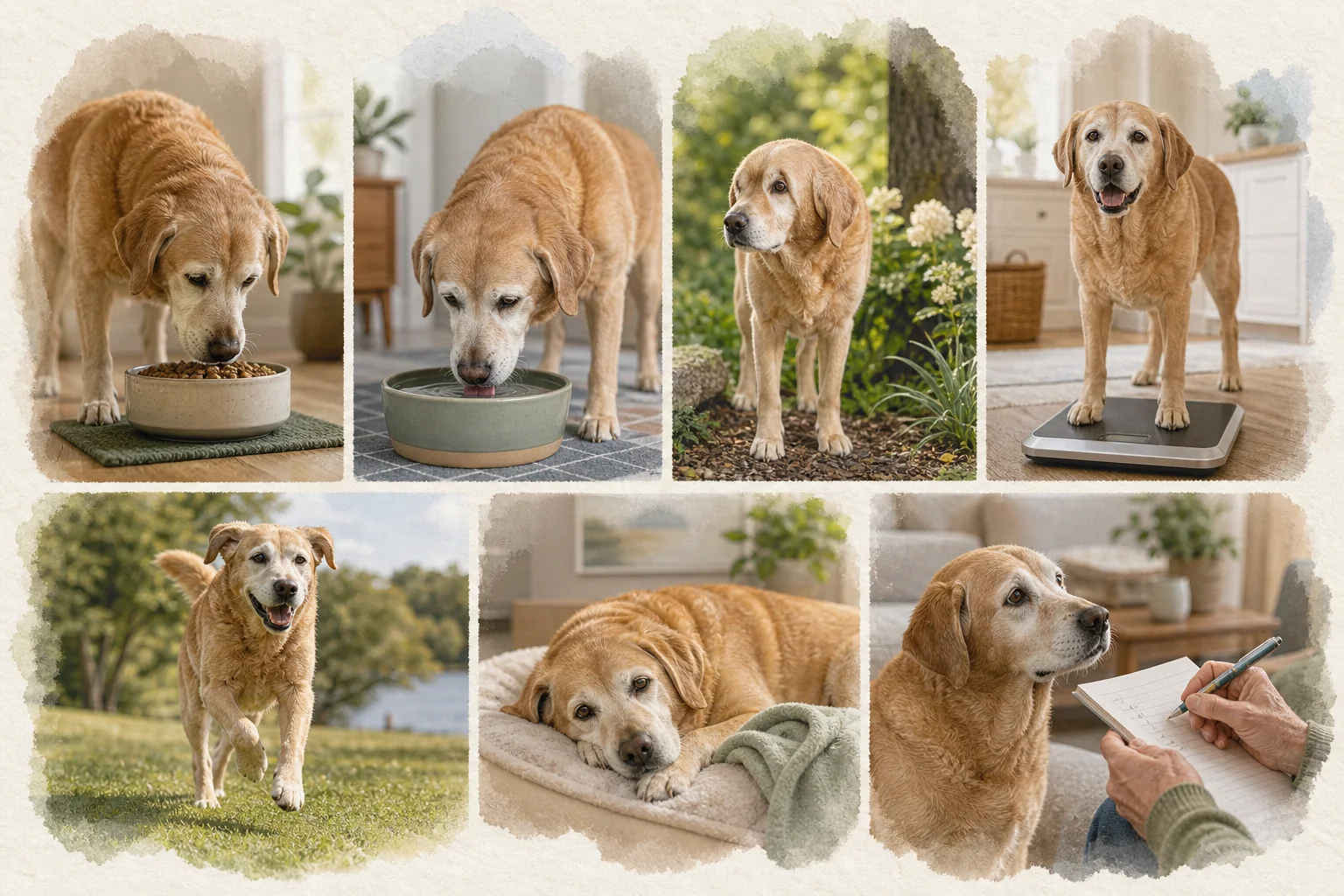
Owner tool
Monthly Wellness Check for Dogs With Metabolic Concerns
Use this monthly wellness review as a repeatable owner record. Mark what is normal, what changed, and what needs veterinary guidance.
| Checkpoint | Owner action | Boundary |
|---|---|---|
| Set the month's baseline | record the current veterinary plan, usual routine, and recent test dates | Do not reinterpret a diagnosis or laboratory result |
| Review meals and appetite | measure planned portions and record leftovers, food seeking, nausea-like behavior, or chewing difficulty | Do not make several diet changes before asking the clinic |
| Review water and elimination | note bowl refills, overnight drinking, urination, stool, accidents, and straining | Never restrict water to test thirst or control accidents |
| Check weight and body condition | use the same safe scale method and observe body and muscle trend | A stable scale number can still hide muscle loss |
| Compare energy and comfort | use one familiar walk or household task as a repeatable reference | Do not force activity to complete a checklist |
| Reconcile medications and supplements | compare the current list with every container and caregiver instruction | Never correct a missed dose by guessing |
| Send a concise monthly update | summarize what changed, when, how often, and what remained stable | Call sooner instead of waiting for month-end when red flags appear |
A three-step next action
Observe
Complete the monthly wellness review without provoking a symptom or forcing the dog through difficulty.
Record
Keep dates, measurements, photographs, short natural-behavior videos, product labels, and caregiver notes together.
Escalate
Share the concise pattern with the veterinary team and seek urgent care for severe or rapidly worsening signs.
Prepare for the visit
Questions to take to your veterinarian
- Which parts of this monthly wellness review are most important for this dog?
- What findings need a routine appointment, a same-day call, or emergency care?
- Could current diagnoses, medications, diet, supplements, pain, vision, hearing, or mobility change the plan?
- What should I measure at home, and how often should I reassess it?
- Which change should make me stop the routine and contact you sooner?
Bring the dated observation log, relevant photos or short videos, and a complete list of foods, treats, medications, and supplements. Do not change the routine solely to produce evidence for the visit.
Frequently asked questions
Can this checklist diagnose a health problem?
No. It organizes observations and questions; diagnosis requires veterinary assessment.
How often should I repeat it?
Use the interval recommended by the veterinary team and repeat sooner after a meaningful change.
Should I change several things at once?
Usually not unless the veterinary team directs it. Multiple changes make response and risk harder to interpret.
What should I bring to the appointment?
Bring the dated log, relevant photos or videos, and complete food, medication, supplement, and product information.
Sources
- Diabetes Mellitus in Dogs, VCA Animal Hospitals. VCA diabetes guidance identifies symptoms and monitoring points that owners can watch for at home, such as thirst, urination, appetite, and weight changes.
- Hypothyroidism in Dogs, VCA Animal Hospitals. VCA hypothyroidism guidance supports watching for patterns in energy, weight, coat, and behavior that may suggest a change in health status.
- AAHA‑AVMA Canine Preventive Healthcare Guidelines, American Veterinary Medical Association. AAHA-AVMA preventive-care guidance supports regular wellness monitoring and veterinary partnership across a dog's life.
- Preventative Health Care for Small Animals, MSD Veterinary Manual. MSD Veterinary Manual guidance supports routine preventive care and earlier follow-up when changes are noticed at home.
Medical disclaimer
Educational information only; contact a veterinarian for diagnosis, treatment, or urgent concerns. If your dog is showing severe, sudden, or rapidly worsening signs, seek urgent veterinary care.
