

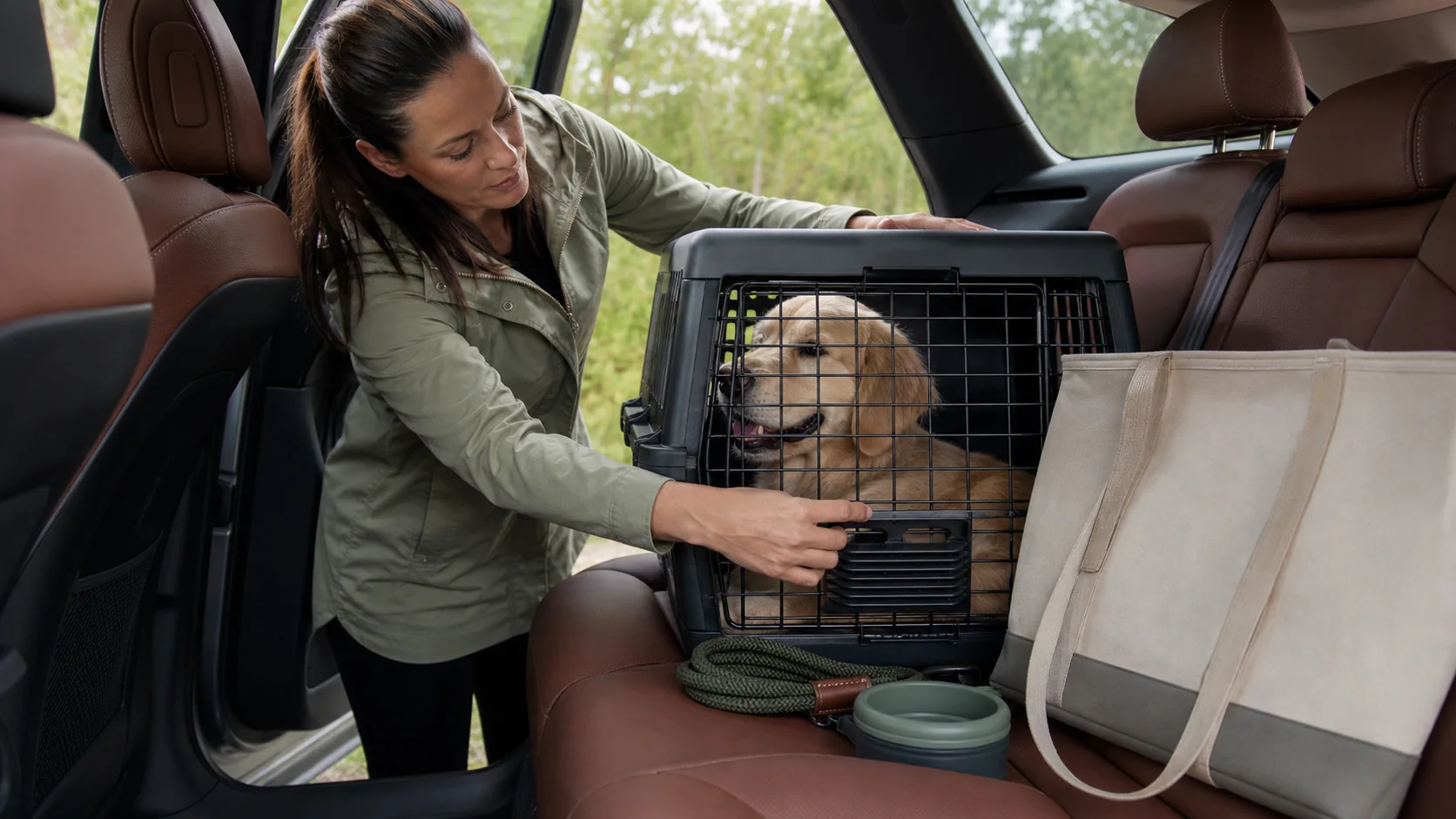
A calm, evidence-aware owner framework for vehicle safety audit, with clear professional-care boundaries and practical observations to bring to the veterinary team.
Short answer
Use a repeatable plan and keep veterinary care in the lead
Prepare restraint, temperature control, loading, identification, supplies, and emergency steps before travel so a routine drive does not become an avoidable hazard.
- Use a secure travel crate or properly fitted vehicle restraint suited to the dog and vehicle.
- Use traction, a stable ramp when appropriate, and controlled door opening.
- Check cabin temperature and airflow before and throughout travel.
- Use child locks where useful and prevent head-out-the-window travel.
Safety first
Stop the checklist when the dog needs professional care
Owners should seek emergency veterinary care promptly if a dog in a vehicle shows signs of heatstroke such as heavy panting, drooling, bright red or very pale gums, unsteadiness, collapse, or seizures, especially after exposure to warm or hot conditions in a car. Immediate veterinary assessment is recommended if a dog is involved in a collision, thrown within the vehicle, or falls from a moving vehicle, even if it appears normal at first, because internal injuries and head trauma may not be immediately obvious. If a dog suddenly becomes extremely anxious, disoriented, or has trouble breathing while traveling, owners should safely stop the vehicle, move the dog to a cooler, calmer environment, and contact a veterinarian or emergency clinic for guidance. Any dog that has been trapped in a hot car, even for a short period, should be examined by a veterinarian as soon as possible because heat damage to organs can continue to evolve after the dog is cooled.
Veterinary note
Educational information only; contact a veterinarian for diagnosis, treatment, or urgent concerns. This guide supports observation and preparation; it does not diagnose a condition or replace an individualized care plan.
What is reasonably supported
Use repeated observations to improve the veterinary conversation
Veterinary guidance emphasizes that dogs should be properly restrained in vehicles, using a secured crate or a harness attached to the vehicle, because unrestrained pets are at risk of injury… The AVMA highlights restraint as a safety priority but does not endorse specific products or… Dogs should not ride with their heads out of open windows because this increases the risk of eye, ear, and face injuries from debris and can lead to falls or… This recommendation is based on general trauma risk rather than quantified injury rates; keeping windows… Pets should never be left alone in parked vehicles due to the rapid development of heat stress, even on days that do not feel extremely hot, as interior temperatures can… The exact time to dangerous heat varies with ambient temperature, sun exposure, and ventilation, so… Signs that a dog may be developing heatstroke during travel include excessive panting, drooling, bright red or very pale gums, vomiting, diarrhea, disorientation, collapse, or seizures, and these require immediate… Heatstroke can progress rapidly and may be fatal; owners should treat any suspicion as an… For driver safety, pets should be kept out of the front seat and away from drivers’ laps, as unrestrained animals can distract the driver or interfere with steering and pedals,… Specific legal requirements vary by jurisdiction, but the safety principle of separating the dog from…
What remains uncertain
Home observations cannot establish the cause
Provides general vehicle-safety principles and checklists and is not a substitute for local traffic laws, restraint regulations, or a veterinarian’s individualized transport advice for dogs with medical conditions. Does not endorse or compare specific restraint brands, crash-test claims, or product performance; owners are directed only to general features and handling practices. Does not guarantee prevention of injury in the event of a collision or sudden stop; even with best practices, some risk remains when transporting animals in vehicles. Focuses on otherwise stable dogs; dogs with severe anxiety, motion sickness, or medical fragility may require customized handling and veterinary consultation.
Choose appropriate restraint
A useful review begins with the dog's own normal pattern, because comparison with a generic ideal can hide meaningful individual change. Research selected for this guide supports a bounded point: Veterinary guidance emphasizes that dogs should be properly restrained in vehicles, using a secured crate or a harness attached to the vehicle, because unrestrained pets are at risk of injury to themselves and others during… The AVMA highlights restraint as a safety priority but does not endorse specific products or crash-test standards; owners must select… This informs careful observation and veterinary discussion, not diagnosis or a guaranteed result.
In practice, use a secure travel crate or properly fitted vehicle restraint suited to the dog and vehicle. Record the date, frequency, context, and related changes that matter to this task. Never allow a dog to ride loose, in a lap, or in an open truck bed. Contact the veterinary team when the pattern is persistent, progressive, painful, or joined by the red-flag signs above.
Practice calm loading
The safest approach separates observation from interpretation: owners document what happened, while the veterinary team evaluates possible causes. Research selected for this guide supports a bounded point: Dogs should not ride with their heads out of open windows because this increases the risk of eye, ear, and face injuries from debris and can lead to falls or being struck by external objects. This recommendation is based on general trauma risk rather than quantified injury rates; keeping windows only partially open and using… This informs careful observation and veterinary discussion, not diagnosis or a guaranteed result.
In practice, use traction, a stable ramp when appropriate, and controlled door opening. Record the date, frequency, context, and related changes that matter to this task. Do not pull a mobility-limited dog by the collar. Contact the veterinary team when the pattern is persistent, progressive, painful, or joined by the red-flag signs above.
Control heat and ventilation
Consistency makes the record more useful. Use the same route, measure, timing, or description when practical and note unusual circumstances. Research selected for this guide supports a bounded point: Pets should never be left alone in parked vehicles due to the rapid development of heat stress, even on days that do not feel extremely hot, as interior temperatures can rise quickly and become life-threatening. The exact time to dangerous heat varies with ambient temperature, sun exposure, and ventilation, so owners are advised to avoid… This informs careful observation and veterinary discussion, not diagnosis or a guaranteed result.
In practice, check cabin temperature and airflow before and throughout travel. Record the date, frequency, context, and related changes that matter to this task. Never leave a dog unattended in a parked vehicle. Contact the veterinary team when the pattern is persistent, progressive, painful, or joined by the red-flag signs above.
Protect doors and windows
Small environmental details can change what the owner sees, so include weather, visitors, travel, food changes, medication timing, and household disruption. Research selected for this guide supports a bounded point: Signs that a dog may be developing heatstroke during travel include excessive panting, drooling, bright red or very pale gums, vomiting, diarrhea, disorientation, collapse, or seizures, and these require immediate veterinary care while the dog… Heatstroke can progress rapidly and may be fatal; owners should treat any suspicion as an emergency rather than waiting to… This informs careful observation and veterinary discussion, not diagnosis or a guaranteed result.
In practice, use child locks where useful and prevent head-out-the-window travel. Record the date, frequency, context, and related changes that matter to this task. An open door can become an escape point in seconds. Contact the veterinary team when the pattern is persistent, progressive, painful, or joined by the red-flag signs above.
Pack identification and supplies
A checklist is a prompt for attention, not proof that risk has been removed or that a medical concern has been explained. Research selected for this guide supports a bounded point: For driver safety, pets should be kept out of the front seat and away from drivers’ laps, as unrestrained animals can distract the driver or interfere with steering and pedals, especially during sudden maneuvers. Specific legal requirements vary by jurisdiction, but the safety principle of separating the dog from the driver is broadly endorsed… This informs careful observation and veterinary discussion, not diagnosis or a guaranteed result.
In practice, carry identification, leash, water, cleanup items, records, and medications. Record the date, frequency, context, and related changes that matter to this task. Supplies do not replace an emergency plan. Contact the veterinary team when the pattern is persistent, progressive, painful, or joined by the red-flag signs above.
Plan rest stops
When several caregivers are involved, shared terms and one current record reduce missed steps, duplicate care, and conflicting impressions. Research selected for this guide supports a bounded point: Veterinary guidance emphasizes that dogs should be properly restrained in vehicles, using a secured crate or a harness attached to the vehicle, because unrestrained pets are at risk of injury to themselves and others during… The AVMA highlights restraint as a safety priority but does not endorse specific products or crash-test standards; owners must select… This informs careful observation and veterinary discussion, not diagnosis or a guaranteed result.
In practice, choose secure areas and leash before opening the vehicle. Record the date, frequency, context, and related changes that matter to this task. Avoid roadside exits and hot pavement. Contact the veterinary team when the pattern is persistent, progressive, painful, or joined by the red-flag signs above.
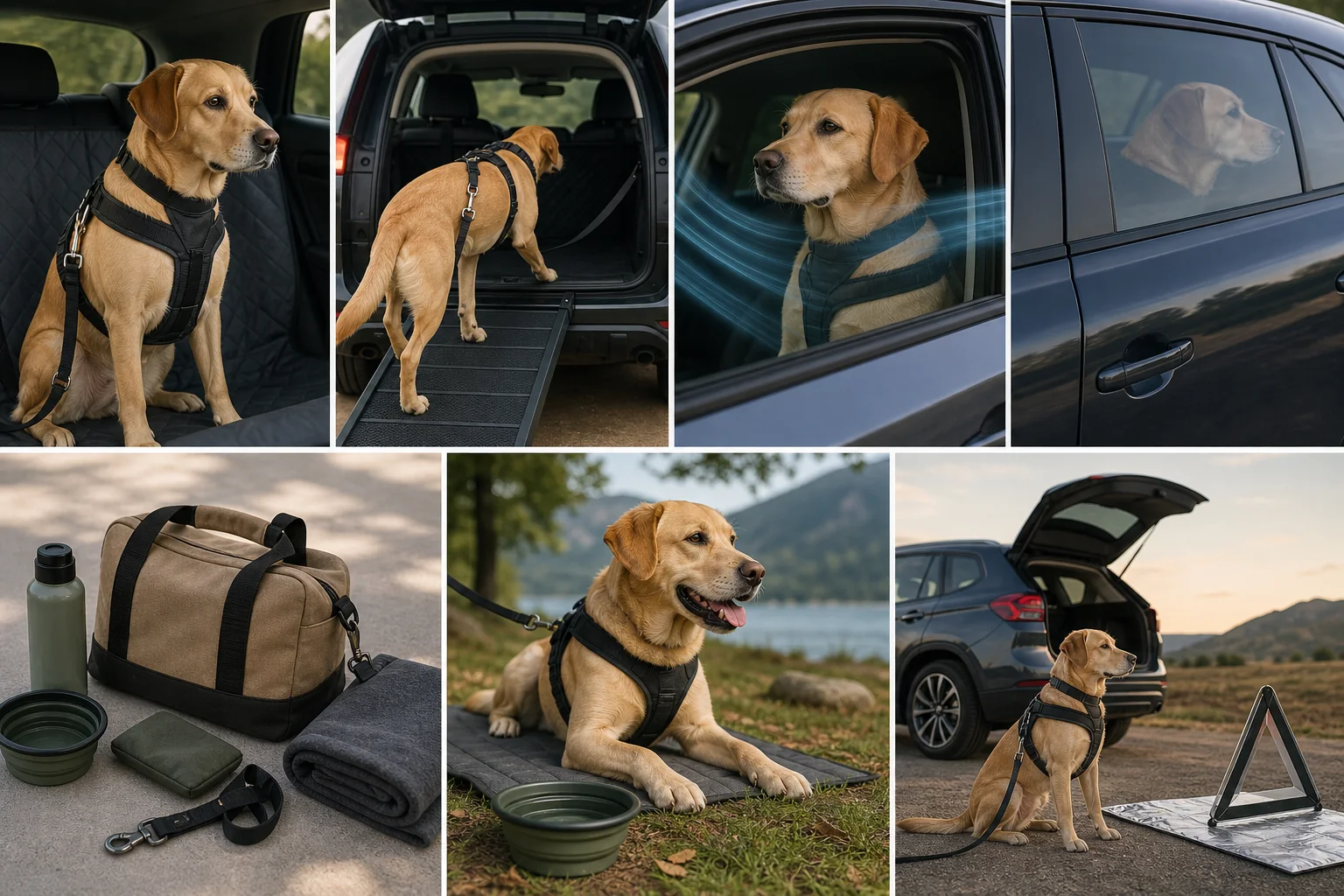
Owner tool
Car Safety Checklist for Dogs
Use this vehicle safety audit as a repeatable owner record. Mark what is normal, what changed, and what needs veterinary guidance.
| Checkpoint | Owner action | Boundary |
|---|---|---|
| Choose appropriate restraint | use a secure travel crate or properly fitted vehicle restraint suited to the dog and vehicle | Never allow a dog to ride loose, in a lap, or in an open truck bed |
| Practice calm loading | use traction, a stable ramp when appropriate, and controlled door opening | Do not pull a mobility-limited dog by the collar |
| Control heat and ventilation | check cabin temperature and airflow before and throughout travel | Never leave a dog unattended in a parked vehicle |
| Protect doors and windows | use child locks where useful and prevent head-out-the-window travel | An open door can become an escape point in seconds |
| Pack identification and supplies | carry identification, leash, water, cleanup items, records, and medications | Supplies do not replace an emergency plan |
| Plan rest stops | choose secure areas and leash before opening the vehicle | Avoid roadside exits and hot pavement |
| Prepare for collision or breakdown | save veterinary contacts and decide how the dog will remain restrained during a disruption | Do not release the dog beside traffic |
A three-step next action
Observe
Complete the vehicle safety audit without provoking a symptom or forcing the dog through difficulty.
Record
Keep dates, measurements, photographs, short natural-behavior videos, product labels, and caregiver notes together.
Escalate
Share the concise pattern with the veterinary team and seek urgent care for severe or rapidly worsening signs.
Prepare for the visit
Questions to take to your veterinarian
- Which parts of this vehicle safety audit are most important for this dog?
- What findings need a routine appointment, a same-day call, or emergency care?
- Could current diagnoses, medications, diet, supplements, pain, vision, hearing, or mobility change the plan?
- What should I measure at home, and how often should I reassess it?
- Which change should make me stop the routine and contact you sooner?
Bring the dated observation log, relevant photos or short videos, and a complete list of foods, treats, medications, and supplements. Do not change the routine solely to produce evidence for the visit.
Frequently asked questions
Can this checklist diagnose a health problem?
No. It organizes observations and questions; diagnosis requires veterinary assessment.
How often should I repeat it?
Use the interval recommended by the veterinary team and repeat sooner after a meaningful change.
Should I change several things at once?
Usually not unless the veterinary team directs it. Multiple changes make response and risk harder to interpret.
What should I bring to the appointment?
Bring the dated log, relevant photos or videos, and complete food, medication, supplement, and product information.
Sources
- Travel Safety Tips for Pet Owners, American Veterinary Medical Association. Veterinary guidance emphasizes that dogs should be properly restrained in vehicles, using a secured crate or a harness attached to the vehicle, because unrestrained pets are at risk of injury…
- Keep Your Pets Safe in Hot Weather, U.S. Food and Drug Administration. Signs that a dog may be developing heatstroke during travel include excessive panting, drooling, bright red or very pale gums, vomiting, diarrhea, disorientation, collapse, or seizures, and these require immediate…
- When it’s hot, it’s hot – Dogs and heatstroke, American Veterinary Medical Association. Background evidence for this locked topic.
Medical disclaimer
Educational information only; contact a veterinarian for diagnosis, treatment, or urgent concerns. If your dog is showing severe, sudden, or rapidly worsening signs, seek urgent veterinary care.
