

A prevention-first home system for separating ordinary digestive upset from a possible exposure that needs immediate professional help.
Short answer
Prevent access, preserve the evidence, and call early
Household chemicals, medicines, unsafe foods, toxic plants, and contaminated pet food can all cause digestive signs, but vomiting or diarrhea does not prove poisoning. Store hazards securely, separate pets during feeding when needed, keep packaging and exposure details, and contact a veterinarian or poison-control resource promptly when ingestion is possible.
- Secure medicines, chemicals, trash, foods, and garden products before relying on supervision.
- Wash hands and bowls, store pet food correctly, and separate raw products from human food areas.
- For a suspected toxin, do not induce vomiting or give a home remedy unless a veterinary professional directs you.
Safety first
A suspected exposure is a call-now situation
Contact a veterinarian or animal poison-control resource promptly if your dog may have swallowed a medicine, chemical, unsafe food, contaminated product, or hazardous plant, even if signs seem mild. Seek urgent care for repeated vomiting, severe diarrhea, tremors, seizures, collapse, breathing difficulty, marked lethargy, bleeding, or rapid worsening. Bring the package, plant photo, ingredient list, and estimated time and amount when it is safe to do so.
Veterinary note
Educational information only; contact a veterinarian for diagnosis, treatment, or urgent concerns. This guide supports observation and preparation; it does not diagnose a condition or replace an individualized care plan.
What is reasonably supported
Use repeated observations to improve the veterinary conversation
Veterinary and public-health guidance consistently supports locking away household hazards, checking plants before allowing access, and using hygienic pet-food storage and handling. Those steps reduce exposure opportunities and make multi-pet routines easier to control.
What remains uncertain
Home observations cannot establish the cause
No checklist can cover every toxin, plant, food, dose, or individual reaction. Digestive signs have many causes, and a dog can appear normal early after an exposure. Product labels and internet lists cannot replace case-specific veterinary or poison-control advice.
Create layers of prevention in the kitchen
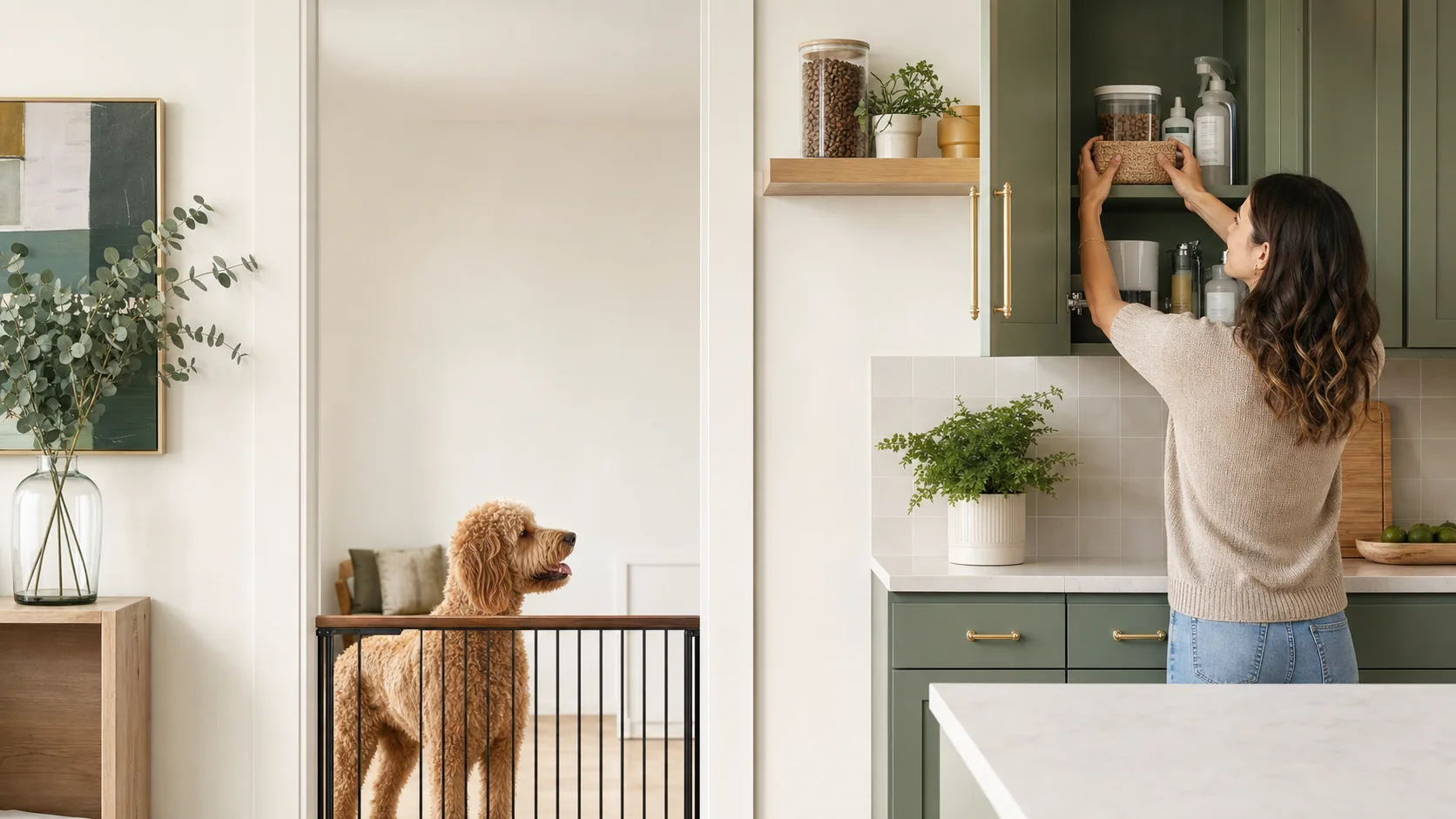
Store human food, supplements, medications, and pet products in closed cabinets rather than on counters or in bags a dog can reach. Use a lidded trash container and clear spills promptly. In a multi-pet home, feed separately when animals steal food, guard bowls, or need different diets.
Handle pet food and treats with clean hands and utensils. Keep dry food in a clean container with the original bag or lot information available, refrigerate opened products as directed, and wash bowls regularly. Keep raw pet food away from human preparation areas and people at higher risk from foodborne illness.
Watch for recalls or damaged packaging, unusual odor, moisture, pests, or mold. Stop using a suspect product, preserve the label and lot code, and ask the veterinary team what information to report.
Audit medicines, cleaners, and small objects
Human and veterinary medicines should stay in secure storage, including weekly pill organizers, flavored prescriptions, topical products, and supplements. Never assume a child-resistant container is dog-resistant. Pick up dropped pills immediately and count what may be missing.
Cleaning products, pest controls, automotive fluids, batteries, nicotine products, and concentrated oils belong behind a closed barrier. Follow label instructions and keep dogs away from treated surfaces until the product is dry or the label says re-entry is safe.
Small objects can cause digestive obstruction rather than toxicity. Socks, toys, corn cobs, string, food wrappers, and chews that break into large pieces deserve the same access-control mindset.
Check the yard and indoor plants
Identify plants before bringing them into the home or allowing a dog access to a new garden area. Scientific names are more reliable than common names. Remember that bulbs, seeds, leaves, berries, mulch, fertilizers, and pesticides may have different risks.
After a possible plant exposure, photograph the whole plant and the part that was chewed. Do not wait for vomiting before calling, and do not use an online list to decide that a significant exposure is safe.
Respond without losing useful information
Move the dog away from the source without putting yourself at risk. Note the time, possible amount, current signs, and the dog's weight. Keep packaging, labels, receipts, plant material, or a photo available for the professional handling the case.
Do not induce vomiting, give milk, oil, salt, charcoal, or another home treatment unless specifically instructed. The safest response depends on the substance, amount, timing, symptoms, and the dog's health.
Make multi-pet routines easier to control
Feed pets in separate, easy-to-clean areas when they receive different foods or when one animal steals meals. Pick up bowls after the planned feeding window and store each product with its original label. This makes it easier to identify what a dog could have eaten and reduces cross-feeding in homes with prescription or species-specific diets.
Give medications and supplements one pet at a time. Confirm the animal, product, and amount before offering it, then close the container immediately. Flavored veterinary products can be attractive to other pets, so they need the same secure storage as human medicine.
If one pet develops digestive signs, do not assume a shared source or automatically change every animal's diet. Record which pets are affected, what each could access, and whether people in the household are ill. That information can help veterinary and public-health professionals assess foodborne or environmental risk.
Owner tool
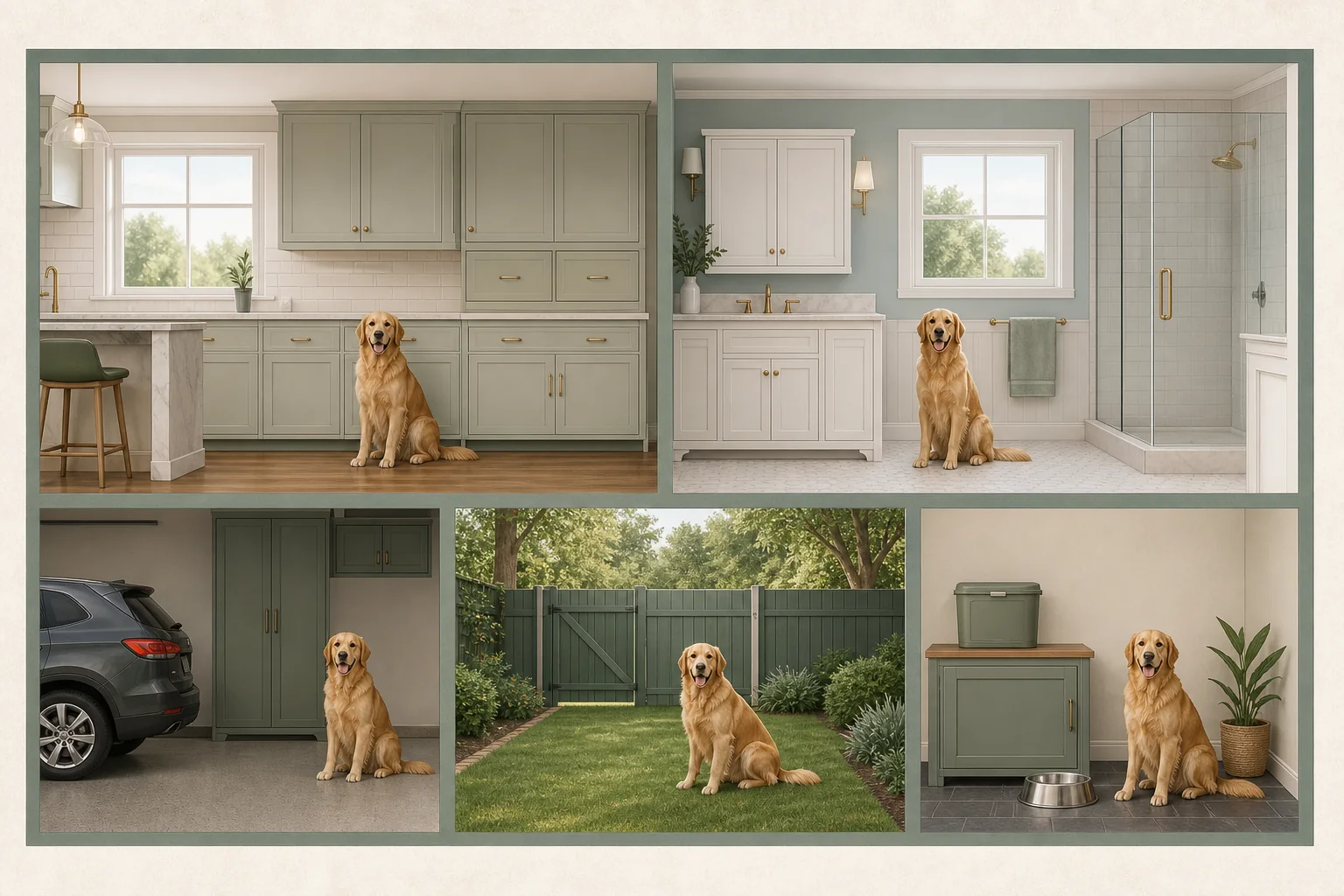
A room-by-room exposure audit
Use barriers first, then labels and routines. Recheck after guests, deliveries, gardening, medication changes, or a new pet joins the home. Assign one household member to confirm that high-risk storage is closed after busy routines, while still making every adult responsible for cleaning spills and dropped items immediately. Repeat the audit whenever household access patterns change.
| Zone | Check | Safer routine |
|---|---|---|
| Kitchen | Food, trash, supplements, pet-food storage | Closed storage and separate feeding |
| Bathroom/bedroom | Medicines, cosmetics, pill organizers | Cabinet plus dropped-pill check |
| Garage/laundry | Cleaners, automotive fluids, pest products | Locked storage and label-based re-entry |
| Yard | Plants, mulch, fertilizer, bait | Identify products and supervise access |
| Pet area | Damaged food, shared bowls, chew fragments | Clean handling and product inspection |
A three-step next action
Prevent
Remove access with secure storage, gates, and separated feeding routines.
Document
Keep labels, plant identity, lot codes, timing, and estimated amount.
Escalate
Call promptly and follow case-specific veterinary or poison-control instructions.
Prepare for the visit
Questions to take to your veterinarian
- Who should I call first after a suspected exposure?
- What information should I keep with my emergency contacts?
- Are any medicines or products in our home especially risky for this dog?
- How should our multi-pet feeding routine change if one pet needs a special diet?
Bring the dated observation log, relevant photos or short videos, and a complete list of foods, treats, medications, and supplements. Do not change the routine solely to produce evidence for the visit.
Frequently asked questions
Does vomiting mean my dog was poisoned?
Not necessarily. Vomiting has many causes, but possible exposure changes the urgency and should be reported promptly.
Should I make my dog vomit?
Not unless a veterinarian or animal poison-control professional specifically directs you. Vomiting can be dangerous for some substances and situations.
Are plants labeled pet-friendly always safe?
Labels can be incomplete or use ambiguous common names. Verify the exact plant and prevent chewing.
Can safe food handling prevent every digestive illness?
No. It reduces contamination risk but cannot guarantee prevention or explain every symptom.
Sources
- Household hazards for dogs and cats, American Veterinary Medical Association. AVMA household-hazard guidance supports keeping common dangers such as medicines, chemicals, and other household risks out of reach of dogs.
- Toxic and Non-Toxic Plants – Dogs, ASPCA Animal Poison Control Center. ASPCA toxic-plant guidance is useful for checking garden and indoor plants that may cause illness if chewed or eaten.
- Tips for Safe Handling of Pet Food and Treats, U.S. Food and Drug Administration. FDA food-handling guidance supports safe storage and handling of pet food and treats to reduce contamination risk.
- Pet food safety, Centers for Disease Control and Prevention. CDC pet food safety guidance reinforces hygienic storage and handling practices that can help limit foodborne risk in pets and households.
Medical disclaimer
Educational information only; contact a veterinarian for diagnosis, treatment, or urgent concerns. If your dog is showing severe, sudden, or rapidly worsening signs, seek urgent veterinary care.
