

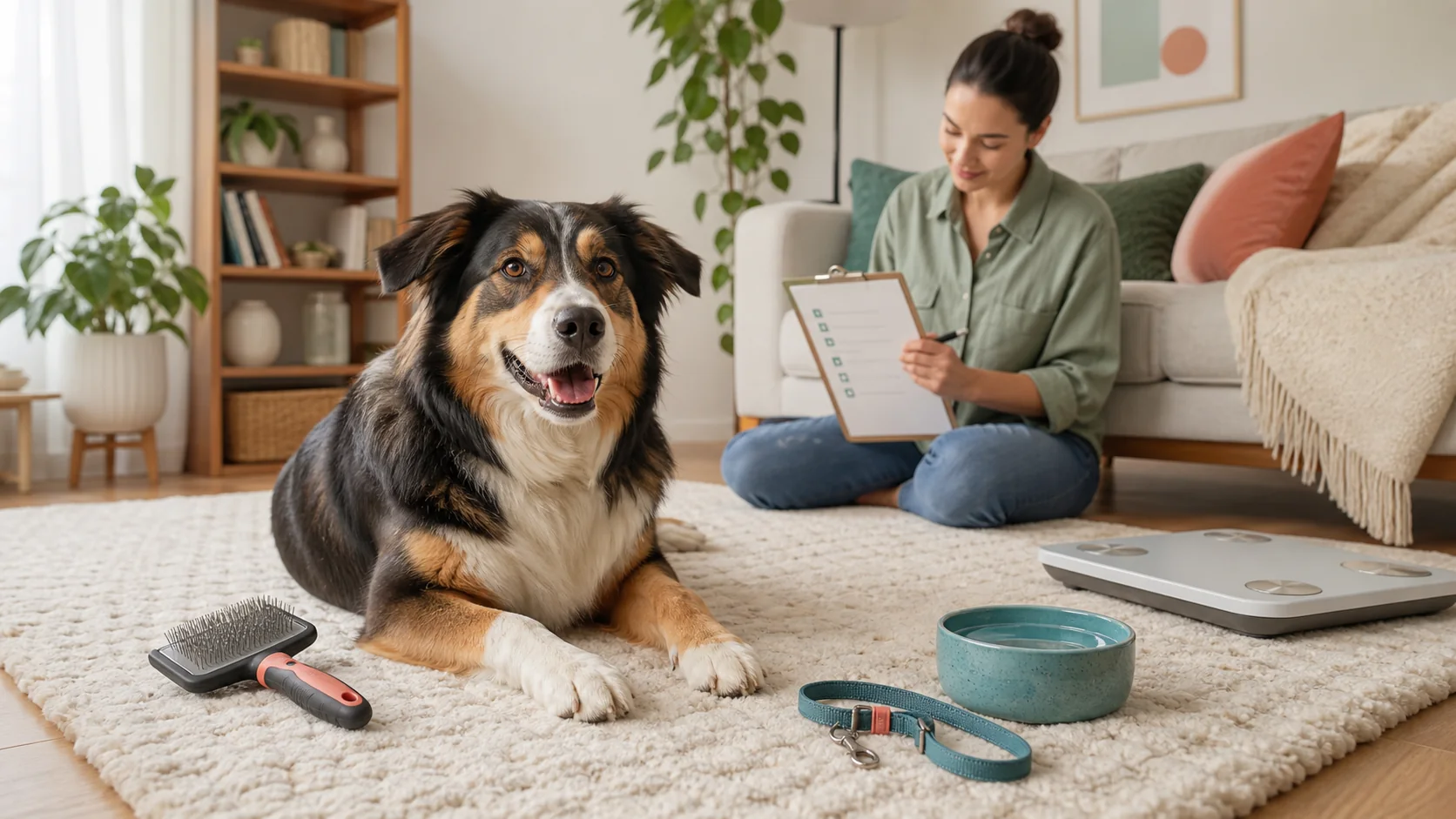
A practical three-month reset for reviewing your dog's everyday health, organizing observations, and deciding what belongs in the next veterinary conversation.
Short answer
Use quarterly as an organizing rhythm, not a medical rule
A brief home review every three months can help you notice gradual changes in body condition, movement, skin and coat, appetite, elimination, behavior, and the home environment. It does not replace routine veterinary care, and quarterly timing is not a universal clinical requirement. The value comes from using the same calm checklist and sharing meaningful changes early.
- Review your dog's whole routine instead of chasing one symptom or performing a home physical exam.
- Use ordinary activities such as eating, walking, resting, grooming, and toileting as observation points.
- Book or call the veterinarian when a change is persistent, worsening, painful, or paired with other signs.
Safety first
Do not wait for the next quarterly check
Contact your veterinarian for persistent appetite change, increased drinking or urination, ongoing weight change, new lumps, skin sores, limping, behavior change, or a sustained drop in activity. Seek urgent care for collapse, trouble breathing, repeated vomiting, severe weakness, uncontrolled bleeding, seizures, or rapid deterioration.
Veterinary note
Educational information only; contact a veterinarian for diagnosis, treatment, or urgent concerns. This guide supports observation and preparation; it does not diagnose a condition or replace an individualized care plan.
What is reasonably supported
Use repeated observations to improve the veterinary conversation
Veterinary wellness guidance relies on history from the owner as well as the examination. Weight, appetite, activity, elimination, medications, behavior, and lifestyle can all help frame preventive care. Body-condition awareness and regular veterinary visits remain central.
What remains uncertain
Home observations cannot establish the cause
The sources do not prescribe one universal quarterly home checklist. Dogs differ by age, breed, health history, medication, and lifestyle. Use the schedule as a memory aid and ask your veterinarian whether your dog needs more frequent professional monitoring.
Set up a calm ten-minute review
Choose a familiar time when your dog is relaxed. Gather the previous entry, current medication and supplement list, and any photos or videos you have taken for a specific concern. The goal is not to inspect every inch or force handling; it is to compare ordinary function with the last review.
Move through the checklist in the same order each time. Consistency makes small shifts easier to recognize and keeps the process short. If your dog dislikes touching, grooming, paw handling, or close examination, observe without restraint and discuss low-stress handling with the veterinary team.
Review body condition, meals, and elimination
Record weight on the same scale when practical. Look from above for a visible waist and from the side for the abdominal outline, then use light touch to notice whether the ribs feel easier or harder to find than before. A veterinarian can show you how to use a body-condition chart correctly.
Note appetite, meal completion, treat intake, and any diet changes. Review drinking and bathroom patterns without restricting access or extending walks to test a concern. New accidents, straining, diarrhea, constipation, vomiting, or a sustained increase in thirst deserves a call rather than a home diagnosis.
Watch movement and recovery
Observe your dog rising from rest, walking on a familiar surface, turning, using steps, getting into the car if that is routine, and settling afterward. Record hesitation, stiffness, slipping, shorter activity, or longer recovery. Avoid repeating a movement that appears painful.
Check the environment at the same time. Loose rugs, slick routes, clutter, dim stairs, damaged gates, and hard-to-reach water can become more important as a dog ages or recovers from illness. Fix simple hazards without assuming that environmental changes explain a mobility problem.
Scan skin, coat, mouth, and behavior without forcing
During normal grooming, notice new hair loss, redness, odor, sores, parasites, or a lump that was not recorded before. Photograph a visible change with a ruler nearby and note location and date. A photo is useful history, not a way to determine whether a mass is harmless.
Notice breath, chewing comfort, drooling, or reluctance to eat hard food, but do not force the mouth open. Record shifts in sleep, social interaction, house training, startle, restlessness, or tolerance for handling. Pain and medical problems can affect behavior, so sudden change belongs in the veterinary conversation.
Turn six observations into one clear summary
At the end, choose the three changes that matter most. Write when each began, whether it is stable or worsening, and what else changed at the same time. A concise summary helps the clinic triage the concern and decide whether an earlier appointment is appropriate.
Keep the full checklist for reference, but do not wait to complete every box before calling. A persistent appetite shift, repeated vomiting, new breathing difficulty, painful movement, or rapid behavior change matters more than finishing the routine. The checklist serves the decision; the decision does not serve the checklist.
Use the next entry to follow up on advice from the veterinary team. Record recommended monitoring, scheduled rechecks, and which changes should trigger a call. This turns the quarterly rhythm into continuity rather than a collection of isolated snapshots.
Owner tool
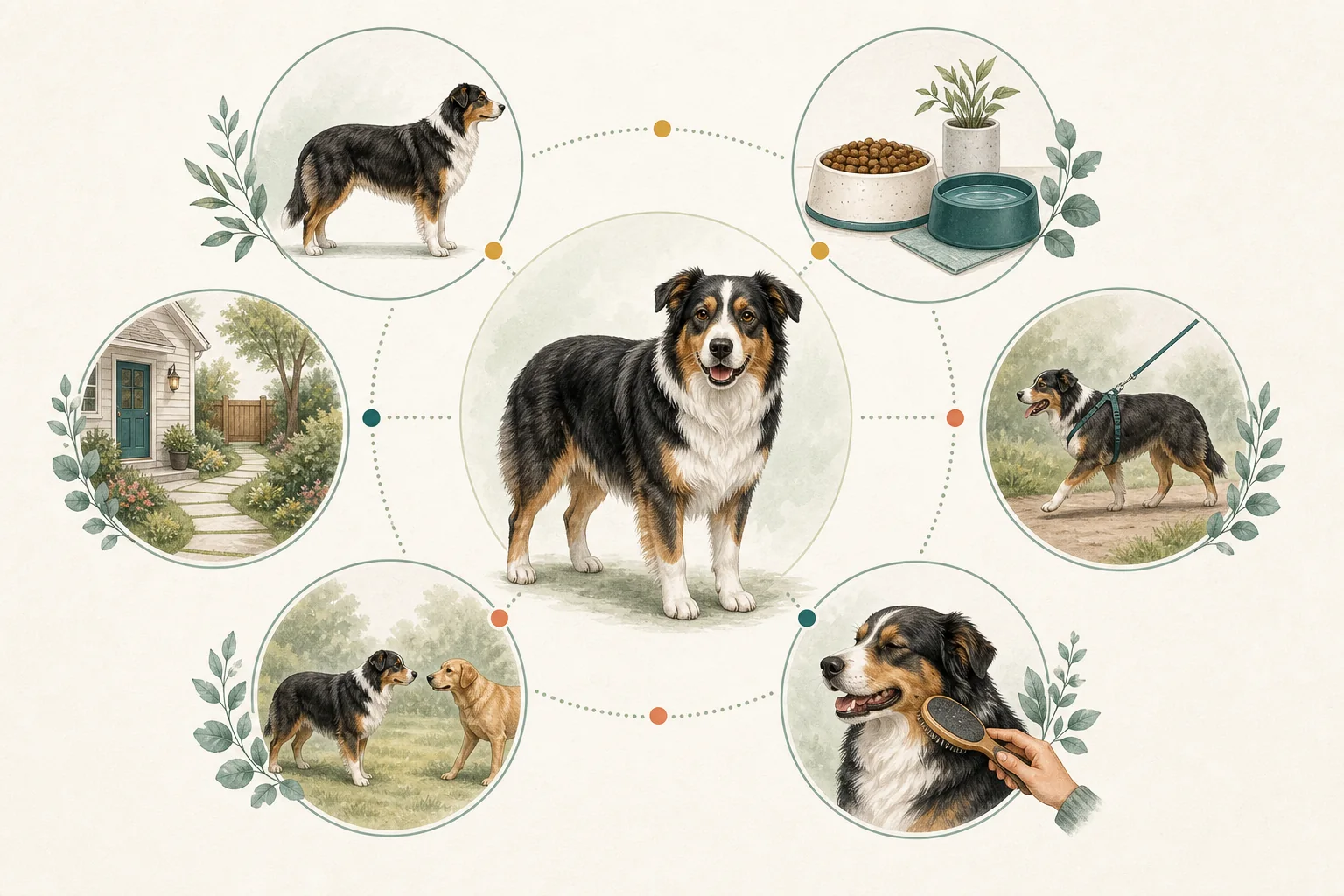
The quarterly six-area review
Mark each area as unchanged, changed, or not observed. Add one sentence of context rather than a long narrative. Use the same order each quarter, but adapt the handling to your dog's comfort. If a check causes fear, pain, guarding, or repeated avoidance, stop and record what you could observe naturally. The inability to complete a check can itself be useful context for the veterinary team; it is not a reason to restrain the dog more firmly. Date the completed review and keep it with the previous entry.
| Area | Ordinary observation | Call about |
|---|---|---|
| Weight and body condition | Same scale, waist, ribs, trend | Unexplained gain or loss |
| Food, water, elimination | Meal, drinking, stool, urine | Persistent or combined changes |
| Movement | Rising, walking, stairs, recovery | Pain, limping, rapid decline |
| Skin and coat | Grooming view, lumps, sores, parasites | New, growing, painful, or infected areas |
| Behavior and sleep | Interaction, rest, handling, routine | Sudden or sustained change |
| Environment | Routes, gates, lighting, hazards | Any barrier causing falls or distress |
A three-step next action
Observe
Use normal routines and low-stress handling.
Summarize
Write the three most important changes, including timing and context.
Act
Fix simple hazards and contact the clinic about health changes rather than waiting for the next review.
Prepare for the visit
Questions to take to your veterinarian
- How often should my dog have professional wellness visits?
- Which home measurements are useful for this dog's age and history?
- Which behavior or mobility changes should prompt an earlier appointment?
- Should I send photos, videos, or the checklist before the visit?
Bring the dated observation log, relevant photos or short videos, and a complete list of foods, treats, medications, and supplements. Do not change the routine solely to produce evidence for the visit.
Frequently asked questions
Is a quarterly check a substitute for a vet exam?
No. It is an owner organization tool between veterinary visits.
Should I examine my dog's mouth or joints myself?
Observe what your dog comfortably allows during normal care. Do not force handling or attempt to diagnose pain, dental disease, or a mass.
What if nothing changed?
Record that briefly. A stable history is useful, and the repeated routine makes future change easier to describe.
Sources
- How Often Should My Dog Go to the Vet? A Dog Life Stage Guide, American Animal Hospital Association. AAHA life-stage guidance supports regular veterinary visits as dogs age, which fits a recurring home review habit between appointments.
- Wellness Examination in Dogs, VCA Animal Hospitals. Wellness-exam guidance reinforces the value of collecting owner observations on appetite, weight, activity, and elimination before veterinary visits.
- Your Dog's Healthy Weight, American Veterinary Medical Association. Healthy weight and body-condition checks are suitable for routine at-home review because weight trends can indicate changing health status.
- Preventative Health Care for Small Animals, MSD Veterinary Manual. Preventive-care guidance supports consistent monitoring and prompt veterinary follow-up when changes are detected.
Medical disclaimer
Educational information only; contact a veterinarian for diagnosis, treatment, or urgent concerns. If your dog is showing severe, sudden, or rapidly worsening signs, seek urgent veterinary care.
