

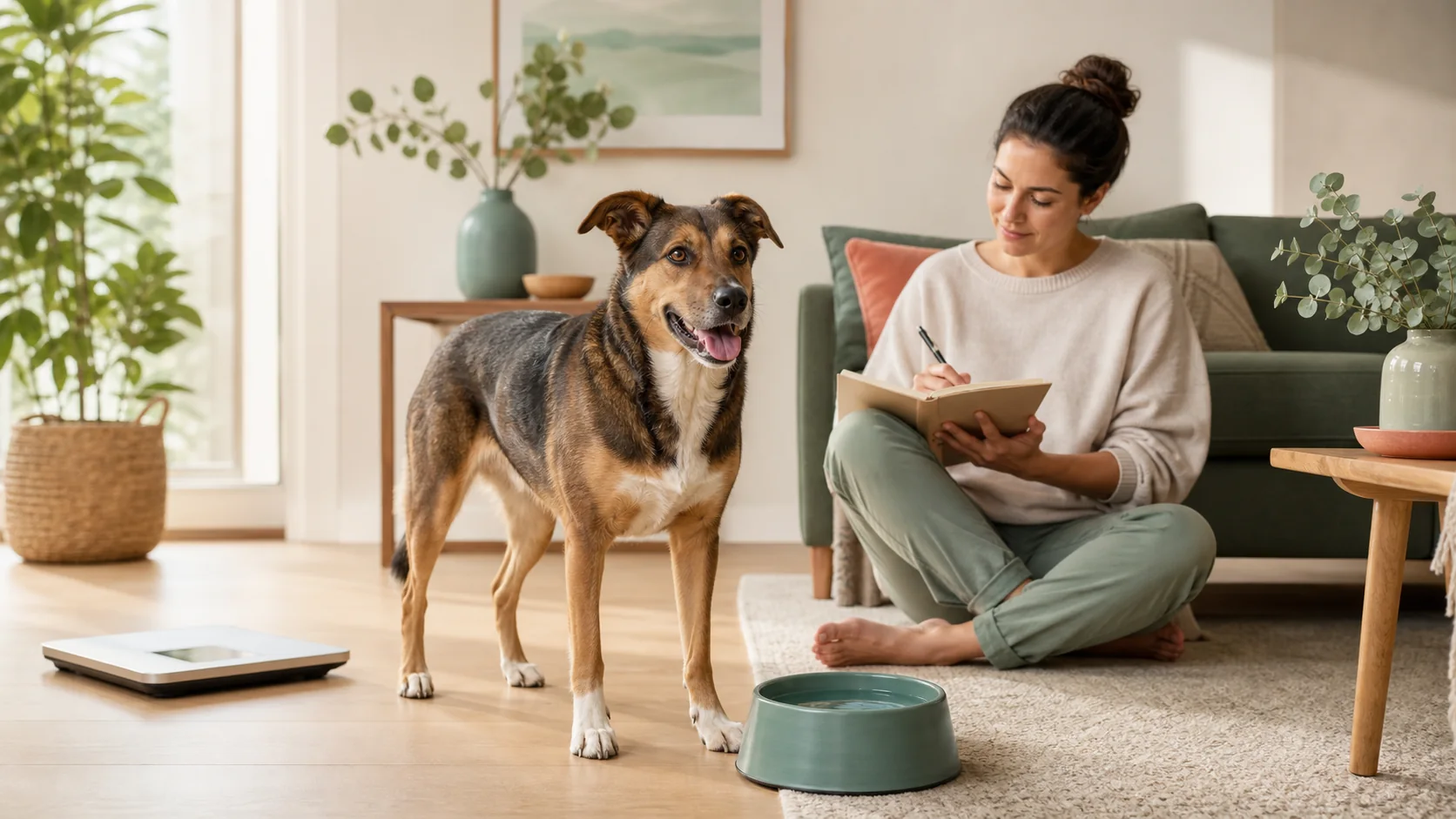
A calm, repeatable way to notice changes in thirst, urination, appetite, weight, and activity without trying to diagnose your dog at home.
Short answer
Track patterns, not isolated moments
Metabolic problems cannot be confirmed by observation alone, but a simple record of drinking, urination, appetite, weight, and energy can help you recognize a meaningful change and describe it clearly to your veterinarian. Compare your dog with their own usual pattern, use the same methods each time, and call when changes persist, cluster together, or worsen.
- Use a consistent weekly weight and body-condition check instead of relying on appearance from day to day.
- Record changes in thirst, urine output, appetite, and activity together because the pattern matters more than one sign.
- Do not restrict water or change food, medication, or supplements to test a theory without veterinary guidance.
Safety first
Changes that deserve prompt veterinary attention
Contact your veterinarian promptly for marked or persistent increases in thirst or urination, unexplained weight loss, repeated vomiting, reduced appetite, or unusual lethargy. Seek urgent care if your dog becomes weak, collapses, has trouble breathing, seems suddenly disoriented, or is difficult to wake. Home tracking should speed up care, never delay it.
Veterinary note
Educational information only; contact a veterinarian for diagnosis, treatment, or urgent concerns. This guide supports observation and preparation; it does not diagnose a condition or replace an individualized care plan.
What is reasonably supported
Use repeated observations to improve the veterinary conversation
Veterinary guidance consistently treats increased thirst, urination changes, appetite shifts, and unexplained weight loss as observations worth reporting. Healthy-weight guidance also supports following weight and body condition over time, while preventive-care guidance places those owner observations alongside veterinary examinations and testing.
What remains uncertain
Home observations cannot establish the cause
No single observation proves diabetes, thyroid disease, or another metabolic disorder. Water intake varies with weather, activity, diet, and individual needs, and home scales are imperfect. The useful question is whether a reliable pattern has changed, not whether one number crosses a self-selected threshold.
Build a baseline before you need it
Choose a quiet week when your adult dog seems well and record the ordinary pattern. Note meal size and timing, how often the water bowl is refilled, usual bathroom opportunities, energy on familiar walks, and a weight measured on the same scale. A baseline does not need to be elaborate; it only needs to be repeatable.
Context keeps the record honest. Hot weather, a longer walk, dry food, guests, boarding, or a recent diet change can alter drinking and activity. Write those circumstances beside the observation rather than treating every variation as illness.
If your household has several dogs, separate bowls for a short observation period may help you determine which dog is drinking more. Do not reduce access to water. If separation causes stress or conflict, stop and use a different observation method.
Watch the five signals as one pattern
Thirst and urination often belong in the same note. Record whether the bowl needs refilling more often, whether your dog seeks water in unusual places, asks to go outside more frequently, produces larger amounts of urine, or has new accidents. Avoid guessing an exact volume unless your veterinarian asks you to measure it.
Appetite changes can point in more than one direction. A dog may eat more, eat less, become unusually urgent around food, or leave meals unfinished. Pair that note with weight and energy: increased appetite with weight loss tells a different story from reduced appetite after a stressful day.
Weight is most useful as a trend. Use the same scale, similar time of day, and similar conditions. Add a simple body-condition observation: can you feel the ribs with light pressure, is the waist still visible from above, and has the abdominal outline changed? Ask your veterinary team to demonstrate body-condition scoring rather than assigning a diagnosis yourself.
Activity notes should describe function, not personality labels. Record whether a familiar walk takes longer, recovery changes, play ends early, stairs become difficult, or sleep and wake patterns shift. Pain, heart or lung disease, stress, and many other problems can change activity, so the note is a starting point for assessment.
Avoid common home-monitoring mistakes
Do not repeatedly provoke a sign. Extra walks to test urination, withholding meals to test appetite, or limiting water can create risk and muddy the pattern. Observe normal routines and contact the clinic when something is concerning.
Do not let a normal-looking day erase a sustained trend. Many health changes fluctuate. A dated record helps the veterinary team see frequency, duration, and combinations of signs that memory can blur.
Do not start a supplement because a symptom list seems to fit. Supplements can complicate the history, interact with other products, or distract from testing. Bring a complete list of foods, treats, medications, and supplements to the appointment.
Turn the log into a useful clinic handoff
Before calling, summarize the baseline, the first date the pattern changed, how often it now occurs, and which signs appear together. Include recent travel, weather, diet changes, medications, supplements, illness, and access to unusual foods or water. A one-page timeline is usually easier to review than many disconnected notes.
Ask the clinic whether they want a urine sample, water measurement, fasting information, or another preparation before the visit. Do not collect samples or change feeding unless they give instructions. Bring the scale method and any short videos that show ordinary activity, but prioritize getting care over perfect documentation.
Owner tool
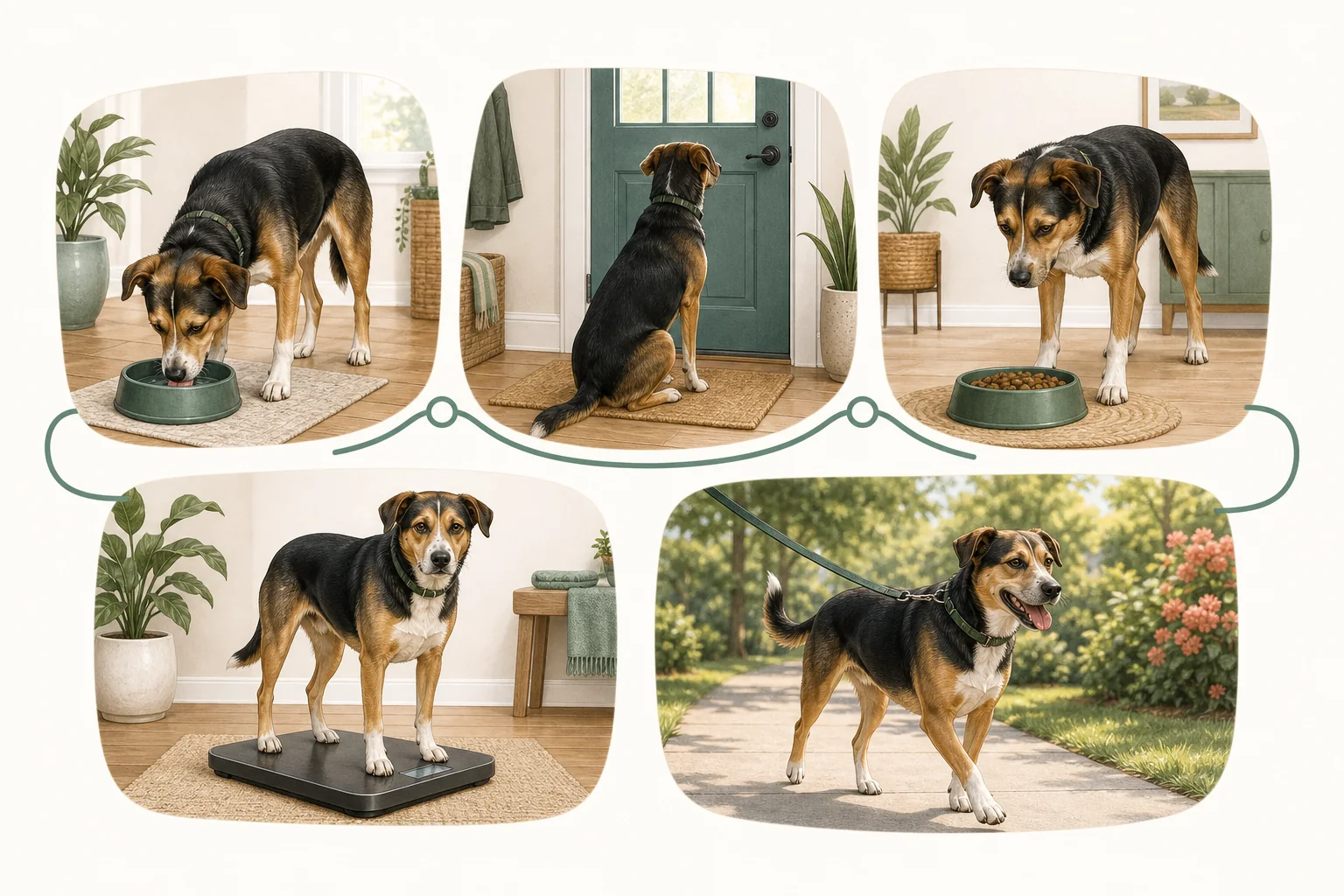
A five-signal weekly tracker
Use one line per week and add an extra entry whenever a meaningful change appears. Keep descriptions brief enough that you will continue using the log. Record ordinary days too, because a baseline is easier to interpret when it includes both stable and changed weeks.
| Signal | What to record | Keep it consistent |
|---|---|---|
| Thirst | Refills, unusual water seeking, or a clear increase | Same bowl setup and household context |
| Urination | Frequency, volume impression, urgency, or accidents | Normal bathroom schedule |
| Appetite | More, less, urgency, or unfinished meals | Same meal size and timing |
| Weight/body condition | Scale reading and visible or touch-based change | Same scale and similar time |
| Activity | Walk tolerance, play, stairs, recovery, and sleep | Compare with familiar routines |
A three-step next action
Record
Write the observation, date, and context without assigning a diagnosis.
Compare
Look for persistence, combinations of signs, and change from your dog's baseline.
Share
Send or bring the concise log, photos if useful, and the complete product list to your veterinarian.
Prepare for the visit
Questions to take to your veterinarian
- Which changes in my dog's thirst or urination should trigger a same-day call?
- How would you like me to measure weight or water intake, if measurement is useful?
- Could diet, medication, supplements, pain, or another condition explain this pattern?
- What examination or testing would help distinguish among possible causes?
Bring the dated observation log, relevant photos or short videos, and a complete list of foods, treats, medications, and supplements. Do not change the routine solely to produce evidence for the visit.
Frequently asked questions
Can I diagnose diabetes by tracking water intake?
No. Increased thirst and urination can be important warning signs, but diagnosis requires veterinary assessment and appropriate testing.
Should I limit water if my dog is drinking more?
No. Restricting water without veterinary direction can be dangerous. Keep water available and contact your veterinarian about a meaningful increase.
How often should I weigh my dog?
A consistent weekly or monthly rhythm may be practical for trend tracking, depending on your dog's needs and your veterinarian's advice. Use the same scale and method.
Sources
- Diabetes Mellitus in Dogs, VCA Animal Hospitals. Canine diabetes guidance emphasizes monitoring for signs such as increased thirst, urination, appetite change, and weight loss, which are useful home observations for owners.
- Your Dog's Healthy Weight, American Veterinary Medical Association. Healthy weight and body-condition awareness are core home checks because weight change can signal broader health problems in dogs.
- Preventative Health Care for Small Animals, MSD Veterinary Manual. Preventive care guidance supports regular wellness assessment and early veterinary follow-up when changes are noted at home.
Medical disclaimer
Educational information only; contact a veterinarian for diagnosis, treatment, or urgent concerns. If your dog is showing severe, sudden, or rapidly worsening signs, seek urgent veterinary care.
