

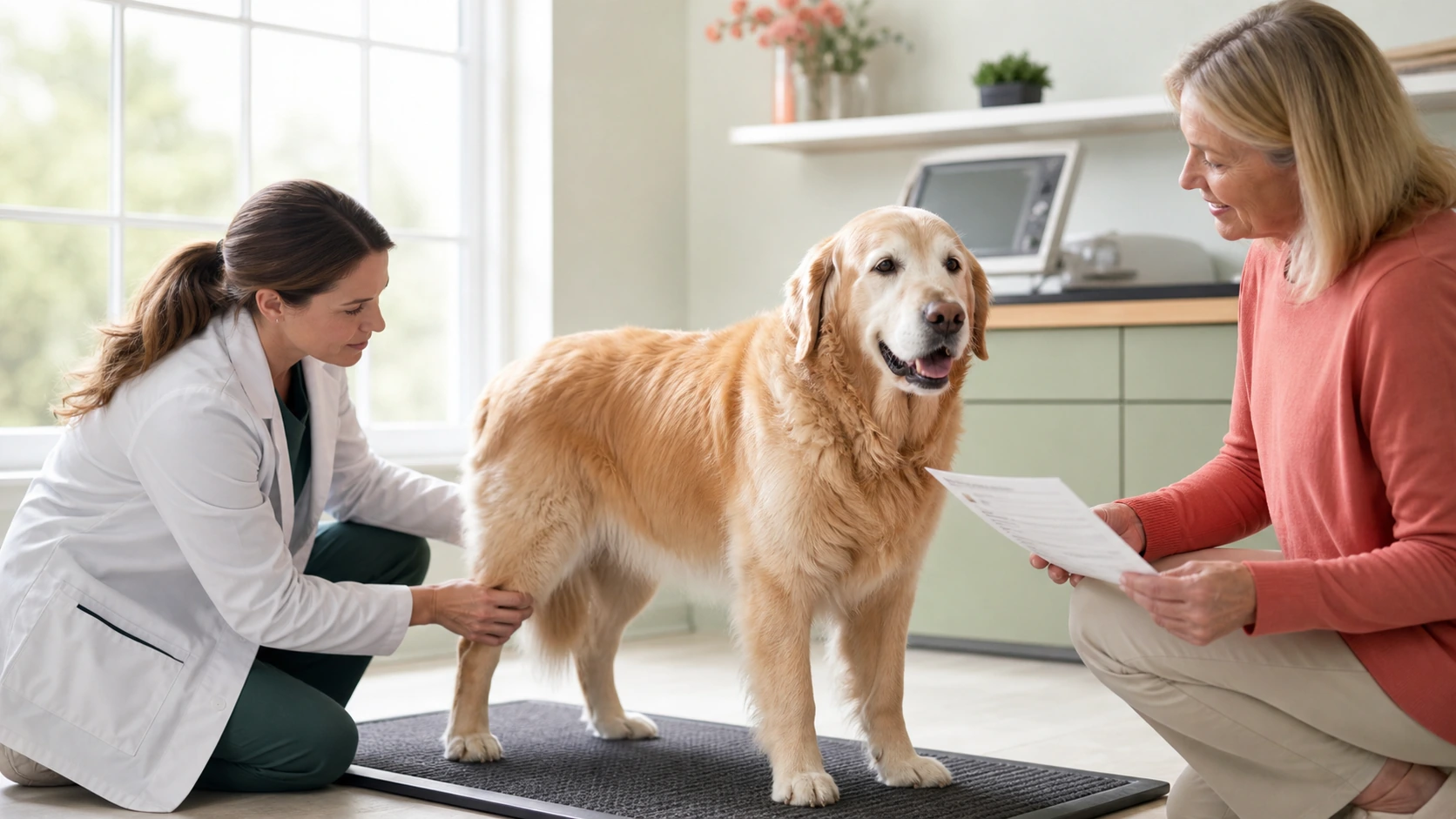
Senior is a life stage, not a diagnosis and not one universal birthday. Dogs age at different rates according to size, genetics, health history, and function. A useful senior-wellness plan combines regular veterinary assessment with specific observations at home so emerging pain, disease, sensory change, nutritional problems, and cognitive changes are not dismissed as simply getting old.
Short answer
The senior baseline is a living record, not an age label
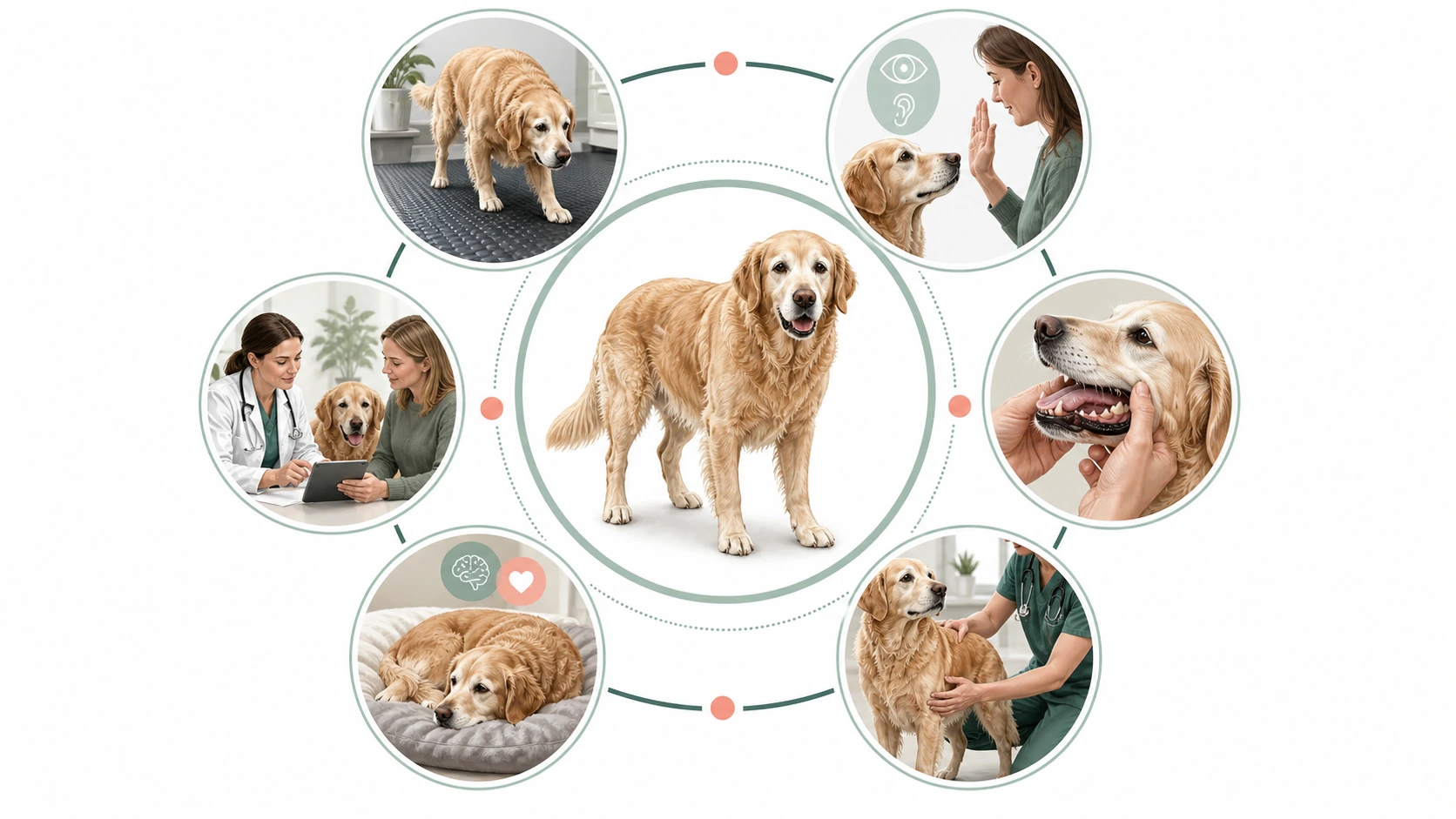
Senior care looks across body systems and daily function: weight, muscle, mobility, mouth, senses, sleep, elimination, appetite, behavior, medication, and quality of life. AAHA guidance emphasizes repeated assessment and individualized diagnostic planning because older pets often have more than one condition at the same time. [1] [2]
- Ask when your dog enters the senior life stage based on size, health, and expected lifespan.
- Report gradual changes instead of waiting for a crisis or assuming they are inevitable with age.
- Keep one current list of foods, treats, medications, supplements, diagnoses, and care goals.
Safety first
Do not wait on acute change just because a dog is older
Seek urgent veterinary care for collapse, breathing difficulty, repeated unproductive retching, sudden inability to stand, severe pain, seizure, major bleeding, suspected toxin exposure, inability to urinate, persistent vomiting, rapidly enlarging abdomen, or abrupt disorientation. A senior label does not make an emergency less urgent.
- Sudden weakness, falling, or behavior change can reflect treatable medical disease.
- Marked appetite, thirst, urination, stool, or weight change deserves timely assessment.
- Never start a human pain medicine or combine supplements to manage an unexplained change.
Veterinary note
This article is educational and does not diagnose, treat, prescribe, or replace care from a licensed veterinarian. Your dog’s history, examination, diet, medications, and current signs determine what is appropriate.
Define senior care around function and risk
AAHA life-stage guidance places senior status in the last portion of expected lifespan rather than assigning one age to every dog. A giant-breed dog may reach that stage earlier than a small dog. The practical question is not whether the label applies today, but which risks, screening conversations, and home observations now deserve more attention. [1] [3]
A senior visit can review cardiovascular and respiratory signs, skin and masses, oral health, eyes and ears, neurologic function, joints and muscles, body and muscle condition, elimination, behavior, and medication safety. Testing is chosen from the dog's history, examination, risk, and previous results; no online checklist can prescribe a universal panel. [1]
Track weight, muscle, appetite, and the mouth together
Body weight alone can hide muscle loss when fat mass is stable or increasing. Record body and muscle condition with the veterinary team, note whether the dog can chew comfortably, and report dropped food, one-sided chewing, odor, drooling, vomiting, diarrhea, appetite change, or difficulty reaching bowls. Dental pain and systemic disease can look like picky eating.
There is no AAFCO nutrient profile specifically for a senior life stage. Some healthy older dogs need fewer calories while individual dogs may need diet changes for disease, muscle loss, digestibility, or appetite. Diet choice should follow nutritional assessment and diagnosis rather than the word senior on a package. [4]
Treat mobility and behavior as health information
Watch rising, stairs, traction, turning, jumping, walks, play, grooming tolerance, and recovery after activity. Slowing down may reflect pain, weakness, neurologic disease, heart or lung disease, sensory loss, or reduced conditioning. Home videos can help when captured during ordinary movement without repeating a difficult task.
Changes in sleep, interaction, housetraining, navigation, anxiety, vocalization, or activity can accompany cognitive dysfunction, but pain, sensory decline, urinary disease, endocrine disease, neurologic disease, medication effects, and environmental change can look similar. Veterinary evaluation is required before assigning a cognitive label. [2] [5]
Build care around goals and reassessment
Write down what matters most for the dog: comfortable movement, eating, sleep, social contact, toileting, grooming, or participation in a favorite routine. Goals turn vague concern into observable outcomes and help the team balance benefit, burden, cost, and feasibility when several conditions are present.
Ask when each medication, diet, supplement, mobility aid, or monitoring plan should be reviewed. Older dogs may be more vulnerable to interactions and changes in organ function. A complete current list and one coordinating veterinary record reduce the chance that separate recommendations conflict. [1]
Prepare for a focused veterinary conversation
Bring a concise timeline, short natural-movement or symptom videos when safe, the exact names and photographs of every food, treat, medication, and supplement label, and notes about appetite, water intake, stool, sleep, activity, comfort, and behavior. Include recent injuries, travel, boarding, diet changes, missed medication, and previous test results. A complete record helps the veterinary team separate a repeatable pattern from a single impression.
Decide in advance what you need from the visit: an urgency decision, a diagnosis plan, a nutrition review, a pain or mobility assessment, or a monitored trial. Ask what result would change the plan and what finding would rule an option out. This keeps research and product information in the right role. Evidence can shape questions and expectations, but it cannot determine what is safe for an individual dog without the history and examination.
Owner tool
Build a senior wellness baseline
On a phone, swipe across the table to see every column.
| Domain | Home observation | Report promptly when |
|---|---|---|
| Body | Weight, muscle, appetite, thirst, stool | Change is persistent, rapid, or unexplained |
| Function | Rising, stairs, walking, sleep, grooming | Pain, falling, weakness, or lost ability appears |
| Behavior | Interaction, navigation, elimination, vocalization | Change is sudden, escalating, or unsafe |
| Care plan | Drugs, supplements, diet, goals, follow-up | Instructions conflict or side effects occur |
Better questions, calmer next steps
Questions to ask your veterinarian
- How are you defining senior for this dog, and which risks change now?
- Which examination findings or tests are most important for this dog's history?
- How should we monitor body condition, muscle condition, pain, and cognitive change?
- Could any current medications, supplements, or diets interact or need adjustment?
- Which home change should trigger an earlier recheck or emergency visit?
FAQ
At what age is a dog senior?
There is no universal age. Size, expected lifespan, health, and function all matter; ask your veterinarian how they classify your dog.
Are twice-yearly exams always required?
Senior dogs often benefit from more frequent assessment, but the exact schedule should match individual risk and health.
Is slowing down normal?
Age can change capacity, but pain and disease are common and should not be assumed normal without assessment.
Does every older dog need senior food?
No. There is no single senior nutrient profile, and diet should match body condition, disease, appetite, and nutritional assessment.
Should I wait until symptoms are obvious?
No. Small repeatable changes are worth reporting because earlier assessment may identify manageable problems.
Sources
- AAHA: 2023 Senior Care Guidelines for Dogs and Cats. Senior assessment, multimorbidity, screening, function, and individualized care.
- AAHA: Evaluating the Healthy Senior Pet. Whole-patient senior evaluation and early change detection.
- AAHA: Canine Life Stage Guidelines. Life-stage definitions and individualized preventive care.
- AAHA: Nutrition for Senior Pets. Body and muscle condition, energy needs, and absence of a universal senior profile.
- Frontiers in Veterinary Science: The Relationship between Signs of Medical Conditions and Cognitive Decline in Senior Dogs. Medical differentials and cognitive-change context.
