


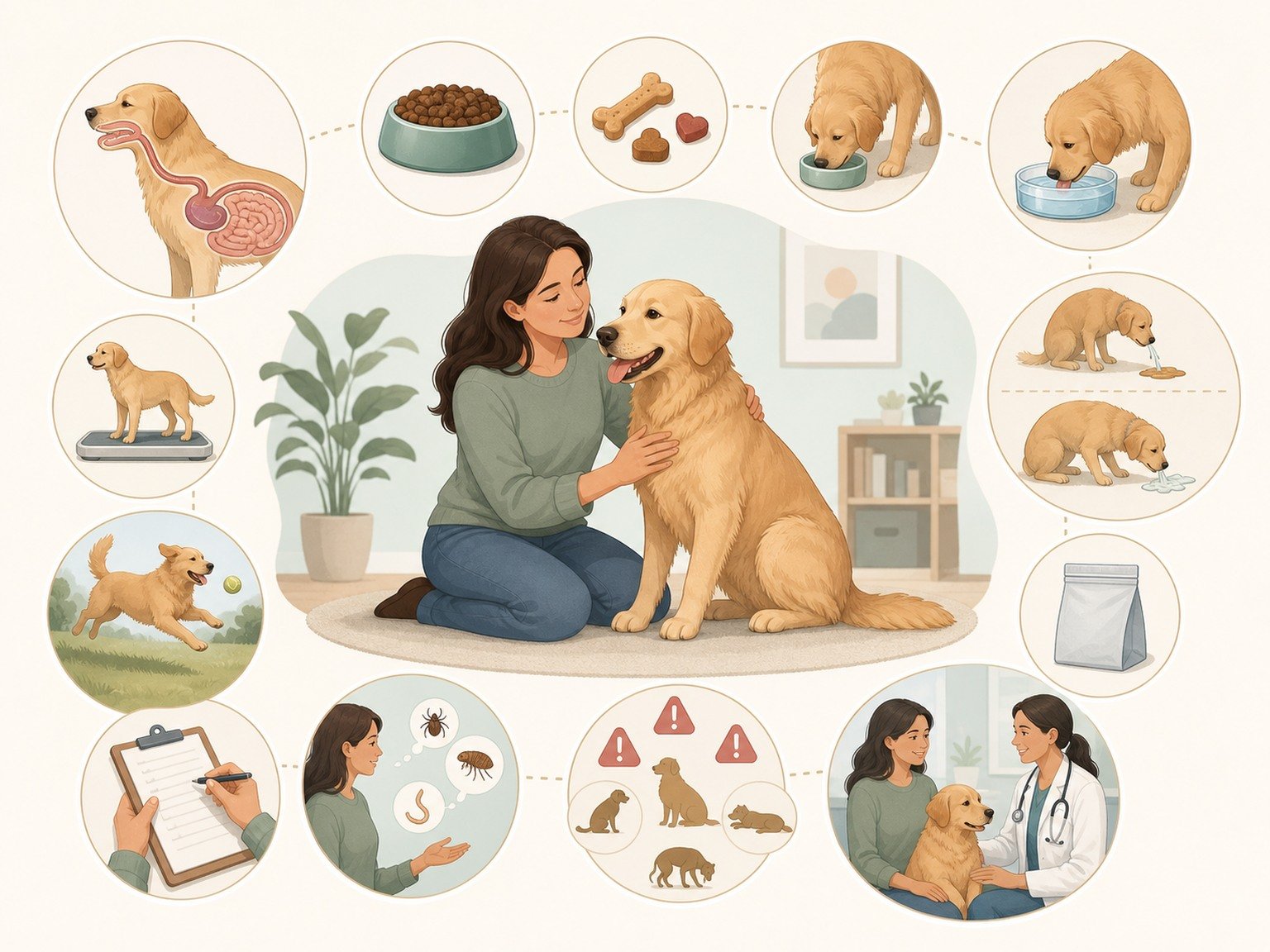
Digestive health involves more than stool. The mouth, esophagus, stomach, liver, pancreas, intestines, rectum, and anus contribute to intake, digestion, absorption, motility, elimination, fluid balance, and electrolyte balance. Vomiting, regurgitation, diarrhea, constipation, appetite loss, weight change, pain, bleeding, bloating, dehydration, or weakness can have many digestive and nondigestive causes. A first-time owner does not need to diagnose the system. Build a reliable baseline, preserve the complete food and product history, recognize serious change, and use the record for individualized nutrition, parasite, diagnostic, and treatment discussions. Keep the clinic's regular and after-hours contact routes with the record so uncertainty does not become delay when the pattern changes.
Short answer
Describe the sign before trying to name the disease
MSD describes the digestive system and broad signs that can occur with disease. AAHA recommends a complete patient, diet, feeding, body, and environment history. CAPC recommends parasite testing and prevention based on age, health, exposure, travel, and lifestyle. FDA provides food and treat safety context. None creates a universal home protocol. [1] [2] [3] [4]
- Start with the individual dog's baseline, complete diet, medication and supplement history, and veterinary plan.
- Use repeated observations to improve a veterinary discussion, not to diagnose, prescribe, or prove an effect at home.
- Keep regulatory categories, product evidence, population findings, and study endpoints within their actual limits.
- Escalate sudden, severe, persistent, progressive, dangerous, or function-limiting changes promptly.
Safety first
Severe, repeated, painful, bloody, or systemic signs need prompt care
Seek urgent care for collapse, severe weakness, pale gums, repeated unproductive retching, a distended painful abdomen, major bleeding, breathing difficulty, suspected obstruction or toxin exposure, or inability to keep water down. Contact the veterinarian promptly for repeated vomiting or diarrhea, blood, pain, dehydration concerns, appetite or weight change, feverish behavior, or progressive decline.
- Do not delay urgent care while completing a log, changing food, comparing claims, or waiting for a routine appointment.
- Do not start, stop, combine, divide, increase, or rechallenge medication or supplements from this article.
- Do not use human products, leftover prescriptions, online dose conversions, or a supplement as a substitute for indicated care.
Veterinary note
This article is educational and does not diagnose, treat, prescribe, or replace care from a licensed veterinarian. Your dog’s history, examination, diet, medications, and current signs determine what is appropriate.
Build the ordinary digestive baseline
Record exact food, formulation, measured amount, meal timing, treats, chews, table food, toppers, scavenging, access to other bowls, medications, preventives, supplements, appetite, water, urine, stool, vomiting, regurgitation, weight, activity, and recent changes.
Describe stool frequency, consistency, color, mucus, blood, urgency, straining, accidents, and change from the dog's own baseline without diagnosing from appearance. A safe photo may help when it can be collected without exposure risk. Wash hands and follow veterinary instructions for samples.
Record whether material came up with active heaving or appeared passively, timing relative to food or water, appearance, frequency, and associated signs. Vomiting and regurgitation are different observations, but owners should not use the distinction to rule out urgency or select treatment.
Discuss food and nutrition without fixed rules
AAHA recommends individualized nutritional assessment including body and muscle condition, health, diet, feeding management, activity, and environment. [2] Package directions and online calculators are starting estimates, not prescriptions.
Avoid abrupt repeated food changes, fasting rules, homemade remedies, or adding fiber, probiotics, enzymes, vitamins, or other supplements from a generic symptom list. Therapeutic diets and transition timing depend on the dog and clinical situation.
FDA food-safety resources can help owners preserve packaging and identify concerns. [4] Keep the label and lot information when food may be involved, but do not assume contamination or blame a diet from timing alone.
Make parasite prevention patient-specific
CAPC recommends veterinarian-guided parasite control and testing informed by age, health, environment, travel, lifestyle, and local exposure. [3] There is no single internet schedule that replaces current regional and patient guidance.
Bring travel, boarding, daycare, hunting, wildlife, raw-food, water-source, flea, and stool-exposure history. Do not administer livestock, human, leftover, or shared dewormers or calculate doses from a label intended for another species.
A negative or positive test requires professional interpretation within test type, timing, signs, and exposure. Parasites are one possible cause of digestive signs, not the default explanation for every loose stool.
Prepare a concise veterinary history
Summarize onset, frequency, progression, food and exposure timeline, associated signs, current products, prior care, and what remains normal. Bring safe photos, product labels, and a sample only when the clinic provides instructions.
Ask which possibilities are being considered, what the examination or test is intended to clarify, what diet or medication instructions apply, which signs change urgency, and how follow-up should occur. Not every dog needs the same panel.
Record the plan and report worsening, new signs, adverse effects, and adherence accurately. A log supports continuity but cannot replace examination, diagnostics, or professional interpretation.
Prepare for a focused veterinary conversation
Bring a concise timeline, short natural-movement or symptom videos when safe, the exact names and photographs of every food, treat, medication, and supplement label, and notes about appetite, water intake, stool, sleep, activity, comfort, and behavior. Include recent injuries, travel, boarding, diet changes, missed medication, and previous test results. A complete record helps the veterinary team separate a repeatable pattern from a single impression.
Decide in advance what you need from the visit: an urgency decision, a diagnosis plan, a nutrition review, a pain or mobility assessment, or a monitored trial. Ask what result would change the plan and what finding would rule an option out. This keeps research and product information in the right role. Evidence can shape questions and expectations, but it cannot determine what is safe for an individual dog without the history and examination.
Owner tool
Build a first digestive-health record
On a phone, swipe across the table to see every column.
| Checkpoint | What to record | Why it helps |
|---|---|---|
| Intake | Food, treats, water, exposures | Maps inputs |
| Output | Stool, vomiting, regurgitation, urine | Describes signs |
| Whole dog | Weight, activity, pain, behavior | Sets urgency |
| Review | Timeline, labels, questions, follow-up | Supports care |
Better questions, calmer next steps
Questions to ask your veterinarian
- Which observations change urgency?
- Could a nondigestive problem cause these signs?
- What food and product details matter most?
- Which parasite plan fits this dog's exposure?
- What should trigger earlier follow-up?
FAQ
Is one loose stool an emergency?
Context matters; no single appearance creates a universal rule.
Are vomiting and regurgitation the same?
No, but both can require assessment.
Should I change food immediately?
Ask for patient-specific guidance.
Does every dog need probiotics?
No.
How often should fecal testing occur?
Follow current veterinarian-guided risk assessment.
Sources
- MSD Veterinary Manual: Introduction to Digestive Disorders of Dogs. Digestive anatomy, signs, and diagnostic context.
- American Animal Hospital Association: Nutrition and Weight Management Guidelines. Individual nutrition and diet-history assessment.
- Companion Animal Parasite Council: General Guidelines for Dogs and Cats. Risk-based parasite testing and prevention.
- U.S. Food and Drug Administration: Pet Food and Treats. Food and treat safety information.
