


A calm, evidence-aware owner framework for ingredient-label toxin check, with clear professional-care boundaries and practical observations to bring to the veterinary team.
Short answer
Use a repeatable plan and keep veterinary care in the lead
Read the full ingredient statement, sweetener details, product purpose, and storage directions while remembering that no label-reading method can replace toxin-control guidance after exposure.
- Separate dog food, treats, human food, supplements, and mixed household products.
- Scan the complete statement rather than front-label claims.
- Look for xylitol and unfamiliar sugar-free ingredients.
- Manage chocolate, grapes, raisins, onions, garlic, alcohol, and other known risks.
Safety first
Stop the checklist when the dog needs professional care
Owners should seek urgent veterinary care if a dog eats a product and then develops vomiting, diarrhea, tremors, seizures, staggering, or sudden collapse, as these can be signs of serious poisoning or contamination. Immediate contact with a veterinarian or animal poison control service is warranted if an ingredient list reveals known toxic components (such as xylitol, large amounts of onion or garlic, or certain human medications) and the dog may have ingested them. If a dog’s food or treats are part of an official recall or safety alert, owners should stop feeding the product, follow recall instructions, and consult their veterinarian, especially if any illness signs are present.
Veterinary note
Educational information only; contact a veterinarian for diagnosis, treatment, or urgent concerns. This guide supports observation and preparation; it does not diagnose a condition or replace an individualized care plan.
What is reasonably supported
Use repeated observations to improve the veterinary conversation
Regulatory guidance explains that pet food labels should include ingredient lists ordered by weight, a nutritional adequacy statement, and manufacturer contact information, which owners can use to understand primary components… The FDA notes that labels summarize intended composition but cannot by themselves rule out contamination… Veterinary association resources advise owners to look for clear ingredient naming, appropriate species designation, and feeding directions, and to be cautious with vague terms or non-specific animal-source descriptions on dog… AVMA provides general label-reading tips but does not endorse particular formulations or claim that following… Contaminant-focused guidance notes that pet foods and treats can occasionally be contaminated with microbes (like Salmonella), chemicals (such as melamine), or natural toxins, and that owners should stay informed about… The FDA emphasizes that contamination events are relatively rare but potentially serious; label review is… A toxic-substance overview lists specific foods and ingredients that commonly harm dogs, such as xylitol, chocolate, onions, grapes, and certain alcohols, underscoring the need to check treat and food labels… The resource provides examples of harmful substances but is not exhaustive; any suspected exposure or…
What remains uncertain
Home observations cannot establish the cause
Guidance focuses on reading ingredient lists and label information to spot potential toxins or safety issues; it does not guarantee any specific product is safe. Owners should not rely solely on labels to identify all contamination risks; recalls and manufacturing problems may occur despite compliant labeling. This packet does not offer brand recommendations, nutritional formulation advice, or medical treatment for suspected poisoning.
Identify the exact product
A useful review begins with the dog's own normal pattern, because comparison with a generic ideal can hide meaningful individual change. Research selected for this guide supports a bounded point: Regulatory guidance explains that pet food labels should include ingredient lists ordered by weight, a nutritional adequacy statement, and manufacturer contact information, which owners can use to understand primary components and reach out with safety… The FDA notes that labels summarize intended composition but cannot by themselves rule out contamination or manufacturing errors; recalls and… This informs careful observation and veterinary discussion, not diagnosis or a guaranteed result.
In practice, separate dog food, treats, human food, supplements, and mixed household products. Record the date, frequency, context, and related changes that matter to this task. Similar packaging does not mean similar safety. Contact the veterinary team when the pattern is persistent, progressive, painful, or joined by the red-flag signs above.
Read every ingredient line
The safest approach separates observation from interpretation: owners document what happened, while the veterinary team evaluates possible causes. Research selected for this guide supports a bounded point: Veterinary association resources advise owners to look for clear ingredient naming, appropriate species designation, and feeding directions, and to be cautious with vague terms or non-specific animal-source descriptions on dog food and treats. AVMA provides general label-reading tips but does not endorse particular formulations or claim that following these tips will prevent all… This informs careful observation and veterinary discussion, not diagnosis or a guaranteed result.
In practice, scan the complete statement rather than front-label claims. Record the date, frequency, context, and related changes that matter to this task. Natural, premium, and wholesome do not establish safety. Contact the veterinary team when the pattern is persistent, progressive, painful, or joined by the red-flag signs above.
Check sweeteners and flavor systems
Consistency makes the record more useful. Use the same route, measure, timing, or description when practical and note unusual circumstances. Research selected for this guide supports a bounded point: Contaminant-focused guidance notes that pet foods and treats can occasionally be contaminated with microbes (like Salmonella), chemicals (such as melamine), or natural toxins, and that owners should stay informed about recalls and contact manufacturers or… The FDA emphasizes that contamination events are relatively rare but potentially serious; label review is one part of safety, and… This informs careful observation and veterinary discussion, not diagnosis or a guaranteed result.
In practice, look for xylitol and unfamiliar sugar-free ingredients. Record the date, frequency, context, and related changes that matter to this task. Brand assumptions are not a substitute for the current label. Contact the veterinary team when the pattern is persistent, progressive, painful, or joined by the red-flag signs above.
Account for human-food hazards
Small environmental details can change what the owner sees, so include weather, visitors, travel, food changes, medication timing, and household disruption. Research selected for this guide supports a bounded point: A toxic-substance overview lists specific foods and ingredients that commonly harm dogs, such as xylitol, chocolate, onions, grapes, and certain alcohols, underscoring the need to check treat and food labels for these components before feeding. The resource provides examples of harmful substances but is not exhaustive; any suspected exposure or signs of poisoning should prompt… This informs careful observation and veterinary discussion, not diagnosis or a guaranteed result.
In practice, manage chocolate, grapes, raisins, onions, garlic, alcohol, and other known risks. Record the date, frequency, context, and related changes that matter to this task. The list is not exhaustive and dose should not be guessed. Contact the veterinary team when the pattern is persistent, progressive, painful, or joined by the red-flag signs above.
Consider cross-contact and storage
A checklist is a prompt for attention, not proof that risk has been removed or that a medical concern has been explained. Research selected for this guide supports a bounded point: Regulatory guidance explains that pet food labels should include ingredient lists ordered by weight, a nutritional adequacy statement, and manufacturer contact information, which owners can use to understand primary components and reach out with safety… The FDA notes that labels summarize intended composition but cannot by themselves rule out contamination or manufacturing errors; recalls and… This informs careful observation and veterinary discussion, not diagnosis or a guaranteed result.
In practice, keep products sealed, separated, and traceable. Record the date, frequency, context, and related changes that matter to this task. Contamination may not be visible. Contact the veterinary team when the pattern is persistent, progressive, painful, or joined by the red-flag signs above.
Verify before sharing
When several caregivers are involved, shared terms and one current record reduce missed steps, duplicate care, and conflicting impressions. Research selected for this guide supports a bounded point: Veterinary association resources advise owners to look for clear ingredient naming, appropriate species designation, and feeding directions, and to be cautious with vague terms or non-specific animal-source descriptions on dog food and treats. AVMA provides general label-reading tips but does not endorse particular formulations or claim that following these tips will prevent all… This informs careful observation and veterinary discussion, not diagnosis or a guaranteed result.
In practice, ask the veterinary team about unfamiliar ingredients or health-condition conflicts. Record the date, frequency, context, and related changes that matter to this task. A dog-safe category does not fit every individual. Contact the veterinary team when the pattern is persistent, progressive, painful, or joined by the red-flag signs above.
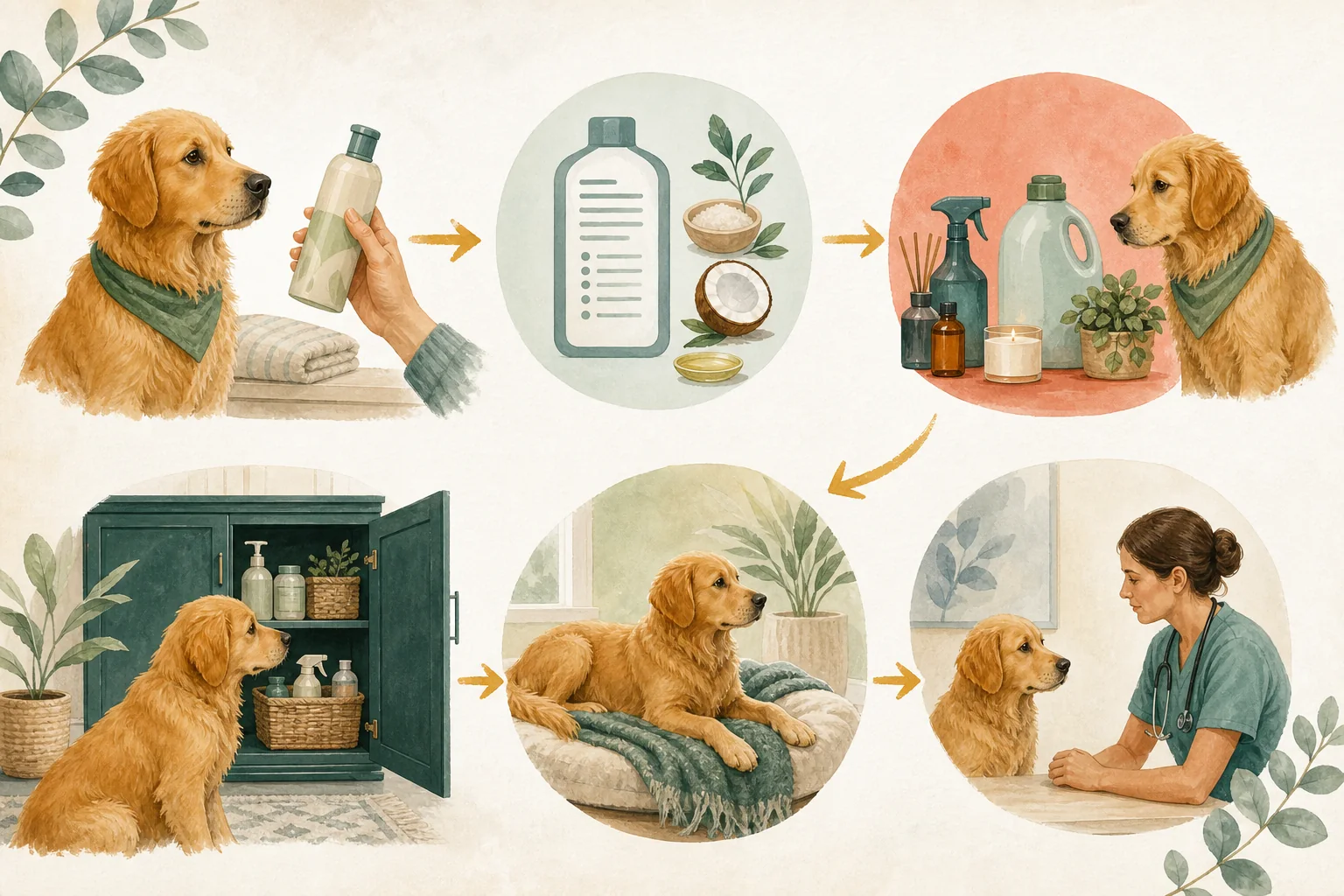
Owner tool
Reading Dog Food and Treat Ingredients to Avoid Hidden Toxins
Use this ingredient-label toxin check as a repeatable owner record. Mark what is normal, what changed, and what needs veterinary guidance.
| Checkpoint | Owner action | Boundary |
|---|---|---|
| Identify the exact product | separate dog food, treats, human food, supplements, and mixed household products | Similar packaging does not mean similar safety |
| Read every ingredient line | scan the complete statement rather than front-label claims | Natural, premium, and wholesome do not establish safety |
| Check sweeteners and flavor systems | look for xylitol and unfamiliar sugar-free ingredients | Brand assumptions are not a substitute for the current label |
| Account for human-food hazards | manage chocolate, grapes, raisins, onions, garlic, alcohol, and other known risks | The list is not exhaustive and dose should not be guessed |
| Consider cross-contact and storage | keep products sealed, separated, and traceable | Contamination may not be visible |
| Verify before sharing | ask the veterinary team about unfamiliar ingredients or health-condition conflicts | A dog-safe category does not fit every individual |
| Respond to suspected exposure | preserve the package and call promptly | Never induce vomiting or give a home antidote without direction |
A three-step next action
Observe
Complete the ingredient-label toxin check without provoking a symptom or forcing the dog through difficulty.
Record
Keep dates, measurements, photographs, short natural-behavior videos, product labels, and caregiver notes together.
Escalate
Share the concise pattern with the veterinary team and seek urgent care for severe or rapidly worsening signs.
Prepare for the visit
Questions to take to your veterinarian
- Which parts of this ingredient-label toxin check are most important for this dog?
- What findings need a routine appointment, a same-day call, or emergency care?
- Could current diagnoses, medications, diet, supplements, pain, vision, hearing, or mobility change the plan?
- What should I measure at home, and how often should I reassess it?
- Which change should make me stop the routine and contact you sooner?
Bring the dated observation log, relevant photos or short videos, and a complete list of foods, treats, medications, and supplements. Do not change the routine solely to produce evidence for the visit.
Frequently asked questions
Can this checklist diagnose a health problem?
No. It organizes observations and questions; diagnosis requires veterinary assessment.
How often should I repeat it?
Use the interval recommended by the veterinary team and repeat sooner after a meaningful change.
Should I change several things at once?
Usually not unless the veterinary team directs it. Multiple changes make response and risk harder to interpret.
What should I bring to the appointment?
Bring the dated log, relevant photos or videos, and complete food, medication, supplement, and product information.
Sources
- Questions and Answers on Contaminants in Pet Food and Treats, U.S. Food and Drug Administration. Contaminant-focused guidance notes that pet foods and treats can occasionally be contaminated with **microbes (like Salmonella), chemicals (such as melamine), or natural toxins**, and that owners should stay informed about…
- Reading Pet Food Labels, U.S. Food and Drug Administration. Regulatory guidance explains that pet food labels should include **ingredient lists ordered by weight**, a nutritional adequacy statement, and manufacturer contact information, which owners can use to understand primary components…
- Petfood labels: What you need to know, American Veterinary Medical Association. Veterinary association resources advise owners to look for **clear ingredient naming, appropriate species designation, and feeding directions**, and to be cautious with vague terms or non-specific animal-source descriptions on dog…
- Harmful and Toxic Substances to Dogs and Cats, U.S. Food and Drug Administration Center for Veterinary Medicine. A toxic-substance overview lists **specific foods and ingredients** that commonly harm dogs, such as xylitol, chocolate, onions, grapes, and certain alcohols, underscoring the need to check treat and food labels…
Medical disclaimer
Educational information only; contact a veterinarian for diagnosis, treatment, or urgent concerns. If your dog is showing severe, sudden, or rapidly worsening signs, seek urgent veterinary care.
