

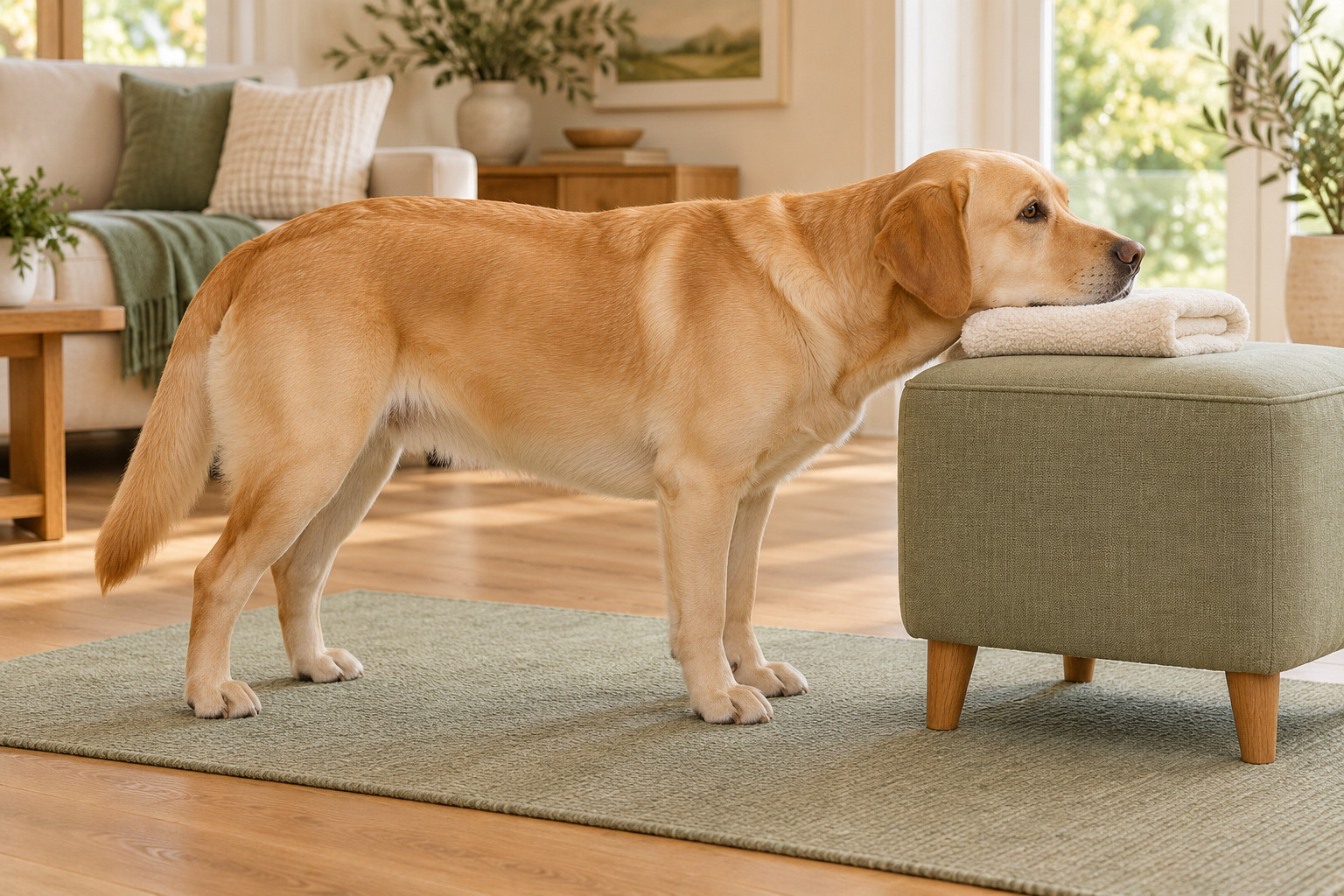
A dog resting their chin on a towel can look like a small, almost ordinary moment. But there is an important difference between a head that has been placed somewhere and a position the dog has learned to offer.
That difference is the starting point for a voluntary chin rest. You are not finding a gentler way to hold the muzzle still. You are introducing a clear body position, keeping your own movements understandable, and learning when to stop rather than finish one more thing.
This guide covers that introduction for a dog who is comfortable enough for optional learning. It does not teach eye drops, ear cleaning, nail care, examinations or restraint. If handling is painful, frightening or unsafe, the appropriate next step is an individual professional plan, not more practice from a webpage.
For the wider framework, read cooperative grooming built around pause and choice. Here, we will concentrate on one narrower question: how can you introduce chin-on-target behavior without moving or holding your dog’s head for them?
Know what the chin rest is meant to be
In a chin rest, the dog places the underside of their chin on a chosen target. That target might be a towel, a suitable support or a handler’s hand. The important feature for this introduction is who makes the movement: the dog offers the position; the person does not put the head there.
Sarah Dixon’s chin-rest teaching example in the IAABC Foundation Journal distinguishes learning a position from adding later handling. It also makes ending handling when the position breaks central to the arrangement. A still head by itself is not the whole behavior.
Keep the goal modest. Today might be about understanding the target, not remaining there for a long time. It might be about noticing that your own reaching changes the interaction. Neither observation means you need to turn the exercise into a full grooming session.
A trained arrangement, not blanket permission
Some cooperative-care resources call participation behaviors start buttons or consent behaviors. Those terms describe a learned arrangement. They do not mean a dog gives human informed medical consent, or that a chin resting on an object permits every task you would like to complete.
Separate four things that can look similar in a photograph: approaching a target, touching it with the nose, resting the chin, and remaining comfortable while something else happens. Do not assume that teaching one establishes all the others.
The photos here illustrate positions and space, not proof of training or a clinical outcome. Your dog does not need to reproduce a picture to demonstrate that you are making thoughtful care decisions.
Decide whether this is an appropriate home lesson
The American Veterinary Society of Animal Behavior recommends reward-based training. That supports the approach used here, but it does not establish that every dog should begin this exercise at home without help.
If your dog avoids hands near the face, has a bite history, shows substantial distress or may be uncomfortable moving the head, speak with your veterinarian and a qualified reward-based behavior professional. Do not move closer to discover how much resistance the dog will show. Let the team help determine an appropriate starting point.
Also distinguish future learning from care that is already needed. A dog does not have to master a chin rest before receiving veterinary help. Explain any time-sensitive care and handling concern when arranging the appointment so the professional can plan for both.
Choose rewards within the existing care plan
Do not change a prescribed diet, withhold meals or introduce unsuitable foods to make participation happen. AAHA’s handling guidance cautions about food allergies and dogs whose behavior becomes more aggressive around food. Those situations need an individual plan rather than a more tempting treat.
If you cannot confidently manage rewards or position yourself without risk, stop at planning and ask for help. This article does not choose a food, hand-feeding method or behavior program for your individual dog.
Prepare the target before inviting the dog
Choose one target and work out where you can place it without reaching around the dog’s head. A folded cloth across your lap is one example described in the professional teaching material. A stable supported target is another option to discuss with a trainer.
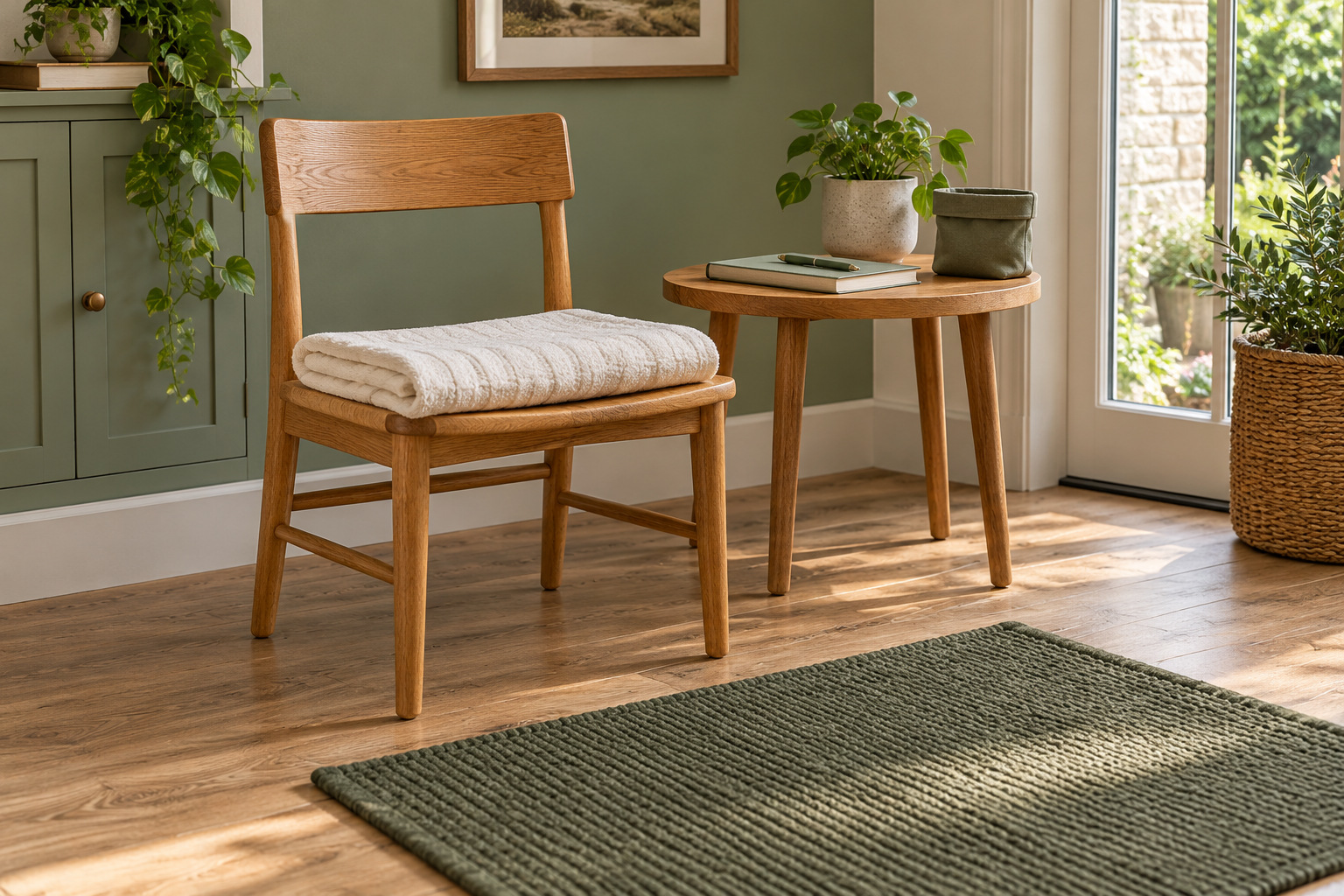
Look at the practical arrangement before expecting participation. Can the dog approach on stable footing? Is there room to leave? Can you keep the target steady without moving it upward into the chin? If the answer is uncertain, change the arrangement or get help rather than correcting the dog’s posture with your hands.
Make the human part easy to repeat
Place your own seat where you can remain comfortable. Decide where the reward supplies will sit, which hand you will use, and where the other hand will rest. You are organizing your movements, not building a station that contains the dog.
You can rehearse those movements without the dog present. Notice whether reaching for the pouch causes your other hand to rise, your knees to close the exit or the target to wobble. Sorting out your own sequence first is an HPE planning suggestion, not a validated training assessment.
Keep brushes, clippers and care supplies put away for this introduction. Their presence can make it tempting to add a task you did not plan. Today’s target does not need to double as a grooming appointment.
Do not turn support into a clamp
A target is a place the dog can leave. It is not a surface to press the chin against, a hand under the jaw that follows every movement, or an object used to block withdrawal. If your hand is doing the holding, pause and reconsider what you are teaching.
No special branded equipment is required to understand the idea. The question is whether the setup fits the dog and your own ability to use it, not whether the product photograph looks professional.
Introduce chin-on-target in small, visible pieces
Keep the first lesson separate from touching or grooming. The following is a conservative introduction based on the professional examples linked above, not a complete behavior-modification program. If your dog already has an individual training plan, use that plan rather than combining it with a second set of steps.
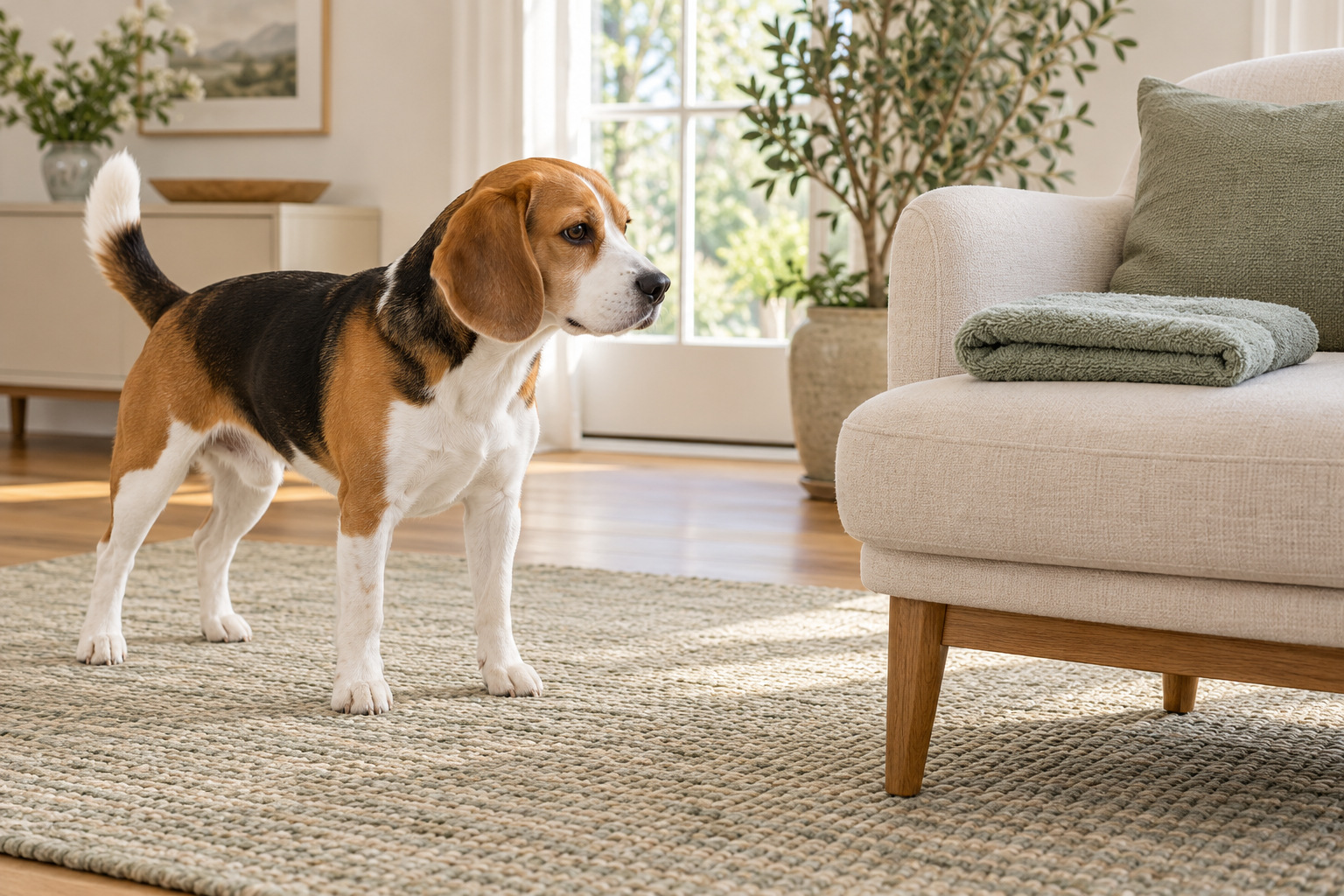
1. Let the dog investigate without placing the head
Settle yourself and the target, then allow a voluntary approach. Shaping means rewarding small actions that move toward the behavior, rather than physically putting the dog into position. Looking toward the cloth or investigating it can be an earlier step than chin contact.
2. Recognize the action you are teaching
Professional examples use a marker, such as a familiar word or click, followed by a reward. Mark the offered action you intended to recognize. Nose contact and chin contact are different actions; do not push the head down to convert one into the other.
3. Let chin contact come from the dog
As the dog learns the target, recognize voluntarily lowering the chin onto it. Do not raise the target to catch the head. Keep early expectations modest rather than holding out for a long pose. A qualified trainer can help with reward placement and timing if the movement remains unclear.
4. Keep the cue separate from pressure
Add a cue only once the offered behavior is becoming understandable and predictable. Do not repeatedly say a word while moving the dog’s head into place. You can ask your trainer how to time a cue and reward without making either a demand to stay.
Watch what your own hands are doing
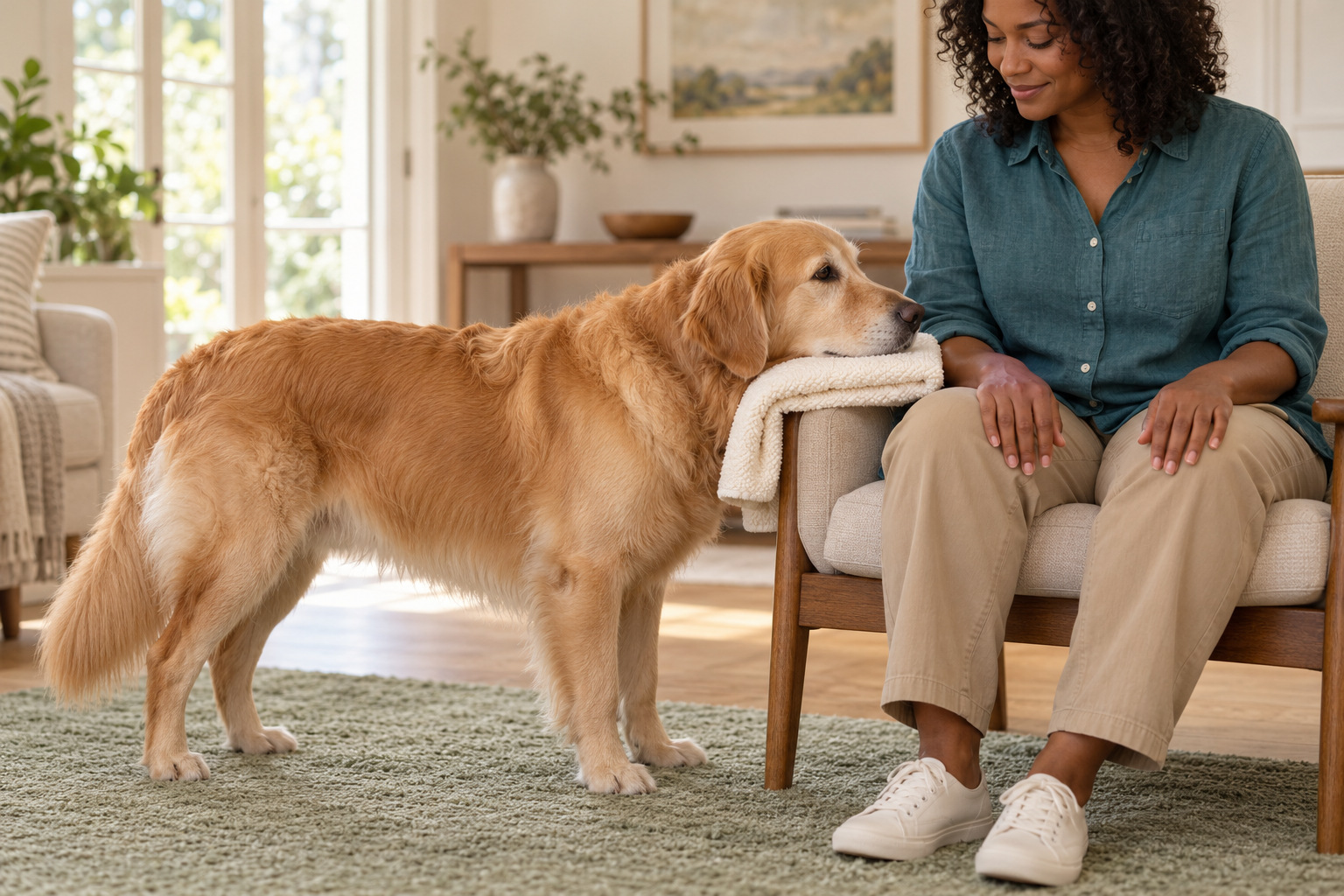
The dog may be learning the target while you are learning a sequence too. Keep the supporting surface and your hands distinct. If one hand is occupied with the reward, know where the other hand is before you begin.
For example, reaching across the muzzle while marking an offered chin rest adds a movement you may not have intended. Moving the cloth to meet the head changes the target. Leaning over the dog can change the space available. Notice those differences without deciding that the dog is being difficult.
These are questions about your setup, not reasons to manufacture more repetitions. You can stop, rehearse your own sequence without the dog, or ask someone qualified to observe your mechanics. A clear next lesson is more useful than repeating an unclear one.
Separate the chin position from a moving hand
Once a dog understands the position, a moving hand is still a separate part of learning. Kristen Klebba’s professional cooperative-care teaching slides hosted by AVSAB introduce hand movement before touch. The sequence is not an instruction to begin a procedure as soon as the chin touches.
For this introductory article, you do not need to add touch at all. If movement is part of an individual plan you are learning with a professional, make clear which movement is being introduced and what will stop when the dog lifts away. Do not invent an examination or grooming task to test readiness.
Give each change a name in your notes
Keep an ordinary description of the last understood version. “Chin on cloth with my hands resting” describes one arrangement. “Chin on cloth while my other hand moves” describes a different one. Writing the distinction down prevents a later caregiver from assuming that both have been learned.
Do not turn this into a duration contest. A longer-looking pose does not establish readiness for a new task, a different person or a different setting. The next question is what the dog has actually learned in the current arrangement, not whether the photograph looks impressive.
If you need help progressing, ask for a lesson that addresses that specific transition. “Can you help me keep my reward hand separate from the new movement?” is more useful than asking how to make the dog hold still for everything.
Make stopping a clear part of the arrangement
If optional handling has been introduced under an appropriate individual plan, lifting away must stop that contact. Do not chase the head with your hand, keep a tool in contact while asking for another chin rest, or press downward to finish the last part.
When you are only teaching the target, a lifted head means the target position has ended. You can let the activity finish without trying to recover the pose immediately. You do not need to decide why the dog moved before you can stop adding demands.
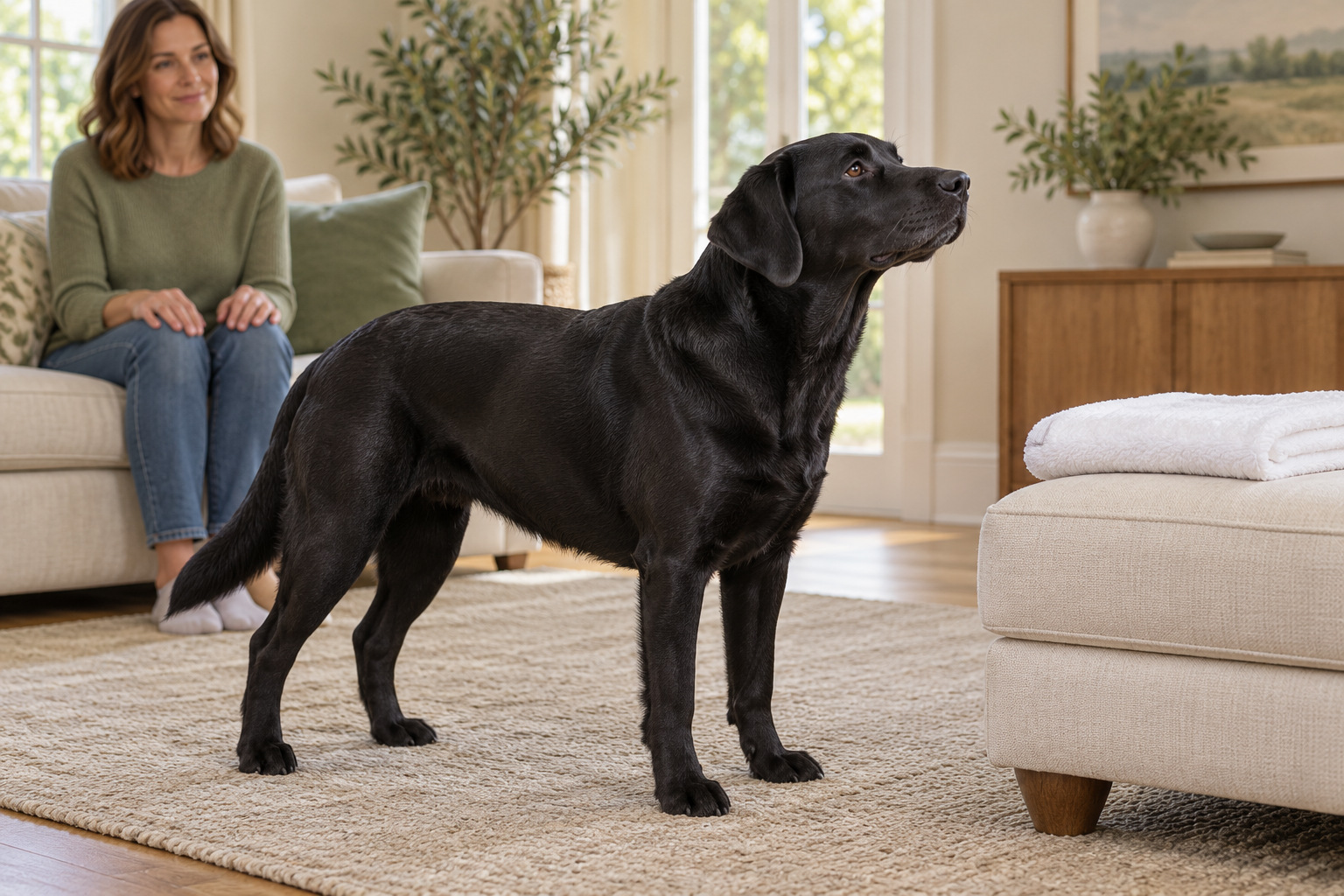
A lifted head is information, not a diagnosis
Look at what was happening: a hand moved, someone entered, the setup shifted, or something else changed. Do not assume any one event explains the response. Equally, do not interpret remaining still as a guarantee of comfort. AAHA lists freezing and social disengagement among nonspecific distress signs; those observations need context.
If you become uncertain, put the optional lesson aside. The answer is not to keep the dog’s head down until you feel reassured. Describe what you saw to the appropriate professional instead of assigning a label such as stubbornness or consent from one posture.
Use a two-line handoff
A simple household note can distinguish the behavior from the next task: “We are learning chin contact on the towel. No grooming has been added.” A second line can name the boundary: “If the position ends, do not hold, follow or restart it to finish something.”
This note is an editorial communication aid. It does not qualify another person to take over training or assess a dog. Keep actual professional instructions available separately, and do not assume familiarity with the household makes someone familiar with the exercise.
Troubleshoot the lesson without escalating it
The dog looks at the cloth but does not lower the chin
Do not turn looking into failure or help by placing the head. You may need clearer timing, a different arrangement or professional instruction. Keep the last behavior you can describe separate from the behavior you hoped to see. It is acceptable to finish without reaching chin contact.
The dog follows the reward hand instead of finding the target
Notice which movement is drawing attention. Do not trap the dog between your reward hand and the cloth or hold food out of reach until the head stays down. Ask a qualified reward-based trainer to help organize the reward delivery and explain how prompting will be reduced in your particular plan.
The exercise becomes harder when another person joins
A second person brings another position, movement and set of expectations. Do not use them to hold the dog while you recreate the original pose. Return to planning the handoff with your trainer rather than assuming the learned arrangement automatically transfers.
There is sudden difficulty, distress or a care need that cannot wait
Contact your veterinarian when a familiar interaction changes unexpectedly, discomfort is a concern or behavior makes safe care difficult. AAHA’s assessment guidance identifies concerning behavioral changes, including withdrawal and aggression. It is not a home diagnostic checklist or an exhaustive emergency guide.
Tell the team what care is needed and what handling has been difficult. Do not postpone necessary care while trying to finish the training. If your dog is injured, appears seriously unwell or you believe there is an urgent problem, contact your veterinarian or an emergency veterinary service promptly.

Frequently Asked Questions
Is a chin rest the same as holding a dog’s head?
No. In this introduction, the dog offers chin contact and can move away from it. Holding the muzzle, lifting the jaw or pressing the head onto a target changes that arrangement. A soft towel does not make physical restraint into voluntary participation. If you find yourself keeping the head in place, stop the optional exercise and review the setup with a qualified professional. You can learn the mechanics without trying to complete care at the same time, and you do not need to preserve a pose for a photograph.
Does lifting the head always mean my dog is frightened?
No single movement establishes an emotional or medical explanation. The dog might respond to something in the room, a movement you made or another change you did not notice. You can respect the end of the position without diagnosing why it ended. If contact is part of an appropriate individual plan, stop it rather than requiring the chin to return. New, repeated or concerning changes belong in a conversation with your veterinarian or behavior professional, not a test in which you continue until you know the answer.
What if my dog will not approach the target?
Do not carry, pull or corner the dog into position. You can end the lesson and review whether the arrangement and your own movements are appropriate. Avoid changing several things at once in an attempt to produce a quick success. A qualified reward-based professional can help determine what is understood and whether a different starting point is needed. If reluctance is new, handling seems uncomfortable or you are worried someone could be hurt, involve your veterinarian rather than repeating the approach as a challenge.
Should I start brushing as soon as the chin touches?
No. Learning where to put the chin and participating in brushing are different tasks. Adding a brush immediately changes what the dog is being asked to learn. This article deliberately stops short of giving a brushing technique, tool-contact progression or clinical procedure. If you are working with a professional, ask how later movement and handling will be introduced and stopped. The broader grooming and hygiene guide covers the wider care context; it does not turn chin contact into permission to finish a groom.
Can another caregiver use the cue immediately?
Do not assume that they understand the current arrangement or that the dog has learned it with that person. Explain the target, the actual behavior being taught and what has not been introduced. A written note can prevent an accidental extra step, but it is not a substitute for instruction. If the second person needs to participate, plan that transition with the professional helping you. Avoid making one caregiver responsible for keeping the dog still while the other tries to complete a task.
Does a chin rest replace a veterinary handling plan?
No. It is one behavior that may form part of an individual cooperative-care plan, not a replacement for veterinary assessment, pain management or professional decisions about safe care. Tell the veterinary team what the dog has actually learned rather than saying they are trained for every procedure. Necessary treatment should not depend on completing an online lesson first. Ask how the present care need and future learning can fit together, especially if handling is difficult or the situation is time-sensitive.
When should I stop practicing at home and ask for help?
Stop when you cannot keep the exercise voluntary, are unsure about the dog’s response, or find yourself adding pressure to obtain the position. Seek individual help for substantial distress, a history of biting, concern about discomfort or repeated difficulty with the mechanics. You do not need a certain number of unsuccessful attempts before asking. For an immediate care need, explain the urgency when contacting the appropriate professional. A smaller lesson or a timely request for help is not evidence that you or your dog failed.
What to do next
Choose the next decision before inviting another attempt: understand the target, organize your own hands, or ask a professional to help with the setup. Keep that decision separate from any grooming task waiting on your list.
Write down what the dog has actually been taught and what has not been added. The distinction can be brief. It is more useful than recording an ambitious goal that another caregiver might mistake for a learned skill.
Return to HPE’s cooperative-grooming overview for the wider pause-and-choice framework, or browse the Care & Safety collection. For this lesson, keep the chin rest what it is meant to be: an offered position with understandable limits, not a quieter way to hold the head.
Sources and scope
Source-checked against AVSAB humane-training guidance, Kristen Klebba’s professional cooperative-care slides, Sarah Dixon’s IAABC Foundation Journal teaching example and the AAHA behavior guidelines linked above. These are professional educational resources, not proof of an individual dog’s readiness or a clinical trial validating this article. Source-specific durations, clinical procedures and reinforcement-withholding language have not been adopted.
Educational information only, not veterinary diagnosis, treatment or an individual behavior plan. The human-movement rehearsal and household handoff are HPE editorial aids. Images illustrate positioning, not medical endorsement or guaranteed results. Not yet medically or behavior reviewed.
