

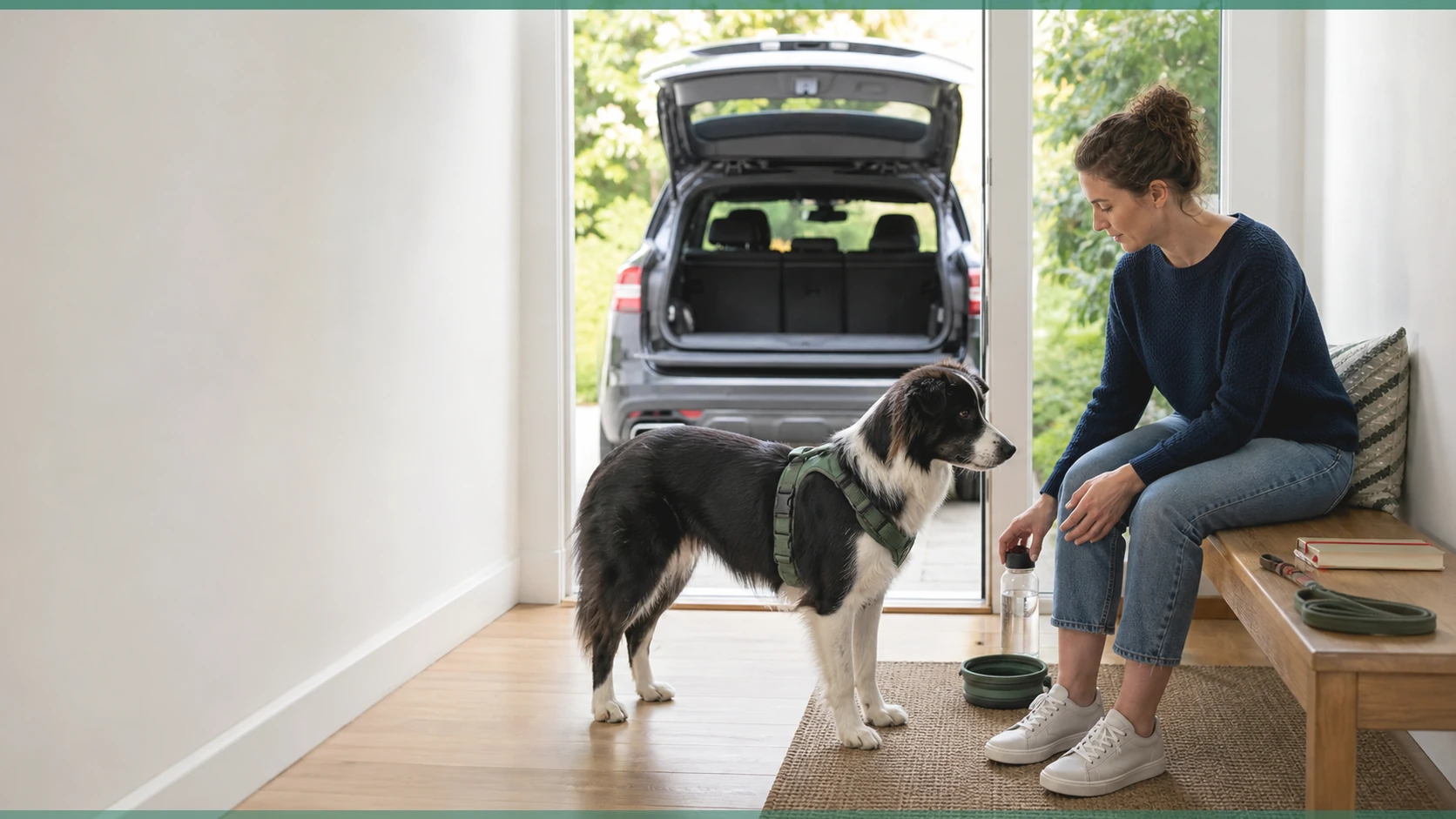
A calm, evidence-aware framework for seasonal room-by-room home safety and wellness checklist for dogs with gut joint calming and senior considerations, with practical owner observations and clear professional-care boundaries.
Short answer
Use a repeatable plan and keep veterinary care in the lead
Design a seasonal, room-by-room checklist that combines toxin and food-safety, environmental parasite-risk, temperature/climate, and mobility-safety checks while briefly connecting these to gut, joint, calming, and senior-wellness domains, without giving diagnostic or first-aid advice. The practical goal is simple: owner can walk through a seasonal, room-by-room checklist at home that addresses toxin and food-safety, environmental parasite risk, climate, and mobility hazards, while briefly linking these factors to gut, joint, calming, and senior-wellness themes in a non-diagnostic way. Keep veterinary care in the lead, record patterns rather than isolated moments, and stop the routine when pain, distress, or urgent signs appear.
- Follow the dog through sleeping, feeding, toileting, play, travel, and family spaces.
- Secure gaps, chemicals, foods, cords, elevation, unstable objects, and escape points.
- Check traction, thresholds, stairs, ramps, doors, and turning space.
- Review heat, cold, airflow, surface temperature, weather, wildlife, and household products.
Safety first
Stop the routine when the dog needs professional care
If a dog is suspected of ingesting a toxic plant, household chemical, or human medication, owners should contact a veterinarian or animal poison control center immediately rather than relying on the home checklist.[HPEV-68CC63A6AF] Sudden difficulty walking, repeated falls, or apparent heat stress (collapse, heavy panting, bright red gums) in any room or outdoor area requires urgent veterinary care.[HPEV-23A4EF0F3C][HPEV-16664136DC] Evidence of heavy parasite infestation (numerous fleas, visible ticks, or worms in stool) should prompt prompt veterinary consultation for diagnosis and treatment; environmental checks alone are insufficient.[HPEV-C816651AE0][HPEV-09C1C4154C]
Veterinary note
Educational information only; contact a veterinarian for diagnosis, treatment, or urgent concerns. This guide supports observation and preparation; it does not diagnose a condition or replace an individualized care plan.
What is reasonably supported
Use repeated observations to improve the veterinary conversation
The ASPCA toxic plant database identifies many common indoor and outdoor plants that can cause gastrointestinal upset or… Including room-by-room and yard checks for potentially… Parasite-control guidelines emphasize that environmental exposure to fleas, ticks, and other parasites varies with geography and season, and… Adding seasonal parasite-risk prompts (e.g., checking bedding,… Owner handouts based on senior-care guidelines advise making environmental adjustments such as secure footing, easy access to resting… Translating these recommendations into room-specific mobility and… Home-environment guidance for dogs with osteoarthritis recommends non-slip flooring, ramps, and arranging furniture to reduce jumping and slipping,… Applying similar modifications as general joint-friendly safety…
What remains uncertain
Home observations cannot establish the cause
This checklist is limited to non-diagnostic home safety and wellness prompts across rooms and seasons, linking environment and mobility to general gut, joint, calming, and senior considerations without giving first-aid or treatment advice. Guidance focuses on risk awareness (toxins, parasites, temperature, mobility hazards) and does not guarantee prevention of illness or injury.[HPEV-09C1C4154C][HPEV-C816651AE0] No source offers a ready-made, room-by-room, seasonal home checklist integrating toxins, parasites, temperature, and mobility for dogs; combining these elements into one framework is interpretive.[HPEV-23A4EF0F3C][HPEV-78FEC307E0] The explicit mapping of environmental safety items to gut, joint, calming, and senior domains is not described in guidelines and is inferred from general discussions of senior mobility and stress reduction.[HPEV-D98F03732C][HPEV-16664136DC]
Map the real daily route
Begin with the dog's own normal pattern so a meaningful change is easier to recognize. For seasonal room-by-room home safety and wellness checklist for dogs with gut, joint, calming, and senior considerations, the accepted research supports a bounded point: The ASPCA toxic plant database identifies many common indoor and outdoor plants that can cause gastrointestinal upset or more serious toxicity in dogs, underscoring the need… Including room-by-room and yard checks for potentially toxic plants and foods is consistent… This evidence guides observation and a veterinary conversation; it does not establish a diagnosis, treatment response, or guaranteed result.
In practice, follow the dog through sleeping, feeding, toileting, play, travel, and family spaces. Record the date, frequency, context, and related changes. A room that looks safe from adult height may not be safe for the dog. Compare the dog with their own baseline and contact the veterinary team when the pattern is persistent, progressive, painful, or joined by the red-flag signs above.
Remove preventable access
Separate observation from interpretation: describe what happened before deciding what it might mean. For seasonal room-by-room home safety and wellness checklist for dogs with gut, joint, calming, and senior considerations, the accepted research supports a bounded point: Parasite-control guidelines emphasize that environmental exposure to fleas, ticks, and other parasites varies with geography and season, and recommend year-round strategies tailored to local risk.[HPEV-C816651AE0] Adding seasonal parasite-risk prompts (e.g., checking bedding, outdoor areas, and discussing prevention with… This evidence guides observation and a veterinary conversation; it does not establish a diagnosis, treatment response, or guaranteed result.
In practice, secure gaps, chemicals, foods, cords, elevation, unstable objects, and escape points. Record the date, frequency, context, and related changes. Supervision alone cannot correct every physical hazard. Compare the dog with their own baseline and contact the veterinary team when the pattern is persistent, progressive, painful, or joined by the red-flag signs above.
Improve footing and transitions
Consistency improves the value of a home record, even when the measurement is simple. For seasonal room-by-room home safety and wellness checklist for dogs with gut, joint, calming, and senior considerations, the accepted research supports a bounded point: Owner handouts based on senior-care guidelines advise making environmental adjustments such as secure footing, easy access to resting areas, and minimizing obstacles to support aging pets’… Translating these recommendations into room-specific mobility and safety checks (stairs, slippery floors, bed… This evidence guides observation and a veterinary conversation; it does not establish a diagnosis, treatment response, or guaranteed result.
In practice, check traction, thresholds, stairs, ramps, doors, and turning space. Record the date, frequency, context, and related changes. An aid must fit the dog and be introduced safely. Compare the dog with their own baseline and contact the veterinary team when the pattern is persistent, progressive, painful, or joined by the red-flag signs above.
Control climate and exposure
The setting around a sign can matter as much as the sign itself. For seasonal room-by-room home safety and wellness checklist for dogs with gut, joint, calming, and senior considerations, the accepted research supports a bounded point: Home-environment guidance for dogs with osteoarthritis recommends non-slip flooring, ramps, and arranging furniture to reduce jumping and slipping, improving joint comfort and safety.[HPEV-16664136DC] Applying similar modifications as general joint-friendly safety checks for all dogs, especially seniors,… This evidence guides observation and a veterinary conversation; it does not establish a diagnosis, treatment response, or guaranteed result.
In practice, review heat, cold, airflow, surface temperature, weather, wildlife, and household products. Record the date, frequency, context, and related changes. Risk changes with season, location, health, and mobility. Compare the dog with their own baseline and contact the veterinary team when the pattern is persistent, progressive, painful, or joined by the red-flag signs above.
Coordinate every caregiver
A checklist supports attention; it does not prove that a risk is gone or explain a medical concern. For seasonal room-by-room home safety and wellness checklist for dogs with gut, joint, calming, and senior considerations, the accepted research supports a bounded point: The ASPCA toxic plant database identifies many common indoor and outdoor plants that can cause gastrointestinal upset or more serious toxicity in dogs, underscoring the need… Including room-by-room and yard checks for potentially toxic plants and foods is consistent… This evidence guides observation and a veterinary conversation; it does not establish a diagnosis, treatment response, or guaranteed result.
In practice, use one current plan for access, handling, feeding, products, and emergency contacts. Record the date, frequency, context, and related changes. Conflicting routines increase missed steps and duplicate care. Compare the dog with their own baseline and contact the veterinary team when the pattern is persistent, progressive, painful, or joined by the red-flag signs above.
Test the plan without stressing the dog
Shared language and one current record help multiple caregivers act consistently. For seasonal room-by-room home safety and wellness checklist for dogs with gut, joint, calming, and senior considerations, the accepted research supports a bounded point: Parasite-control guidelines emphasize that environmental exposure to fleas, ticks, and other parasites varies with geography and season, and recommend year-round strategies tailored to local risk.[HPEV-C816651AE0] Adding seasonal parasite-risk prompts (e.g., checking bedding, outdoor areas, and discussing prevention with… This evidence guides observation and a veterinary conversation; it does not establish a diagnosis, treatment response, or guaranteed result.
In practice, walk through barriers, transport, exits, and backup arrangements calmly. Record the date, frequency, context, and related changes. Never create an exposure or emergency as a test. Compare the dog with their own baseline and contact the veterinary team when the pattern is persistent, progressive, painful, or joined by the red-flag signs above.
Owner tool
Seasonal Room-By-Room Home Safety and Wellness Checklist for Dogs With Gut, Joint, Calming, and Senior Considerations
Use this seasonal-home-safety-and-wellness-checklist as a repeatable record for seasonal room-by-room home safety and wellness checklist for dogs with gut joint calming and senior considerations. Mark what is normal, what changed, and what needs veterinary guidance.
| Checkpoint | Owner action | Safety boundary |
|---|---|---|
| Map the real daily route | follow the dog through sleeping, feeding, toileting, play, travel, and family spaces | A room that looks safe from adult height may not be safe for the dog |
| Remove preventable access | secure gaps, chemicals, foods, cords, elevation, unstable objects, and escape points | Supervision alone cannot correct every physical hazard |
| Improve footing and transitions | check traction, thresholds, stairs, ramps, doors, and turning space | An aid must fit the dog and be introduced safely |
| Control climate and exposure | review heat, cold, airflow, surface temperature, weather, wildlife, and household products | Risk changes with season, location, health, and mobility |
| Coordinate every caregiver | use one current plan for access, handling, feeding, products, and emergency contacts | Conflicting routines increase missed steps and duplicate care |
| Test the plan without stressing the dog | walk through barriers, transport, exits, and backup arrangements calmly | Never create an exposure or emergency as a test |
| Prepare for failure and escalation | keep labels, identification, records, contacts, and a safe transport method ready | Suspected poisoning, heat illness, trauma, or collapse requires prompt care |
A three-step next action
Observe
Complete the seasonal room-by-room home safety and wellness checklist for dogs with gut, joint, calming, and senior considerations review without provoking a symptom or forcing the dog through difficulty.
Record
Keep dates, measurements, photographs, short natural-behavior videos, product labels, and caregiver notes together.
Escalate
Share the concise pattern with the veterinary team and seek urgent care for severe or rapidly worsening signs.
Prepare for the visit
Questions to take to your veterinarian
- Which parts of this seasonal room-by-room home safety and wellness checklist for dogs with gut, joint, calming, and senior considerations plan matter most for this dog?
- What findings need a routine appointment, a same-day call, or emergency care?
- Could current diagnoses, medications, diet, supplements, pain, vision, hearing, or mobility change the plan?
- What should I measure at home, and how often should I reassess it?
- Which change should make me stop the routine and contact you sooner?
Bring the dated observation log, relevant photos or short videos, and a complete list of foods, treats, medications, and supplements. Do not change the routine solely to produce evidence for the visit.
Frequently asked questions
Can this guide diagnose a health or behavior problem?
No. It organizes observations and questions; diagnosis requires veterinary assessment.
How often should I repeat the routine?
Use the interval recommended by the veterinary team and repeat sooner after a meaningful change.
Should I change several things at once?
Usually not unless the veterinary team directs it. Multiple changes make response and risk harder to interpret.
What should I bring to the appointment?
Bring the dated log, relevant photos or videos, and complete food, medication, supplement, and product information.
Sources
- CANADIAN PARASITOLOGY EXPERT PANEL GUIDELINES, Canadian Parasitology Expert Panel (CPEP). Parasite-control guidelines emphasize that environmental exposure to fleas, ticks, and other parasites varies with geography and season, and recommend year-round strategies tailored to local risk.[HPEV-C816651AE0]
- Home Environment Modifications for Dogs with OA, Canine Arthritis Management. Home-environment guidance for dogs with osteoarthritis recommends non-slip flooring, ramps, and arranging furniture to reduce jumping and slipping, improving joint comfort and safety.[HPEV-16664136DC]
- Toxic and Non-Toxic Plants, ASPCA Animal Poison Control Center. The ASPCA toxic plant database identifies many common indoor and outdoor plants that can cause gastrointestinal upset or more serious toxicity in dogs, underscoring the need to review home and…
- AAHA Senior Care Guidelines – Your Senior Pet (Owner Handout), American Animal Hospital Association. Owner handouts based on senior-care guidelines advise making environmental adjustments such as secure footing, easy access to resting areas, and minimizing obstacles to support aging pets’ mobility and comfort.[HPEV-23A4EF0F3C]
Medical disclaimer
Educational information only; contact a veterinarian for diagnosis, treatment, or urgent concerns. If your dog is showing severe, sudden, or rapidly worsening signs, seek urgent veterinary care.
