


A calm, evidence-aware framework for monthly lifestyle and environment check for middle-aged and senior dogs, with practical owner observations and clear professional-care boundaries.
Short answer
Use a repeatable plan and keep veterinary care in the lead
Create a simple, non-diagnostic home checklist to help owners track environmental and lifestyle factors that may influence metabolic or organ-related wellness in middle-aged and senior dogs The practical goal is simple: equip owners to notice subtle shifts in routine, diet, exercise, and home environment that might affect metabolic or organ-related wellness in middle-aged and older dogs before a crisis Keep veterinary care in the lead, record patterns rather than isolated moments, and stop the routine when pain, distress, or urgent signs appear.
- Record the confirmed diagnoses, monitoring instructions, medication list, and follow-up schedule.
- Describe appetite, water, elimination, weight, movement, sleep, behavior, and comfort.
- Use the same measurements and descriptions at the interval requested by the clinic.
- Note doses, missed doses, diet, supplements, activity, stress, and unusual exposures.
Safety first
Stop the routine when the dog needs professional care
Contact a veterinarian if monthly checks reveal sustained changes such as increased drinking and urination, unexplained weight loss or gain, reduced exercise tolerance, or persistent coughing or breathing changes. Seek prompt veterinary attention if a dog shows signs of confusion, collapse, jaundice (yellow gums or eyes), severe lethargy, or is not eating for more than 24 hours. Owners should not adjust prescription diets, medications, or long-term supplements for metabolic or organ conditions without veterinary direction.
Veterinary note
Educational information only; contact a veterinarian for diagnosis, treatment, or urgent concerns. This guide supports observation and preparation; it does not diagnose a condition or replace an individualized care plan.
What is reasonably supported
Use repeated observations to improve the veterinary conversation
Preventive-health guidance emphasizes that diet, body condition, exercise, and environmental management all influence chronic disease risk, and encourages… General principles are adapted for simple monthly… Healthy-aging guidance for older dogs stresses distinguishing normal aging from disease and notes that longitudinal information about lifestyle,… Supports structured observation rather than owner diagnosis. Senior-care guidelines recommend routine wellness exams and age-appropriate screening, with attention to nutrition, mental and physical activity, and… Clinical recommendations are translated into non-diagnostic lifestyle… WSAVA wellness principles advocate for regular, proactive review of a pet’s environment, nutrition, parasite control, and behavior, suggesting… Owner tools are not formally described; use…
What remains uncertain
Home observations cannot establish the cause
The checklist is intended to prompt owners to consider environment and lifestyle factors relevant to general wellness; it does not identify metabolic or organ disease or give individualized risk estimates. Laboratory screening and diagnostic imaging decisions must be made by veterinarians, not based solely on checklist responses. The framework does not replace regular wellness examinations and recommended testing. Selected sources discuss healthy aging, wellness, and risk factors but do not lay out a monthly lifestyle and environment checklist for middle-aged and senior dogs. Evidence directly linking home lifestyle/environment checklists to improved organ health outcomes is not presented.
Start with the veterinary plan
Begin with the dog's own normal pattern so a meaningful change is easier to recognize. For monthly lifestyle and environment check for middle-aged and senior dogs, the accepted research supports a bounded point: Preventive-health guidance emphasizes that diet, body condition, exercise, and environmental management all influence chronic disease risk, and encourages regular review of these factors as pets age. General principles are adapted for simple monthly owner checklists without medical scoring. This evidence guides observation and a veterinary conversation; it does not establish a diagnosis, treatment response, or guaranteed result.
In practice, record the confirmed diagnoses, monitoring instructions, medication list, and follow-up schedule. Record the date, frequency, context, and related changes. Home observations must not reinterpret a diagnosis. Compare the dog with their own baseline and contact the veterinary team when the pattern is persistent, progressive, painful, or joined by the red-flag signs above.
Establish the dog's current baseline
Separate observation from interpretation: describe what happened before deciding what it might mean. For monthly lifestyle and environment check for middle-aged and senior dogs, the accepted research supports a bounded point: Healthy-aging guidance for older dogs stresses distinguishing normal aging from disease and notes that longitudinal information about lifestyle, environment, and behavior can help veterinarians interpret age-related… Supports structured observation rather than owner diagnosis. This evidence guides observation and a veterinary conversation; it does not establish a diagnosis, treatment response, or guaranteed result.
In practice, describe appetite, water, elimination, weight, movement, sleep, behavior, and comfort. Record the date, frequency, context, and related changes. Baseline varies with the individual and stage of disease. Compare the dog with their own baseline and contact the veterinary team when the pattern is persistent, progressive, painful, or joined by the red-flag signs above.
Track the targeted signs
Consistency improves the value of a home record, even when the measurement is simple. For monthly lifestyle and environment check for middle-aged and senior dogs, the accepted research supports a bounded point: Senior-care guidelines recommend routine wellness exams and age-appropriate screening, with attention to nutrition, mental and physical activity, and home environment, highlighting that these pillars collectively affect… Clinical recommendations are translated into non-diagnostic lifestyle prompts. This evidence guides observation and a veterinary conversation; it does not establish a diagnosis, treatment response, or guaranteed result.
In practice, use the same measurements and descriptions at the interval requested by the clinic. Record the date, frequency, context, and related changes. More frequent checking is not always more informative. Compare the dog with their own baseline and contact the veterinary team when the pattern is persistent, progressive, painful, or joined by the red-flag signs above.
Record treatment and routine context
The setting around a sign can matter as much as the sign itself. For monthly lifestyle and environment check for middle-aged and senior dogs, the accepted research supports a bounded point: WSAVA wellness principles advocate for regular, proactive review of a pet’s environment, nutrition, parasite control, and behavior, suggesting that owner-completed lifestyle checklists can support veterinary wellness… Owner tools are not formally described; use is inferred from wellness concepts. This evidence guides observation and a veterinary conversation; it does not establish a diagnosis, treatment response, or guaranteed result.
In practice, note doses, missed doses, diet, supplements, activity, stress, and unusual exposures. Record the date, frequency, context, and related changes. Never change treatment to test a theory. Compare the dog with their own baseline and contact the veterinary team when the pattern is persistent, progressive, painful, or joined by the red-flag signs above.
Watch for combined change
A checklist supports attention; it does not prove that a risk is gone or explain a medical concern. For monthly lifestyle and environment check for middle-aged and senior dogs, the accepted research supports a bounded point: Preventive-health guidance emphasizes that diet, body condition, exercise, and environmental management all influence chronic disease risk, and encourages regular review of these factors as pets age. General principles are adapted for simple monthly owner checklists without medical scoring. This evidence guides observation and a veterinary conversation; it does not establish a diagnosis, treatment response, or guaranteed result.
In practice, connect the target sign with energy, breathing, vomiting, pain, confusion, and recovery. Record the date, frequency, context, and related changes. Several mild changes together may be meaningful. Compare the dog with their own baseline and contact the veterinary team when the pattern is persistent, progressive, painful, or joined by the red-flag signs above.
Use planned and unplanned checkpoints
Shared language and one current record help multiple caregivers act consistently. For monthly lifestyle and environment check for middle-aged and senior dogs, the accepted research supports a bounded point: Healthy-aging guidance for older dogs stresses distinguishing normal aging from disease and notes that longitudinal information about lifestyle, environment, and behavior can help veterinarians interpret age-related… Supports structured observation rather than owner diagnosis. This evidence guides observation and a veterinary conversation; it does not establish a diagnosis, treatment response, or guaranteed result.
In practice, send routine summaries and contact the clinic sooner when the pattern changes. Record the date, frequency, context, and related changes. The calendar should not delay necessary care. Compare the dog with their own baseline and contact the veterinary team when the pattern is persistent, progressive, painful, or joined by the red-flag signs above.
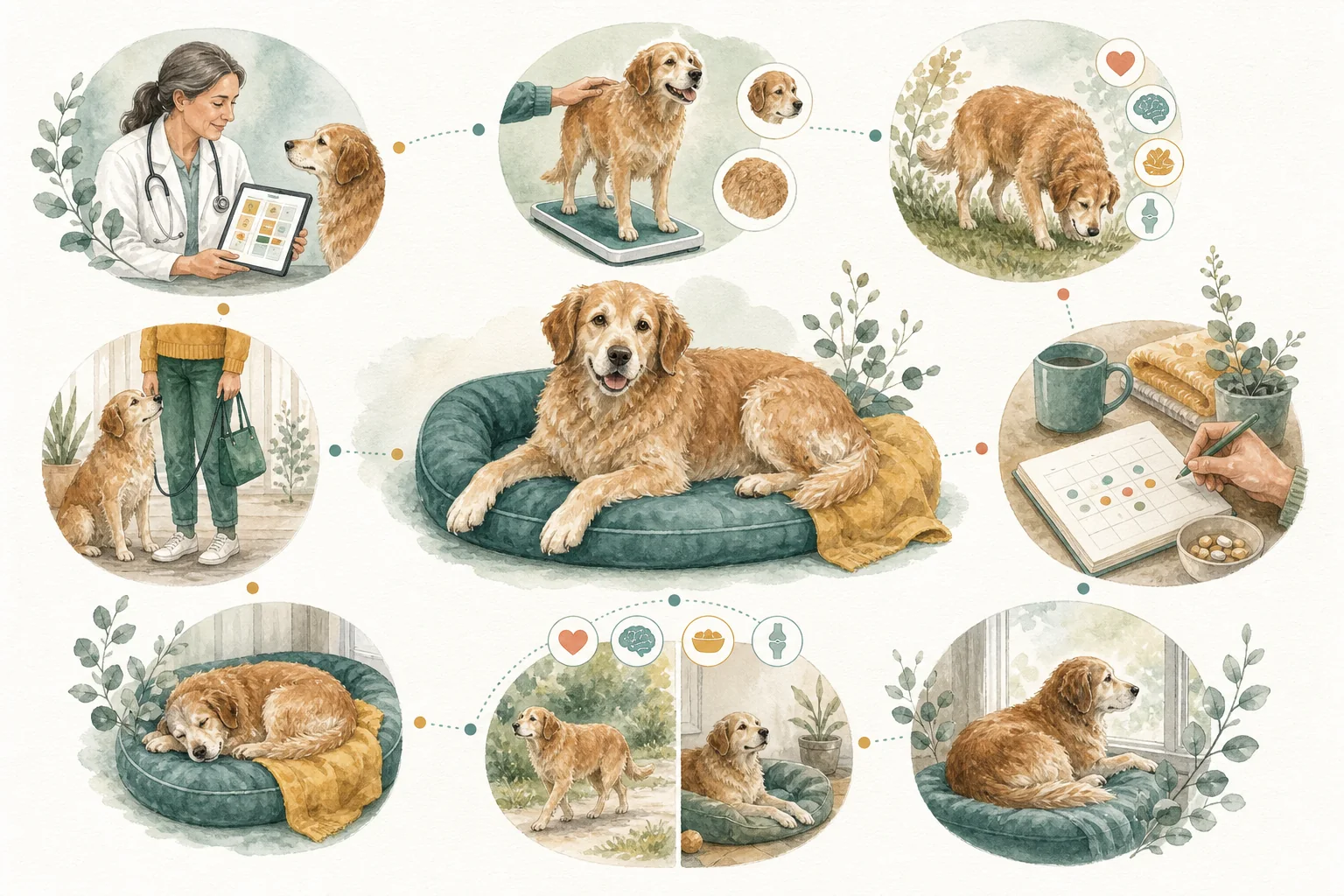
Owner tool
Monthly Lifestyle and Environment Check for Middle-Aged and Senior Dogs
Use this athomeguide as a repeatable record for monthly lifestyle and environment check for middle-aged and senior dogs. Mark what is normal, what changed, and what needs veterinary guidance.
| Checkpoint | Owner action | Safety boundary |
|---|---|---|
| Start with the veterinary plan | record the confirmed diagnoses, monitoring instructions, medication list, and follow-up schedule | Home observations must not reinterpret a diagnosis |
| Establish the dog's current baseline | describe appetite, water, elimination, weight, movement, sleep, behavior, and comfort | Baseline varies with the individual and stage of disease |
| Track the targeted signs | use the same measurements and descriptions at the interval requested by the clinic | More frequent checking is not always more informative |
| Record treatment and routine context | note doses, missed doses, diet, supplements, activity, stress, and unusual exposures | Never change treatment to test a theory |
| Watch for combined change | connect the target sign with energy, breathing, vomiting, pain, confusion, and recovery | Several mild changes together may be meaningful |
| Use planned and unplanned checkpoints | send routine summaries and contact the clinic sooner when the pattern changes | The calendar should not delay necessary care |
| Prepare for urgent escalation | keep contacts, records, transport, and the current medication list ready | Collapse, seizures, breathing difficulty, severe pain, or rapid decline is urgent |
A three-step next action
Observe
Complete the monthly lifestyle and environment check for middle-aged and senior dogs review without provoking a symptom or forcing the dog through difficulty.
Record
Keep dates, measurements, photographs, short natural-behavior videos, product labels, and caregiver notes together.
Escalate
Share the concise pattern with the veterinary team and seek urgent care for severe or rapidly worsening signs.
Prepare for the visit
Questions to take to your veterinarian
- Which parts of this monthly lifestyle and environment check for middle-aged and senior dogs plan matter most for this dog?
- What findings need a routine appointment, a same-day call, or emergency care?
- Could current diagnoses, medications, diet, supplements, pain, vision, hearing, or mobility change the plan?
- What should I measure at home, and how often should I reassess it?
- Which change should make me stop the routine and contact you sooner?
Bring the dated observation log, relevant photos or short videos, and a complete list of foods, treats, medications, and supplements. Do not change the routine solely to produce evidence for the visit.
Frequently asked questions
Can this guide diagnose a health or behavior problem?
No. It organizes observations and questions; diagnosis requires veterinary assessment.
How often should I repeat the routine?
Use the interval recommended by the veterinary team and repeat sooner after a meaningful change.
Should I change several things at once?
Usually not unless the veterinary team directs it. Multiple changes make response and risk harder to interpret.
What should I bring to the appointment?
Bring the dated log, relevant photos or videos, and complete food, medication, supplement, and product information.
Sources
- WSAVA Principles of Wellness, World Small Animal Veterinary Association (WSAVA). WSAVA wellness principles advocate for regular, proactive review of a pet’s environment, nutrition, parasite control, and behavior, suggesting that owner-completed lifestyle checklists can support veterinary wellness planning, especially in middle‑aged…
- Preventative Health Care for Small Animals, MSD Veterinary Manual. Preventive-health guidance emphasizes that diet, body condition, exercise, and environmental management all influence chronic disease risk, and encourages regular review of these factors as pets age.
- 2023 AAHA Senior Care Guidelines for Dogs and Cats, American Animal Hospital Association. Senior-care guidelines recommend routine wellness exams and age‑appropriate screening, with attention to nutrition, mental and physical activity, and home environment, highlighting that these pillars collectively affect organ and metabolic health.
- Defining healthy aging in older dogs and differentiating age-related changes from disease, Journal of the American Veterinary Medical Association (JAVMA). Healthy-aging guidance for older dogs stresses distinguishing normal aging from disease and notes that longitudinal information about lifestyle, environment, and behavior can help veterinarians interpret age-related changes.
Medical disclaimer
Educational information only; contact a veterinarian for diagnosis, treatment, or urgent concerns. If your dog is showing severe, sudden, or rapidly worsening signs, seek urgent veterinary care.
