A calm, evidence-aware framework for simple home hygiene and parasite prevention for dog gut health, with practical owner observations and clear professional-care boundaries.
Short answer
Use a repeatable plan and keep veterinary care in the lead
Offer a prevention-focused guide that links clean-food handling, parasite risk, and simple home hygiene to everyday gut-health decisions. The practical goal is simple: owner understands how household hygiene, parasite control, and safe food handling collectively support gut health without implying diagnosis. Keep veterinary care in the lead, record patterns rather than isolated moments, and stop the routine when pain, distress, or urgent signs appear.
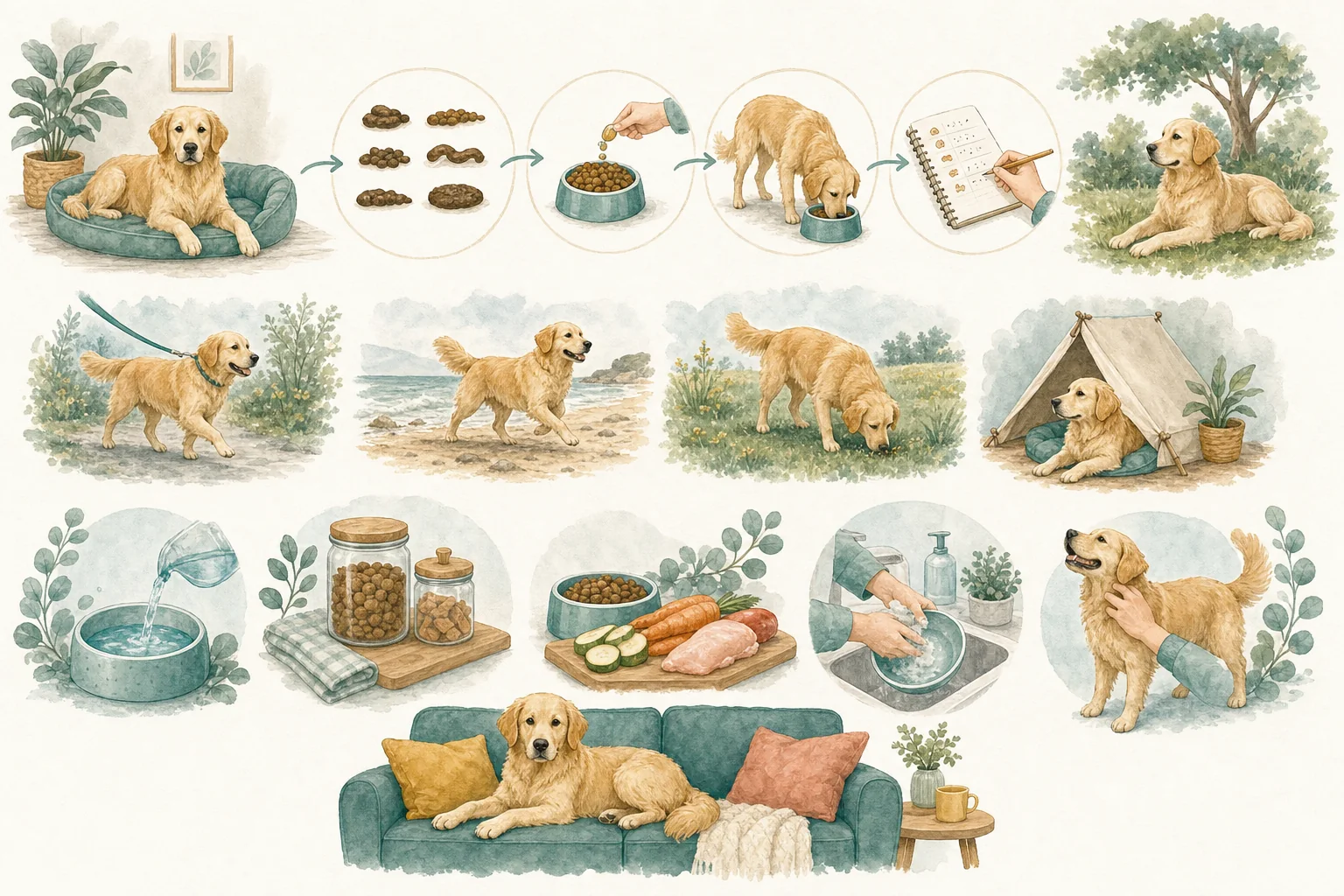
- Record meals, treats, appetite, water, stool, elimination timing, and normal energy.
- Keep portions, meal timing, and approved ingredients consistent enough to interpret response.
- Record frequency, consistency, urgency, straining, leftovers, and food interest.
- Note scavenging, travel, stress, new treats, medications, wildlife, and household illness.
Safety first
Stop the routine when the dog needs professional care
Owners should contact a veterinarian promptly if a dog develops persistent diarrhea, vomiting, blood in stool, or significant changes in appetite or weight, even when hygiene and parasite-prevention routines are in place.[1][3][5][10] Urgent veterinary or emergency care is recommended if gastrointestinal signs are accompanied by lethargy, collapse, severe abdominal pain, or dehydration signs such as dry gums and weakness, regardless of home hygiene measures.
Veterinary note
Educational information only; contact a veterinarian for diagnosis, treatment, or urgent concerns. This guide supports observation and preparation; it does not diagnose a condition or replace an individualized care plan.
What is reasonably supported
Use repeated observations to improve the veterinary conversation
AAHA’s parasite-control section recommends veterinarian-guided, life-stage and lifestyle-based parasite prevention, noting that many intestinal parasites are transmitted via… AAHA stresses that specific products and testing… WSAVA Principles of Wellness highlight routine parasite prevention and fecal testing as central components of wellness care, emphasizing… WSAVA notes that preventive protocols should be… FDA guidance on safe handling of pet food and treats advises washing hands after handling pet food, cleaning… FDA recommendations are general hygiene measures; they… CDC’s Healthy Pets information for dog owners advises keeping living areas clean, promptly disposing of pet waste, practicing… CDC emphasizes that vulnerable people (such as…
What remains uncertain
Home observations cannot establish the cause
This guide links basic hygiene and parasite-prevention principles to gut health awareness but does not claim to prevent all gastrointestinal disease or parasites.[1][2][4] Recommendations are general and may not reflect specific regional risks or individual medical needs; owners should obtain veterinary advice on tailored parasite and hygiene plans.[1][3][10] Authorities emphasize safe food handling, environmental hygiene, and year-round parasite prevention but do not offer detailed, home-level schedules that integrate all of these factors specifically for gut-health tracking.[1][4][5] Research directly quantifying how specific home hygiene routines (e.g., dish-washing frequency, yard cleaning intervals) influence canine gut health outcomes in everyday households is limited.[8][10]
Establish the usual digestive pattern
Begin with the dog's own normal pattern so a meaningful change is easier to recognize. For simple home hygiene and parasite prevention for dog gut health, the accepted research supports a bounded point: AAHA’s parasite-control section recommends veterinarian-guided, life-stage and lifestyle-based parasite prevention, noting that many intestinal parasites are transmitted via contaminated environments or feces and can affect digestive… AAHA stresses that specific products and testing intervals must be selected by veterinarians;… This evidence guides observation and a veterinary conversation; it does not establish a diagnosis, treatment response, or guaranteed result.
In practice, record meals, treats, appetite, water, stool, elimination timing, and normal energy. Record the date, frequency, context, and related changes. Normal varies among dogs and cannot be inferred from one bowel movement. Compare the dog with their own baseline and contact the veterinary team when the pattern is persistent, progressive, painful, or joined by the red-flag signs above.
Change one controllable factor at a time
Separate observation from interpretation: describe what happened before deciding what it might mean. For simple home hygiene and parasite prevention for dog gut health, the accepted research supports a bounded point: WSAVA Principles of Wellness highlight routine parasite prevention and fecal testing as central components of wellness care, emphasizing that preventing and detecting parasites early is important… WSAVA notes that preventive protocols should be individualized; owners should not change or… This evidence guides observation and a veterinary conversation; it does not establish a diagnosis, treatment response, or guaranteed result.
In practice, keep portions, meal timing, and approved ingredients consistent enough to interpret response. Record the date, frequency, context, and related changes. Do not make several diet or supplement changes together. Compare the dog with their own baseline and contact the veterinary team when the pattern is persistent, progressive, painful, or joined by the red-flag signs above.
Describe stool and appetite precisely
Consistency improves the value of a home record, even when the measurement is simple. For simple home hygiene and parasite prevention for dog gut health, the accepted research supports a bounded point: FDA guidance on safe handling of pet food and treats advises washing hands after handling pet food, cleaning bowls regularly, refrigerating or discarding food as directed,… FDA recommendations are general hygiene measures; they do not replace veterinary evaluation when… This evidence guides observation and a veterinary conversation; it does not establish a diagnosis, treatment response, or guaranteed result.
In practice, record frequency, consistency, urgency, straining, leftovers, and food interest. Record the date, frequency, context, and related changes. Owner descriptions support care but do not diagnose a cause. Compare the dog with their own baseline and contact the veterinary team when the pattern is persistent, progressive, painful, or joined by the red-flag signs above.
Include exposure and routine context
The setting around a sign can matter as much as the sign itself. For simple home hygiene and parasite prevention for dog gut health, the accepted research supports a bounded point: CDC’s Healthy Pets information for dog owners advises keeping living areas clean, promptly disposing of pet waste, practicing good hand hygiene, and following veterinary parasite-prevention guidance… CDC emphasizes that vulnerable people (such as young children or immunocompromised individuals) may… This evidence guides observation and a veterinary conversation; it does not establish a diagnosis, treatment response, or guaranteed result.
In practice, note scavenging, travel, stress, new treats, medications, wildlife, and household illness. Record the date, frequency, context, and related changes. Apparently minor exposures can matter. Compare the dog with their own baseline and contact the veterinary team when the pattern is persistent, progressive, painful, or joined by the red-flag signs above.
Protect hydration and food safety
A checklist supports attention; it does not prove that a risk is gone or explain a medical concern. For simple home hygiene and parasite prevention for dog gut health, the accepted research supports a bounded point: AAHA’s parasite-control section recommends veterinarian-guided, life-stage and lifestyle-based parasite prevention, noting that many intestinal parasites are transmitted via contaminated environments or feces and can affect digestive… AAHA stresses that specific products and testing intervals must be selected by veterinarians;… This evidence guides observation and a veterinary conversation; it does not establish a diagnosis, treatment response, or guaranteed result.
In practice, keep fresh water available and store, prepare, and transition food safely. Record the date, frequency, context, and related changes. Never restrict water or use fasting without veterinary direction. Compare the dog with their own baseline and contact the veterinary team when the pattern is persistent, progressive, painful, or joined by the red-flag signs above.
Watch the whole dog
Shared language and one current record help multiple caregivers act consistently. For simple home hygiene and parasite prevention for dog gut health, the accepted research supports a bounded point: WSAVA Principles of Wellness highlight routine parasite prevention and fecal testing as central components of wellness care, emphasizing that preventing and detecting parasites early is important… WSAVA notes that preventive protocols should be individualized; owners should not change or… This evidence guides observation and a veterinary conversation; it does not establish a diagnosis, treatment response, or guaranteed result.
In practice, connect digestive signs with weight, comfort, behavior, vomiting, and recovery. Record the date, frequency, context, and related changes. Persistent or combined signs deserve veterinary assessment. Compare the dog with their own baseline and contact the veterinary team when the pattern is persistent, progressive, painful, or joined by the red-flag signs above.
Owner tool
Simple Home Hygiene and Parasite Prevention for Dog Gut Health
Use this preventivecareguide as a repeatable record for simple home hygiene and parasite prevention for dog gut health. Mark what is normal, what changed, and what needs veterinary guidance.
| Checkpoint | Owner action | Safety boundary |
|---|---|---|
| Establish the usual digestive pattern | record meals, treats, appetite, water, stool, elimination timing, and normal energy | Normal varies among dogs and cannot be inferred from one bowel movement |
| Change one controllable factor at a time | keep portions, meal timing, and approved ingredients consistent enough to interpret response | Do not make several diet or supplement changes together |
| Describe stool and appetite precisely | record frequency, consistency, urgency, straining, leftovers, and food interest | Owner descriptions support care but do not diagnose a cause |
| Include exposure and routine context | note scavenging, travel, stress, new treats, medications, wildlife, and household illness | Apparently minor exposures can matter |
| Protect hydration and food safety | keep fresh water available and store, prepare, and transition food safely | Never restrict water or use fasting without veterinary direction |
| Watch the whole dog | connect digestive signs with weight, comfort, behavior, vomiting, and recovery | Persistent or combined signs deserve veterinary assessment |
| Prepare a useful clinic record | bring dates, photos when appropriate, food labels, amounts, medications, supplements, and travel history | Blood, repeated vomiting, severe pain, weakness, or dehydration can be urgent |
A three-step next action
Observe
Complete the simple home hygiene and parasite prevention for dog gut health review without provoking a symptom or forcing the dog through difficulty.
Record
Keep dates, measurements, photographs, short natural-behavior videos, product labels, and caregiver notes together.
Escalate
Share the concise pattern with the veterinary team and seek urgent care for severe or rapidly worsening signs.
Prepare for the visit
Questions to take to your veterinarian
- Which parts of this simple home hygiene and parasite prevention for dog gut health plan matter most for this dog?
- What findings need a routine appointment, a same-day call, or emergency care?
- Could current diagnoses, medications, diet, supplements, pain, vision, hearing, or mobility change the plan?
- What should I measure at home, and how often should I reassess it?
- Which change should make me stop the routine and contact you sooner?
Bring the dated observation log, relevant photos or short videos, and a complete list of foods, treats, medications, and supplements. Do not change the routine solely to produce evidence for the visit.
Frequently asked questions
Can this guide diagnose a health or behavior problem?
No. It organizes observations and questions; diagnosis requires veterinary assessment.
How often should I repeat the routine?
Use the interval recommended by the veterinary team and repeat sooner after a meaningful change.
Should I change several things at once?
Usually not unless the veterinary team directs it. Multiple changes make response and risk harder to interpret.
What should I bring to the appointment?
Bring the dated log, relevant photos or videos, and complete food, medication, supplement, and product information.
Sources
- Parasite Control – 2019 AAHA Canine Life Stage Guidelines, American Animal Hospital Association (AAHA). AAHA’s parasite-control section recommends veterinarian-guided, life-stage and lifestyle-based parasite prevention, noting that many intestinal parasites are transmitted via contaminated environments or feces and can affect digestive health.[1]
- WSAVA Principles of Wellness, World Small Animal Veterinary Association (WSAVA). WSAVA Principles of Wellness highlight routine parasite prevention and fecal testing as central components of wellness care, emphasizing that preventing and detecting parasites early is important for overall health, including…
- Dog Owners, U.S. Centers for Disease Control and Prevention. CDC’s Healthy Pets information for dog owners advises keeping living areas clean, promptly disposing of pet waste, practicing good hand hygiene, and following veterinary parasite-prevention guidance to reduce zoonotic and…
- Tips for Safe Handling of Pet Food and Treats for Your Family and Pet, U.S. Food and Drug Administration. FDA guidance on safe handling of pet food and treats advises washing hands after handling pet food, cleaning bowls regularly, refrigerating or discarding food as directed, and avoiding cross-contamination, to…
Medical disclaimer
Educational information only; contact a veterinarian for diagnosis, treatment, or urgent concerns. If your dog is showing severe, sudden, or rapidly worsening signs, seek urgent veterinary care.
