
A calm, evidence-aware framework for quarterly life-stage wellness review for dogs, with practical owner observations and clear professional-care boundaries.
Short answer
Use a repeatable plan and keep veterinary care in the lead
Frame a quarterly life-stage check-in that aligns nutrition, exercise, grooming, parasite control, dental, and supplement routines to the dog’s current age band and household lifestyle The practical goal is simple: owner can run a structured quarterly review that aligns feeding, activity, grooming, and preventive care to the dog’s life stage and household constraints Keep veterinary care in the lead, record patterns rather than isolated moments, and stop the routine when pain, distress, or urgent signs appear.
- Record the dog's normal appetite, movement, sleep, interaction, elimination, and comfort.
- Compare rising, turning, walking, eating, grooming, and settling under similar conditions.
- Record when the change began, how often it appears, and whether recovery is slower.
- Check traction, lighting, temperature, access, bedding, noise, and household disruption.
Safety first
Stop the routine when the dog needs professional care
If a quarterly review uncovers sudden weight loss or gain, persistent vomiting or diarrhea, coughing, breathing difficulty, or marked changes in behavior, owners should schedule a veterinary visit promptly rather than waiting for the next routine check. Discovery of broken teeth, bleeding gums, severe tartar, or difficulty eating during dental review should trigger a veterinary dental examination. Finding fleas, ticks, or worm segments despite regular parasite prevention warrants consultation with a veterinarian as soon as possible to reassess the control plan.
Veterinary note
Educational information only; contact a veterinarian for diagnosis, treatment, or urgent concerns. This guide supports observation and preparation; it does not diagnose a condition or replace an individualized care plan.
What is reasonably supported
Use repeated observations to improve the veterinary conversation
Canine life-stage checklists from a veterinary association outline age-banded priorities for dogs, including nutrition, body condition assessment, exercise, dental care, parasite control,… These checklists provide broad guidance and are intended for use… Life-stage guidelines emphasize year-round parasite control tailored to the dog’s environment and risk, recommending that veterinarians review heartworm, intestinal parasite, and ectoparasite… Parasite prevention specifics, including product choice and dosing, must be… Nutrition and weight-management guidelines advise routine assessment of diet type, amount fed, body condition, and activity level, with adjustments over time to… Guidance is aimed at veterinary teams; owners should use it… Client-facing life-stage guidance explains that puppies typically need more frequent visits, adults usually benefit from at least annual wellness exams, and seniors… Visit-frequency recommendations are general; dogs with chronic disease or specific…
What remains uncertain
Home observations cannot establish the cause
The quarterly wellness framework is a planning tool and does not replace individualized veterinary examinations or diagnostic testing. Life-stage bands and recommended actions are generalized from guideline documents; some breeds or health conditions may require different intervals or priorities. Checklist items address prevention and routine care, not treatment of existing disease. Selected sources do not present a unified quarterly schedule, so the suggested timing of reviews is inferred from broader life-stage and preventive-care guidance. Household lifestyle factors such as multi-pet dynamics or owner work schedules are not detailed in the sources; their inclusion is extrapolated from general wellness principles.
Define the senior dog's baseline
Begin with the dog's own normal pattern so a meaningful change is easier to recognize. For quarterly life-stage wellness review for dogs, the accepted research supports a bounded point: Canine life-stage checklists from a veterinary association outline age-banded priorities for dogs, including nutrition, body condition assessment, exercise, dental care, parasite control, and behavior monitoring, to help structure wellness planning… These checklists provide broad guidance and are intended for use alongside veterinary visits, not as stand-alone… This evidence guides observation and a veterinary conversation; it does not establish a diagnosis, treatment response, or guaranteed result.
In practice, record the dog's normal appetite, movement, sleep, interaction, elimination, and comfort. Record the date, frequency, context, and related changes. Aging alone does not explain a new decline. Compare the dog with their own baseline and contact the veterinary team when the pattern is persistent, progressive, painful, or joined by the red-flag signs above.
Observe function in familiar tasks
Separate observation from interpretation: describe what happened before deciding what it might mean. For quarterly life-stage wellness review for dogs, the accepted research supports a bounded point: Life-stage guidelines emphasize year-round parasite control tailored to the dog’s environment and risk, recommending that veterinarians review heartworm, intestinal parasite, and ectoparasite prevention regularly as dogs age or their lifestyle… Parasite prevention specifics, including product choice and dosing, must be determined by a veterinarian; owners should… This evidence guides observation and a veterinary conversation; it does not establish a diagnosis, treatment response, or guaranteed result.
In practice, compare rising, turning, walking, eating, grooming, and settling under similar conditions. Record the date, frequency, context, and related changes. Do not repeatedly force a difficult task for evidence. Compare the dog with their own baseline and contact the veterinary team when the pattern is persistent, progressive, painful, or joined by the red-flag signs above.
Track direction and recovery
Consistency improves the value of a home record, even when the measurement is simple. For quarterly life-stage wellness review for dogs, the accepted research supports a bounded point: Nutrition and weight-management guidelines advise routine assessment of diet type, amount fed, body condition, and activity level, with adjustments over time to maintain ideal body condition and support healthy aging. Guidance is aimed at veterinary teams; owners should use it to frame questions and decisions with… This evidence guides observation and a veterinary conversation; it does not establish a diagnosis, treatment response, or guaranteed result.
In practice, record when the change began, how often it appears, and whether recovery is slower. Record the date, frequency, context, and related changes. One good day does not erase a progressive trend. Compare the dog with their own baseline and contact the veterinary team when the pattern is persistent, progressive, painful, or joined by the red-flag signs above.
Review the daily environment
The setting around a sign can matter as much as the sign itself. For quarterly life-stage wellness review for dogs, the accepted research supports a bounded point: Client-facing life-stage guidance explains that puppies typically need more frequent visits, adults usually benefit from at least annual wellness exams, and seniors may require more frequent check-ins, helping owners align… Visit-frequency recommendations are general; dogs with chronic disease or specific risks may need a different schedule… This evidence guides observation and a veterinary conversation; it does not establish a diagnosis, treatment response, or guaranteed result.
In practice, check traction, lighting, temperature, access, bedding, noise, and household disruption. Record the date, frequency, context, and related changes. Environmental support does not rule out pain or disease. Compare the dog with their own baseline and contact the veterinary team when the pattern is persistent, progressive, painful, or joined by the red-flag signs above.
Reconcile food, medication, and supplements
A checklist supports attention; it does not prove that a risk is gone or explain a medical concern. For quarterly life-stage wellness review for dogs, the accepted research supports a bounded point: Canine life-stage checklists from a veterinary association outline age-banded priorities for dogs, including nutrition, body condition assessment, exercise, dental care, parasite control, and behavior monitoring, to help structure wellness planning… These checklists provide broad guidance and are intended for use alongside veterinary visits, not as stand-alone… This evidence guides observation and a veterinary conversation; it does not establish a diagnosis, treatment response, or guaranteed result.
In practice, keep one current list with amounts, timing, missed doses, and recent changes. Record the date, frequency, context, and related changes. Never correct uncertainty by guessing or stacking products. Compare the dog with their own baseline and contact the veterinary team when the pattern is persistent, progressive, painful, or joined by the red-flag signs above.
Protect choice and comfort
Shared language and one current record help multiple caregivers act consistently. For quarterly life-stage wellness review for dogs, the accepted research supports a bounded point: Life-stage guidelines emphasize year-round parasite control tailored to the dog’s environment and risk, recommending that veterinarians review heartworm, intestinal parasite, and ectoparasite prevention regularly as dogs age or their lifestyle… Parasite prevention specifics, including product choice and dosing, must be determined by a veterinarian; owners should… This evidence guides observation and a veterinary conversation; it does not establish a diagnosis, treatment response, or guaranteed result.
In practice, adjust the routine to current ability while preserving gentle activity and social contact. Record the date, frequency, context, and related changes. Withdrawal or irritability may signal discomfort. Compare the dog with their own baseline and contact the veterinary team when the pattern is persistent, progressive, painful, or joined by the red-flag signs above.
Owner tool
Quarterly Life-Stage Wellness Review for Dogs
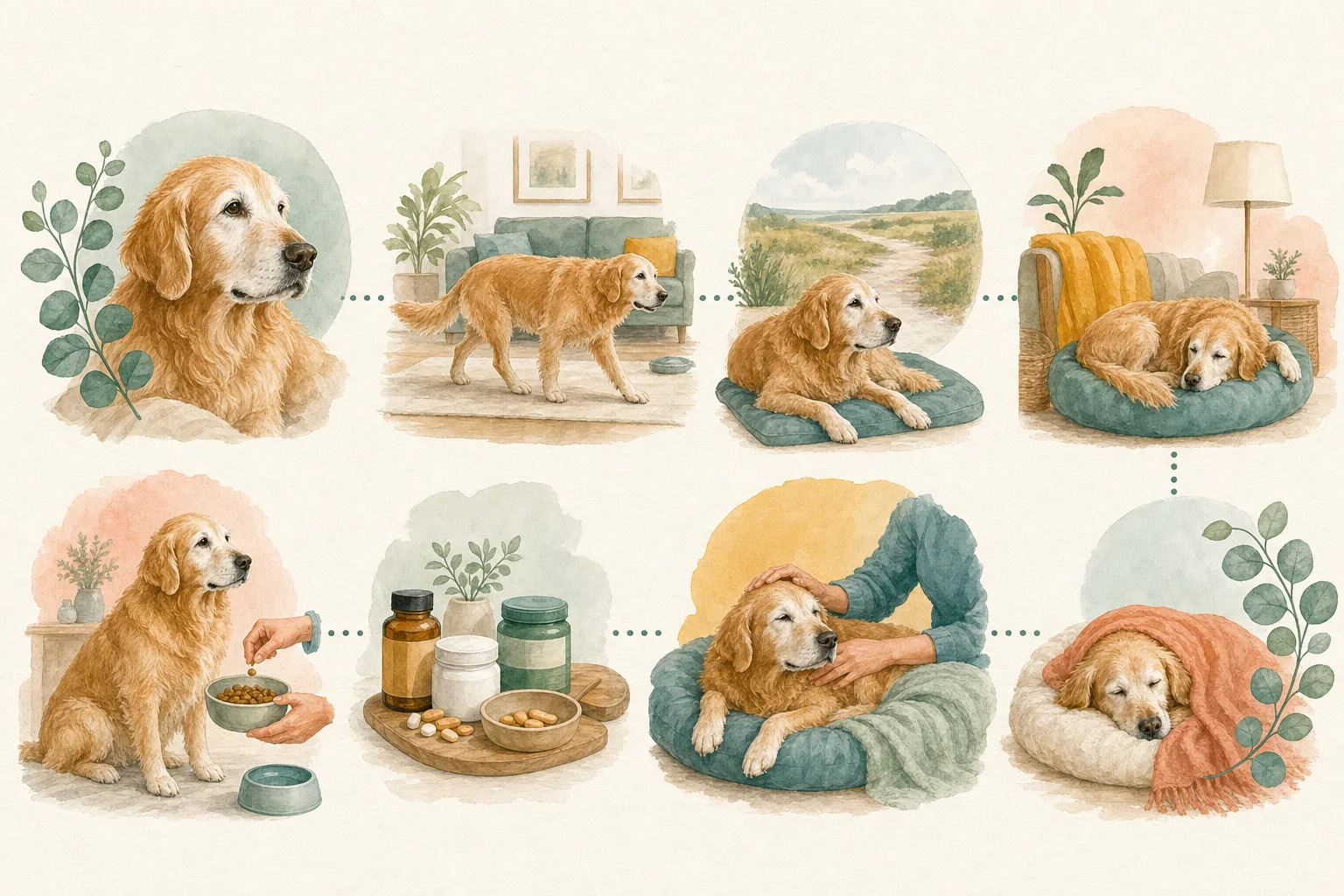
Use this planningrecord as a repeatable record for quarterly life-stage wellness review for dogs. Mark what is normal, what changed, and what needs veterinary guidance.
| Checkpoint | Owner action | Safety boundary |
|---|---|---|
| Define the senior dog's baseline | record the dog's normal appetite, movement, sleep, interaction, elimination, and comfort | Aging alone does not explain a new decline |
| Observe function in familiar tasks | compare rising, turning, walking, eating, grooming, and settling under similar conditions | Do not repeatedly force a difficult task for evidence |
| Track direction and recovery | record when the change began, how often it appears, and whether recovery is slower | One good day does not erase a progressive trend |
| Review the daily environment | check traction, lighting, temperature, access, bedding, noise, and household disruption | Environmental support does not rule out pain or disease |
| Reconcile food, medication, and supplements | keep one current list with amounts, timing, missed doses, and recent changes | Never correct uncertainty by guessing or stacking products |
| Protect choice and comfort | adjust the routine to current ability while preserving gentle activity and social contact | Withdrawal or irritability may signal discomfort |
| Bring a concise pattern to the clinic | share dated notes, measurements, photographs, videos, and the complete product list | Rapid decline or emergency signs need immediate care |
A three-step next action
Observe
Complete the quarterly life-stage wellness review for dogs review without provoking a symptom or forcing the dog through difficulty.
Record
Keep dates, measurements, photographs, short natural-behavior videos, product labels, and caregiver notes together.
Escalate
Share the concise pattern with the veterinary team and seek urgent care for severe or rapidly worsening signs.
Prepare for the visit
Questions to take to your veterinarian
- Which parts of this quarterly life-stage wellness review for dogs plan matter most for this dog?
- What findings need a routine appointment, a same-day call, or emergency care?
- Could current diagnoses, medications, diet, supplements, pain, vision, hearing, or mobility change the plan?
- What should I measure at home, and how often should I reassess it?
- Which change should make me stop the routine and contact you sooner?
Bring the dated observation log, relevant photos or short videos, and a complete list of foods, treats, medications, and supplements. Do not change the routine solely to produce evidence for the visit.
Frequently asked questions
Can this guide diagnose a health or behavior problem?
No. It organizes observations and questions; diagnosis requires veterinary assessment.
How often should I repeat the routine?
Use the interval recommended by the veterinary team and repeat sooner after a meaningful change.
Should I change several things at once?
Usually not unless the veterinary team directs it. Multiple changes make response and risk harder to interpret.
What should I bring to the appointment?
Bring the dated log, relevant photos or videos, and complete food, medication, supplement, and product information.
Sources
- Parasite Control – 2019 AAHA Canine Life Stage Guidelines, American Animal Hospital Association (AAHA). Life‑stage guidelines emphasize year‑round parasite control tailored to the dog’s environment and risk, recommending that veterinarians review heartworm, intestinal parasite, and ectoparasite prevention regularly as dogs age or their lifestyle…
- AAHA Nutrition and Weight Management Guidelines, American Animal Hospital Association. Nutrition and weight‑management guidelines advise routine assessment of diet type, amount fed, body condition, and activity level, with adjustments over time to maintain ideal body condition and support healthy aging.
- Canine Life Stage Health Checklist, American Animal Hospital Association. Canine life‑stage checklists from a veterinary association outline age‑banded priorities for dogs, including nutrition, body condition assessment, exercise, dental care, parasite control, and behavior monitoring, to help structure wellness planning…
- How Often Should My Dog Go to the Vet? A Dog Life Stage Guide, American Animal Hospital Association. Client‑facing life‑stage guidance explains that puppies typically need more frequent visits, adults usually benefit from at least annual wellness exams, and seniors may require more frequent check‑ins, helping owners align…
Medical disclaimer
Educational information only; contact a veterinarian for diagnosis, treatment, or urgent concerns. If your dog is showing severe, sudden, or rapidly worsening signs, seek urgent veterinary care.
