

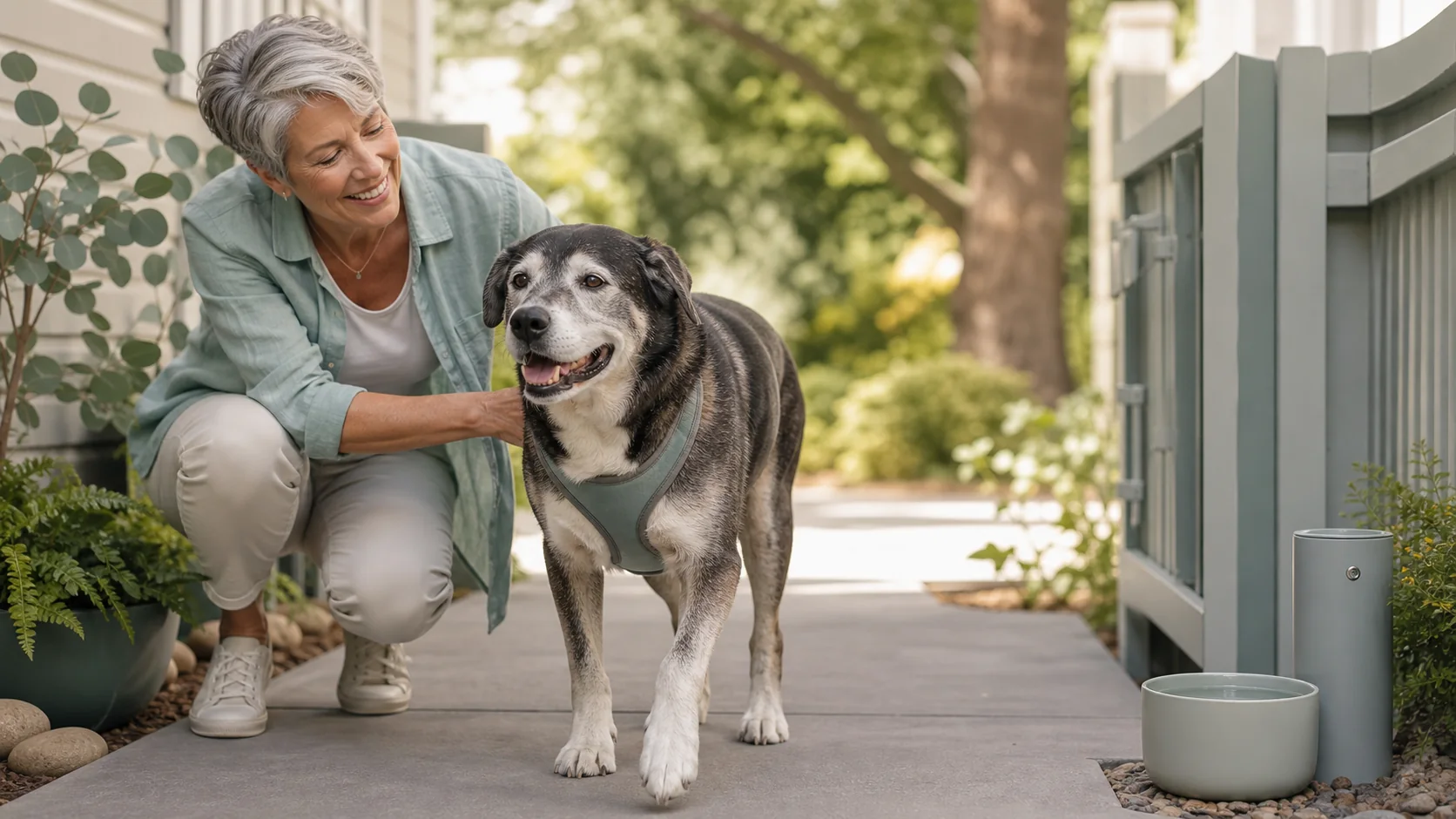
A calm, evidence-aware owner framework for outdoor senior mobility audit, with clear professional-care boundaries and practical observations to bring to the veterinary team.
Short answer
Use a repeatable plan and keep veterinary care in the lead
Assess walking surfaces, weather, visibility, wildlife, water, yard access, and transport so outdoor time remains manageable for an older or mobility-limited dog.
- Check slope, cracks, gravel, mud, ice, roots, and turning space.
- Use shorter outings and observe return to baseline.
- Consider shade, surface temperature, wind, and the dog's ability to relocate.
- Use daylight or adequate lighting and visible identification.
Safety first
Stop the checklist when the dog needs professional care
If a senior or mobility-limited dog shows signs of heat stress during or after outdoor time—such as excessive panting, drooling, bright red or pale gums, vomiting, collapse, or confusion—stop activity immediately, move the dog to a cool area, offer water if it
Veterinary note
Educational information only; contact a veterinarian for diagnosis, treatment, or urgent concerns. This guide supports observation and preparation; it does not diagnose a condition or replace an individualized care plan.
What is reasonably supported
Use repeated observations to improve the veterinary conversation
Veterinary heat-safety guidance recommends scheduling dog walks in cooler hours (early morning or evening), avoiding strenuous exercise during hot, humid periods, providing frequent water breaks, and keeping pets indoors during… Applies broadly to dogs; older or mobility-limited dogs generally have lower heat tolerance and may… The AVMA advises limiting walks to safe areas and avoiding very hot surfaces, broken glass, uneven ground, sand, holes, ice over water, and areas with high wildlife or free-roaming dog… These recommendations are especially relevant for senior and mobility-limited dogs, who may be less able… Cold-weather veterinary guidance recommends avoiding frozen ponds and lakes when walking dogs, providing shelter from wind, and ensuring access to non-frozen water, as ice and cold exposure can pose significant… Senior dogs, particularly those with arthritis or balance issues, may be at higher risk of… Senior-care guidance from a veterinary hospital network recommends housing senior dogs indoors and using particular caution with outdoor activities during extreme weather because aging dogs may not tolerate environmental stressors… Owners of senior or mobility-limited dogs should proactively adjust walk length, timing, and route in…
What remains uncertain
Home observations cannot establish the cause
Does not replace individualized mobility assessment or exercise prescription by a veterinarian or rehabilitation specialist. Focuses on general outdoor safety (heat, cold, footing, surroundings) rather than diagnosing pain, arthritis, or neurologic disease. Assumes the dog has basic leash training and is medically stable enough for gentle walks as cleared by a veterinarian.
Choose a stable route
A useful review begins with the dog's own normal pattern, because comparison with a generic ideal can hide meaningful individual change. Research selected for this guide supports a bounded point: Veterinary heat-safety guidance recommends scheduling dog walks in cooler hours (early morning or evening), avoiding strenuous exercise during hot, humid periods, providing frequent water breaks, and keeping pets indoors during extreme temperatures to reduce heat… Applies broadly to dogs; older or mobility-limited dogs generally have lower heat tolerance and may benefit even more from shorter,… This informs careful observation and veterinary discussion, not diagnosis or a guaranteed result.
In practice, check slope, cracks, gravel, mud, ice, roots, and turning space. Record the date, frequency, context, and related changes that matter to this task. Familiar routes can change with weather or construction. Contact the veterinary team when the pattern is persistent, progressive, painful, or joined by the red-flag signs above.
Match distance to recovery
The safest approach separates observation from interpretation: owners document what happened, while the veterinary team evaluates possible causes. Research selected for this guide supports a bounded point: The AVMA advises limiting walks to safe areas and avoiding very hot surfaces, broken glass, uneven ground, sand, holes, ice over water, and areas with high wildlife or free-roaming dog activity to prevent paw injury,… These recommendations are especially relevant for senior and mobility-limited dogs, who may be less able to compensate for slippery, irregular,… This informs careful observation and veterinary discussion, not diagnosis or a guaranteed result.
In practice, use shorter outings and observe return to baseline. Record the date, frequency, context, and related changes that matter to this task. Do not use enthusiasm at the start as proof of endurance. Contact the veterinary team when the pattern is persistent, progressive, painful, or joined by the red-flag signs above.
Plan heat and cold exposure
Consistency makes the record more useful. Use the same route, measure, timing, or description when practical and note unusual circumstances. Research selected for this guide supports a bounded point: Cold-weather veterinary guidance recommends avoiding frozen ponds and lakes when walking dogs, providing shelter from wind, and ensuring access to non-frozen water, as ice and cold exposure can pose significant safety risks. Senior dogs, particularly those with arthritis or balance issues, may be at higher risk of slips and hypothermia and often… This informs careful observation and veterinary discussion, not diagnosis or a guaranteed result.
In practice, consider shade, surface temperature, wind, and the dog's ability to relocate. Record the date, frequency, context, and related changes that matter to this task. Mobility limits can increase environmental risk. Contact the veterinary team when the pattern is persistent, progressive, painful, or joined by the red-flag signs above.
Improve visibility
Small environmental details can change what the owner sees, so include weather, visitors, travel, food changes, medication timing, and household disruption. Research selected for this guide supports a bounded point: Senior-care guidance from a veterinary hospital network recommends housing senior dogs indoors and using particular caution with outdoor activities during extreme weather because aging dogs may not tolerate environmental stressors as well as younger animals. Owners of senior or mobility-limited dogs should proactively adjust walk length, timing, and route in response to heat, cold, and… This informs careful observation and veterinary discussion, not diagnosis or a guaranteed result.
In practice, use daylight or adequate lighting and visible identification. Record the date, frequency, context, and related changes that matter to this task. Vision and hearing change can affect navigation. Contact the veterinary team when the pattern is persistent, progressive, painful, or joined by the red-flag signs above.
Manage wildlife and plants
A checklist is a prompt for attention, not proof that risk has been removed or that a medical concern has been explained. Research selected for this guide supports a bounded point: Veterinary heat-safety guidance recommends scheduling dog walks in cooler hours (early morning or evening), avoiding strenuous exercise during hot, humid periods, providing frequent water breaks, and keeping pets indoors during extreme temperatures to reduce heat… Applies broadly to dogs; older or mobility-limited dogs generally have lower heat tolerance and may benefit even more from shorter,… This informs careful observation and veterinary discussion, not diagnosis or a guaranteed result.
In practice, supervise access and identify regional risks. Record the date, frequency, context, and related changes that matter to this task. National hazard lists are not exhaustive. Contact the veterinary team when the pattern is persistent, progressive, painful, or joined by the red-flag signs above.
Prepare yard toileting
When several caregivers are involved, shared terms and one current record reduce missed steps, duplicate care, and conflicting impressions. Research selected for this guide supports a bounded point: The AVMA advises limiting walks to safe areas and avoiding very hot surfaces, broken glass, uneven ground, sand, holes, ice over water, and areas with high wildlife or free-roaming dog activity to prevent paw injury,… These recommendations are especially relevant for senior and mobility-limited dogs, who may be less able to compensate for slippery, irregular,… This informs careful observation and veterinary discussion, not diagnosis or a guaranteed result.
In practice, create a short clear route with traction and space to turn. Record the date, frequency, context, and related changes that matter to this task. Stairs and wet thresholds can block access. Contact the veterinary team when the pattern is persistent, progressive, painful, or joined by the red-flag signs above.
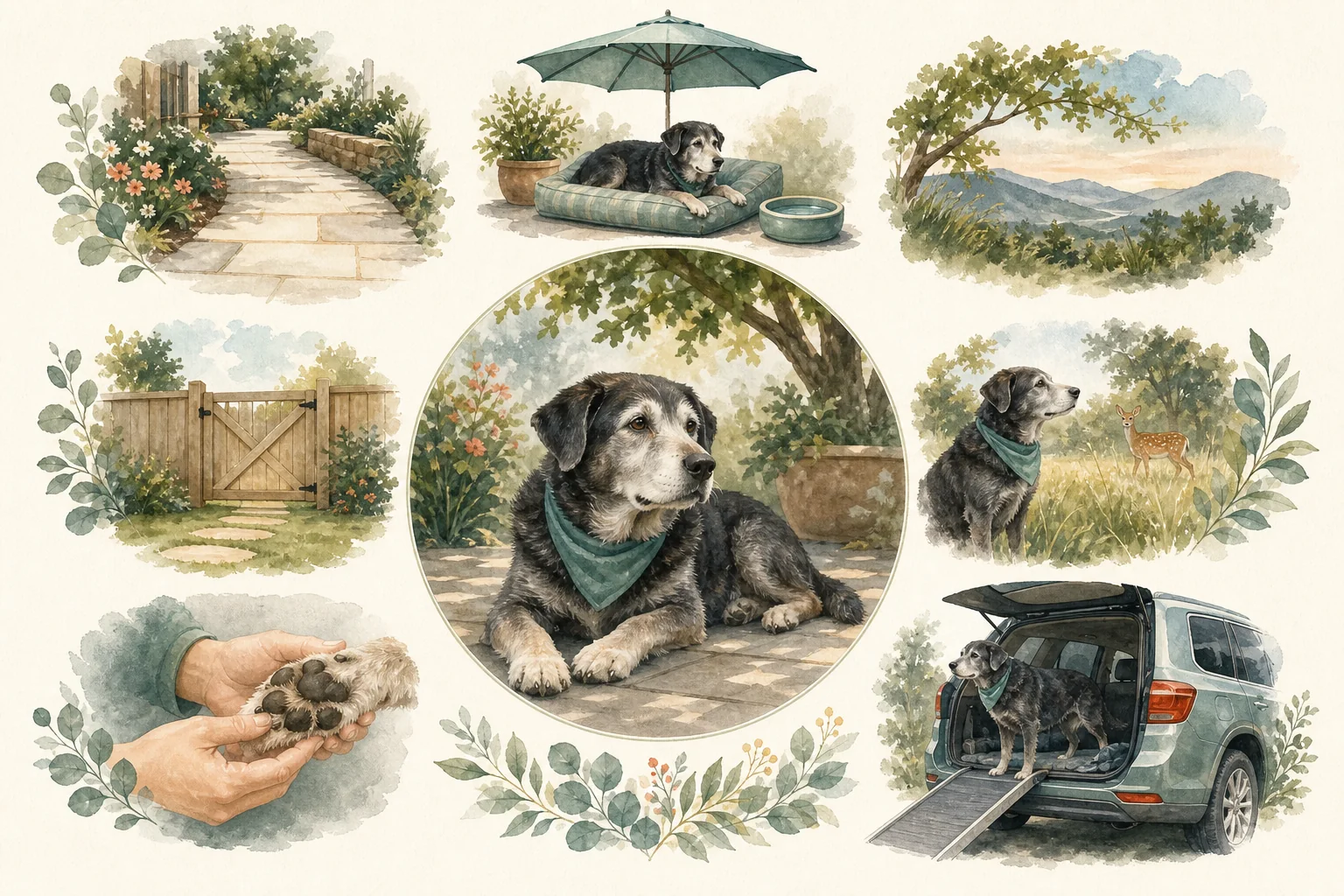
Owner tool
Outdoor Safety for Senior and Mobility-Limited Dogs
Use this outdoor senior mobility audit as a repeatable owner record. Mark what is normal, what changed, and what needs veterinary guidance.
| Checkpoint | Owner action | Boundary |
|---|---|---|
| Choose a stable route | check slope, cracks, gravel, mud, ice, roots, and turning space | Familiar routes can change with weather or construction |
| Match distance to recovery | use shorter outings and observe return to baseline | Do not use enthusiasm at the start as proof of endurance |
| Plan heat and cold exposure | consider shade, surface temperature, wind, and the dog's ability to relocate | Mobility limits can increase environmental risk |
| Improve visibility | use daylight or adequate lighting and visible identification | Vision and hearing change can affect navigation |
| Manage wildlife and plants | supervise access and identify regional risks | National hazard lists are not exhaustive |
| Prepare yard toileting | create a short clear route with traction and space to turn | Stairs and wet thresholds can block access |
| Plan transport and assistance | use fitted equipment and a stable vehicle method when advised | Never lift or pull in a way that risks injury |
A three-step next action
Observe
Complete the outdoor senior mobility audit without provoking a symptom or forcing the dog through difficulty.
Record
Keep dates, measurements, photographs, short natural-behavior videos, product labels, and caregiver notes together.
Escalate
Share the concise pattern with the veterinary team and seek urgent care for severe or rapidly worsening signs.
Prepare for the visit
Questions to take to your veterinarian
- Which parts of this outdoor senior mobility audit are most important for this dog?
- What findings need a routine appointment, a same-day call, or emergency care?
- Could current diagnoses, medications, diet, supplements, pain, vision, hearing, or mobility change the plan?
- What should I measure at home, and how often should I reassess it?
- Which change should make me stop the routine and contact you sooner?
Bring the dated observation log, relevant photos or short videos, and a complete list of foods, treats, medications, and supplements. Do not change the routine solely to produce evidence for the visit.
Frequently asked questions
Can this checklist diagnose a health problem?
No. It organizes observations and questions; diagnosis requires veterinary assessment.
How often should I repeat it?
Use the interval recommended by the veterinary team and repeat sooner after a meaningful change.
Should I change several things at once?
Usually not unless the veterinary team directs it. Multiple changes make response and risk harder to interpret.
What should I bring to the appointment?
Bring the dated log, relevant photos or videos, and complete food, medication, supplement, and product information.
Sources
- Summer heat safety tips for dogs, Cornell University College of Veterinary Medicine. Veterinary heat‑safety guidance recommends scheduling dog walks in cooler hours (early morning or evening), avoiding strenuous exercise during hot, humid periods, providing frequent water breaks, and keeping pets indoors during…
- Walking with your dog, American Veterinary Medical Association. The AVMA advises limiting walks to safe areas and avoiding very hot surfaces, broken glass, uneven ground, sand, holes, ice over water, and areas with high wildlife or free‑roaming dog…
- Cold weather animal safety, American Veterinary Medical Association. Cold‑weather veterinary guidance recommends avoiding frozen ponds and lakes when walking dogs, providing shelter from wind, and ensuring access to non‑frozen water, as ice and cold exposure can pose significant…
- Senior Dog Care – Special Considerations, VCA Animal Hospitals. Senior‑care guidance from a veterinary hospital network recommends housing senior dogs indoors and using particular caution with outdoor activities during extreme weather because aging dogs may not tolerate environmental stressors…
Medical disclaimer
Educational information only; contact a veterinarian for diagnosis, treatment, or urgent concerns. If your dog is showing severe, sudden, or rapidly worsening signs, seek urgent veterinary care.
