

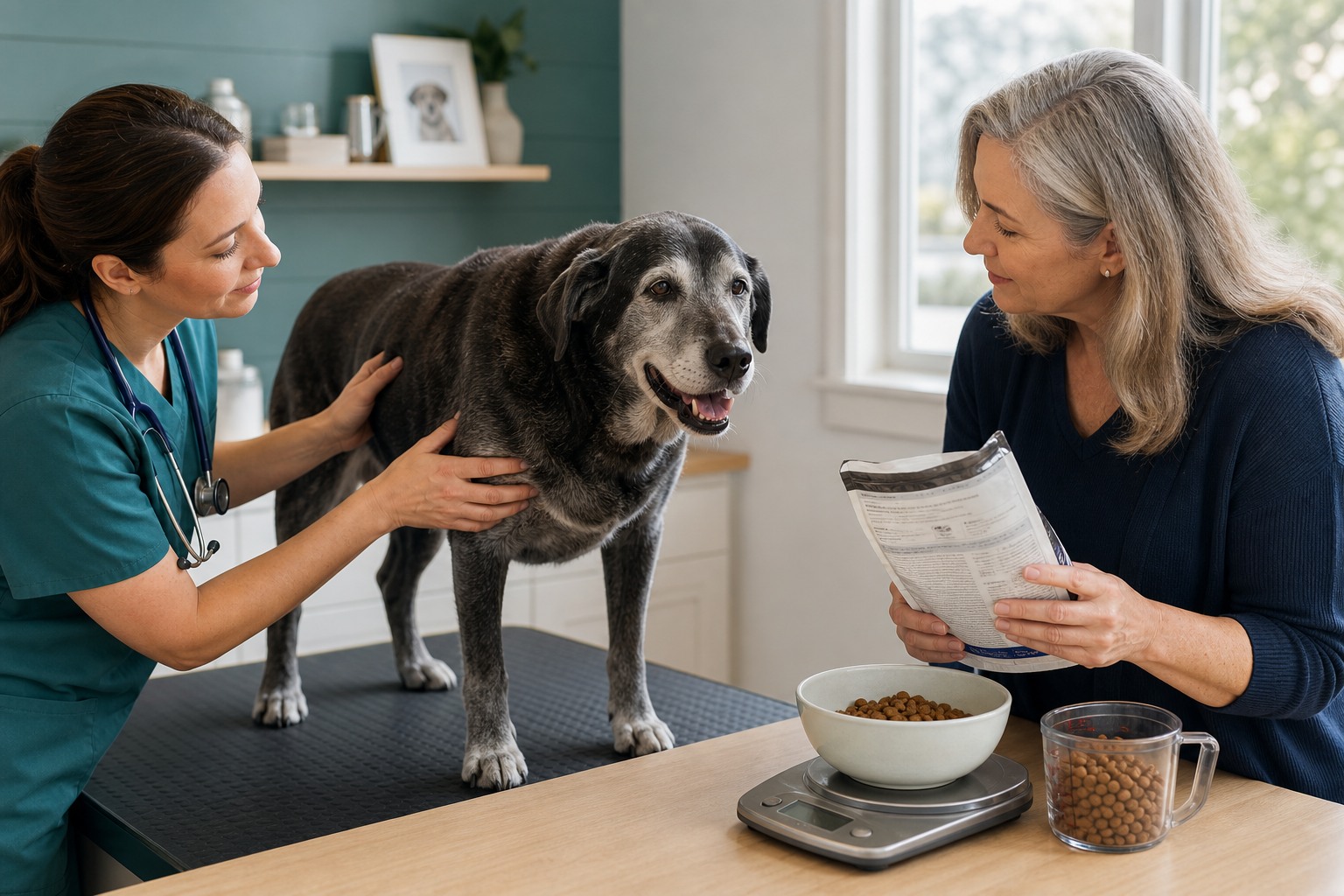
A dog's birthday does not automatically create one senior diet requirement. Energy needs can change with activity, body composition, temperature, disease, medication, and individual metabolism. Some older dogs gain fat; others lose weight or muscle. Appetite, chewing, swallowing, digestion, thirst, stool, and treatment goals may also change. The correct response is assessment, not simply buying a food labeled senior, adding protein, restricting protein, or stacking supplements. Review the complete diet and every treat, chew, topper, supplement, and food used for medication. Measure body weight, body condition, and muscle condition separately. Investigate unexplained weight or appetite change before treating it as normal aging. A therapeutic diet may help a diagnosed condition, but it should be selected and monitored for that dog. Keep nutrition changes gradual and traceable unless the veterinary team directs otherwise.
Short answer
There is no single senior diet for every dog
AAHA senior and nutrition guidelines recommend an individualized assessment of health, diet history, body weight, body condition, and muscle condition. WSAVA likewise treats nutrition assessment as part of every patient evaluation. Energy-requirement research shows wide variation among adult dogs. [1] [2] [3] [4]
- Start with the individual dog's baseline, complete history, and veterinary plan.
- Track change across function, comfort, appetite, sleep, and behavior instead of blaming age or breed.
- Use environment and routine as coordinated supports, not substitutes for diagnosis or care.
- Escalate sudden, severe, persistent, or rapidly worsening signs promptly.
Safety first
Weight loss, poor intake, vomiting, or swallowing difficulty needs assessment
Contact a veterinarian promptly for unexplained weight or muscle loss, appetite change, difficulty chewing or swallowing, repeated vomiting or diarrhea, increased thirst or urination, abdominal pain, severe lethargy, weakness, or rapid body change. Seek urgent care for collapse, repeated unproductive retching, inability to keep water down, or breathing difficulty.
- Do not use this article to diagnose anxiety, pain, cognitive change, or organ disease.
- Do not change prescribed medication, diet, or activity because of a general age or breed rule.
- Seek urgent veterinary care for collapse, breathing difficulty, severe pain, major trauma, or rapid decline.
Veterinary note
This article is educational and does not diagnose, treat, prescribe, or replace care from a licensed veterinarian. Your dog’s history, examination, diet, medications, and current signs determine what is appropriate.
Assess weight, body fat, and muscle separately
Use a consistent scale, body condition score, and muscle condition assessment. A senior dog can carry excess fat while losing muscle, so stable scale weight can hide a meaningful change. Ask the veterinary team to demonstrate the target and record it over time.
Muscle loss can reflect reduced activity, pain, inadequate intake, disease, or age-related change and deserves context. Do not respond by adding protein powder or sharply increasing food without evaluating the complete diet, kidney or liver concerns, and the reason for loss.
AAHA senior nutrition guidance emphasizes preserving an optimal body condition and accounting for muscle, health, and appetite. [1] A number on the scale is not a moral judgment and should not be used without frame size, tissue composition, function, and medical findings.
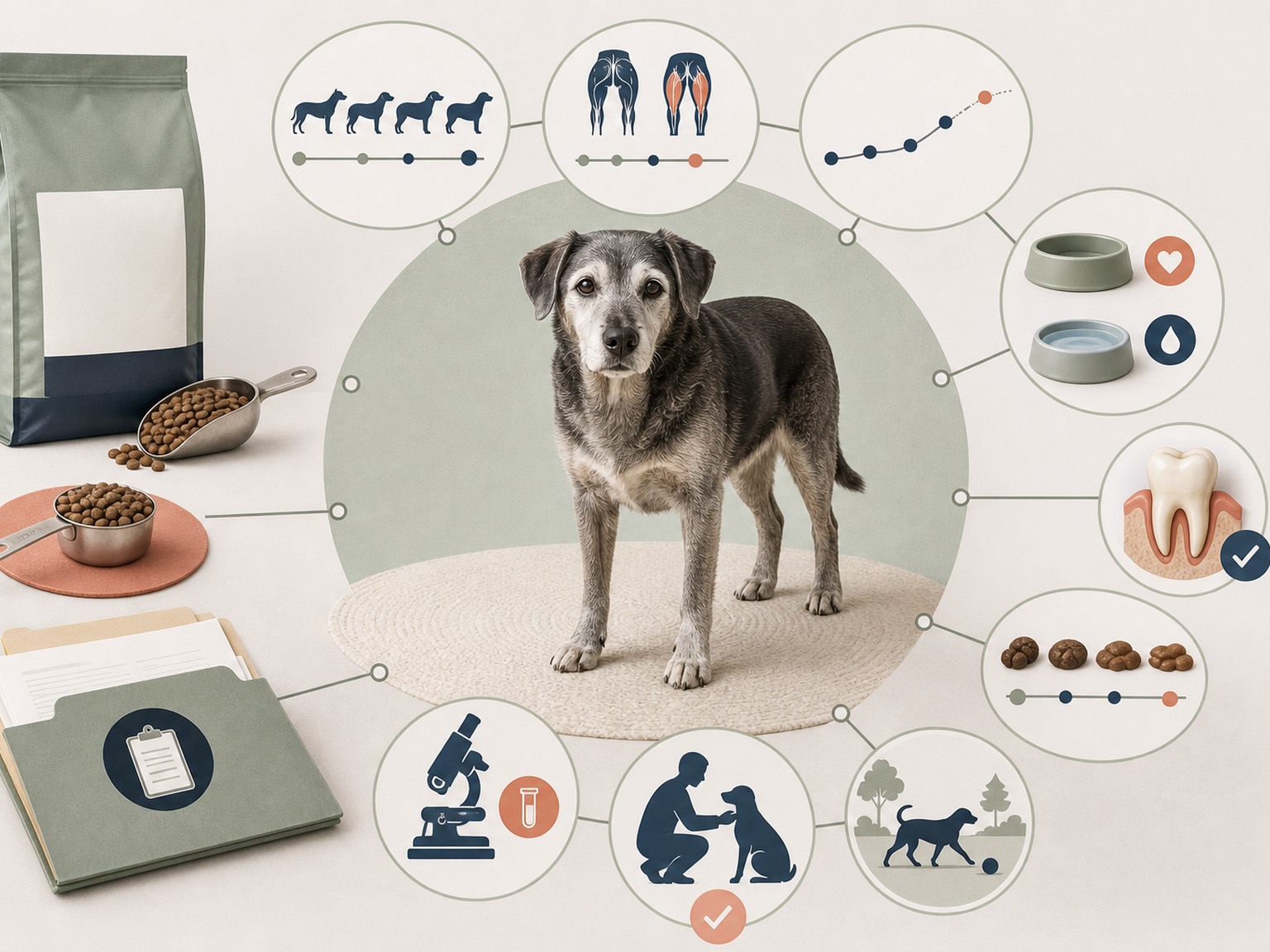
Map the entire diet and feeding experience
Record exact food, formulation, lot or label, measured amount, meals, treats, chews, table food, toppers, supplements, pill pockets, shared household feeding, and access to other pets' bowls. Package directions are a starting point, not an individual prescription.
Observe appetite, enthusiasm, chewing, dropping food, swallowing, posture at the bowl, nausea, vomiting, stool, water, urine, and the time needed to eat. Dental pain, sensory change, gastrointestinal disease, medication, cognitive change, and environmental stress can affect intake.
AAHA nutrition guidance recommends a complete diet and patient, diet, and feeding-environment assessment. [2] WSAVA provides body and muscle condition tools and diet-history resources. [3] Use structured information instead of assuming pickiness or switching repeatedly among rich foods.
Change nutrients for a defined reason
There is no universal evidence-based rule that every healthy senior dog needs less protein, more fat, less fat, more fiber, or a supplement. Requirements depend on the individual and whether a diagnosed condition changes the goal. Avoid translating a therapeutic diet claim to all older dogs.
Energy requirements vary substantially among dogs, and equations estimate rather than measure an individual's need. [4] Adjust intake from repeated weight, body condition, muscle, appetite, and health findings rather than a one-time calculator. Protect essential nutrient intake when calories are reduced.
If a therapeutic diet is recommended, ask what condition and outcome it targets, how the transition should occur, what treats and supplements remain compatible, when monitoring happens, and what adverse signs require a call. Do not mix therapeutic diets casually or dilute them with unplanned extras.
Transition, monitor, and avoid supplement stacking
Unless an urgent medical reason changes the plan, introduce a new diet gradually according to veterinary direction and keep the rest of the routine stable. Record food amounts, appetite, stool, vomiting, weight, muscle, activity, medication, and relevant laboratory or clinical results.
Review every supplement for ingredients, dose, duplication, calories, quality information, evidence, interactions, and the condition it is meant to support. A senior multivitamin can duplicate nutrients already supplied by a complete diet, and multiple products can make adverse effects hard to interpret.
Recheck at the planned interval and sooner for declining intake, weight or muscle change, vomiting, diarrhea, weakness, or worsening disease signs. Nutrition is one part of coordinated senior care; it cannot replace pain treatment, dentistry, diagnostics, medication, environment, or behavior support. [5]
Prepare for a focused veterinary conversation
Bring a concise timeline, short natural-movement or symptom videos when safe, the exact names and photographs of every food, treat, medication, and supplement label, and notes about appetite, water intake, stool, sleep, activity, comfort, and behavior. Include recent injuries, travel, boarding, diet changes, missed medication, and previous test results. A complete record helps the veterinary team separate a repeatable pattern from a single impression.
Decide in advance what you need from the visit: an urgency decision, a diagnosis plan, a nutrition review, a pain or mobility assessment, or a monitored trial. Ask what result would change the plan and what finding would rule an option out. This keeps research and product information in the right role. Evidence can shape questions and expectations, but it cannot determine what is safe for an individual dog without the history and examination.
Owner tool
Build a senior nutrition assessment
On a phone, swipe across the table to see every column.
| Checkpoint | What to record | Why it helps |
|---|---|---|
| Body | Weight, fat, muscle, function | Defines need |
| Intake | Food, amount, treats, supplements | Maps total |
| Response | Appetite, stool, water, energy | Tracks tolerance |
| Review | Goal, exam, tests, recheck | Guides change |
Better questions, calmer next steps
Questions to ask your veterinarian
- What nutritional problem are we trying to solve?
- Is the current diet complete at the amount fed?
- How are body and muscle condition changing?
- Could dental, gastrointestinal, or other disease affect intake?
- What outcome and recheck schedule apply to this diet?
FAQ
Does every senior dog need senior food?
No. Choose food from the individual assessment and health goals.
Should older dogs eat less protein?
There is no universal rule; disease and complete nutrition context matter.
Why is my senior gaining weight on the same food?
Activity and energy needs can change, but medical and intake factors should be reviewed.
Is weight loss normal with age?
Unexplained weight or muscle loss deserves veterinary assessment.
Should I add a multivitamin?
Not automatically; complete diets may already supply required nutrients.
Sources
- American Animal Hospital Association: Nutrition in Senior Pets. Senior nutrition, body condition, muscle, and individualized needs.
- American Animal Hospital Association: 2021 Nutrition and Weight Management Guidelines. Patient, diet, feeding, body, and muscle assessment.
- World Small Animal Veterinary Association: Global Nutrition Guidelines. Global nutrition assessment and tools.
- PLOS ONE: Energy Requirements of Adult Dogs: A Meta-analysis. Variation in maintenance energy requirements.
- American Animal Hospital Association: 2023 Senior Care Guidelines. Coordination of nutrition with whole-patient senior care.
