The intestine, immune system, skin barrier, diet, and microbial communities interact, so researchers are studying a canine gut-skin axis. That phrase can be useful as a research framework, but it is often stretched into a marketing promise that a powder, food, or probiotic will fix itching, odor, hair loss, ear disease, or poor coat. Current canine studies report associations among atopic dermatitis, skin and gut microbial patterns, barrier changes, diet, and inflammation. Association does not establish which change came first, whether it caused the disease, or whether altering a stool sample will improve a dog's clinical signs. Skin disease also has many common and treatable contributors, including parasites, secondary infection, allergy, grooming exposure, pain, endocrine disease, nutrition, and medication. Start with a complete history and dermatologic examination. Evaluate GI signs on their own merits, and use a structured veterinary nutrition plan when food allergy is being tested.
Short answer
The gut-skin axis is a research question, not a diagnosis or cure
Canine atopic dermatitis is a complex inflammatory skin disease involving barrier, immune, and cutaneous microbiome changes. Research has also identified gut and skin microbiome associations in affected dogs, but these observational findings do not prove that a gut product will treat an individual dog's skin disease. [1] [2]
- Start with the dog's history, complete diet, current treatment, and the exact question being asked.
- Separate an observed association from evidence that an intervention causes a useful clinical outcome.
- Use measurable observations and a planned review instead of testimonials or vague wellness claims.
- Contact a veterinarian promptly when signs are severe, escalating, persistent, or affecting normal function.
Safety first
Rapid swelling, breathing trouble, severe infection, and systemic illness need prompt care
Seek urgent veterinary care for facial swelling with breathing difficulty, collapse, rapidly spreading swelling, severe pain, extensive blistering or skin loss, or a dog who is systemically unwell. Contact a veterinarian promptly for raw or bleeding skin, pus, strong odor, painful ears, persistent vomiting or diarrhea, appetite or weight change, or rapidly worsening itch. Do not apply human medication or begin a restrictive diet without guidance.
- Do not use this article to diagnose a condition or calculate treatment.
- Do not delay care for collapse, breathing difficulty, severe pain, repeated vomiting, blood, or rapid decline.
- Do not start, stop, combine, or replace veterinary treatment based on a product claim.
Veterinary note
This article is educational and does not diagnose, treat, prescribe, or replace care from a licensed veterinarian. Your dog’s history, examination, diet, medications, and current signs determine what is appropriate.
Begin with the skin and ear diagnostic pathway
Record itch onset, seasonality, body locations, licking, chewing, rubbing, redness, odor, hair loss, scales, wounds, ear signs, parasite prevention, grooming products, household contacts, travel, diet, treats, medications, and response to prior treatment.
AAHA allergic-skin guidance recommends a comprehensive history, physical examination, minimum dermatologic database, and attention to ectoparasites, secondary infection, food allergy, and atopy. Similar signs can require very different treatment. [3]
Treating infection or parasites and controlling severe itch may be necessary while the diagnostic process continues. A microbiome result or commercial sensitivity test should not bypass that workup.

Interpret microbiome findings with restraint
Microbiome studies can describe relative abundance, diversity, genes, or metabolites. Results depend on sampling site, collection, storage, sequencing method, analysis, breed, age, diet, environment, medication, and disease severity.
A study in Shiba Inu dogs with atopic dermatitis reported gut and skin microbial associations, but a breed-specific observational comparison cannot establish a universal cause or treatment. Replication across breeds and clinically meaningful intervention trials are needed. [2]
A review of canine atopic dermatitis research describes skin-barrier dysfunction and cutaneous microbial dysbiosis as important parts of disease biology. It does not establish that every altered organism is harmful or that adding a general probiotic restores the skin. [1]
Evaluate food and GI signs through a controlled plan
Provide the exact complete diet, treats, chews, flavored medications, supplements, table food, scavenging, stool, vomiting, appetite, and weight history. A shiny or dull coat alone does not diagnose a nutrient deficiency in a dog eating a complete diet.
When food allergy is a concern, the veterinary team may recommend a strict elimination diet and later challenge. The diagnostic value depends on selecting an appropriate diet and preventing every unplanned exposure; casually rotating foods or adding supplements can make the result uninterpretable.
Persistent diarrhea, vomiting, weight loss, pain, or appetite change deserves a GI workup. Do not assume skin signs prove a leaky gut or that GI signs prove food allergy.
Judge proposed interventions by canine clinical outcomes
Ask whether a trial enrolled dogs with a clearly defined condition, used a suitable comparator, controlled diet and medication, measured validated itch or lesion outcomes, reported adverse events, and followed dogs long enough to assess relapse.
A favorable change in fecal bacteria is not enough. Look for improved comfort, skin lesions, infection frequency, ear disease, medication need, quality of life, or another prespecified outcome, along with effect size and uncertainty.
Use one coordinated plan and a review date. Adding a new food, probiotic, oil, shampoo, antihistamine, and medication together can obscure benefit, adverse effects, and the diagnosis.
Prepare for a focused veterinary conversation
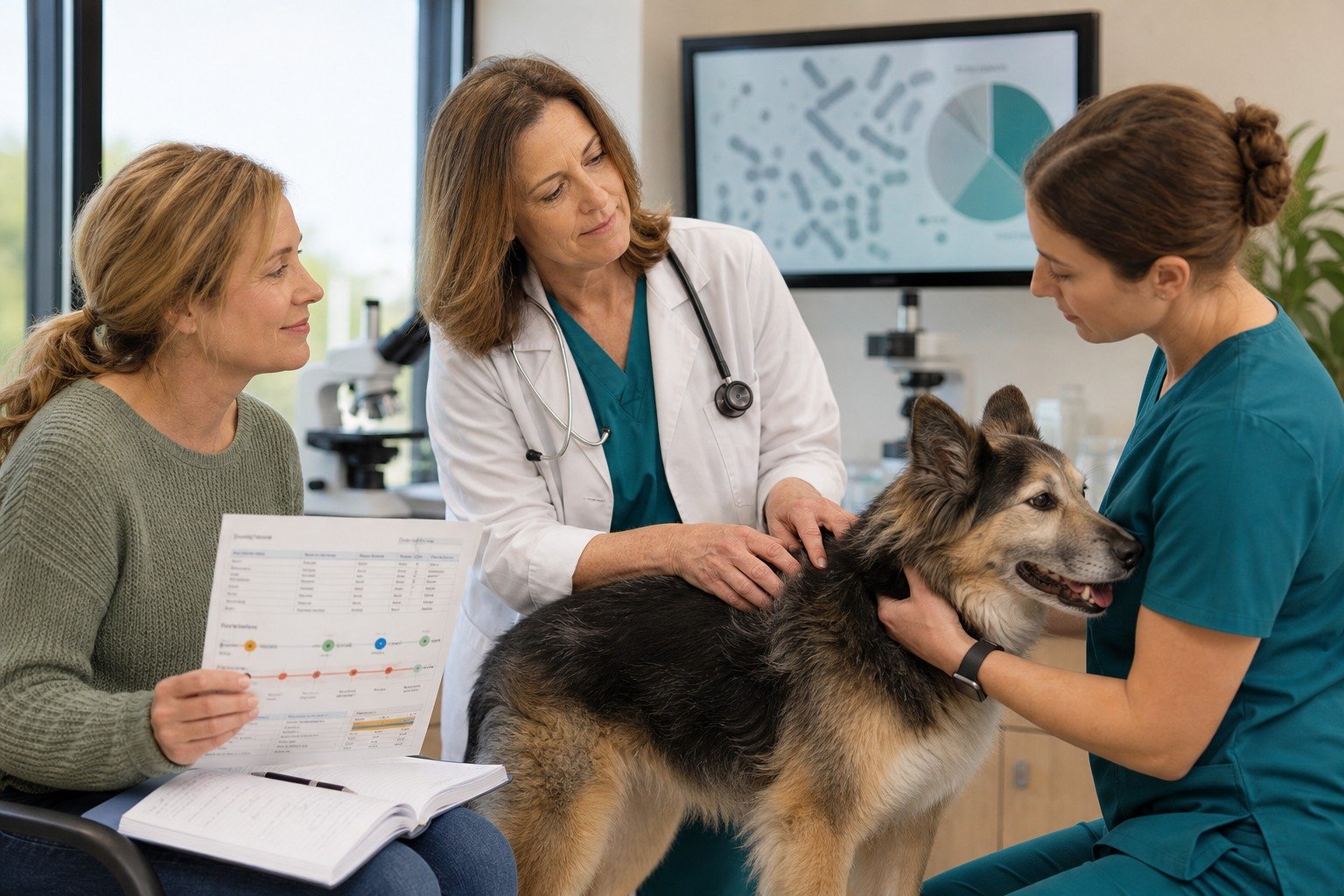
Bring a concise timeline, short natural-movement or symptom videos when safe, the exact names and photographs of every food, treat, medication, and supplement label, and notes about appetite, water intake, stool, sleep, activity, comfort, and behavior. Include recent injuries, travel, boarding, diet changes, missed medication, and previous test results. A complete record helps the veterinary team separate a repeatable pattern from a single impression.
Decide in advance what you need from the visit: an urgency decision, a diagnosis plan, a nutrition review, a pain or mobility assessment, or a monitored trial. Ask what result would change the plan and what finding would rule an option out. This keeps research and product information in the right role. Evidence can shape questions and expectations, but it cannot determine what is safe for an individual dog without the history and examination.
Owner tool
Build a combined skin, diet, and GI history
On a phone, swipe across the table to see every column.
| Checkpoint | What to record | Why it matters |
|---|---|---|
| Skin and ears | Location, itch, lesions, odor | Defines phenotype |
| GI | Stool, vomit, appetite, weight | Separates pattern |
| Exposure | Diet, treats, products, parasites | Finds contributors |
| Response | Treatment, timing, outcome | Guides next step |
Better questions, calmer next steps
Questions to ask your veterinarian
- What diagnoses and secondary infections should be checked first?
- Does this dog need a controlled elimination-diet trial?
- Which GI signs require a separate workup?
- Is the proposed outcome clinical or only a microbiome marker?
- How will we change one variable and reassess it?
FAQ
Does poor coat prove poor gut health?
No. Coat changes have many nutritional, dermatologic, endocrine, and systemic causes.
Can probiotics cure dog allergies?
No general cure claim is supported; discuss strain-specific evidence and the individual plan.
Does dysbiosis prove causation?
No. Disease, diet, treatment, and environment can also alter microbial patterns.
Should I switch foods whenever itching flares?
No. Unplanned changes can obscure diagnosis; use a veterinary diet strategy.
Can skin and GI signs be related?
They can coexist or share contributors, but each still needs appropriate assessment.
Sources
- Veterinary Dermatology: Skin Barrier, Cutaneous Microbiome and Host Defence in Canine Atopic Dermatitis. Review of barrier and cutaneous microbiome evidence.
- Microbiome: Gut and Skin Microbiota in Shiba Inu Dogs With Atopic Dermatitis. Breed-specific gut and skin microbiome associations.
- American Animal Hospital Association: 2023 Management of Allergic Skin Diseases Guidelines. Systematic allergic skin disease workup.
- World Small Animal Veterinary Association: Global Nutrition Toolkit. Complete diet history and nutrition assessment.
- Merck Veterinary Manual: Atopic Dermatitis in Animals. Atopic dermatitis diagnosis and management context.
