

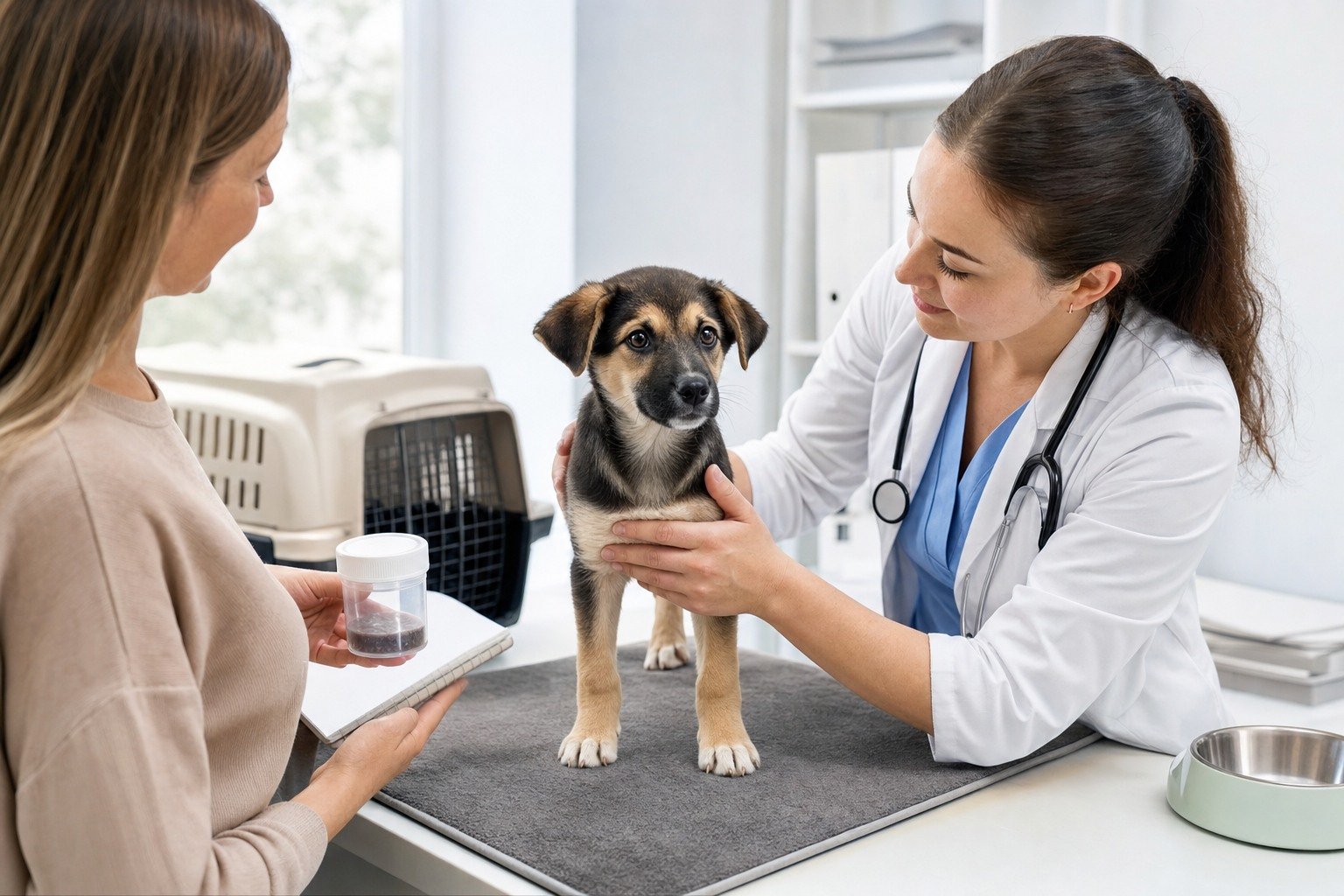
Puppy digestion changes during growth, but youth is not an explanation for vomiting, diarrhea, poor appetite, or weight concern. Infection, parasites, dietary exposure, foreign material, toxins, stress, congenital problems, and illness outside the gastrointestinal tract can overlap. Stable feeding, preventive care, exact records, and early veterinary triage are more useful than a generic home remedy or microbiome claim.
Short answer
Track the puppy and contact the veterinary team early
Keep a new puppy on a veterinarian-approved life-stage feeding and preventive-care plan. Record stool, vomiting, appetite, water intake, activity, weight or growth, diet, exposures, vaccination, and parasite-control history. Puppy age alone cannot determine whether waiting at home is appropriate, and current microbiome research does not justify routine testing or supplements for every puppy. [1] [2] [4]
- Record the exact pattern, products, diet, treatments, and recent changes.
- Separate what the evidence supports from what remains uncertain for this dog.
- Agree on a veterinary reassessment plan and urgent-response instructions.
Safety first
Repeated vomiting, bloody diarrhea, weakness, or dehydration can become urgent quickly
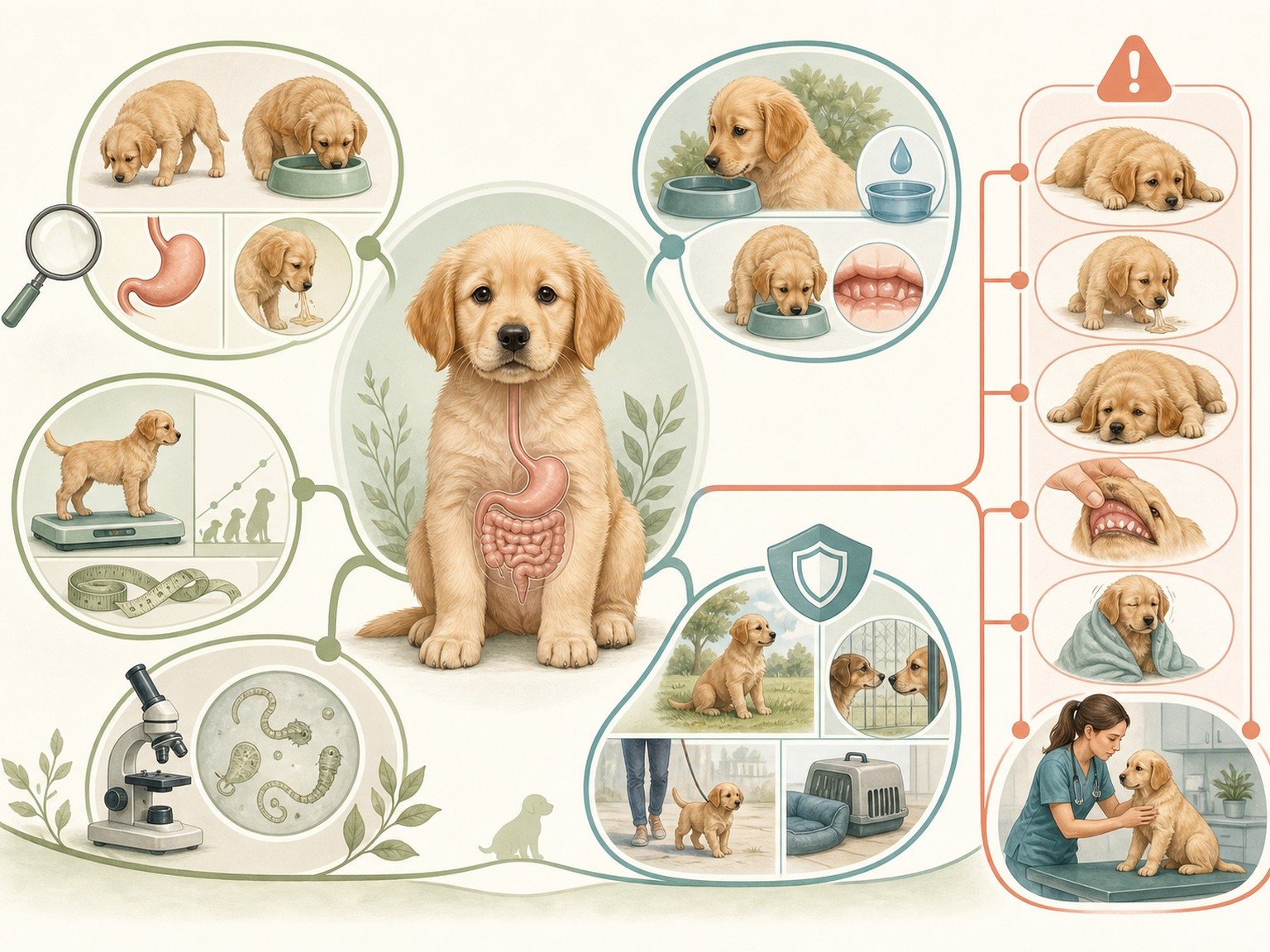
Contact a veterinarian promptly for vomiting or diarrhea in a young puppy, especially with poor appetite, lethargy, pain, fever, weight loss, unknown vaccination history, parasite exposure, or possible foreign material. Seek emergency care for collapse, severe weakness, repeated vomiting, profuse or bloody diarrhea, pale gums, a swollen painful abdomen, breathing difficulty, seizures, or rapid decline.
- Do not use general information to delay evaluation of severe, persistent, or worsening signs.
- Do not start, stop, combine, or calculate treatments from this article.
- Keep exact labels, exposure details, and a concise timeline available for the veterinary team.
Veterinary note
This article is educational and does not diagnose, treat, prescribe, or replace care from a licensed veterinarian. Your dog’s history, examination, diet, medications, and current signs determine what is appropriate.
Understand development without overclaiming
The gastrointestinal tract, immune system, diet, environment, maternal influences, medications, and exposures shape early microbial communities. A longitudinal study describes canine gut-microbiota development as dynamic during the first year and notes important unanswered questions. A compositional change is not automatically disease or treatment need. [4]
Routine commercial microbiome testing, probiotics, enzymes, or supplements are not supported for every healthy puppy by this packet. A veterinarian may consider targeted nutrition or treatment for a defined problem, but the decision requires the puppy's history and examination.
Growth raises nutritional stakes. Feed a complete, life-stage-appropriate diet recommended for the individual puppy and avoid improvised restriction, human remedies, or frequent switching. Record exact food, treats, training rewards, chews, table scraps, and access to garbage or other animals' food.
Treat diarrhea as a sign, not a diagnosis
Diarrhea can occur with dietary change, overfeeding, parasites, viruses, bacteria, toxins, foreign material, medication effects, stress, or nonintestinal illness. Color or consistency alone cannot identify the cause. Note frequency, volume, blood or mucus, straining, accidents, and whether vomiting or appetite change occurs.
Parvoviral enteritis can begin with nonspecific illness and progress to vomiting, diarrhea, dehydration, systemic compromise, and shock. Susceptibility depends on vaccination, exposure, age, and other factors; general information cannot rule it in or out. [1] [3]
Separate the puppy from shared spaces when contagious disease is possible and follow clinic instructions for arrival. Do not take a sick, incompletely vaccinated puppy into a waiting room or public dog area without calling first.
Connect prevention with digestive health
Canine parvovirus is a core vaccination target. Timing and series completion depend on age, prior records, maternal-antibody considerations, exposure risk, health, and product-specific veterinary guidance. This article intentionally does not reproduce a schedule. [1]
CAPC guidance supports puppy-specific parasite control and repeated fecal testing. Geography, lifestyle, household animals, travel, prior treatment, and health shape recommendations. A negative result at one time does not answer every future exposure question. [2]
Bring records from the breeder, shelter, rescue, or previous clinic. Include vaccine labels or certificates, deworming product and date, fecal results, travel, dog-park or daycare exposure, wildlife, standing water, scavenging, and household illness.
Build a useful puppy log
Record every vomiting event, stool, appetite, water intake, urination, energy, sleep, pain behavior, body weight when safely available, and food or treat exposure. Add date and time, not only good or bad. Photograph stool when useful rather than transporting it without instructions.
Keep a fresh sample only when the clinic requests it and follow its container and storage directions. Bring the package after any possible toxin, medication, supplement, or foreign-material exposure. Do not induce vomiting unless a veterinarian or poison professional gives case-specific instructions.
Ask what to feed during recovery, how hydration will be assessed, which preventive-care steps are due, and when recheck is required. A brief improvement does not always mean the underlying cause is resolved, especially in a young puppy.
Prepare for a focused veterinary conversation
Bring a concise timeline, short natural-movement or symptom videos when safe, the exact names and photographs of every food, treat, medication, and supplement label, and notes about appetite, water intake, stool, sleep, activity, comfort, and behavior. Include recent injuries, travel, boarding, diet changes, missed medication, and previous test results. A complete record helps the veterinary team separate a repeatable pattern from a single impression.
Decide in advance what you need from the visit: an urgency decision, a diagnosis plan, a nutrition review, a pain or mobility assessment, or a monitored trial. Ask what result would change the plan and what finding would rule an option out. This keeps research and product information in the right role. Evidence can shape questions and expectations, but it cannot determine what is safe for an individual dog without the history and examination.
Owner tool
Prepare a puppy digestive record
On a phone, swipe across the table to see every column.
| Checkpoint | Record | Why it helps |
|---|---|---|
| Stool and vomit | Time, appearance, frequency | Shows pattern |
| Whole puppy | Appetite, water, activity, weight | Shows severity |
| Exposure | Food, objects, animals, travel | Guides testing |
| Prevention | Vaccines, parasite care, fecal tests | Frames risk |
Better questions, calmer next steps
Questions to ask your veterinarian
- How urgent are these signs for this puppy?
- Which infection, parasite, diet, or foreign-material risks fit the history?
- What records or sample should I bring?
- How should feeding and hydration be handled now?
- Which change means emergency care?
FAQ
Is puppy diarrhea always caused by food?
No. Infection, parasites, foreign material, toxins, stress, and other illness can overlap.
Should every puppy take a probiotic?
The cited evidence does not support routine supplements for every puppy.
Why call before arriving?
The clinic can triage urgency and reduce exposure when contagious disease is possible.
What should I record?
Track stool, vomiting, appetite, water, activity, weight, exposures, and preventive care.
Can this guide give a vaccine schedule?
No. Timing is individualized by the veterinary team.
Sources
- American Animal Hospital Association: Canine Parvovirus. Core vaccination target and veterinary risk assessment.
- Companion Animal Parasite Council: General Guidelines for Dogs and Cats. Puppy parasite control and fecal-testing context.
- MSD Veterinary Manual: Canine Parvovirus Infection. Progression and urgency of parvoviral enteritis.
- Frontiers in Veterinary Science: Gut Microbiota Development in the Growing Dog. Dynamic early-life microbiota development and evidence gaps.
