


Enzymes break food components into forms the intestine can absorb. Dogs normally produce digestive enzymes in the pancreas and intestinal tract. A diagnosed failure of pancreatic enzyme production, called exocrine pancreatic insufficiency, has a well-established veterinary treatment. That does not mean an over-the-counter enzyme blend is a general remedy for loose stool, gas, appetite changes, or every digestive complaint.
Short answer
The strongest enzyme evidence belongs to a specific diagnosis
Dogs with exocrine pancreatic insufficiency commonly have weight loss, loose or voluminous stool, and increased appetite, though signs vary. Serum trypsin-like immunoreactivity is the primary diagnostic test, and pancreatic enzyme replacement is standard management after diagnosis. Similar-looking signs can arise from other disease, so symptoms alone cannot establish a need for enzymes. [1] [2]
- Distinguish prescribed pancreatic enzyme replacement from optional OTC digestive blends.
- Persistent weight loss, diarrhea, or appetite change deserves a diagnostic workup rather than a supplement experiment.
- Review formulation, handling, adverse effects, diet, cobalamin status, and follow-up with the veterinarian.
Safety first
Weight loss and chronic diarrhea should not be covered up with enzymes
Contact a veterinarian promptly for ongoing diarrhea, repeated vomiting, weight loss despite appetite, marked hunger with poor condition, pale or unusually bulky stool, dehydration, blood or black stool, abdominal pain, weakness, or a rapid change. Seek urgent care for collapse, severe pain, inability to keep water down, or suspected overdose.
- Do not start raw pancreas or concentrated enzyme powder without direct veterinary instruction.
- Do not inhale powders or place pancreatic enzyme powder directly in the mouth; these products can irritate tissue.
- Do not replace diagnostic testing, cobalamin assessment, therapeutic diet planning, or prescribed treatment with an OTC blend.
Veterinary note
This article is educational and does not diagnose, treat, prescribe, or replace care from a licensed veterinarian. Your dog’s history, examination, diet, medications, and current signs determine what is appropriate.
Understand where digestive enzymes fit
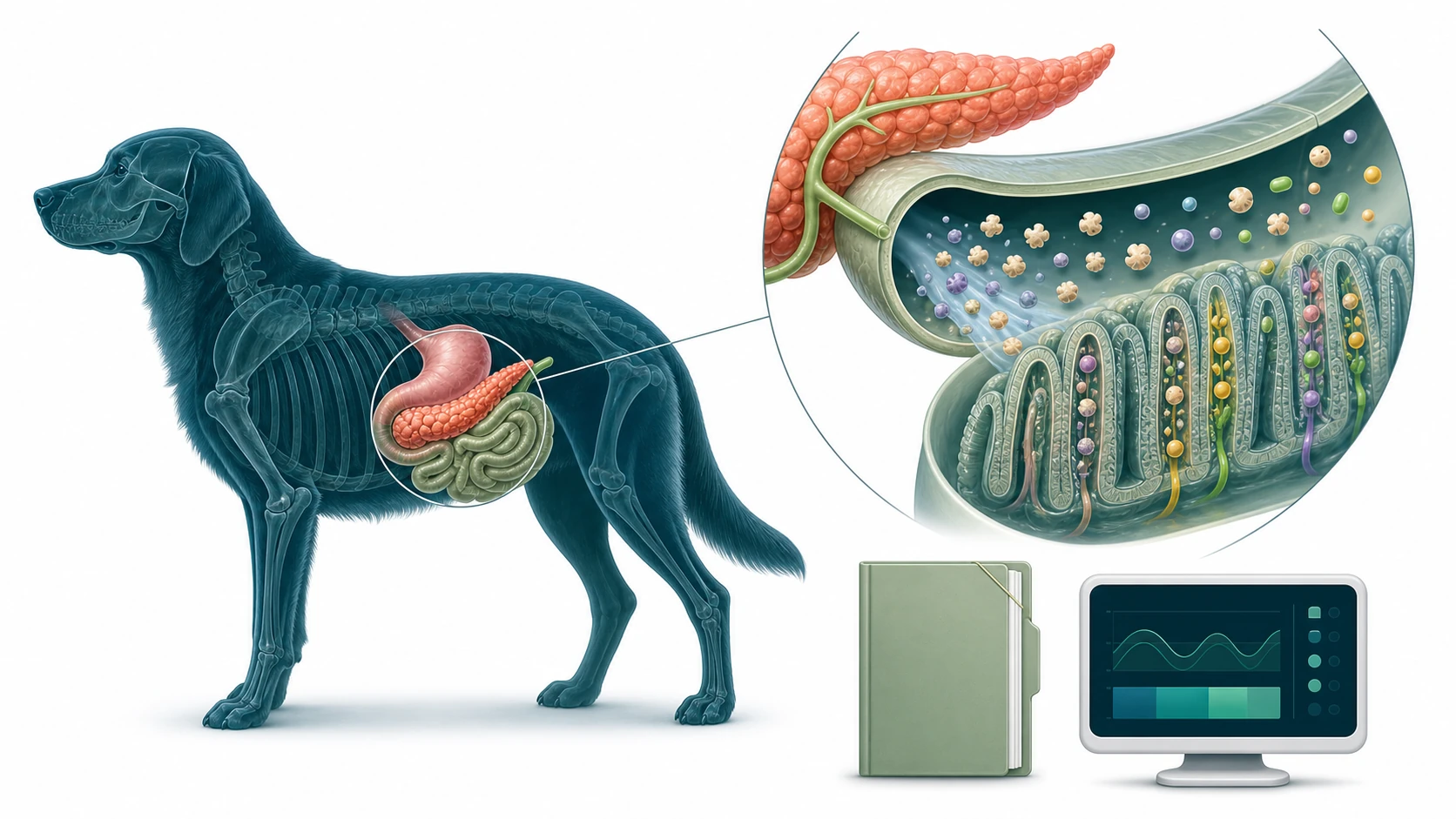
The pancreas releases enzymes that digest fat, protein, and carbohydrate into the small intestine. The intestinal surface, bile, motility, microbiota, and absorptive tissue also contribute to digestion. A dog can therefore have diarrhea or malabsorption even when pancreatic enzyme production is adequate.
Exocrine pancreatic insufficiency occurs when insufficient pancreatic digestive function leads to maldigestion. Merck describes weight loss and loose stools as common, often with increased appetite. Serum trypsin-like immunoreactivity is the key diagnostic test, while cobalamin and folate assessment helps identify associated problems. [1]
Keep prescription replacement separate from wellness supplementation
Pancreatic enzyme replacement therapy is given with food as part of a veterinarian-managed EPI plan. Formulation and response matter, and some dogs need dietary or cobalamin management in addition. Powdered extracts can cause oral mucosal irritation or bleeding, which illustrates why handling and dose adjustments belong under clinical supervision. [1] [2]
An OTC product marketed for digestion may contain animal enzymes, microbial enzymes, botanicals, probiotics, or other ingredients. Its label may not match the formulation used in EPI research or treatment. Veterinary supplement reviews describe variable evidence, quality, and regulatory classification across nutraceutical products. [3]
Evaluate general digestive claims at the right evidence level
A laboratory demonstration that an enzyme breaks down a substrate does not prove a meaningful benefit after storage, oral administration, stomach transit, and use in a dog that already produces the enzyme. Ask whether the exact formulation was tested in client-owned dogs with the same problem, against a comparator, with clinically important outcomes and adverse events reported.
Current chronic inflammatory enteropathy guidance emphasizes complete assessment and structured therapeutic diet trials for many stable dogs. Routine empiric enzyme use is not a substitute for that process. If signs persist, the next step is reassessment of diagnosis and severity rather than indefinite stacking of digestive products. [4] [5]
Prepare a safer enzyme discussion
Bring stool and appetite history, body-weight records, diet and treat list, medication and supplement labels, and any prior laboratory results. Ask whether EPI, chronic enteropathy, parasites, pancreatic disease, endocrine disease, or another cause should be considered. A short video or stool photographs may help describe the pattern without relying on vague labels.
If enzyme therapy is prescribed, record the exact formulation, handling instructions, meal relationship, storage, expected response, adverse signs, and recheck tests. Never transfer powder to an unlabeled container. If an OTC product is proposed instead, ask what diagnosis and evidence justify it and what would make the trial stop.
Response is not merely fewer symptoms for a day. The plan may track stool, body weight, appetite, muscle condition, laboratory values, cobalamin, and quality of life over time. Report mouth irritation, bleeding, vomiting, worsening diarrhea, or refusal to eat promptly.
Prepare for a focused veterinary conversation
Bring a concise timeline, short natural-movement or symptom videos when safe, the exact names and photographs of every food, treat, medication, and supplement label, and notes about appetite, water intake, stool, sleep, activity, comfort, and behavior. Include recent injuries, travel, boarding, diet changes, missed medication, and previous test results. A complete record helps the veterinary team separate a repeatable pattern from a single impression.
Decide in advance what you need from the visit: an urgency decision, a diagnosis plan, a nutrition review, a pain or mobility assessment, or a monitored trial. Ask what result would change the plan and what finding would rule an option out. This keeps research and product information in the right role. Evidence can shape questions and expectations, but it cannot determine what is safe for an individual dog without the history and examination.
Owner tool
Separate enzyme scenarios
On a phone, swipe across the table to see every column.
| Scenario | Evidence path | Owner caution |
|---|---|---|
| Suspected EPI | TLI plus clinical assessment | Do not diagnose by stool alone |
| Diagnosed EPI | Prescribed replacement and monitoring | Follow handling instructions |
| Chronic enteropathy | Workup and therapeutic diet trials | Do not substitute enzymes |
| General wellness claim | Product-specific canine evidence | Benefit often unverified |
Better questions, calmer next steps
Questions to ask your veterinarian
- Do the signs justify testing for exocrine pancreatic insufficiency?
- Which findings suggest small-intestinal or other disease instead?
- If replacement is prescribed, how should it be handled and monitored?
- Does cobalamin or diet need assessment alongside enzyme therapy?
- What evidence supports this exact OTC formula for this diagnosis?
FAQ
Do all dogs with diarrhea need enzymes?
No. Diarrhea has many causes, and most do not establish enzyme deficiency.
How is EPI diagnosed?
Veterinarians primarily use serum trypsin-like immunoreactivity with the clinical picture and related tests.
Are OTC enzymes the same as prescription replacement?
No. Formulations, evidence, quality, and intended use can differ.
Can enzymes cause side effects?
Yes. Pancreatic extracts can irritate oral tissue, and any product may cause adverse effects.
Can a response prove the diagnosis?
No. Diagnosis and monitoring require veterinary interpretation.
Sources
- Merck Veterinary Manual: Exocrine Pancreatic Insufficiency in Dogs and Cats. Signs, TLI diagnosis, replacement therapy, cobalamin, and adverse effects.
- Merck Veterinary Manual: Malabsorption Syndromes in Small Animals. Differential diagnosis and enzyme management context.
- Veterinary Clinics of North America: Veterinary Pet Supplements and Nutraceuticals. OTC supplement regulation, quality, safety, and evidence.
- Frontiers in Veterinary Science: Canine Chronic Enteropathy: Current State of the Art. Classification, diagnosis, diet response, barrier research, and treatment context.
- Journal of Veterinary Internal Medicine: ACVIM Consensus on Chronic Inflammatory Enteropathy in Dogs. Current evidence-graded diagnostic and dietary guidance.
