


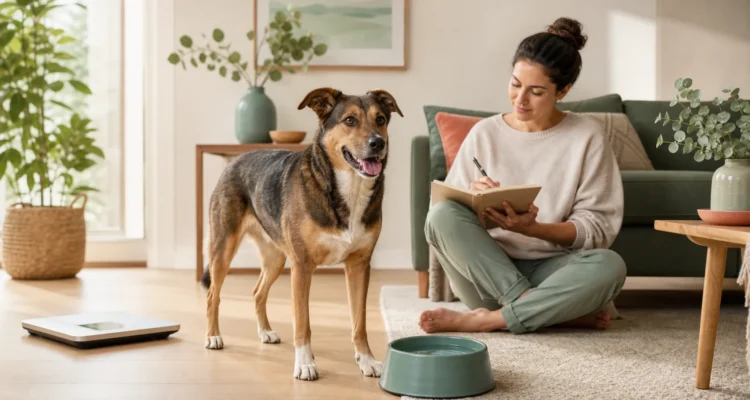
Monitoring Your Dog’s Metabolic Health at Home: A Vet‑First Tracking Guide
A calm, repeatable way to notice changes in thirst, urination, appetite, weight, and activity without trying to diagnose your dog at home. Updated: July 22, 2026 Reading time: 10-12 minutes…
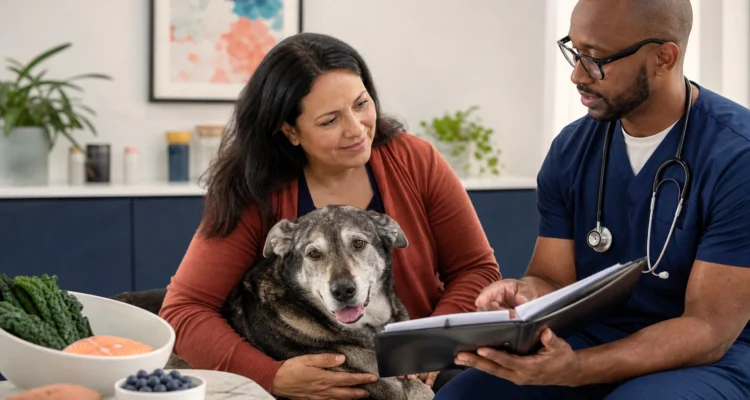
Antioxidants and Senior Dog Health: An Overview
Antioxidants are often marketed as if one ingredient can slow aging, protect every organ, or prevent cognitive decline. Canine research gives a more careful picture. Oxidative damage is part of…
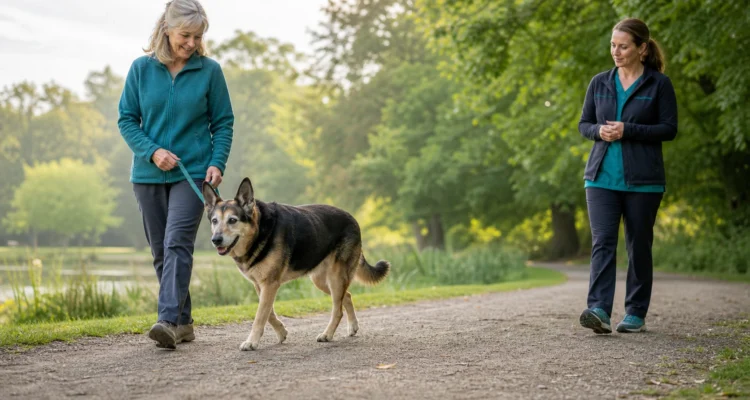
Exercise Guidelines for Senior Dogs
Older dogs still benefit from movement, exploration, social contact, and mental engagement, but senior exercise is not a generic number of minutes or steps. The appropriate activity depends on pain,…
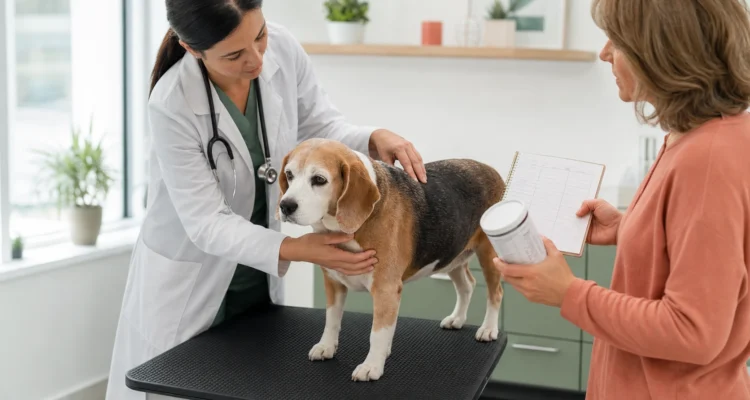
Nutritional Needs of Senior Dogs
There is no universal senior-dog diet and no AAFCO nutrient profile created specifically for senior status. Some older dogs need fewer calories as activity changes; others lose weight or muscle…
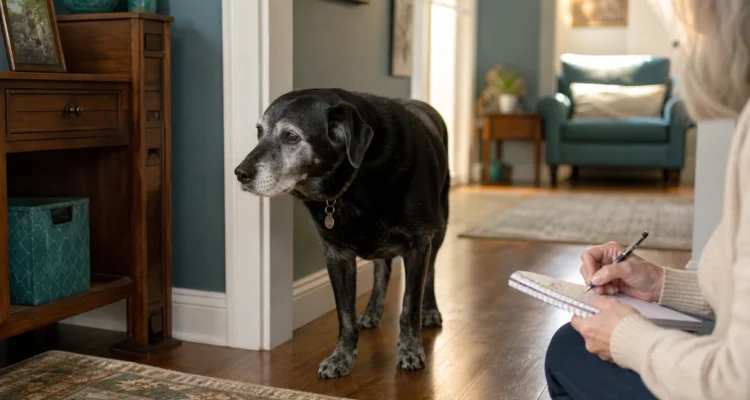
Cognitive Changes in Older Dogs: What Owners Can Observe
An older dog may sleep differently, hesitate in familiar spaces, interact less, vocalize at night, or have housetraining accidents. These observations matter, but they do not prove canine cognitive dysfunction.…
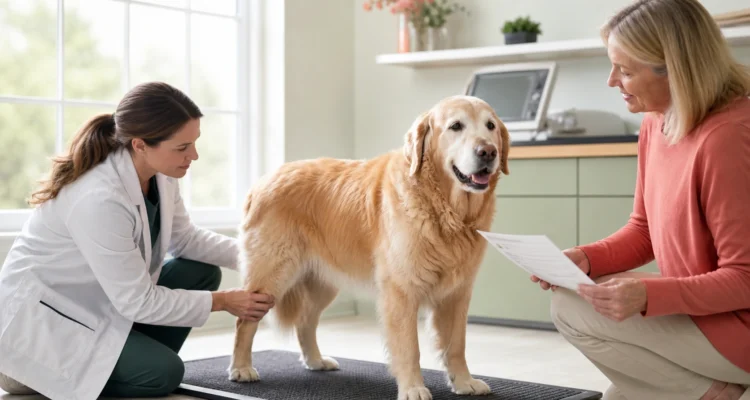
Senior Dog Wellness: A Vet-First Guide for Aging Dogs
Senior is a life stage, not a diagnosis and not one universal birthday. Dogs age at different rates according to size, genetics, health history, and function. A useful senior-wellness plan…

Creating a Calming Environment for an Anxious Dog
A calm environment is not a silent room, a crate, or a collection of calming products. It is a home setup that makes daily events more predictable, lowers avoidable trigger…

L-Theanine for Dogs: What the Research Says
L-theanine is an amino acid associated with tea plants and included in some products marketed for canine calming. Interest is understandable, but the practical question is narrower than whether L-theanine…

Calming Supplements for Dogs: An Evidence-Based Overview
Calming supplements are marketed for thunderstorms, travel, separation, handling, sleep, and everyday stress, but those situations are not one diagnosis. Ingredients, formulas, study designs, product consistency, and individual risks vary…

Separation Anxiety in Dogs: What Owners Should Know
Separation-related problems are behaviors that occur when a dog is alone or separated from an important person. They are not all caused by the same emotion. Fear, panic, frustration, confinement…