


There is no universal senior-dog diet and no AAFCO nutrient profile created specifically for senior status. Some older dogs need fewer calories as activity changes; others lose weight or muscle because of disease, reduced intake, difficulty chewing, or altered digestion. Nutrition decisions should begin with a complete diet history, body and muscle condition, health assessment, and a plan for monitoring response.
Short answer
Senior nutrition is individualized, measured, and reassessed
Age can change energy use, body composition, appetite, and disease risk, but dogs do not all change in the same direction. AAHA recommends nutritional assessment that includes body condition, muscle condition, current diet, treats, supplements, medical history, and follow-up. The word senior on a label does not establish suitability. [1] [2]
- Track weight and muscle condition together because stable weight can hide muscle loss.
- Do not restrict protein, phosphorus, fat, or another nutrient solely because a dog is older.
- Bring exact label photos and measured daily amounts for food, treats, chews, toppers, and supplements.
Safety first
Appetite or weight change can signal disease, pain, or feeding difficulty
Contact a veterinarian promptly for refusal to eat, repeated vomiting, persistent diarrhea, trouble swallowing, repeated regurgitation, painful chewing, marked thirst or urination, rapid weight change, weakness, yellow gums or eyes, black stool, a swollen abdomen, or suspected toxin exposure. Do not solve an unexplained change by repeatedly switching foods.
- Do not give a homemade diet long term unless it is formulated and monitored by a qualified veterinary nutrition professional.
- Do not add high-dose vitamins, minerals, oils, or human supplements without exact product review.
- Do not assume kidney, heart, liver, pancreatic, or gastrointestinal disease needs the same nutrient changes in every dog.
Veterinary note
This article is educational and does not diagnose, treat, prescribe, or replace care from a licensed veterinarian. Your dog’s history, examination, diet, medications, and current signs determine what is appropriate.
Begin with a complete nutritional assessment
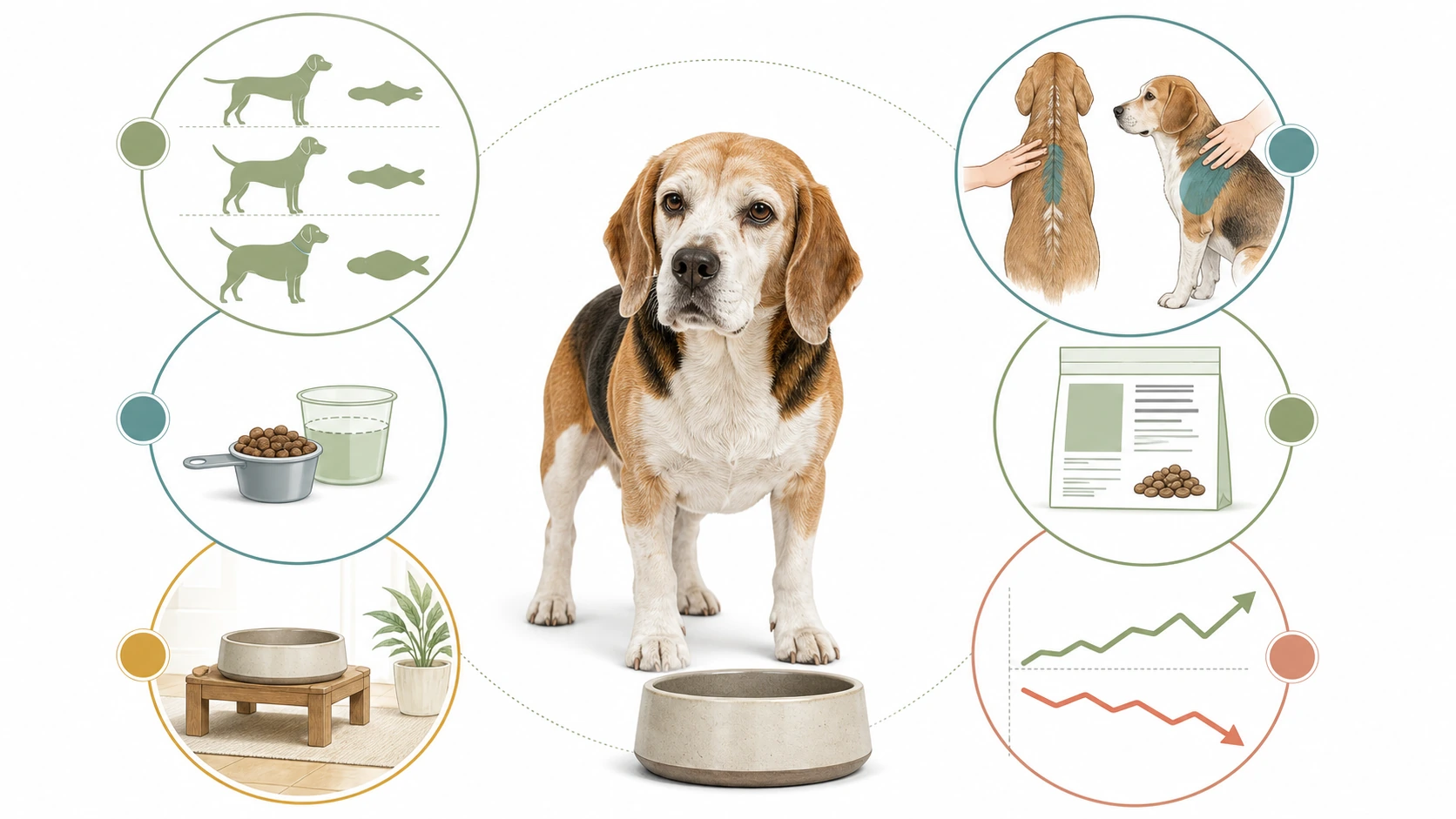
Record the product name, manufacturer, exact formula, amount offered and eaten, feeding method, treats, chews, table foods, toppers, supplements, access to other pets' food, and recent changes. The veterinary team combines this history with body weight, body condition score, muscle condition score, examination findings, activity, and medical data. [1] [3]
Body condition estimates fat stores, while muscle condition focuses on muscle loss over areas such as the spine, shoulder blades, skull, and pelvis. An overweight dog can still lose muscle. Repeated measurements are more informative than a single number, especially when coat, breed shape, fluid change, or scale differences complicate interpretation.
Energy and protein needs do not move in one direction
Maintenance energy needs often decline across adult life, but illness, activity, environment, neuter status, and individual metabolism create wide variation. Portion decisions should follow weight and body-composition trends rather than a generic senior feeding chart. Unintentional weight loss deserves investigation before calories are simply added. [2]
Healthy older dogs do not automatically need protein restriction. Adequate high-quality protein may help maintain lean tissue, while specific diseases may require targeted adjustments based on diagnosis and laboratory findings. Restricting nutrients without a clinical reason can reduce diet adequacy or palatability. [2] [4]
Separate healthy aging from disease-directed nutrition
A complete and balanced maintenance food may remain appropriate for a healthy senior dog. Disease-directed diets can be valuable for conditions such as chronic kidney disease, certain urinary problems, obesity, gastrointestinal disease, or food-responsive disease, but each diet has a specific nutritional purpose. A diet useful for one diagnosis may be unsuitable for another.
Dental pain, nausea, medication effects, sensory change, mobility limitations, and bowl placement can reduce intake. Before choosing a more enticing product, identify whether the dog can reach the bowl, chew, swallow, and keep food down comfortably. Texture, moisture, meal frequency, and feeding position should be discussed in the context of the dog's condition. [1]
Evaluate labels, treats, and supplements as one diet
Look for the nutritional adequacy statement, life stage, calorie content, feeding directions, manufacturer contact information, and exact product identity. Ingredient lists do not rank diet quality by themselves, and terms such as premium, holistic, or senior do not replace adequacy and manufacturer evaluation. [3] [5]
Treats, chews, toppers, and supplements affect calories and nutrient balance. Products can also duplicate ingredients or interact with medication. Keep optional items limited, count them in the diet history, and ask what measurable goal each addition serves. The diet should remain useful and nutritionally coherent without marketing claims.
Prepare for a focused veterinary conversation
Bring a concise timeline, short natural-movement or symptom videos when safe, the exact names and photographs of every food, treat, medication, and supplement label, and notes about appetite, water intake, stool, sleep, activity, comfort, and behavior. Include recent injuries, travel, boarding, diet changes, missed medication, and previous test results. A complete record helps the veterinary team separate a repeatable pattern from a single impression.
Decide in advance what you need from the visit: an urgency decision, a diagnosis plan, a nutrition review, a pain or mobility assessment, or a monitored trial. Ask what result would change the plan and what finding would rule an option out. This keeps research and product information in the right role. Evidence can shape questions and expectations, but it cannot determine what is safe for an individual dog without the history and examination.
Owner tool
Create a senior nutrition record
On a phone, swipe across the table to see every column.
| Measure | Record | Why it matters |
|---|---|---|
| Intake | Exact food, grams/cups, treats, supplements | Shows the complete exposure |
| Body | Weight, body condition, muscle condition | Separates fat change from muscle loss |
| Function | Chewing, swallowing, bowl access, appetite | Identifies barriers beyond food preference |
| Response | Stool, vomiting, energy, trend, review date | Tests whether the plan fits the dog |
Better questions, calmer next steps
Questions to ask your veterinarian
- Is the current diet complete and balanced for this dog's life stage and condition?
- What are this dog's body and muscle condition scores, and what trend is the goal?
- Does any diagnosis justify changing protein, phosphorus, fat, fiber, sodium, or calories?
- Could dental pain, nausea, medication, or mobility be affecting intake?
- When should weight, muscle, laboratory results, and the diet plan be rechecked?
FAQ
Does every older dog need senior dog food?
No. There is no universal senior nutrient profile; suitability depends on the individual dog and the exact food.
Should senior dogs eat less protein?
Not automatically. Protein decisions should follow health, muscle condition, diet adequacy, and any disease-specific veterinary plan.
Is stable weight enough?
No. A dog can lose muscle while maintaining or gaining fat, so body and muscle condition should also be tracked.
Are supplements required for senior dogs?
No. Additions should have a defined goal, product review, and safety check; duplication and interactions are possible.
When is a veterinary nutritionist helpful?
Complex disease, multiple dietary restrictions, long-term homemade feeding, or persistent nutrition problems may justify referral.
Sources
- AAHA: Nutrition for Senior Pets. Senior energy, body composition, muscle, and diet guidance.
- Frontiers in Veterinary Science: Nutrition and Aging in Dogs and Cats. Review of nutritional assessment and aging-related diet considerations.
- WSAVA: Global Nutrition Guidelines. Nutritional assessment, diet history, and product evaluation tools.
- AAHA: 2021 Nutrition and Weight Management Guidelines. Body and muscle condition and individualized feeding plans.
- U.S. Food and Drug Administration: Complete and Balanced Pet Food. Nutritional adequacy statements and complete-and-balanced label context.
