

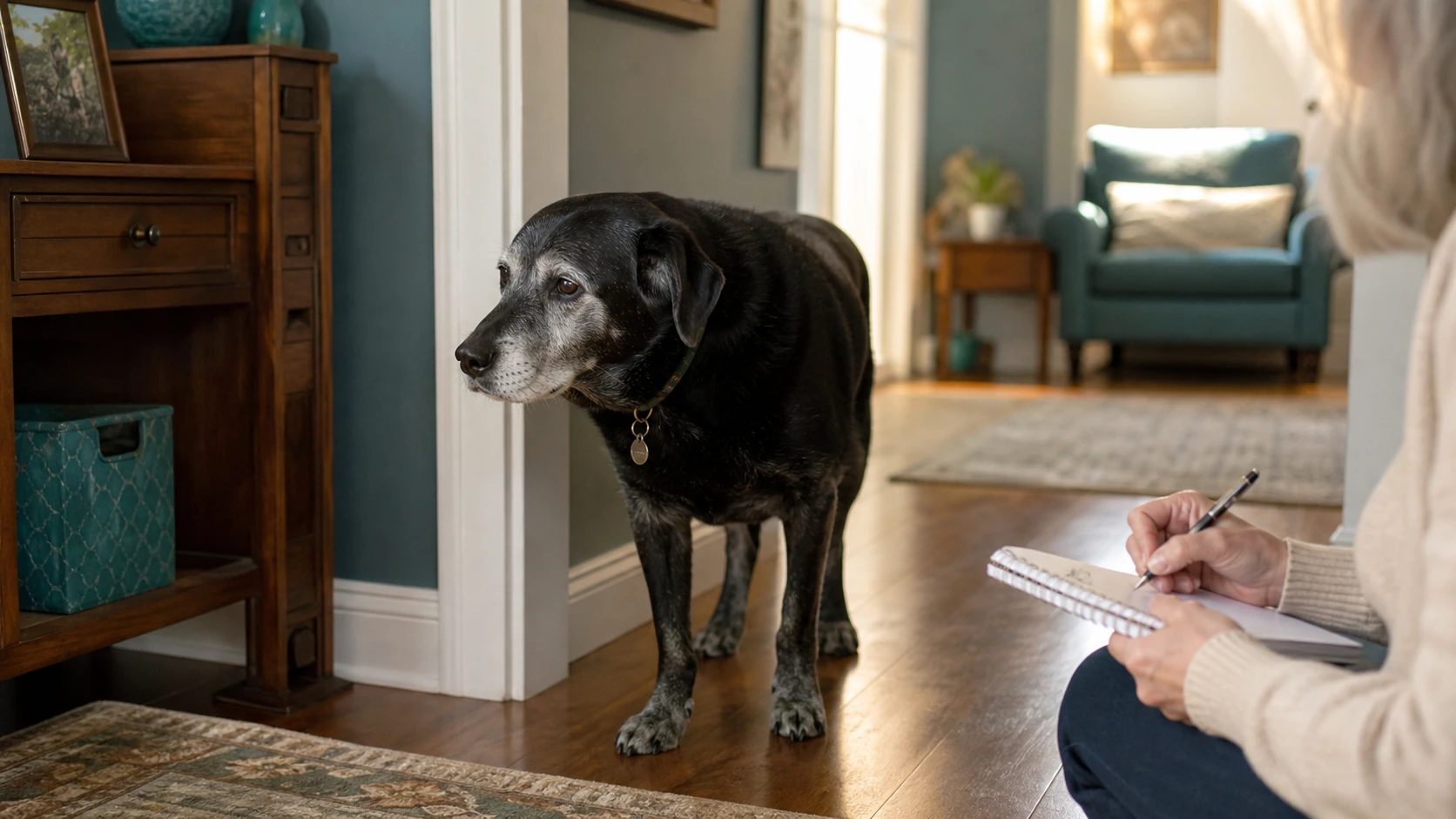
An older dog may sleep differently, hesitate in familiar spaces, interact less, vocalize at night, or have housetraining accidents. These observations matter, but they do not prove canine cognitive dysfunction. Pain, sensory loss, urinary or gastrointestinal disease, endocrine disease, neurologic disease, medication effects, and environmental change can create similar patterns. The owner's role is to record change clearly and seek veterinary assessment.
Short answer
Observe the pattern; do not diagnose from a checklist
Veterinary teams often organize possible cognitive changes around disorientation, interaction, sleep-wake cycles, housetraining, activity, and anxiety. Screening tools can support history-taking, but cognitive dysfunction remains a diagnosis of exclusion after other medical and neurologic causes are considered. [1] [2]
- Record the first date, frequency, context, duration, and recovery for each change.
- Include mobility, pain, hearing, vision, appetite, thirst, urination, stool, and every medication.
- Treat sudden disorientation, collapse, seizure, severe weakness, or circling as urgent until assessed.
Safety first
Sudden neurologic or behavior change is not a watch-and-wait senior moment
Seek urgent veterinary care for sudden disorientation, seizure, collapse, head tilt, circling, inability to stand, new weakness on one side, abnormal eye movement, severe pain, toxin exposure, or abrupt loss of vision. Contact the clinic promptly for escalating night distress, repeated accidents with illness signs, inability to eat or drink, or unsafe wandering.
- Do not use a dementia label to explain an acute event.
- Do not provoke confusion or repeat a difficult navigation task for video evidence.
- Use gates and lighting to prevent falls while assessment is pending, without trapping the dog in distress.
Veterinary note
This article is educational and does not diagnose, treat, prescribe, or replace care from a licensed veterinarian. Your dog’s history, examination, diet, medications, and current signs determine what is appropriate.
Describe change across six everyday domains
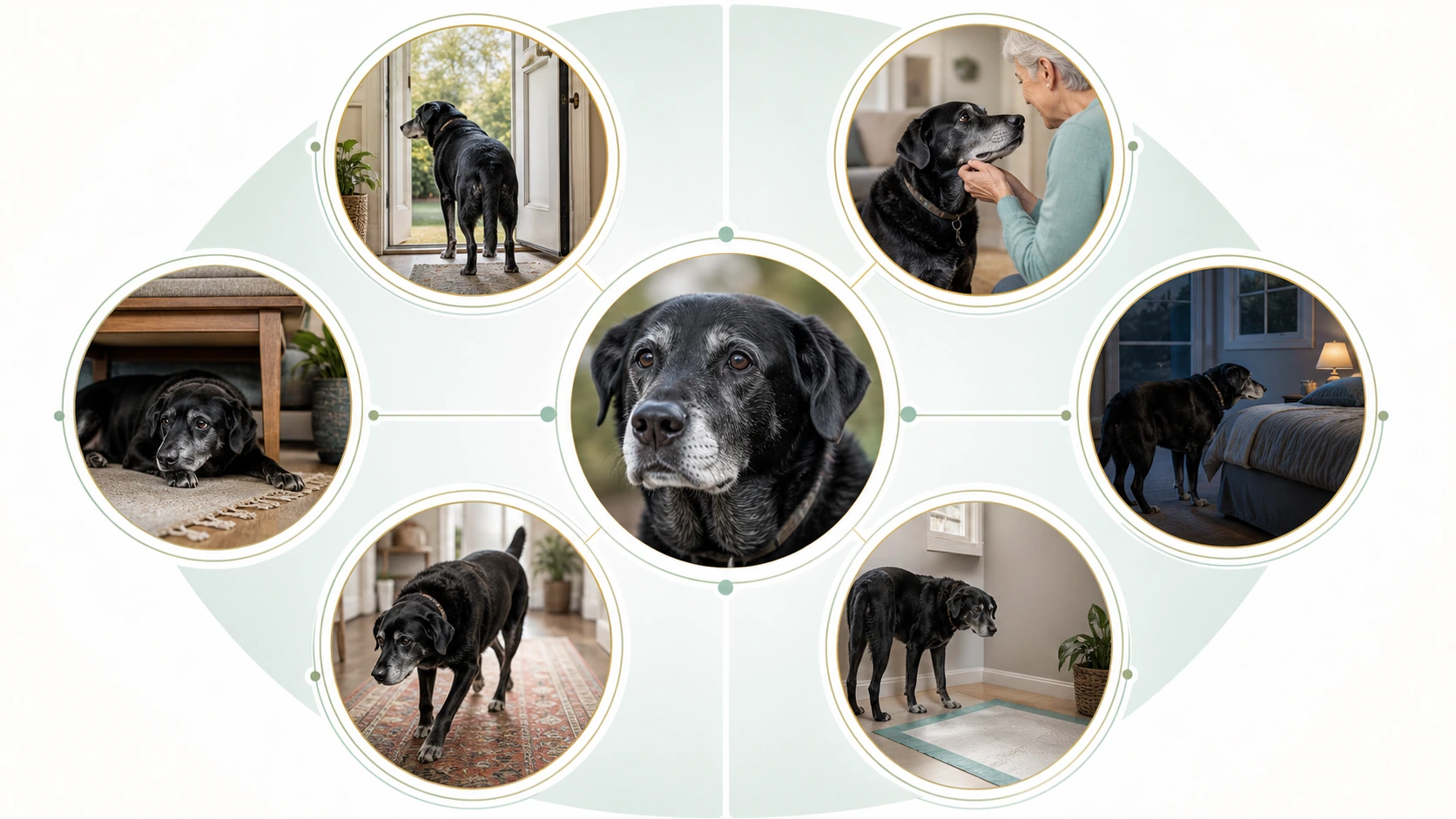
Disorientation can include becoming stuck, approaching the wrong side of a door, staring, or difficulty navigating familiar routes. Interaction changes can include altered greeting, attention, social withdrawal, or irritability. Sleep-wake changes, indoor elimination, repetitive activity, reduced exploration, and new anxiety also belong in the history. [1] [3]
One behavior is rarely specific. A dog may pace because of pain, nausea, urinary urgency, medication, fear, or inability to settle comfortably. Reduced greeting may reflect hearing loss or arthritis. House soiling may reflect urinary, gastrointestinal, endocrine, kidney, mobility, or learning problems. The combination and progression help the veterinarian prioritize differentials. [2]
Build a timeline that can survive memory bias
Use short dated notes instead of general labels such as confused or senile. Record where the dog was, what happened immediately before, the exact behavior, duration, response to familiar cues, and recovery. A naturally occurring video can be valuable, especially for intermittent movement or orientation changes.
Repeat the same brief observations weekly: response to name, navigation to water and exits, sleep periods, elimination location, social engagement, and mobility. Consistency can reveal gradual change, but the log is not a home diagnostic score and should never determine treatment or end-of-life decisions by itself.
Expect a medical and neurologic differential
The veterinary visit may include a full history, physical and neurologic examination, pain and sensory assessment, medication review, and laboratory testing chosen for the individual dog. Imaging or specialist referral may be considered when focal neurologic signs, atypical onset, rapid progression, or examination findings suggest another brain disorder. [1] [4]
Cognitive screening questionnaires can organize owner observations and monitor change. Different tools use different thresholds and populations, so a score is not interchangeable with a diagnosis. Research also shows that physical disturbances and concurrent medical signs are common among older dogs with cognitive decline, reinforcing the need for whole-patient assessment. [2] [5]
Support safety while the plan is developed
Keep furniture routes stable, improve lighting, block unsafe stairs, add nonslip surfaces, make water and toileting access easy, and maintain a predictable day. Preserve choice and familiar activities within the dog's physical ability. Sudden major environmental changes may increase confusion.
Management may include treatment of concurrent disease, environmental adaptation, nutrition, behavior support, and medication selected by the veterinarian. Evidence varies across interventions. Judge progress using sleep, distress, navigation, interaction, elimination, safety, and quality of life rather than a promise to reverse aging. [1]
Prepare for a focused veterinary conversation
Bring a concise timeline, short natural-movement or symptom videos when safe, the exact names and photographs of every food, treat, medication, and supplement label, and notes about appetite, water intake, stool, sleep, activity, comfort, and behavior. Include recent injuries, travel, boarding, diet changes, missed medication, and previous test results. A complete record helps the veterinary team separate a repeatable pattern from a single impression.
Decide in advance what you need from the visit: an urgency decision, a diagnosis plan, a nutrition review, a pain or mobility assessment, or a monitored trial. Ask what result would change the plan and what finding would rule an option out. This keeps research and product information in the right role. Evidence can shape questions and expectations, but it cannot determine what is safe for an individual dog without the history and examination.
Owner tool
Record a cognitive-change pattern
On a phone, swipe across the table to see every column.
| Domain | Specific observation | Medical context to include |
|---|---|---|
| Orientation | Stuck, wrong door side, staring, route change | Vision, hearing, neurologic signs |
| Sleep | Night waking, vocalizing, daytime sleep | Pain, urination, medication, breathing |
| Elimination | Location, timing, awareness, stool or urine | Mobility, urinary, GI, endocrine signs |
| Interaction | Greeting, touch tolerance, withdrawal | Pain, senses, household change |
Better questions, calmer next steps
Questions to ask your veterinarian
- Which medical, pain, sensory, or neurologic causes should be investigated first?
- Which screening tool are we using, and how will its result be interpreted?
- What findings would make imaging or neurology referral appropriate?
- Which environmental changes improve safety without reducing useful activity?
- How will we measure response and reassess quality of life over time?
FAQ
Is nighttime pacing always cognitive dysfunction?
No. Pain, urinary urgency, medication effects, fear, and medical disease can also disrupt sleep.
Can a questionnaire diagnose canine dementia?
No. It can organize observations and monitor change, but diagnosis requires veterinary evaluation and exclusion of other causes.
Is house soiling a normal part of aging?
No. It is a health and behavior change worth reporting because many medical and functional causes are possible.
Can cognitive decline begin gradually?
Yes, but gradual onset does not remove the need to assess pain, senses, disease, and medication effects.
Can cognitive dysfunction be cured?
Current care focuses on managing signs, concurrent disease, safety, function, and quality of life; outcomes vary.
Sources
- AAHA: 2023 Senior Care Guidelines for Dogs and Cats. Cognitive screening, senior assessment, and multimodal care.
- Frontiers in Veterinary Science: The Relationship between Signs of Medical Conditions and Cognitive Decline in Senior Dogs. Medical look-alikes and physical signs associated with cognitive decline.
- Frontiers in Veterinary Science: Cognitive Aging in Dogs. Cognitive aging domains, DISHA signs, and evidence limits.
- Merck Veterinary Manual: Behavior Problems of Dogs. Behavioral and medical diagnostic context.
- Journal of Veterinary Medical Science: Physical Signs of Canine Cognitive Dysfunction. Physical disturbances and cognitive assessment in older dogs.
