

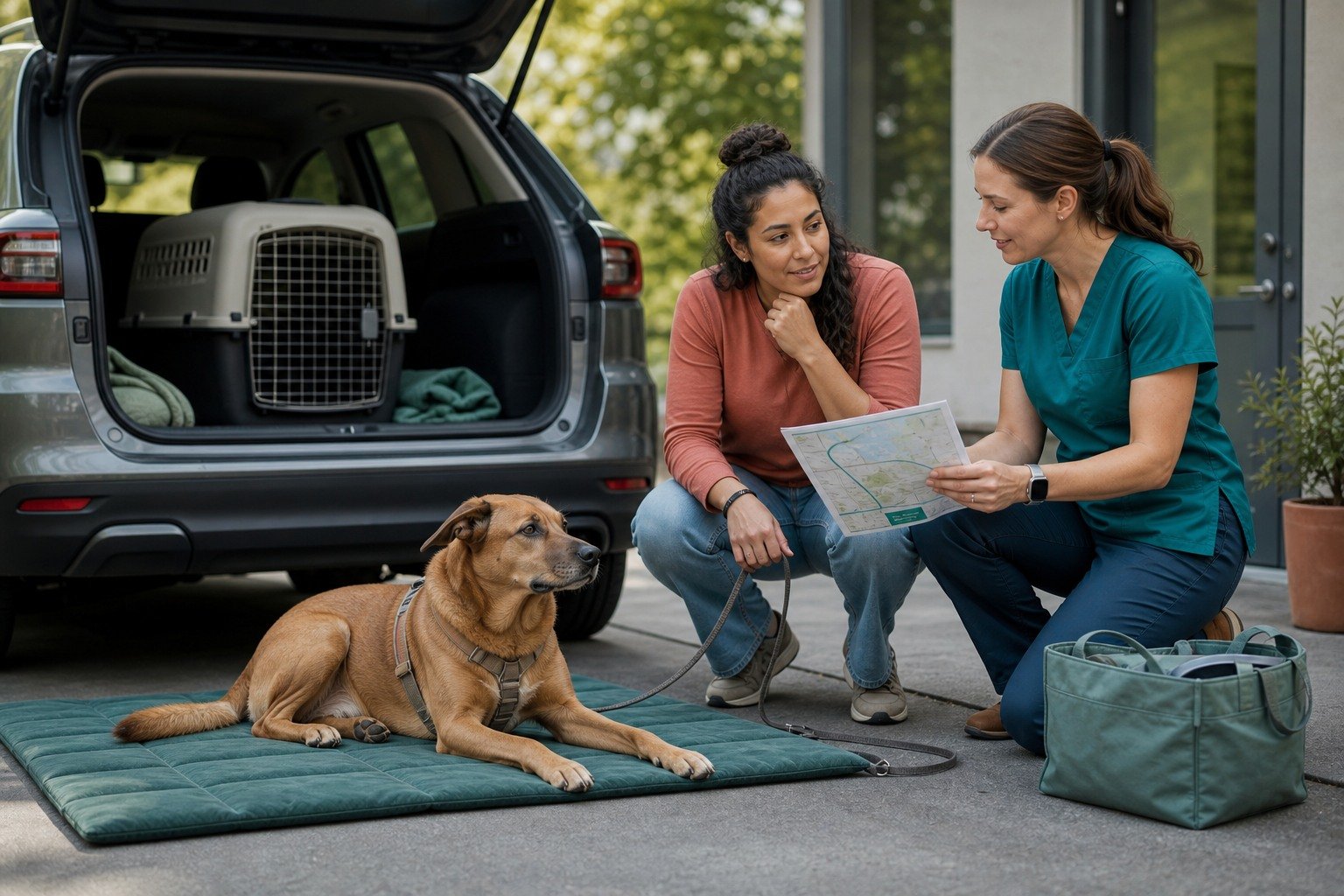
Travel changes motion, confinement, sound, people, animals, temperature, routine, sleep, food, toileting, and access to care. Panting, drooling, vomiting, freezing, pacing, vocalizing, escape attempts, or refusal can reflect fear, motion sickness, pain, heat, illness, or several factors together. A past pattern does not identify the cause or prove that the next trip is safe. Prepare while the dog is stable. Ask the veterinarian whether the proposed route and transport fit the dog's health and behavior, whether gradual practice is appropriate, how any prescription should be used, and which signs should stop travel. Use secure transport and familiar supports without forced exposure. Build a destination and emergency plan. If the dog cannot enter, remain safely contained, recover, or maintain essential functions, redesign or postpone the trip rather than pushing through.
Short answer
Plan the trip around the dog's current ability to cope
AAHA travel guidance recommends advance veterinary planning, identification, records, supplies, restraint, and destination care. A survey found travel-related problems are common, while motion sickness and anxiety can overlap. These sources support individual preparation, not a universal sedative or training protocol. [1] [2] [3]
- Start with the individual dog's baseline, complete history, and veterinary plan.
- Track change across function, comfort, appetite, sleep, and behavior instead of blaming age or breed.
- Use environment and routine as coordinated supports, not substitutes for diagnosis or care.
- Escalate sudden, severe, persistent, or rapidly worsening signs promptly.
Safety first
Panic, heat illness, repeated vomiting, or unsafe escape should end travel
Stop and seek veterinary help for collapse, breathing difficulty, heat-related distress, repeated vomiting, inability to keep water down, severe pain, disorientation, self-injury, uncontrolled escape attempts, or aggression with immediate injury risk. Move to a safe low-pressure setting without punishment. Do not give human medication or increase a prescription.
- Do not use this article to diagnose anxiety, pain, cognitive change, or organ disease.
- Do not change prescribed medication, diet, or activity because of a general age or breed rule.
- Seek urgent veterinary care for collapse, breathing difficulty, severe pain, major trauma, or rapid decline.
Veterinary note
This article is educational and does not diagnose, treat, prescribe, or replace care from a licensed veterinarian. Your dog’s history, examination, diet, medications, and current signs determine what is appropriate.
Separate anxiety, motion sickness, pain, and illness
Record when signs begin: during packing, approach to the vehicle, loading, engine start, motion, turns, stopping, arrival, confinement, or a specific sound or sight. Note panting, salivation, nausea, vomiting, posture, scanning, trembling, refusal, vocalization, elimination, escape behavior, and time to recover.
Motion sickness can include nausea, drooling, restlessness, and vomiting, and anxiety can develop around cues that predict travel. [3] Pain, breathing disease, gastrointestinal illness, medication effects, and temperature can create similar or compounding signs. The veterinarian decides which medical questions and treatments apply.
Bring short natural video only when it can be collected without provoking another episode. Include previous routes, transport type, restraint, feeding, medication, weather, trip duration, age, health conditions, and what happened after arrival. A complete timeline is more useful than the label car anxiety.
Prepare with the veterinary and behavior team
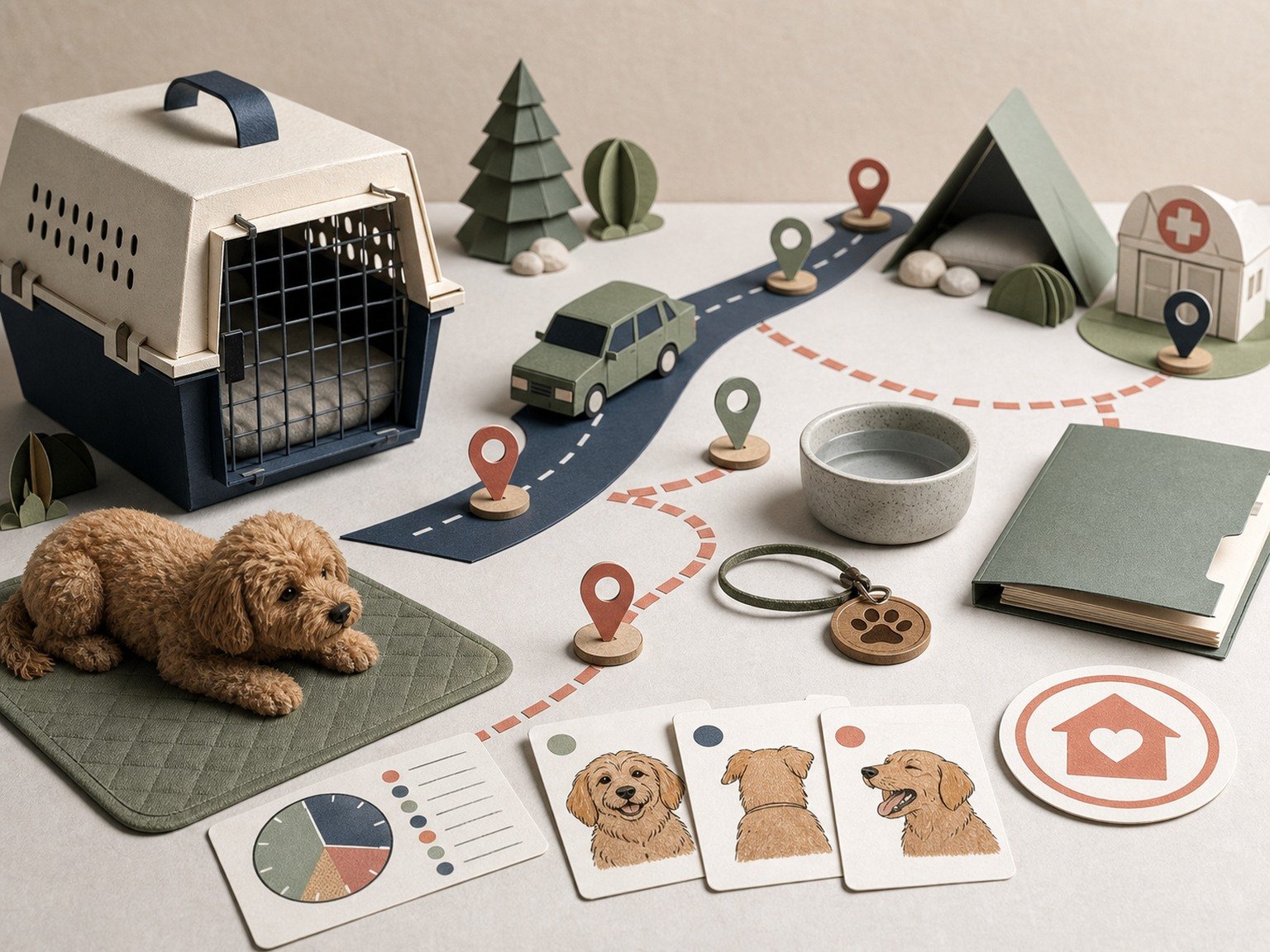
Share destination, route, dates, transport mode, carrier or restraint, lodging, climate, prior behavior, medical history, medications, supplements, and access to routine and emergency clinics. Ask directly whether this trip is reasonable now and what alternative would reduce risk.
Request written instructions for any prescribed antinausea or behavior medication, including timing, food, storage, missed dose, side effects, and the threshold for calling. Medication selection requires the individual history. Do not test a borrowed drug, combine calming products, or use sedation to conceal inability to travel safely.
AAHA behavior guidance recommends addressing distress with medical evaluation, environmental management, and appropriate behavior intervention. [4] When needed, ask about referral to a board-certified veterinary behaviorist or qualified reward-based professional. Travel deadlines do not justify flooding or an improvised intensive plan.
Use gradual, voluntary practice when it is appropriate
Practice components separately at a level where the dog can remain functional: approaching a parked vehicle, resting near it, entering a familiar secured carrier, hearing the door, or taking a very short stationary session. The exact sequence and pace must fit the dog; this is not a universal desensitization protocol.
Let the dog opt out and increase distance at early distress signals. AVSAB recommends reward-based methods and warns that aversive techniques can increase fear, anxiety, avoidance, and fear-related aggression. [5] Do not drag, corner, leash-correct, shock, or keep driving until the dog gives up reacting.
Test the restraint and carrier for fit, ventilation, stability, and safe positioning before departure. A familiar mat or cover may help some dogs, but it is not a treatment and must not impair airflow or observation. The dog should not roam freely or ride unsecured.
Create a route, destination, and recovery record
Plan quiet departure timing, safe stops, water, familiar food, toileting access, temperature control, secure door procedures, and the location of routine and emergency veterinary care. Avoid rigid break or feeding rules; use the veterinary plan and transport requirements.
During travel, record signs, trigger stage, food and water, vomiting, medication administration, rest, temperature context, and recovery. Do not keep repeating a failed exposure to collect better data. Use the predetermined stop threshold and communicate the complete record if care is needed.
Continue observations after arrival and return. Sleep loss, appetite change, gastrointestinal signs, reactivity, withdrawal, or delayed recovery may show that the total travel load was too high. Reassess before the next trip instead of assuming practice alone will solve it.
Prepare for a focused veterinary conversation
Bring a concise timeline, short natural-movement or symptom videos when safe, the exact names and photographs of every food, treat, medication, and supplement label, and notes about appetite, water intake, stool, sleep, activity, comfort, and behavior. Include recent injuries, travel, boarding, diet changes, missed medication, and previous test results. A complete record helps the veterinary team separate a repeatable pattern from a single impression.
Decide in advance what you need from the visit: an urgency decision, a diagnosis plan, a nutrition review, a pain or mobility assessment, or a monitored trial. Ask what result would change the plan and what finding would rule an option out. This keeps research and product information in the right role. Evidence can shape questions and expectations, but it cannot determine what is safe for an individual dog without the history and examination.
Owner tool
Build an anxious-dog travel readiness log
On a phone, swipe across the table to see every column.
| Checkpoint | What to record | Why it helps |
|---|---|---|
| Before | Health, triggers, prior response, route | Defines risk |
| Practice | Step, distance, signals, recovery | Tests tolerance |
| Travel | Motion, climate, food, doses, behavior | Tracks context |
| Contingency | Stop signs, safe place, clinic, records | Protects welfare |
Better questions, calmer next steps
Questions to ask your veterinarian
- Could motion sickness, pain, or illness contribute to these signs?
- Is this dog fit for this route and transport method?
- What written medication instructions and side effects apply?
- Which signs should stop the trip?
- Would postponement or a qualified behavior referral be safer?
FAQ
Should I feed before travel?
Follow the individual veterinary and carrier plan rather than a universal fasting rule.
Can I sedate my dog for a trip?
Only with a veterinarian-selected and monitored plan.
Will repeated car rides cure anxiety?
Forced repetition can worsen fear; use a tailored reward-based plan.
Is drooling always anxiety?
No. Motion sickness and medical factors can overlap.
What if the dog cannot enter the carrier?
Stop forcing the step and ask whether the trip or preparation plan should change.
Sources
- American Animal Hospital Association: Traveling Safely With Your Pet. Pre-trip veterinary care, restraint, records, supplies, and destination planning.
- Veterinary Record: Survey of Travel-Related Problems in Dogs. Owner-reported prevalence and types of travel problems.
- Merck Veterinary Manual: Motion Sickness in Animals. Motion sickness context and veterinary treatment.
- American Animal Hospital Association: Canine and Feline Behavior Management Guidelines. Distress recognition, medical assessment, and behavior intervention.
- American Veterinary Society of Animal Behavior: Humane Dog Training Position Statement. Reward-based methods and risks of aversive training.
