

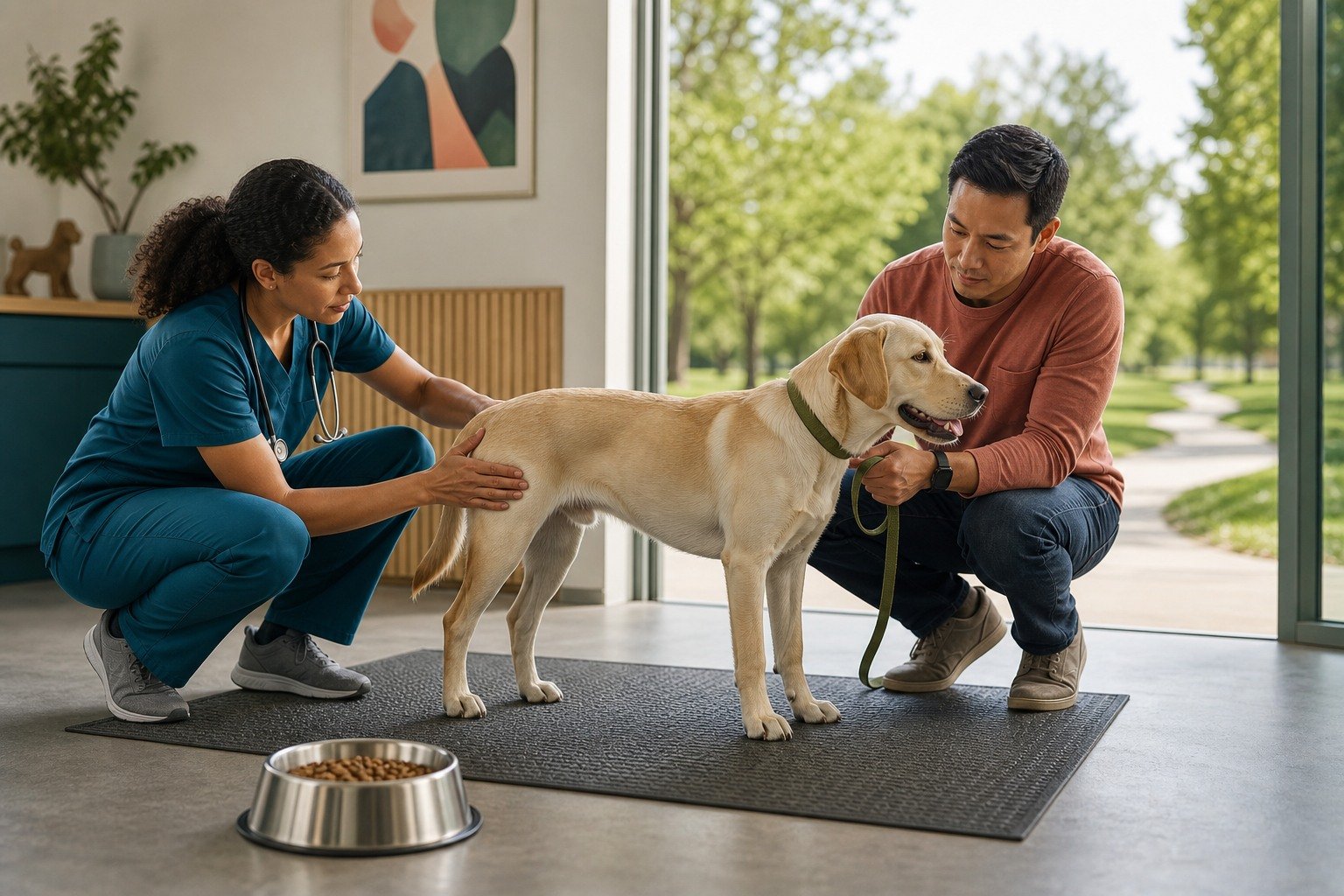
No owner can guarantee that a dog will avoid hip dysplasia, cruciate disease, osteoarthritis, injury, or age-related mobility change. Genetics, conformation, breed, growth, age, sex, prior joint disease, and chance all contribute, and some factors cannot be changed after a dog is born. Prevention is therefore better framed as risk reduction and early response. The most defensible actions are feeding for controlled growth, maintaining a lean body condition, preserving muscle through appropriate progressive activity, reducing avoidable slips and overload, conditioning for specific work, addressing injury promptly, considering breed-related screening, and noticing changes before function is severely limited. Supplements, rigid exercise formulas, and reassuring slogans should not replace these fundamentals or individualized veterinary guidance.
Short answer
Reduce modifiable risk while being honest about what cannot be prevented
A systematic review found associations between canine osteoarthritis and factors including age, body weight, breed, joint disease, and injury, but evidence quality and causality varied. Risk-factor knowledge supports better decisions; it does not permit a prevention guarantee for an individual dog. [1] [2]
- Record the dog's baseline, current routine, exact diet and products, and any recent change.
- Use observations to support veterinary assessment, not to diagnose or choose treatment at home.
- Keep every household member working from the same written plan and restrictions.
- Agree on measurable outcomes, a review date, and clear urgent-contact signs.
Safety first
Early lameness and function change deserve assessment, not preventive products
Contact a veterinarian for recurring limping, stiffness, difficulty rising, reluctance to jump or use stairs, reduced play, altered gait, muscle loss, pain with handling, or behavior change. Seek urgent care for inability to bear weight, major trauma, severe pain, a hot swollen joint, dragging limbs, collapse, or rapid loss of function.
- Do not delay care for sudden, severe, escalating, or function-limiting signs.
- Do not start, stop, combine, divide, or calculate treatment from this article.
- Preserve exact labels, discharge instructions, exposure details, and a concise timeline.
Veterinary note
This article is educational and does not diagnose, treat, prescribe, or replace care from a licensed veterinarian. Your dog’s history, examination, diet, medications, and current signs determine what is appropriate.
Separate fixed risk from choices owners can influence
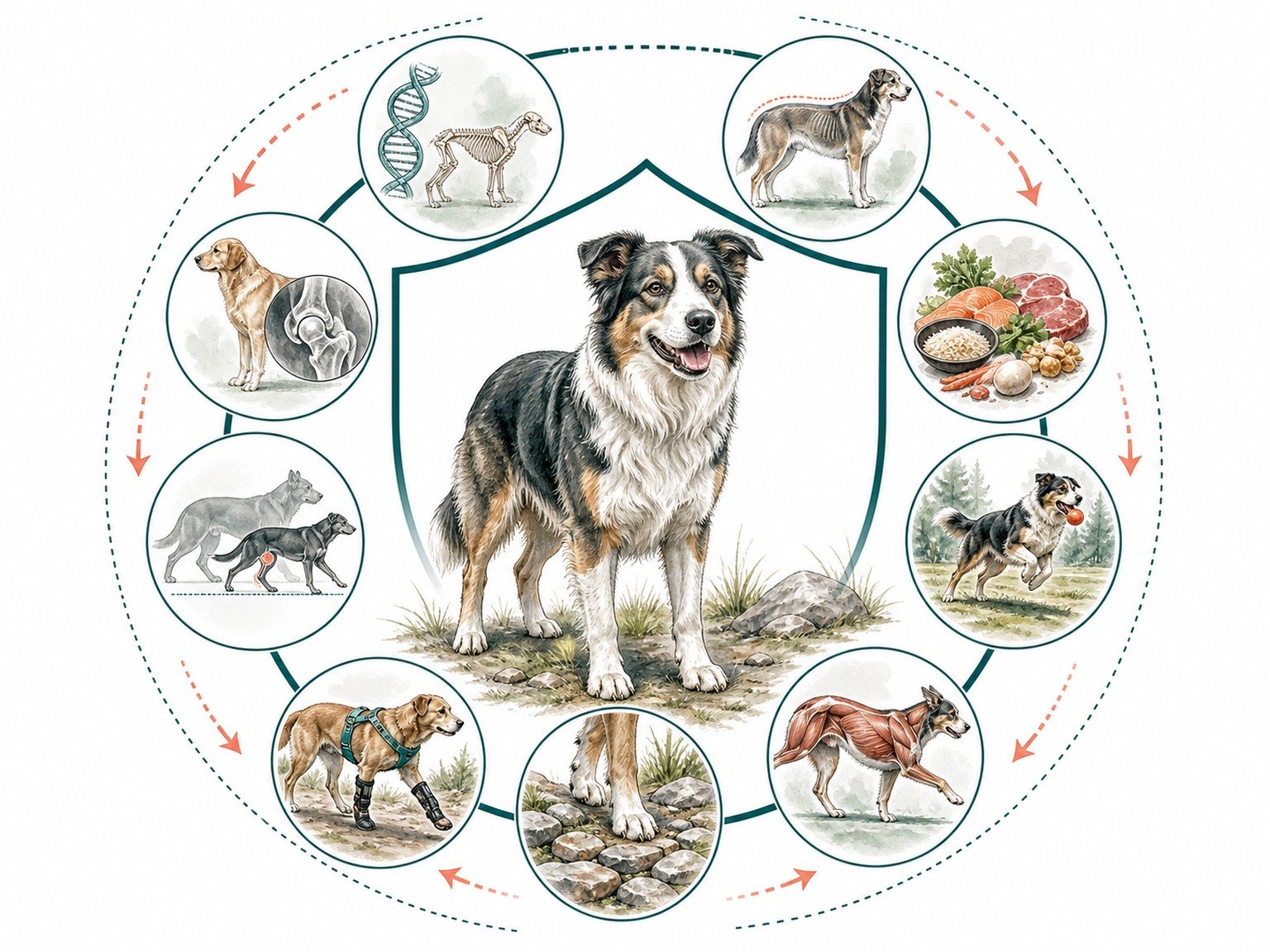
Breed, inherited traits, skeletal conformation, developmental abnormalities, and prior joint damage may shape risk despite excellent care. Responsible breeding and appropriate screening can reduce some population risk, but a clear screen does not guarantee a dog will never develop joint disease.
Modifiable factors include calorie intake, body condition, muscle and fitness, speed of workload progression, surfaces, equipment, and how quickly injury or pain is addressed. These factors interact. A lean dog can still be injured, and a carefully conditioned dog can still develop inherited disease.
Use risk language carefully: lower, manage, monitor, and detect early are more accurate than prevent, protect completely, or arthritis-proof. This framing helps owners act without implying blame when disease occurs.
Prioritize controlled growth and lifelong lean condition
Growing puppies need a complete and balanced diet appropriate to expected adult size, measured to maintain healthy growth and condition. Extra calcium, minerals, calories, or supplements can be harmful when added without a defined indication.
Across the lifespan, body condition and muscle should be assessed separately. Excess body weight is one of the most consistently identified modifiable associations with osteoarthritis. A safe weight plan uses measured food, complete nutrition, treat accounting, and gradual goals. [1]
Lean does not mean underfed, and rapid weight loss can cost muscle. Ask the veterinary team to show the target body-condition range, how to assess muscle, how often to weigh, and when calories or activity should change.
Build movement capacity without relying on unsupported formulas
Regular, tolerable movement supports muscle, coordination, body condition, and daily function. Progress distance, speed, terrain, jumping, sport skills, and load gradually, especially after illness, injury, seasonal inactivity, or a change in work.
Research does not support one universal puppy exercise formula or a rule that one activity is safe for every dog. Self-paced play, structured conditioning, sport, work, and repetitive impact create different demands. Individualize for age, conformation, health, surface, weather, and fatigue.
Improve traction where slips occur, keep nails and paws maintained, teach controlled vehicle and furniture access, and use equipment that fits. Environmental changes reduce avoidable incidents but cannot substitute for diagnosis when movement changes.
Screen thoughtfully and respond early
Discuss breed-related orthopedic screening, developmental examinations, and reproductive decisions with veterinarians and responsible breeding programs. Screening serves a defined population or breeding question; it is not a complete forecast of one dog's future.
Create a baseline for rising, walking, trotting, stairs, jumping, play, work, sleep, and recovery. Compare similar tasks on similar surfaces. Pain guidelines emphasize systematic assessment because dogs often show discomfort through function and behavior rather than crying. [3]
If a change persists or recurs, reduce the provoking activity and seek assessment. Early care may identify injury, developmental disease, neurologic problems, infection, or another condition before compensatory patterns and muscle loss deepen. Stage-based OA guidance supports repeated evaluation and adjustment. [2]
Prepare for a focused veterinary conversation
Bring a concise timeline, short natural-movement or symptom videos when safe, the exact names and photographs of every food, treat, medication, and supplement label, and notes about appetite, water intake, stool, sleep, activity, comfort, and behavior. Include recent injuries, travel, boarding, diet changes, missed medication, and previous test results. A complete record helps the veterinary team separate a repeatable pattern from a single impression.
Decide in advance what you need from the visit: an urgency decision, a diagnosis plan, a nutrition review, a pain or mobility assessment, or a monitored trial. Ask what result would change the plan and what finding would rule an option out. This keeps research and product information in the right role. Evidence can shape questions and expectations, but it cannot determine what is safe for an individual dog without the history and examination.
Owner tool
Build an evidence-based joint-risk plan
On a phone, swipe across the table to see every column.
| Checkpoint | Record | Why it helps |
|---|---|---|
| Fixed risk | Breed, conformation, history, age | Sets context |
| Modifiable | Condition, muscle, workload, footing | Guides action |
| Baseline | Gait, tasks, recovery, behavior | Detects change |
| Response | Reduce load, examine, reassess | Limits delay |
Better questions, calmer next steps
Questions to ask your veterinarian
- Which joint risks are fixed and which can we influence?
- Is growth, body condition, and muscle appropriate?
- How should activity progress for this dog's role?
- Does breed or history support orthopedic screening?
- Which early change should trigger assessment?
FAQ
Can joint disease always be prevented?
No. Risk can be reduced, not eliminated.
Do supplements prevent arthritis?
No universal prevention claim is supported.
Should puppies avoid all stairs or running?
Use individualized, developmentally appropriate guidance.
Is a lean dog fully protected?
No, but healthy condition is an important modifiable factor.
When should screening begin?
Timing depends on breed, purpose, signs, and veterinary advice.
Sources
- BMC Veterinary Research: Risk Factors for Canine Osteoarthritis: A Systematic Review. Risk factors, evidence quality, and limitations.
- Frontiers in Veterinary Science: COAST Development Group Consensus Guidelines. Stage-based OA recognition and management.
- Journal of Feline Medicine and Surgery: 2022 AAHA Pain Management Guidelines. Pain and function assessment.
- Veterinary Sciences: Osteoarthritis Management in Growing Dogs. Growth, nutrition, and early risk management.
- Veterinary Medicine and Science: Physiotherapy for Canine Osteoarthritis: Systematic Review. Exercise and rehabilitation evidence limits.
