

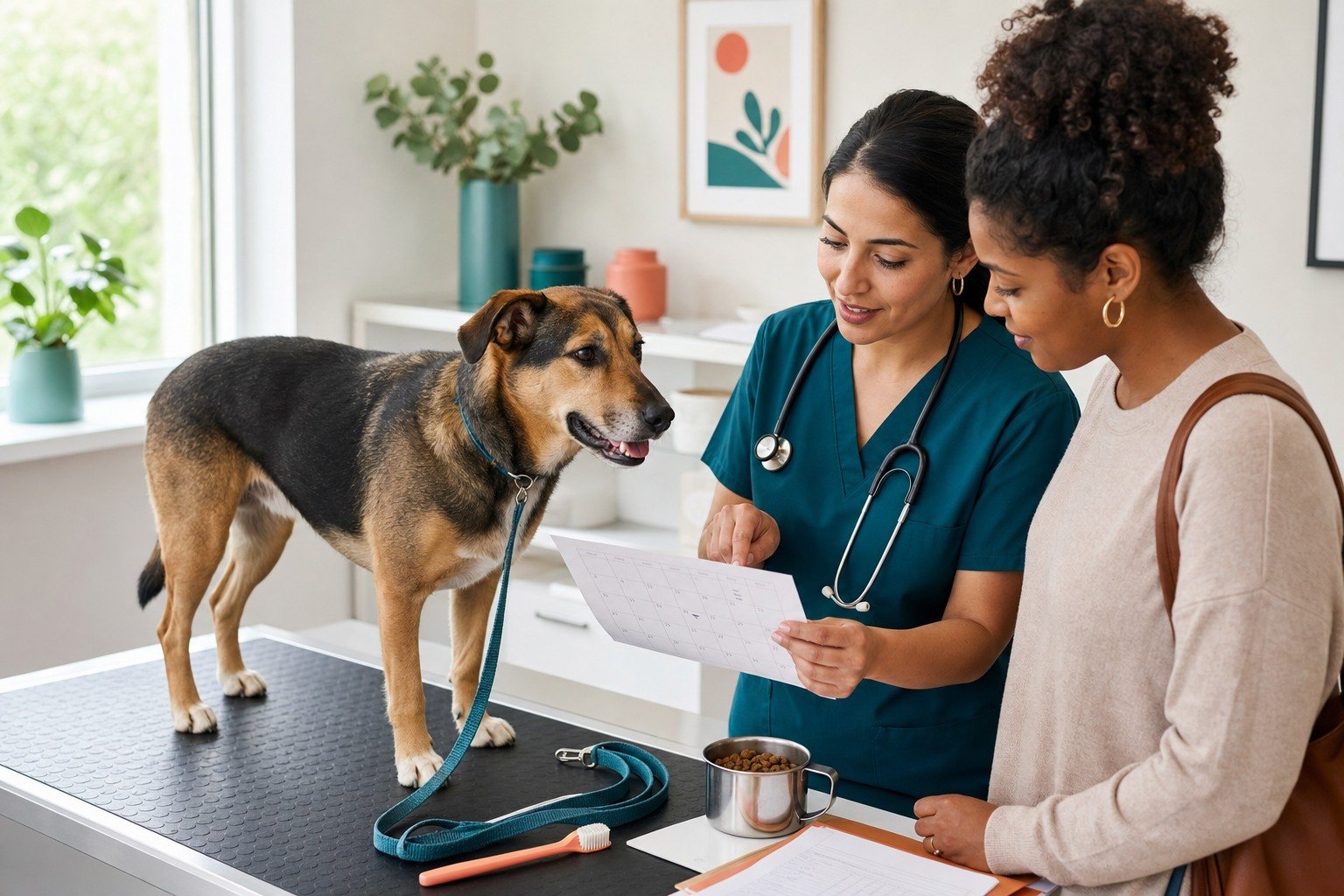
A dog wellness routine is not a supplement stack, a rigid daily checklist, or a promise to prevent every illness. It is a coordinated plan that connects regular veterinary assessment with individualized vaccination and parasite prevention, complete nutrition, body and muscle condition, oral health, movement, behavior, grooming, identification, home safety, and clear follow-up. Age, size, breed, reproductive status, travel, exposure, disease, medication, temperament, and owner capacity all influence the plan. AAHA and AVMA preventive-care frameworks emphasize individualized risk assessment and documentation rather than one universal schedule. The best routine is specific enough to follow, simple enough to sustain, and flexible enough to change when the dog or household changes.
Short answer
Build one coordinated plan instead of collecting disconnected wellness tasks
Preventive-care guidance organizes dog health around history and examination, risk-based vaccination, parasite control, nutrition, dental care, behavior, reproduction, screening, and documented follow-up. No supplement, test, or calendar replaces individualized veterinary judgment. [1] [2]
- Record the dog's baseline, current routine, exact diet and products, and any recent change.
- Use observations to support veterinary assessment, not to diagnose or create treatment at home.
- Keep every household member working from the same written plan and product list.
- Agree on measurable outcomes, a review date, and clear urgent-contact signs.
Safety first
A routine is not a substitute for care when a dog changes suddenly
Contact a veterinarian promptly for pain, appetite or weight loss, repeated vomiting or diarrhea, increased thirst or urination, coughing, exercise intolerance, a changing mass, behavior change, or declining function. Seek urgent care for collapse, breathing difficulty, seizures, severe weakness, major trauma, uncontrolled bleeding, or suspected poisoning.
- Do not delay care for sudden, severe, escalating, or function-limiting signs.
- Do not start, stop, combine, divide, or calculate treatment from this article.
- Preserve exact labels, lot information, exposure details, and a concise timeline.
Veterinary note
This article is educational and does not diagnose, treat, prescribe, or replace care from a licensed veterinarian. Your dog’s history, examination, diet, medications, and current signs determine what is appropriate.
Start with life stage, risk, and a complete baseline
Record age, breed or mix, weight, body and muscle condition, reproductive status, diagnoses, procedures, allergies, medications, supplements, diet, behavior, travel, boarding, wildlife exposure, and household composition. These details turn a generic routine into a patient plan.
AAHA life-stage guidance treats preventive care as a continuum. Needs change from puppy development through adulthood and senior years, while size and breed influence when transitions occur. Calendar age alone should not dictate every decision. [2]
Ask how often the dog should be examined and which screening is appropriate now. Frequency and tests depend on findings and risk; an annual visit is a minimum framework in general preventive guidance, not a promise that every dog needs the same panel. [1]
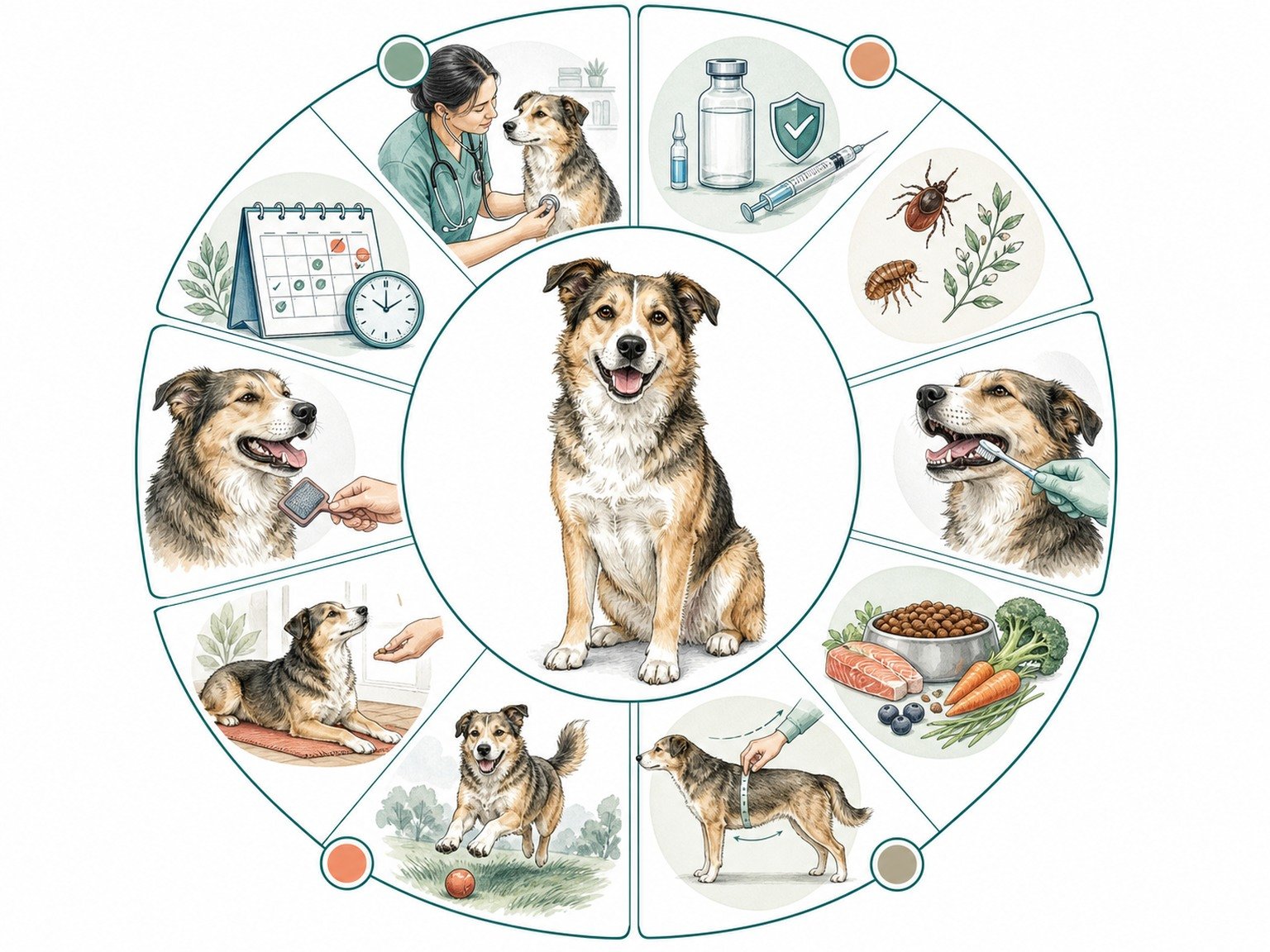
Coordinate vaccination, parasites, and exposure prevention
Vaccination combines core protection with individualized decisions based on geography, lifestyle, travel, boarding, wildlife, other dogs, and health. AAHA's vaccine guidance was updated to make leptospirosis a core recommendation, while exact timing remains a veterinary decision. [3]
Parasite prevention and testing should address heartworm, intestinal parasites, fleas, ticks, and region-specific threats. Indoor living does not eliminate exposure because vectors and parasite stages can enter through people, animals, soil, and travel.
Keep vaccine and prevention records together with adverse reactions, missed doses, travel, boarding, and test results. Do not substitute titers, supplements, repellents, or home remedies for a veterinarian-directed prevention plan.
Make nutrition, teeth, movement, and behavior routine
Use a complete and balanced diet appropriate to life stage and health, then monitor amount, treats, appetite, stool, weight, body condition, and muscle. A food's marketing theme does not establish suitability, and supplements should address a defined need rather than fill a quota. [4]
Oral care belongs in preventive health because periodontal disease can cause pain and progressive tissue damage. Ask for an awake oral assessment, home-care instruction, and when professional examination, imaging, and treatment are indicated. [5]
Choose tolerable movement and enrichment that fit joints, heart and respiratory health, weather, behavior, and recovery. Track fear, aggression, sleep, elimination, and handling comfort alongside physical signs; behavior change can be a health signal.
Turn the plan into a sustainable calendar
Separate daily, weekly, monthly, and visit-based tasks. Assign one owner for refills and records, store emergency and clinic contacts, and use reminders without treating a missed box as proof of neglect or failure.
At each review, reconcile food, treats, medications, supplements, preventives, and topical products. Check whether goals, exposure, body condition, dental status, activity, behavior, cost, and owner capacity have changed.
Ask the veterinary team to identify the few priorities that matter most now, what can wait, and what finding changes the plan. A sustainable routine is safer than an elaborate system that nobody can follow consistently.
Prepare for a focused veterinary conversation
Bring a concise timeline, short natural-movement or symptom videos when safe, the exact names and photographs of every food, treat, medication, and supplement label, and notes about appetite, water intake, stool, sleep, activity, comfort, and behavior. Include recent injuries, travel, boarding, diet changes, missed medication, and previous test results. A complete record helps the veterinary team separate a repeatable pattern from a single impression.
Decide in advance what you need from the visit: an urgency decision, a diagnosis plan, a nutrition review, a pain or mobility assessment, or a monitored trial. Ask what result would change the plan and what finding would rule an option out. This keeps research and product information in the right role. Evidence can shape questions and expectations, but it cannot determine what is safe for an individual dog without the history and examination.
Owner tool
Build a one-page wellness plan
On a phone, swipe across the table to see every column.
| Checkpoint | Record | Why it helps |
|---|---|---|
| Baseline | Life stage, health, diet, function | Individualizes care |
| Prevention | Vaccines, parasites, dental, safety | Manages risk |
| Routine | Food, movement, behavior, grooming | Supports daily care |
| Review | Outcome, change, next visit | Keeps plan current |
Better questions, calmer next steps
Questions to ask your veterinarian
- What are this dog's top three preventive priorities?
- Which vaccines and parasite controls fit current exposure?
- Is the diet and body condition appropriate?
- What dental, movement, or behavior issue needs action?
- When should the plan be reviewed?
FAQ
Does every dog need the same wellness schedule?
No. Risk, life stage, health, and exposure differ.
Is a supplement part of every routine?
No. Zero supplements can be appropriate.
Are annual exams enough?
Frequency is individualized by health and risk.
Can an indoor dog skip parasite prevention?
Indoor living does not eliminate exposure.
What makes a routine vet-approved?
The veterinary team has assessed and documented the individual plan.
Sources
- American Animal Hospital Association: AAHA-AVMA Canine Preventive Healthcare Guidelines. Preventive assessment and follow-up framework.
- American Animal Hospital Association: Canine Life Stage Guidelines. Life-stage preventive care.
- American Animal Hospital Association: Canine Vaccination Guidelines. Individualized core and noncore vaccination.
- World Small Animal Veterinary Association: Global Nutrition Guidelines. Nutrition assessment.
- American Animal Hospital Association: Dental Care Across the Canine Life Stage. Oral health in preventive care.
