


Vitamin D is essential for calcium and phosphorus regulation, bone health, and other physiologic functions, yet it can also be toxic. Unlike people, dogs rely primarily on dietary vitamin D rather than making meaningful amounts in skin after sunlight exposure. Complete and balanced dog food is formulated to meet nutritional requirements when fed as directed, but diet history, life stage, disease, absorption, liver and kidney metabolism, and product quality all affect interpretation. A low or high blood measurement does not by itself identify a cause or create a treatment plan. Human vitamin D, veterinary supplements, fortified foods, rodenticides containing cholecalciferol, and manufacturing errors can all create exposure concerns. Owners should never add vitamin D or seek extra sun as a home correction.
Short answer
Vitamin D is necessary, but excess can damage the kidneys and other tissues
Dogs obtain vitamin D mainly from diet. Its metabolism involves the liver and kidneys, and blood results require clinical context. Excess cholecalciferol can cause dangerous calcium and phosphorus disturbances, mineralization, kidney injury, and systemic illness; suspected exposure requires prompt professional guidance. [1] [2]
- Record the exact question, baseline, product or exposure, timing, and whole-dog context.
- Use the record to support veterinary assessment, not to diagnose or create a regimen at home.
- Bring the complete diet, labels, medications, supplements, health history, and observed changes.
- Agree on measurable goals, a review point, and clear instructions for urgent changes.
Safety first
Suspected vitamin D or rodenticide exposure is an urgent toxicology question
Contact a veterinarian, emergency clinic, or animal poison control center immediately after possible access to vitamin D concentrate, human supplements, rodenticide, or an incorrect amount. Do not wait for symptoms. Vomiting, appetite loss, increased thirst or urination, weakness, constipation, black stool, collapse, or seizures requires urgent assessment.
- Do not delay care for sudden, severe, escalating, or function-limiting signs.
- Do not start, stop, combine, divide, or calculate treatment from this article.
- Preserve exact packages, lot information, exposure details, and a concise timeline.
Veterinary note
This article is educational and does not diagnose, treat, prescribe, or replace care from a licensed veterinarian. Your dog’s history, examination, diet, medications, and current signs determine what is appropriate.
Understand where dogs get vitamin D
Dogs do not depend on sun exposure for vitamin D in the way people do. Research and veterinary nutrition references describe limited cutaneous synthesis, making dietary provision central. More outdoor time is not a treatment for a suspected deficiency. [1]
Complete and balanced foods are formulated for a stated species and life stage under defined feeding conditions. Treats, toppers, homemade diets, supplements, appetite loss, malabsorption, and feeding below or above guidance can change the nutritional picture.
Read the nutritional adequacy statement and bring the exact food, amount, treats, supplements, and feeding history to the veterinarian. Do not compare package numbers across dry and wet foods without understanding units, moisture, energy, and total intake.
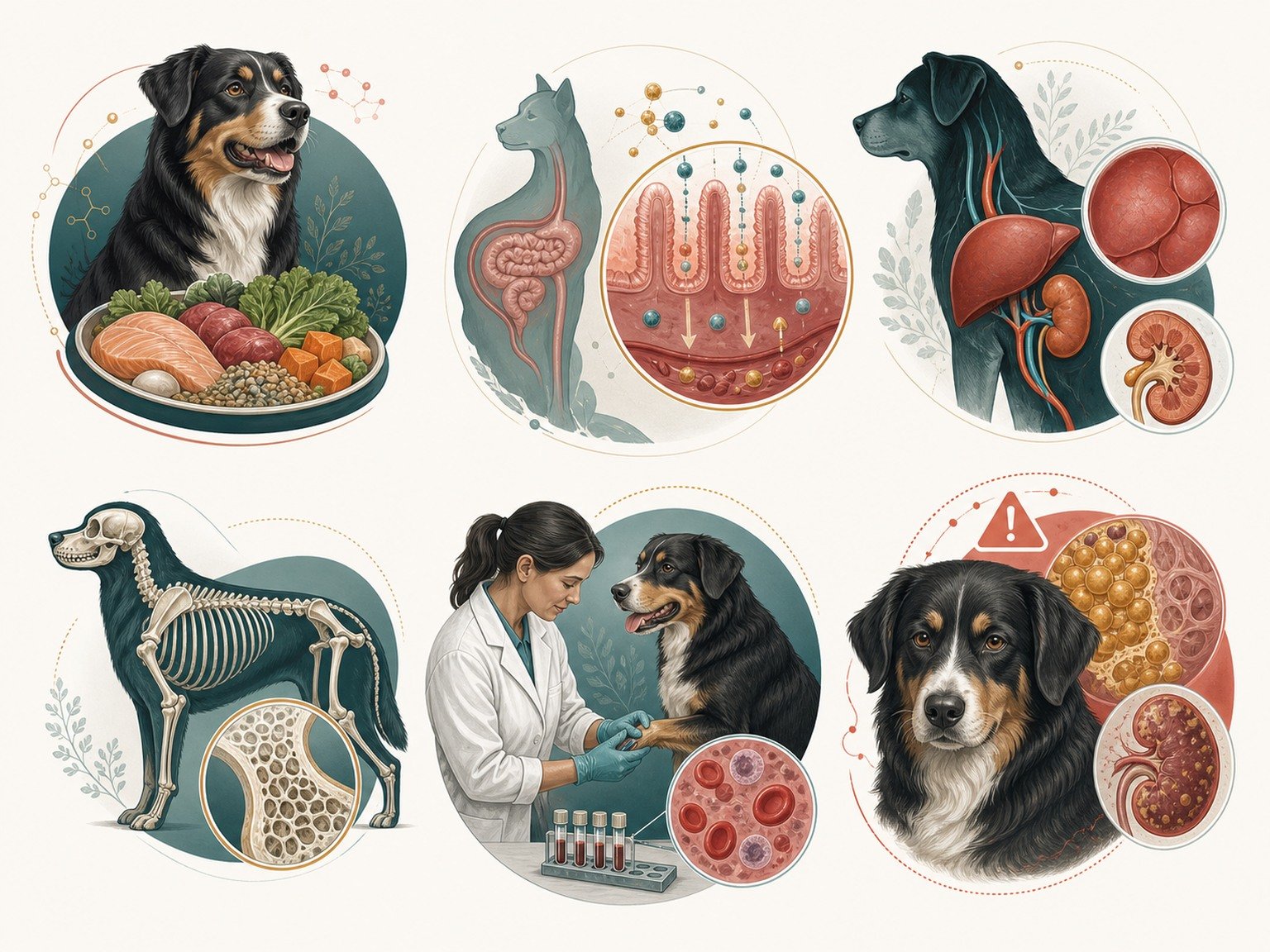
Keep blood testing in clinical context
The commonly measured circulating form is 25-hydroxyvitamin D, while active hormonal regulation involves additional metabolism. A number on a report should be interpreted with the laboratory method, reference interval, diet, disease, and concurrent treatment. [1]
Associations between vitamin D status and disease have been reported in canine studies, but association does not prove that a low value caused disease or that supplementation improves the outcome. Illness may alter intake, absorption, metabolism, binding proteins, or measured concentration.
Ask why testing is recommended, what alternative explanations are being considered, whether calcium, phosphorus, kidney, liver, gastrointestinal, or parathyroid findings matter, and what result would change care.
Recognize why more is not better
Vitamin D has a narrower safety margin than casual wellness language may suggest. Excess can increase calcium and phosphorus, leading to soft-tissue mineralization and kidney injury. Risk depends on the compound, amount, timing, formulation, and patient. [2]
Cholecalciferol rodenticide is a distinct emergency exposure, but concentrated human products, misformulated foods, and dosing errors can also cause toxicity. A dog may initially appear normal, so waiting for signs is unsafe after a credible exposure. [3]
Do not induce vomiting, give food, calculate a safe amount, or use an internet threshold unless a veterinary toxicology professional directs the response. Preserve the package, concentration, ingredient list, estimated amount, time, dog weight, and current signs.
Create a safe nutrition and follow-up plan
If a veterinarian identifies a nutritional problem, the correction may involve the complete diet, a specific formulation, treatment of underlying disease, or carefully monitored supplementation. It should not be generalized to another dog or another product.
Record the exact product, reason, amount, administration, storage, baseline laboratory values, concurrent diet and medication, adverse signs, and recheck date. Do not substitute a human or differently concentrated product because the ingredient name matches.
Report suspected food or product problems with the veterinarian's help and preserve lot information. Regulatory notices and recalls identify specific products and lots; they do not establish that all foods or all vitamin D products are unsafe. [4]
Prepare for a focused veterinary conversation
Bring a concise timeline, short natural-movement or symptom videos when safe, the exact names and photographs of every food, treat, medication, and supplement label, and notes about appetite, water intake, stool, sleep, activity, comfort, and behavior. Include recent injuries, travel, boarding, diet changes, missed medication, and previous test results. A complete record helps the veterinary team separate a repeatable pattern from a single impression.
Decide in advance what you need from the visit: an urgency decision, a diagnosis plan, a nutrition review, a pain or mobility assessment, or a monitored trial. Ask what result would change the plan and what finding would rule an option out. This keeps research and product information in the right role. Evidence can shape questions and expectations, but it cannot determine what is safe for an individual dog without the history and examination.
Owner tool
Prepare a vitamin D assessment
On a phone, swipe across the table to see every column.
| Checkpoint | Record | Why it helps |
|---|---|---|
| Diet | Food, amount, treats, supplements | Defines intake |
| Testing | Method, result, calcium, organs | Adds context |
| Exposure | Product, concentration, amount, time | Guides urgency |
| Plan | Exact correction and recheck | Prevents excess |
Better questions, calmer next steps
Questions to ask your veterinarian
- Is the complete diet nutritionally appropriate?
- Why is vitamin D testing being considered?
- What conditions could explain this result?
- Could any food, supplement, or rodenticide create excess exposure?
- What exact monitoring and recheck plan is needed?
FAQ
Can sunlight correct low vitamin D in a dog?
No. Dogs rely primarily on dietary vitamin D.
Should I give a human vitamin D pill?
No, unless a veterinarian directs the exact product and plan.
Does a low blood value prove deficiency caused disease?
No. It requires clinical context.
Is vitamin D toxicity immediate?
Signs may be delayed, so suspected exposure needs prompt guidance.
Does every recall affect all dog food?
No. Recalls apply to identified products and lots.
Sources
- Veterinary Sciences: Vitamin D Metabolism and Profiling in Dogs. Dietary dependence, metabolism, and measurement context.
- Veterinary Sciences: Vitamin D and Bone Metabolism in Dogs. Calcium, phosphorus, bone, and metabolic physiology.
- Merck Veterinary Manual: Cholecalciferol Poisoning in Animals. Toxicity mechanism, signs, and urgent care.
- U.S. Food and Drug Administration: How to Report a Pet Food Complaint. Product and lot reporting.
- Merck Veterinary Manual: Nutritional Requirements and Related Diseases of Small Animals. Vitamin D within complete nutrition.
