

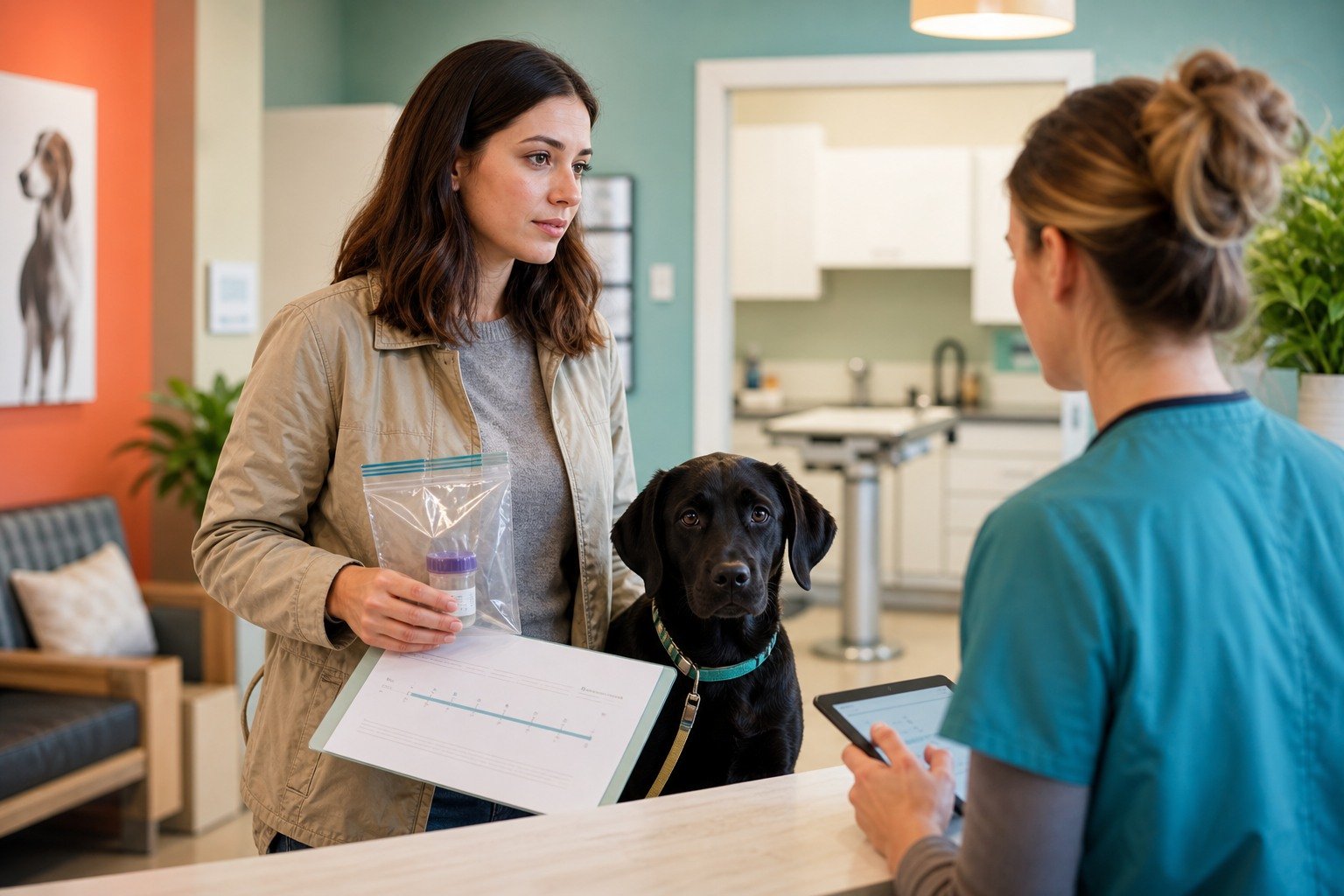
Diarrhea is increased water in feces and may involve changed frequency, volume, urgency, mucus, blood, or straining. Causes range from dietary change, scavenging, stress, and parasites to infection, toxins, foreign material, pancreatic or endocrine disease, inflammation, cancer, and illness outside the gut. Most important is the whole dog: age, vaccine status, hydration, appetite, vomiting, pain, energy, blood, duration, and exposure history. A young unvaccinated dog, repeated vomiting, black or bloody stool, collapse, severe lethargy, or inability to keep water down raises urgency. Record the pattern and contact the veterinary team rather than selecting fasting, bland food, probiotics, antidiarrheals, antibiotics, or human medicine from a general guide.
Short answer
Triage the dog, not only the stool
Cornell distinguishes mild uncomplicated cases from diarrhea accompanied by appetite loss, lethargy, vomiting, black or bloody stool, persistence, or dehydration. MSD notes that diarrhea has many gastrointestinal and systemic causes, so accurate history and examination guide testing. [1] [2]
- Record exact timing, pattern, exposures, diet, products, and recent changes.
- Use the record to prepare for veterinary assessment, not to diagnose or prescribe at home.
- Bring labels, medications, supplements, prior results, and safe photos or video when useful.
- Agree on monitoring, reassessment, and urgent-response instructions.
Safety first
Blood, repeated vomiting, dehydration, collapse, or a high-risk dog needs prompt care
Seek veterinary guidance promptly for repeated or persistent diarrhea, black or bloody stool, vomiting, appetite loss, marked lethargy, pain, fever concern, dehydration, weight loss, or a puppy, unvaccinated, very small, senior, or medically fragile dog. Seek emergency care for collapse, severe weakness, breathing difficulty, distended painful abdomen, or rapid decline.
- Do not delay care for sudden, severe, escalating, or function-limiting signs.
- Do not start, stop, combine, or calculate treatment from this article.
- Keep a concise timeline and exact product or exposure details available.
Veterinary note
This article is educational and does not diagnose, treat, prescribe, or replace care from a licensed veterinarian. Your dog’s history, examination, diet, medications, and current signs determine what is appropriate.
Record a precise stool and symptom pattern
Record onset, number of episodes, volume, urgency, color, consistency, mucus, fresh blood, black tarry appearance, straining, accidents, and whether signs wake the dog. Photograph a representative stool and collect a sample only as the clinic directs.
Track vomiting, appetite, water, urination, energy, pain, weight, temperature only if trained, and ability to keep water down. Dehydration risk increases when vomiting accompanies diarrhea. [1]
Include normal intervals and recovery. One soft stool in an otherwise normal adult dog differs from repeated watery diarrhea with reduced function, but only the veterinary team can account for the individual risk.
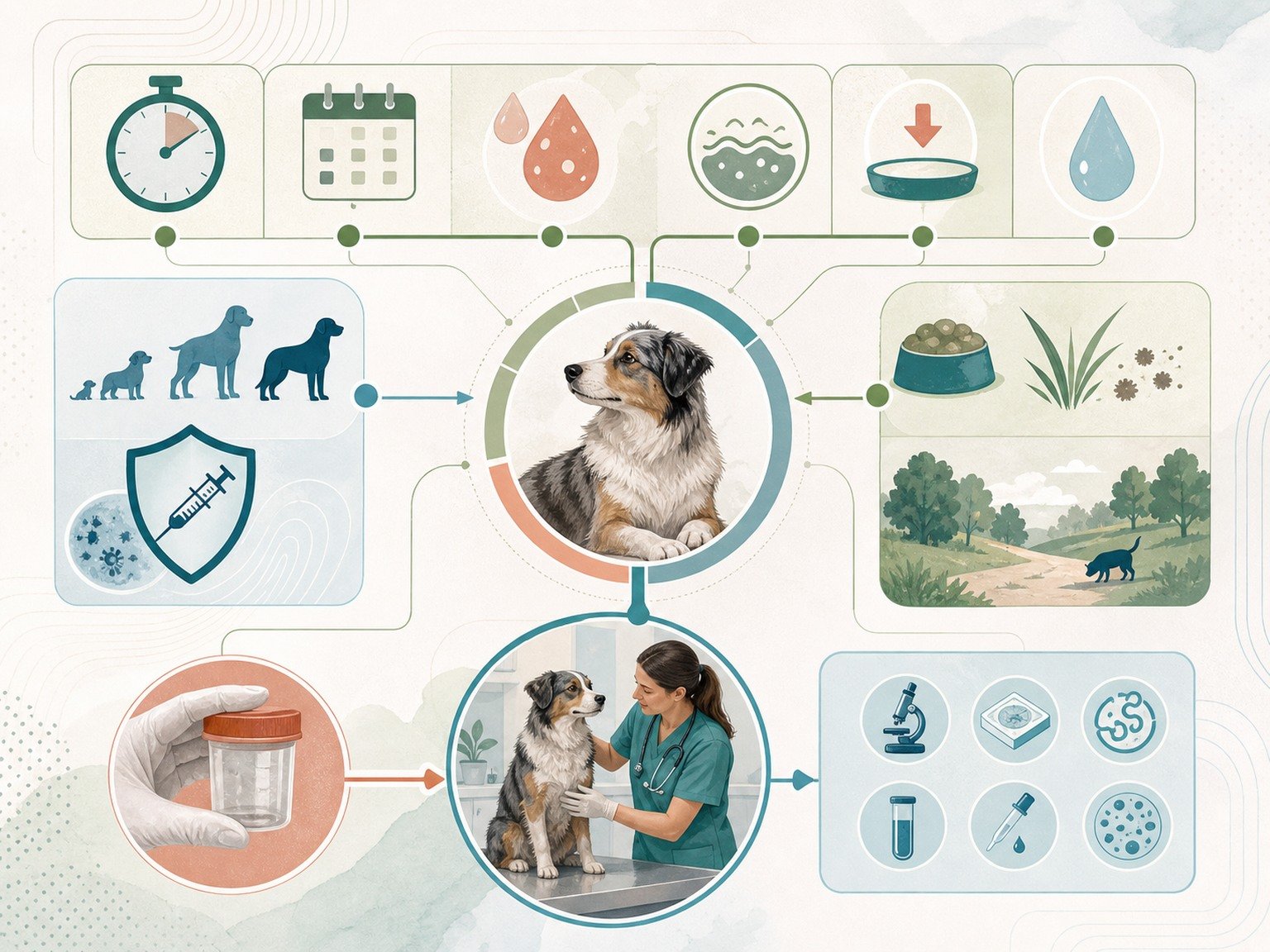
List diet, exposure, age, and prevention context
Record the complete diet, treats, chews, table food, recent transition, trash or compost, raw or spoiled food, bones, toys, fabric, plants, chemicals, medications, and supplements.
Include travel, boarding, daycare, dog parks, wildlife, water sources, other affected animals, parasite prevention, vaccine status, and prior gastrointestinal disease. These details help prioritize infectious, parasitic, dietary, toxic, and foreign-body concerns.
Parvovirus is an important concern in young or incompletely vaccinated dogs with compatible signs and exposure context. Do not bring a potentially infectious dog into a waiting room without calling ahead. [3]
Understand how veterinarians choose tests
History and examination assess hydration, pain, temperature, perfusion, abdominal findings, body condition, and systemic illness. The veterinarian may request fecal tests, bloodwork, urinalysis, imaging, or disease-specific tests based on risk.
A fecal result must be interpreted with signs and exposure. Imaging may be selected when obstruction or another structural concern exists. Chronic or recurrent diarrhea can require a broader pathway than an acute mild episode.
Black stool can represent digested blood and may arise from the upper gastrointestinal tract or other sources. Severe diarrhea with red or black blood is listed among Cornell emergency concerns. [1] [3]
Avoid generic home protocols and monitor the plan
Do not give loperamide, bismuth subsalicylate, leftover antibiotics, human pain medicine, or another pet's prescription unless the veterinarian directs the exact product and dog. These can be inappropriate or mask deterioration.
Diet decisions depend on age, nutritional status, disease, allergy history, vomiting, obstruction risk, and severity. A short-term diet used in one uncomplicated case is not a universal protocol and may be unsuitable for puppies or medically fragile dogs.
Ask what outcome to monitor, how hydration and food intake should be managed, when to report persistence, and what finding would trigger testing or hospitalization. Treatment depends on the cause and may include fluids or other veterinary support. [4]
Keep the care record current
When several household members care for the dog, use one shared record and designate one person to communicate with the clinic. Duplicate food changes, medications, samples, or conflicting descriptions can obscure the pattern. Record the veterinary advice with its date and the circumstances it addressed. If the dog worsens, ask whether the earlier plan still applies rather than extending a wait-and-see interval that was given for a milder presentation.
Prepare for a focused veterinary conversation
Bring a concise timeline, short natural-movement or symptom videos when safe, the exact names and photographs of every food, treat, medication, and supplement label, and notes about appetite, water intake, stool, sleep, activity, comfort, and behavior. Include recent injuries, travel, boarding, diet changes, missed medication, and previous test results. A complete record helps the veterinary team separate a repeatable pattern from a single impression.
Decide in advance what you need from the visit: an urgency decision, a diagnosis plan, a nutrition review, a pain or mobility assessment, or a monitored trial. Ask what result would change the plan and what finding would rule an option out. This keeps research and product information in the right role. Evidence can shape questions and expectations, but it cannot determine what is safe for an individual dog without the history and examination.
Owner tool
Prepare a diarrhea triage record
On a phone, swipe across the table to see every column.
| Checkpoint | Record | Why it helps |
|---|---|---|
| Stool | Frequency, volume, color, blood, mucus | Describes pattern |
| Whole dog | Vomiting, appetite, water, energy, pain | Guides urgency |
| Risk | Age, vaccines, disease, exposures | Prioritizes causes |
| Follow-up | Sample, tests, hydration, recheck | Tracks plan |
Better questions, calmer next steps
Questions to ask your veterinarian
- Does this dog's age or health raise urgency?
- Which causes and exposures matter most?
- Should I bring a sample or photograph?
- What testing could change treatment?
- What sign means emergency care?
FAQ
Is one soft stool an emergency?
Not always; whole-dog signs and risk context matter.
Can I give human antidiarrheal medicine?
Not unless a veterinarian directs it.
Why does vaccine status matter?
It changes concern for infections such as parvovirus.
Does blood always come from the colon?
No. Color and other findings need interpretation.
When is dehydration a concern?
Risk rises with repeated watery stool, vomiting, poor intake, or vulnerable dogs.
Sources
- Cornell University College of Veterinary Medicine: Diarrhea. Urgency, dehydration, causes, sample, and diagnostics.
- MSD Veterinary Manual: Introduction to Digestive Disorders of Dogs. Signs, history, examination, and tests.
- Cornell University College of Veterinary Medicine: Emergency and Critical Care. Severe bloody diarrhea and abdominal emergency cues.
- MSD Veterinary Manual: Disorders of the Stomach and Intestines in Dogs. Causes, diagnosis, and cause-specific treatment context.
