

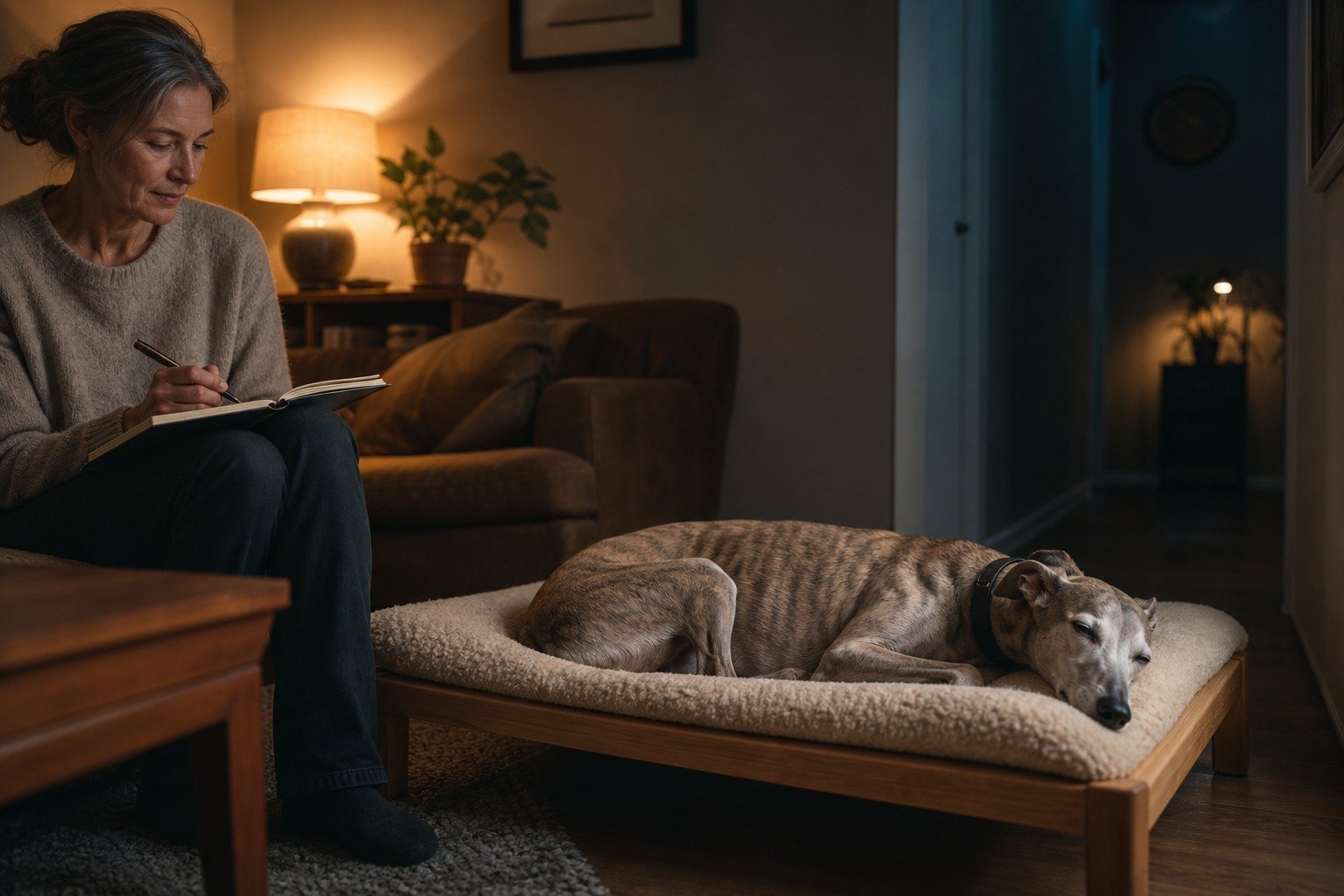
Senior dogs may sleep at different times, wake more often, change resting locations, pace, vocalize, or seem less settled at night. Sleep-wake changes are considered during evaluation for canine cognitive dysfunction, but they are not diagnostic by themselves. Pain, organ dysfunction, neurologic or structural disease, sensory loss, medication effects, elimination needs, temperature, noise, light, and household routines can also alter sleep. Research using polysomnography in older dogs has found associations between selected sleep measures and cognitive scores, yet a small two-hour laboratory nap cannot create a normal daily-hour target or home diagnostic threshold. Owners can help by recording patterns, concurrent signs, and daytime function and seeking care for sudden, progressive, distressing, or disruptive changes.
Short answer
Track the pattern instead of counting toward a universal sleep target
AAHA includes sleep-wake changes among signs considered in senior behavioral and cognitive assessment, while emphasizing medical rule-outs. A small polysomnographic study found associations between sleep measures and cognitive scores during a defined afternoon nap, but it did not establish causation, a household cutoff, or a normal daily sleep range. [1] [3]
- Record the exact pattern, product, context, timing, and recent changes.
- Use the record to support professional assessment, not to create a diagnosis or protocol at home.
- Bring the complete label, health history, diet, medications, supplements, and prior responses.
- Agree on a review point and clear instructions for urgent changes.
Safety first
Sudden confusion, severe restlessness, collapse, or loss of function needs prompt care
Contact a veterinarian for persistent nighttime distress, pain, repeated falls, inability to settle, marked appetite or thirst change, new house-soiling, progressive confusion, rapid behavior change, or impaired daytime function. Seek urgent care for collapse, seizures, breathing difficulty, inability to stand, severe pain, or rapid deterioration.
- Do not delay care for sudden, severe, escalating, or function-limiting signs.
- Do not start, stop, combine, divide, or calculate treatment from this article.
- Preserve exact packages, lot information, exposure details, and a concise timeline.
Veterinary note
This article is educational and does not diagnose, treat, prescribe, or replace care from a licensed veterinarian. Your dog’s history, examination, diet, medications, and current signs determine what is appropriate.
Describe the change without diagnosing it
Record when the dog lies down, where sleep occurs, how often waking happens, what the dog does when awake, how long resettling takes, and whether the next day differs. A statement such as awake from 2:10 to 2:35, paced near the back door, urinated, then settled is more useful than slept badly.
Sleep can shift gradually with routine and age, but increased sleep should not automatically be dismissed as normal aging. Night waking also should not automatically be labeled dementia. Direction, speed of change, distress, and functional effect determine how quickly the pattern deserves assessment.
Include snoring, coughing, breathing effort, movement during sleep, unusual posture, vocalization, startle, disorientation, elimination, appetite, thirst, pain signs, and medication timing. Do not wake or provoke the dog simply to test responsiveness.
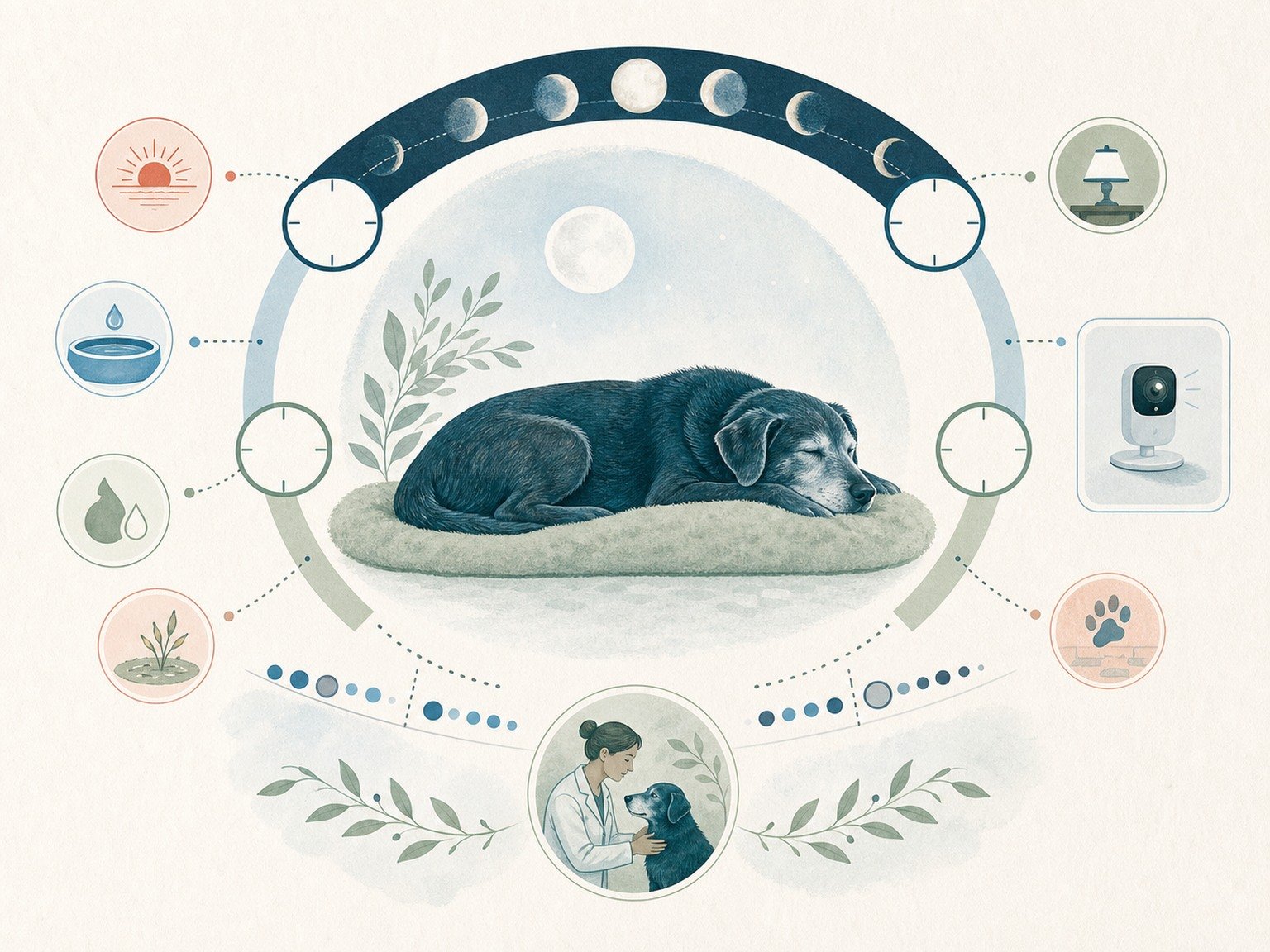
Keep medical, sensory, and environmental contributors visible
Pain can interfere with finding a comfortable position or rising to eliminate. Organ dysfunction may increase thirst or urination. Neurologic disease, seizures, sensory loss, endocrine problems, gastrointestinal discomfort, medication effects, and other conditions can alter nighttime behavior. [1]
Changes in hearing or vision can make darkness or household movement more confusing. Environmental contributors include temperature, noise, light, visitors, another pet, changed sleeping arrangements, and access to the outdoors. Record these details without assuming they explain the entire pattern.
AAHA behavior guidance places sleep observations alongside physical, sensory, cognitive, elimination, interaction, and anxiety changes. Looking across domains helps the veterinary team avoid treating one sleep sign as a stand-alone diagnosis. [2]
Understand what sleep research can support
In a study of 28 senior dogs, polysomnography during a two-hour afternoon nap found selected associations between sleep architecture and cognitive scores. The finding supports scientific interest in sleep and aging; it does not prove that one causes the other. [3]
The sample was small, the setting and time window were defined, and laboratory equipment differs from ordinary home observation. Results cannot be converted into a required number of hours, a consumer sleep score, or a home test for cognitive dysfunction.
A wearable, camera, or app may create additional observations, but device output still requires context and validation. Do not buy or rely on a product solely because it claims to detect dementia or optimize a senior dog's sleep.
Prepare for a diagnostic conversation
Veterinary behavior diagnosis begins with a detailed history, physical and neurologic examination, medical rule-outs, and selected testing when indicated. Safe video and a context-rich log can show patterns that are hard to reproduce during a daytime visit. [4]
Bring medication and supplement timing, diet, water and elimination changes, pain or mobility observations, hearing and vision concerns, recent household changes, and daytime function. Note whether the dog can still enjoy normal routines and recover after a disrupted night.
This guide provides no sedative, supplement, medication, bedtime, exercise, or feeding protocol. Ask what causes are being considered, what each test could change, what immediate comfort or safety steps fit the dog, and when reassessment should occur.
Prepare for a focused veterinary conversation
Bring a concise timeline, short natural-movement or symptom videos when safe, the exact names and photographs of every food, treat, medication, and supplement label, and notes about appetite, water intake, stool, sleep, activity, comfort, and behavior. Include recent injuries, travel, boarding, diet changes, missed medication, and previous test results. A complete record helps the veterinary team separate a repeatable pattern from a single impression.
Decide in advance what you need from the visit: an urgency decision, a diagnosis plan, a nutrition review, a pain or mobility assessment, or a monitored trial. Ask what result would change the plan and what finding would rule an option out. This keeps research and product information in the right role. Evidence can shape questions and expectations, but it cannot determine what is safe for an individual dog without the history and examination.
Owner tool
Build a sleep-and-context record
On a phone, swipe across the table to see every column.
| Checkpoint | Record | Why it helps |
|---|---|---|
| Timing | Sleep, waking, resettling, daytime naps | Shows pattern |
| Behavior | Pacing, vocalization, confusion, posture | Describes impact |
| Context | Pain, elimination, drugs, light, noise | Keeps causes open |
| Function | Appetite, mobility, interaction, next day | Guides urgency |
Better questions, calmer next steps
Questions to ask your veterinarian
- Could pain, illness, sensory change, or medication contribute?
- Which observations or videos are most useful?
- What testing could change the plan?
- How should I protect nighttime safety now?
- What change requires urgent reassessment?
FAQ
How many hours should a senior dog sleep?
The repaired evidence supports no universal normal-hour cutoff.
Does night waking mean dementia?
No. Many medical, sensory, and environmental causes are possible.
Can a sleep tracker diagnose cognitive dysfunction?
No consumer reading replaces veterinary assessment.
Should I wake the dog to test it?
No. Observe naturally occurring behavior.
What should a video show?
Only safe, naturally occurring behavior and context.
Sources
- American Animal Hospital Association: Managing Cognitive Dysfunction and Behavioral Anxiety. Sleep-wake signs and medical rule-outs.
- American Animal Hospital Association: Age and Behavior. Senior behavior domains to monitor.
- Frontiers in Veterinary Science: Sleep and Cognition in Aging Dogs. Small defined polysomnography study and limits.
- MSD Veterinary Manual: Diagnosis of Behavior Problems in Animals. History, examination, testing, logs, and video.
