

The NASC Quality Seal is a voluntary industry quality-program mark used by eligible member companies. It can tell an owner that a company has met specified program requirements involving audits, written quality systems, labeling, adverse-event handling, training, and possible random testing. It does not mean FDA approved, veterinarian prescribed, clinically effective for every claim, risk-free, or appropriate for an individual dog.
Short answer
Read the seal as a company-quality signal, not a treatment endorsement
NASC says companies authorized to display its seal must pass an independent quality audit and maintain program requirements such as written procedures, complaint and adverse-event systems, labeling compliance, training, and random product testing. The program does not replace federal oversight, clinical evidence, or a veterinarian's patient-specific decision. [1] [2]
- Verify the current seal and audited-company status through the official program source.
- Ask what controls apply to the exact formula and lot, not only the parent company.
- Evaluate evidence, interactions, intended use, and monitoring separately from the seal.
Safety first
A seal does not make severe claims or reactions safe
Avoid products that promise to cure, treat, or prevent disease without appropriate regulatory status and veterinary context. Stop use and contact a veterinarian for suspected reactions. Seek emergency help for collapse, breathing difficulty, seizure, facial swelling, severe vomiting, unusual bleeding, or suspected overdose.
- Do not interpret the seal as FDA approval or proof of clinical effectiveness.
- Do not assume every product from a member company carries the seal or has the same evidence.
- Do not ignore a damaged package, missing lot, hidden ingredients, or conflicting directions because a logo is present.
Veterinary note
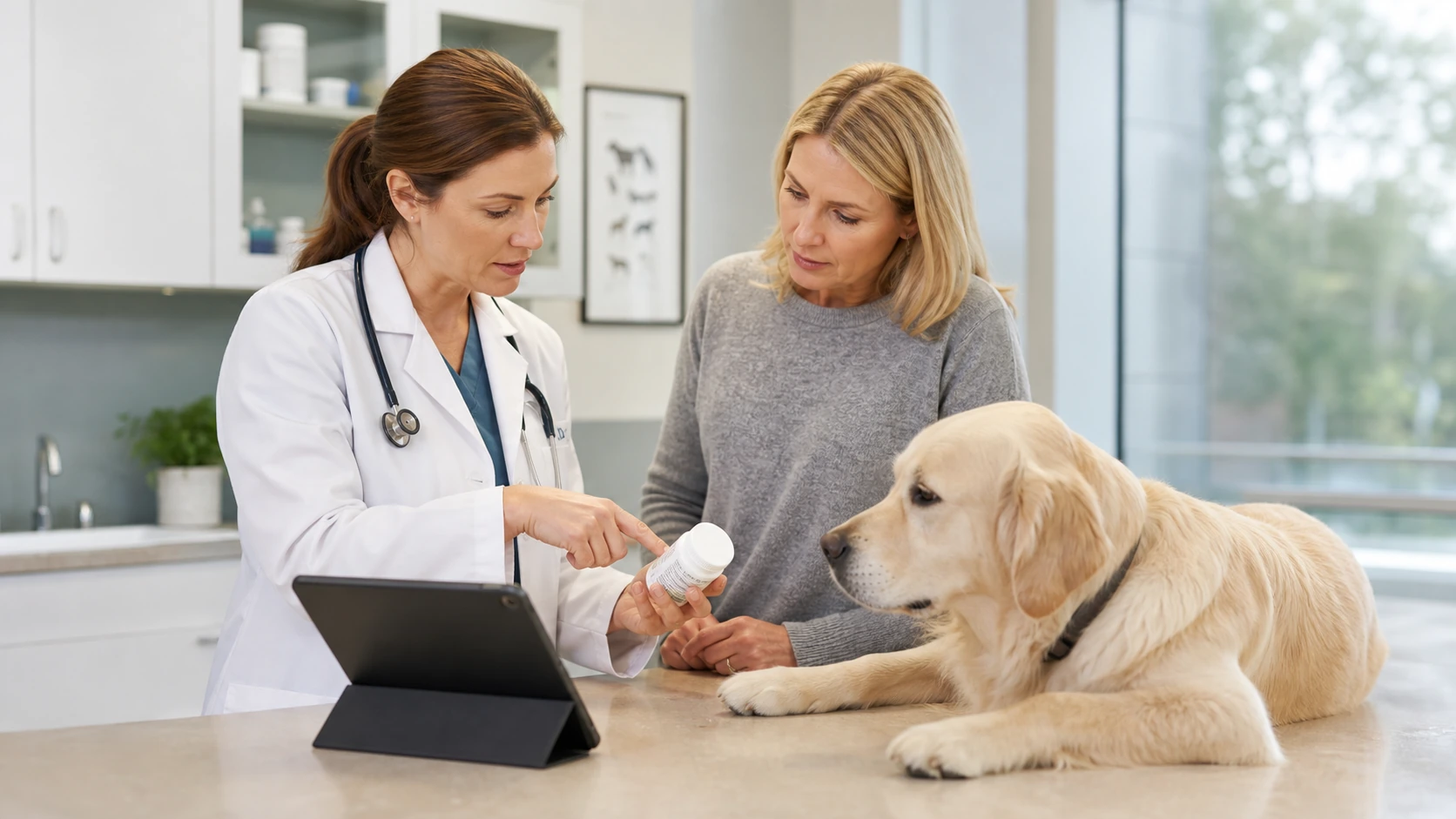
This article is educational and does not diagnose, treat, prescribe, or replace care from a licensed veterinarian. Your dog’s history, examination, diet, medications, and current signs determine what is appropriate.
Understand how the program is structured
NASC describes its Quality Seal as permission granted to qualifying member companies that pass an independent audit and maintain ongoing compliance. Criteria include a quality-control manual, production procedures, complaint and adverse-event reporting, label guidance, specified caution statements, random testing participation, and annual training. [1]
These controls can improve consistency, traceability, and vigilance. They are not identical to government premarket approval of an animal drug. FDA remains the federal authority for animal food and drug classification, adulteration, misbranding, claims, and enforcement. [2] [3]

Separate company systems from product performance
An audit asks whether documented systems exist and are followed. Random testing can assess selected label-claim or quality questions. Neither automatically establishes that each ingredient benefits dogs, that a study matches the formula, or that the product is appropriate with a dog's disease and medication list.
Verify that the seal is current and attached to the product or company in a way the program permits. Then continue the review: exact ingredients and amounts, lot information, intended use, evidence, cautions, contraindications, interactions, and a monitoring plan. [1] [3]
Use adverse-event systems correctly
A company complaint system can collect product defects and events occurring after use. Reports can reveal signals and support investigation, but temporal association does not by itself prove that a product caused a sign. Useful reports include the exact product, lot, date, amount, timing, concurrent products, medical history, and veterinary findings. [4]
Owners should contact their veterinarian first when a dog is unwell. Depending on product classification and the event, reports may also go to the company or an FDA pathway. Keep the container and records; do not restart a suspected product merely to test causation.
Build a complete decision beyond the badge
Ask whether there is canine clinical evidence for the exact formulation and goal. Review conflicts of interest, study size, comparator, outcome, duration, withdrawals, and adverse events. A quality-manufactured product with weak efficacy evidence remains a product with weak efficacy evidence.
Finally, review necessity. A complete commercial diet may already supply vitamins and minerals, and multiple products can duplicate nutrients or interact with medication. Tufts veterinary nutrition guidance recommends a skeptical, limited, purpose-driven approach rather than routine stacking. [5]
Document which question the seal answered in the final decision. If it helped establish company traceability or quality-system participation, say that plainly. Keep separate notes for product composition, clinical evidence, veterinary suitability, and response monitoring so confidence in one category does not silently spill into the others.
Prepare for a focused veterinary conversation
Bring a concise timeline, short natural-movement or symptom videos when safe, the exact names and photographs of every food, treat, medication, and supplement label, and notes about appetite, water intake, stool, sleep, activity, comfort, and behavior. Include recent injuries, travel, boarding, diet changes, missed medication, and previous test results. A complete record helps the veterinary team separate a repeatable pattern from a single impression.
Decide in advance what you need from the visit: an urgency decision, a diagnosis plan, a nutrition review, a pain or mobility assessment, or a monitored trial. Ask what result would change the plan and what finding would rule an option out. This keeps research and product information in the right role. Evidence can shape questions and expectations, but it cannot determine what is safe for an individual dog without the history and examination.
Owner tool
Separate four supplement questions
On a phone, swipe across the table to see every column.
| Question | Useful evidence | Seal alone answers it? |
|---|---|---|
| Was it made under defined systems? | Audit and quality records | Partly |
| Does it contain what the label says? | Lot-specific testing | Not completely |
| Does it improve the intended outcome? | Relevant canine clinical evidence | No |
| Is it suitable for this dog? | Veterinary history and interaction review | No |
Better questions, calmer next steps
Questions to ask your veterinarian
- Is this company currently authorized to display the seal?
- Which audit and testing requirements apply to this exact product and lot?
- What evidence supports the formula's intended outcome?
- What risks or interactions remain despite the quality program?
- How should a product problem or adverse event be documented and reported?
FAQ
Is NASC a government agency?
No. It is an industry organization with a voluntary quality program.
Does the seal mean FDA approved?
No. FDA approval and NASC program participation are different concepts.
Does every NASC product work?
No. Effectiveness depends on product-specific evidence and the intended outcome.
Does random testing cover every lot?
The official program describes random testing; owners should not assume every lot receives every possible test.
Is a product without the seal automatically unsafe?
No. Absence or presence of one voluntary seal cannot answer the entire safety and evidence review.
Sources
- National Animal Supplement Council: NASC Quality Seal. Official program criteria, audits, adverse-event systems, labeling, and random testing.
- U.S. Food and Drug Administration: Animal Foods and Feeds. Federal classification and oversight context.
- Veterinary Clinics of North America: Veterinary Pet Supplements and Nutraceuticals. Independent review of veterinary supplement regulation and quality control.
- U.S. Food and Drug Administration: Pet Food Safety Reporting Portal FAQ. Product and adverse-event reporting details including lot and date information.
- Tufts Petfoodology: When Less Is More: Sensible Use of Supplements. Independent veterinary nutrition guidance on evidence, duplication, and interactions.
