

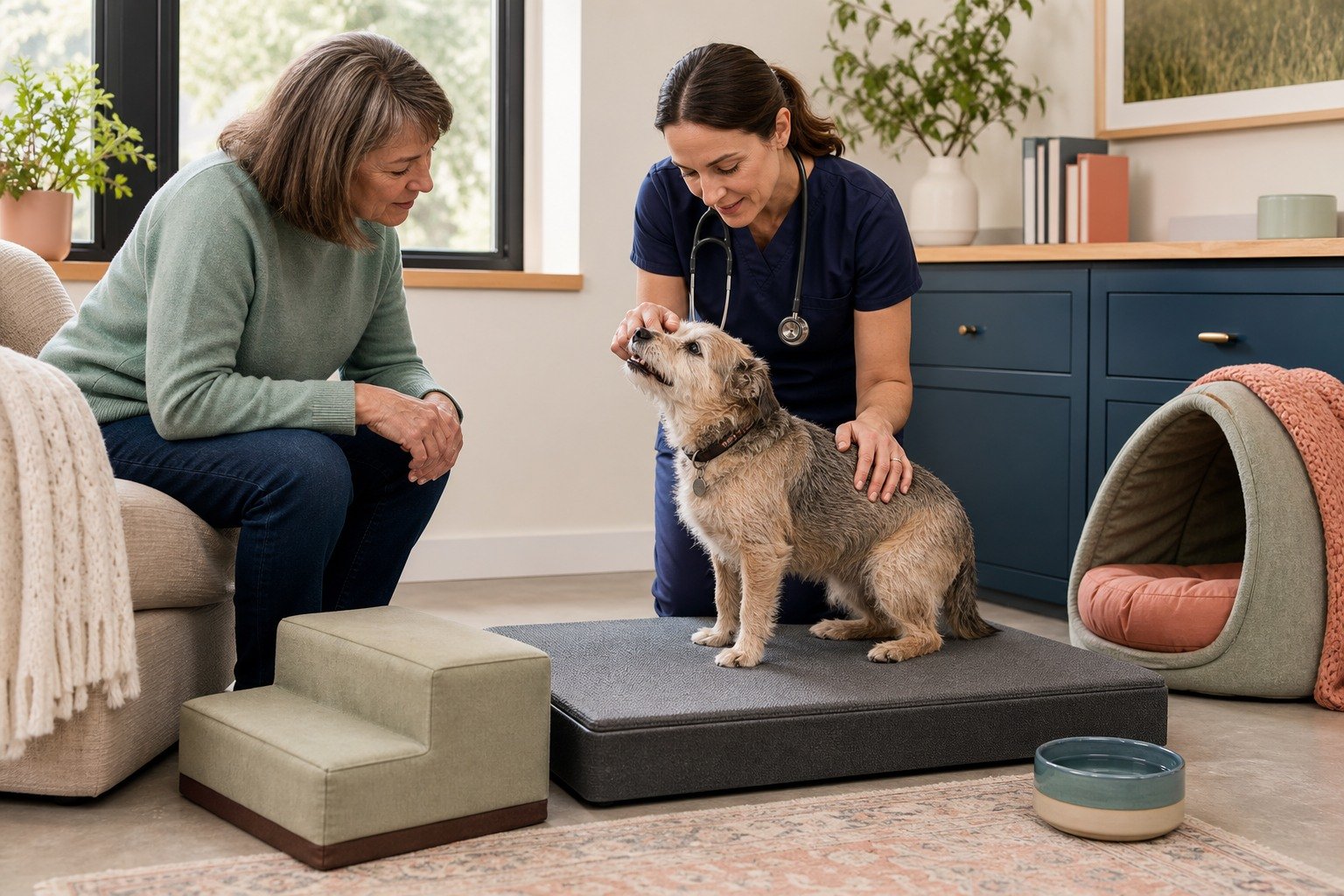
Small dogs often have longer population life expectancy than larger dogs, but longevity averages are not a promise, a diagnosis, or evidence that a change can wait. A small dog can live many years with accumulating dental, cardiac, sensory, orthopedic, metabolic, kidney, cognitive, or medication considerations. Because the dog is easy to carry, people may miss declining stair use, gait, endurance, toileting access, or handling comfort. Because weight changes are numerically small, meaningful loss or gain may also be overlooked. Senior care should define this dog's baseline, screen according to individual risk, assess pain and oral health, review the complete diet, and adapt the environment without removing voluntary movement or choice. Report new behavior, appetite, sleep, breathing, thirst, urine, stool, weight, muscle, and mobility changes. Old age and small breed are contexts, not explanations.
Short answer
Longer population lifespan does not mean slower attention
Breed studies report associations among body size, genetic diversity, and lifespan, and clinical data produce different life-expectancy estimates by breed and body size. These are population findings with methodological limits. AAHA defines senior status individually rather than by one universal age. [1] [2] [3] [4]
- Start with the individual dog's baseline, complete history, and veterinary plan.
- Track change across function, comfort, appetite, sleep, and behavior instead of blaming age or breed.
- Use environment and routine as coordinated supports, not substitutes for diagnosis or care.
- Escalate sudden, severe, persistent, or rapidly worsening signs promptly.
Safety first
Promptly assess breathing change, collapse, severe pain, or sudden confusion
Seek urgent care for collapse, breathing difficulty, pale or blue gums, severe pain, inability to stand, major trauma, repeated vomiting, toxin exposure, seizures, or sudden neurologic change. Contact the veterinarian for persistent cough, appetite or weight change, increased thirst or urine, dental pain, house-soiling, sleep disruption, or new disorientation.
- Do not use this article to diagnose anxiety, pain, cognitive change, or organ disease.
- Do not change prescribed medication, diet, or activity because of a general age or breed rule.
- Seek urgent veterinary care for collapse, breathing difficulty, severe pain, major trauma, or rapid decline.
Veterinary note
This article is educational and does not diagnose, treat, prescribe, or replace care from a licensed veterinarian. Your dog’s history, examination, diet, medications, and current signs determine what is appropriate.
Use lifespan research for planning, not prediction
Population studies can show that smaller body size is often associated with longer lifespan across breeds, while genetic diversity and other factors also matter. [1] [2] The studies do not tell how long an individual dog will live or what caused a current sign.
Life expectancy tables reflect the records, dates, geography, breeds, access to care, and definitions in the dataset. [3] Use them to support proactive senior conversations, not to compare dogs, promise longevity, or decide that testing is unnecessary because a breed usually lives longer.
Ask the veterinarian when this dog enters the senior stage and what changes in examination, diagnostics, dentistry, nutrition, pain, behavior, and recheck planning. AAHA notes that senior onset varies and the care plan should be tailored. [4]

Watch small changes in a small body
Record weight on a consistent scale, body condition, muscle condition, appetite, measured food, treats, chewing, water, urine, stool, vomiting, sleep, interaction, and daily function. A modest numerical weight change can represent a meaningful percentage of a small dog's body.
Observe rising, stairs, jumping, toileting posture, walking, turning, being picked up, grooming, harnessing, and recovery after normal activity. Carrying the dog everywhere can conceal declining ability and reduce opportunities to observe natural movement. Do not repeatedly test a painful task.
Track cough, breathing rate or effort changes, exercise tolerance, fainting, restlessness, and nighttime behavior. These observations do not diagnose heart or airway disease, but they help the veterinary team decide what examination and testing are appropriate.
Prioritize oral comfort, sensory change, and behavior
Small dogs can have substantial periodontal disease that is not visible from a quick look at the front teeth. Report odor, dropping food, chewing changes, pawing, reluctance, swelling, or handling sensitivity. Dental treatment decisions require oral examination and often imaging; age alone does not automatically prohibit anesthesia.
Hearing or vision change, pain, urinary disease, endocrine disease, sleep disturbance, and cognitive dysfunction can alter behavior. New house-soiling, startle, clinginess, irritability, night waking, pacing, or confusion needs medical context before it is labeled anxiety or dementia.
Use predictable routines, clear paths, stable steps or ramps when assessed for the dog, nonslip footing, comfortable rest, and night lighting where helpful. Preserve choice and avoid surprising touch. Environmental support does not replace diagnosis or pain care.
Coordinate nutrition, screening, and medication
Review the exact complete diet, treats, chews, supplements, food used for medication, appetite, dental ability, body and muscle condition, and disease. Do not switch to a senior label or reduce food sharply based on age alone. Energy and nutrient needs vary.
Ask which diagnostics fit the dog's history, examination, breed context, prior trends, and medications. AAHA senior guidance describes a systematic, multifaceted approach rather than one test panel for every dog. [5] Record results over time and ask what change would alter the plan.
Keep an accurate medication and supplement list. Small size makes dose accuracy and accidental extra administration especially important, but owners should not calculate or change doses independently. Use one administration log when several caregivers participate.
Prepare for a focused veterinary conversation
Bring a concise timeline, short natural-movement or symptom videos when safe, the exact names and photographs of every food, treat, medication, and supplement label, and notes about appetite, water intake, stool, sleep, activity, comfort, and behavior. Include recent injuries, travel, boarding, diet changes, missed medication, and previous test results. A complete record helps the veterinary team separate a repeatable pattern from a single impression.
Decide in advance what you need from the visit: an urgency decision, a diagnosis plan, a nutrition review, a pain or mobility assessment, or a monitored trial. Ask what result would change the plan and what finding would rule an option out. This keeps research and product information in the right role. Evidence can shape questions and expectations, but it cannot determine what is safe for an individual dog without the history and examination.
Owner tool
Build a small-senior trend record
On a phone, swipe across the table to see every column.
| Checkpoint | What to record | Why it helps |
|---|---|---|
| Body | Weight, fat, muscle, food | Finds subtle change |
| Function | Stairs, jump, gait, handling | Shows impact |
| Systems | Mouth, breathing, water, sleep | Connects clues |
| Plan | Tests, dentistry, drugs, recheck | Coordinates care |
Better questions, calmer next steps
Questions to ask your veterinarian
- When is this dog considered senior?
- Which oral and diagnostic assessments are appropriate now?
- Could pain, sensory loss, or disease explain this behavior?
- Is carrying the dog hiding a mobility change?
- How will body and muscle condition guide nutrition?
FAQ
Do small dogs age more slowly?
Population lifespan differs, but individual aging and disease still require assessment.
Is bad breath normal in an older small dog?
No. Oral odor can accompany dental disease and deserves evaluation.
Should I carry my senior dog on stairs?
Use an individual safety and mobility plan; handling can help or create risk.
Is anesthesia too risky because of age?
Risk is assessed individually; age alone is not the only factor.
Does a senior label mean a special food is required?
No. Diet should match the complete assessment and health needs.
Sources
- GeroScience: Size, Genetic Diversity and Lifespan Across Dog Breeds. Breed-level size, genetics, and lifespan associations.
- Conservation Genetics: Body Size, Inbreeding, and Lifespan in Domestic Dogs. Population body size and genetic context.
- Frontiers in Veterinary Science: Life Expectancy Tables for Dogs and Cats. Clinical-record life expectancy estimates.
- American Animal Hospital Association: Defining the Senior Patient. Individual senior-stage definition.
- American Animal Hospital Association: 2023 Senior Care Guidelines. Multifaceted senior assessment and care.
