

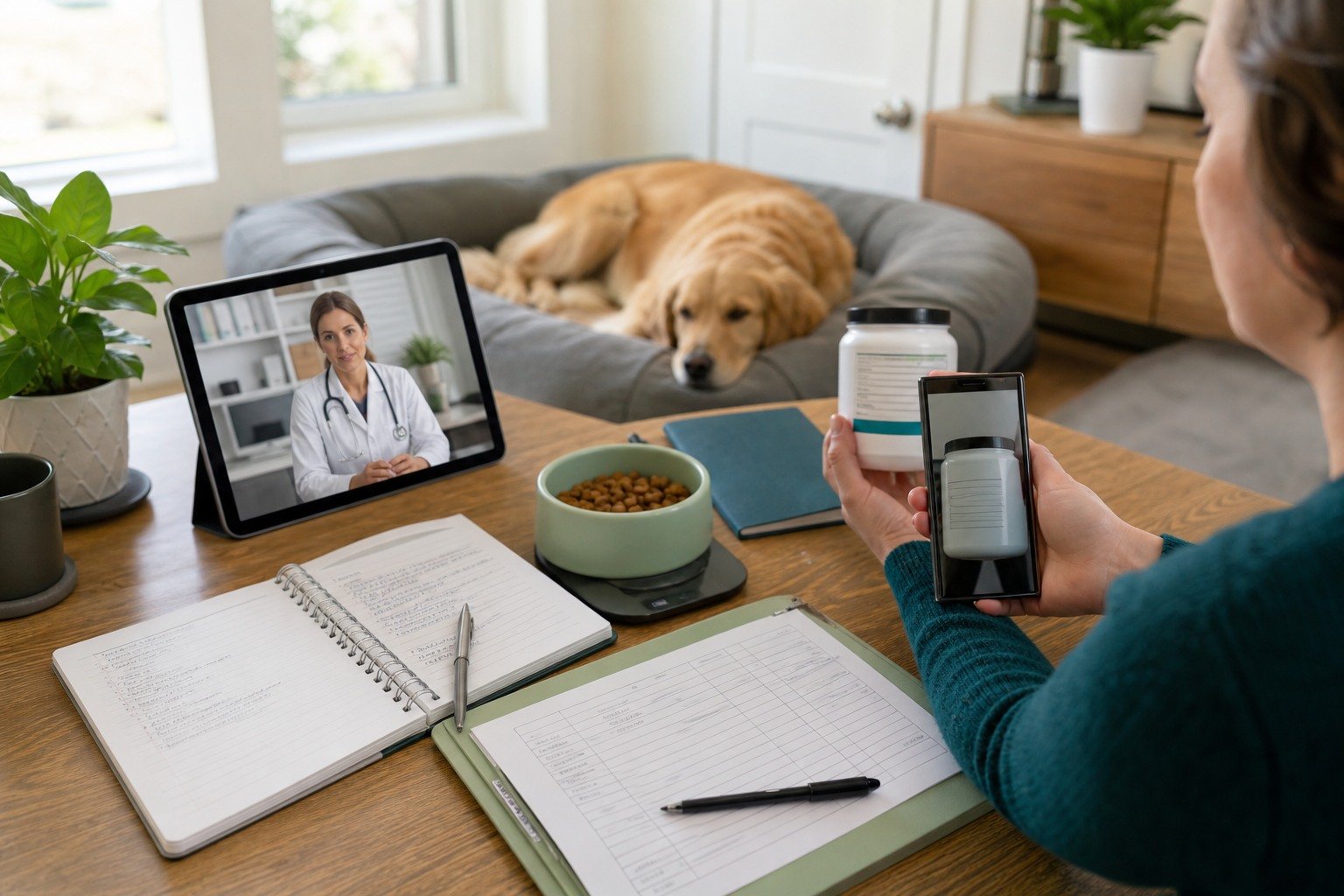
A supplement record is not just a checkmark that something was given. It should identify the exact dog, product, ingredient and label panels, lot and expiration details, reason for use, complete diet and medication context, baseline, administration, observations, adverse signs, and review decision. Without that information, a caregiver may not know whether a container changed, two products duplicate an ingredient, a dose was repeated, or a new symptom followed food, medication, illness, or the supplement. Start the record before the product, not after a problem. Define one measurable outcome and a review date with the veterinary team. Preserve the original container and photographs. If a suspected adverse event occurs, contact the veterinarian promptly; product and medical details can also support manufacturer or FDA reporting when appropriate.
Short answer
A good record connects product identity, dog context, outcome, and action
FDA asks adverse-event reporters for pre-existing health problems, names and amounts of drugs, vitamins and supplements, food and treats, veterinary findings, and test results. A structured routine record preserves those details before memory fades. [1] [2]
- Record the exact dog, product or treatment, purpose, timing, and observed response.
- Use observations to support veterinary assessment, not to diagnose or treat at home.
- Protect complete nutrition, medication safety, storage, and reliable caregiver handoffs.
- Agree on measurable outcomes, a review date, and clear urgent-contact signs.
Safety first
Stop routine tracking and seek help when a dog may be in danger
Contact a veterinarian after suspected overdose, wrong product, container access, or a concerning new sign. Seek urgent care for collapse, seizure, tremors, repeated vomiting, severe weakness, loss of coordination, breathing difficulty, uncontrolled bleeding, or rapidly worsening condition. Bring the original container and do not induce vomiting unless directed.
- Do not delay care for sudden, severe, escalating, or function-limiting change.
- Do not start, stop, combine, divide, or calculate treatment from this article.
- After a possible overdose, wrong-dog dose, or toxic exposure, contact a veterinarian or animal poison service promptly.
Veterinary note
This article is educational and does not diagnose, treat, prescribe, or replace care from a licensed veterinarian. Your dog’s history, examination, diet, medications, and current signs determine what is appropriate.
Capture exact product identity before the first use
Photograph the front, ingredient list, guaranteed analysis when present, directions, cautions, manufacturer contact, lot, and expiration area. Repeat photographs after a replacement purchase or formulation change.
Record product form, package size, purchase source, storage instructions, and seal condition. Words such as natural, veterinarian formulated, registered, or made in an inspected facility do not by themselves establish FDA approval or effectiveness.
Keep the container until the trial and follow-up period are complete. Do not transfer products to an unlabeled jar or combine different lots in one container.
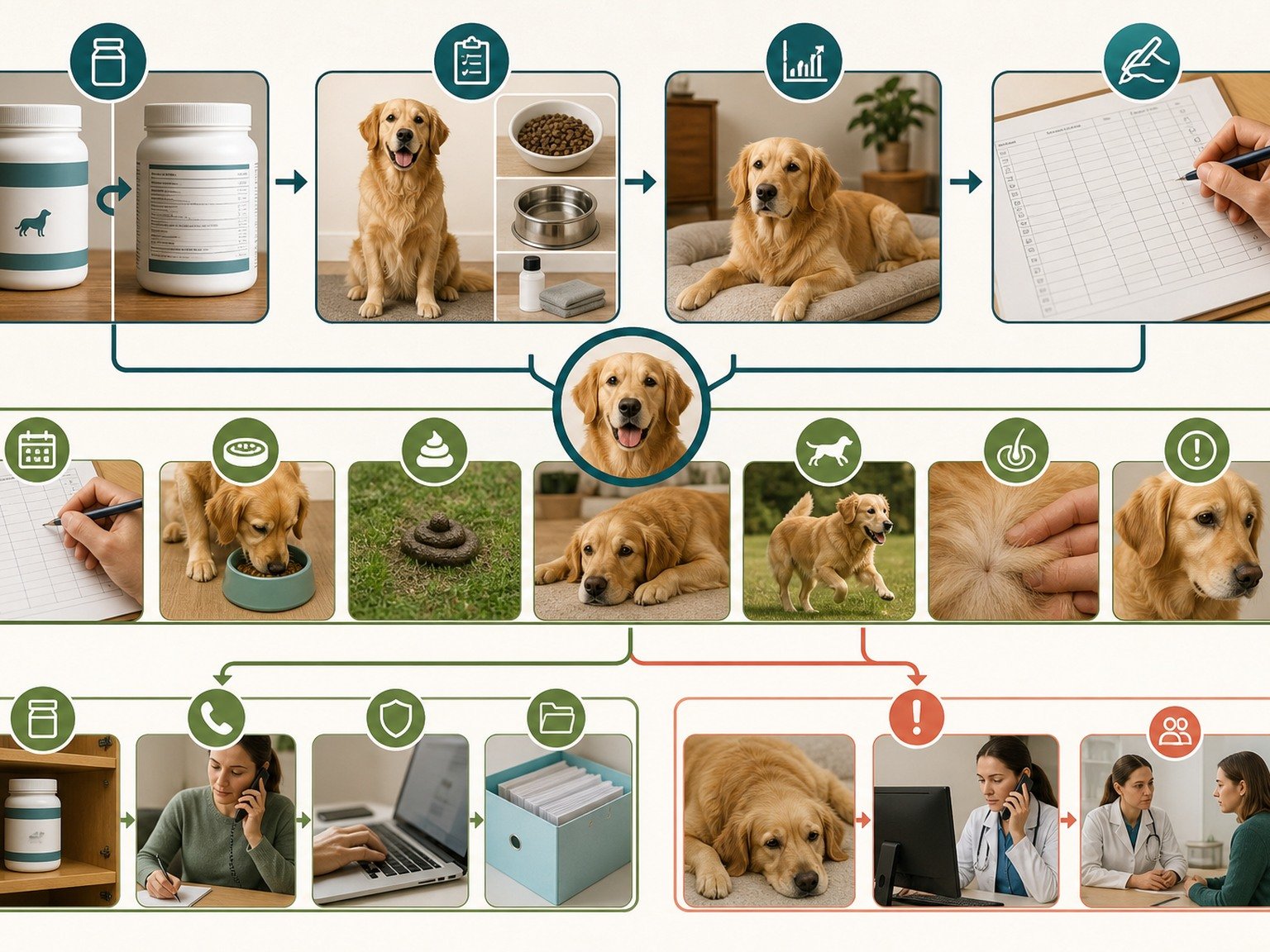
Record the dog's full context and a measurable baseline
Identify the dog, current weight and body or muscle condition when relevant, complete food and amount, treats, prescriptions, preventives, other supplements, diagnoses, allergies, and recent laboratory findings.
Define one purpose in observable terms. Examples include a veterinarian-selected stool score, client-specific mobility activity, appetite pattern, or laboratory value. Avoid broad goals such as immunity, detox, vitality, or wellness that cannot be assessed.
Collect baseline observations before starting when the veterinary plan allows. If food, medication, environment, and supplement all change together, the record may not identify which change mattered.
Log administration and response without turning it into diagnosis
Record date, time, exact amount as directed, route or food context, and caregiver immediately after administration. Note missed, vomited, refused, or uncertain amounts and call for instructions rather than compensating later.
Track the chosen outcome plus appetite, water, stool, vomiting, sleep, behavior, skin, mobility, and any suspected effect. Use consistent definitions and comparable situations instead of retrospective impressions.
Record no change as carefully as improvement or worsening. A product trial should have an agreed review date and stopping rule; indefinite use without reassessment can add cost, calories, interactions, and false confidence.
Preserve an adverse-event and reassessment trail
After a possible event, write the last administration, onset, progression, other exposures, food, medication, veterinary findings, tests, treatment, and outcome. Save photographs and the container. Add follow-up changes instead of overwriting the original timeline. Record who received each instruction and when, because telephone guidance, emergency discharge, and later follow-up may differ as new findings become available.
FDA accepts reports of side effects, lack of effectiveness, product defects, and medication errors for animal drugs and devices, and directs consumers through product-specific reporting paths. [3]
Review the primary diet and nutrition plan as well as the add-on. WSAVA and AAFCO resources help owners ask about nutritional adequacy and complete diets; a supplement record should never obscure the foundation. [4] [5]
Prepare for a focused veterinary conversation
Bring a concise timeline, short natural-movement or symptom videos when safe, the exact names and photographs of every food, treat, medication, and supplement label, and notes about appetite, water intake, stool, sleep, activity, comfort, and behavior. Include recent injuries, travel, boarding, diet changes, missed medication, and previous test results. A complete record helps the veterinary team separate a repeatable pattern from a single impression.
Decide in advance what you need from the visit: an urgency decision, a diagnosis plan, a nutrition review, a pain or mobility assessment, or a monitored trial. Ask what result would change the plan and what finding would rule an option out. This keeps research and product information in the right role. Evidence can shape questions and expectations, but it cannot determine what is safe for an individual dog without the history and examination.
Owner tool
Create a supplement evidence trail
On a phone, swipe across the table to see every column.
| Checkpoint | Record | Why it helps |
|---|---|---|
| Identity | Panels, lot, expiry, source | Preserves product |
| Baseline | Dog, diet, medicines, goal | Defines context |
| Administration | Date, time, amount, caregiver | Prevents errors |
| Outcome | Trend, event, action, review | Guides decision |
Better questions, calmer next steps
Questions to ask your veterinarian
- What exact purpose and baseline should we record?
- Could the diet or another product duplicate ingredients?
- Which administration details matter?
- What stopping rule and review date should we use?
- How should a suspected event be reported?
FAQ
Can I track only the product name?
No. Preserve exact label, lot, and dog context.
Should I record days with no change?
Yes. No change is part of the evidence.
Can I make up a missed amount later?
Not without veterinary direction.
Should I discard the container after opening?
No. Keep it through the trial and event-review period.
Does tracking prove a product caused a change?
No. It improves the evidence available for assessment.
Sources
- U.S. Food and Drug Administration: How to Report Animal Drug and Device Side Effects. Information requested for adverse-event reporting.
- openFDA: Animal and Veterinary Adverse Events. Product, food, and medical context for reports.
- U.S. Food and Drug Administration: Report a Problem. Consumer reporting pathways.
- World Small Animal Veterinary Association: Global Nutrition Toolkit. Nutrition assessment and food evaluation.
- Association of American Feed Control Officials: Reading Pet Food Labels. Nutritional adequacy and supplemental-use labeling.
